Showing posts with label Africa. Show all posts

Sunday, 6 December 2020

What’s the deal with Huawei and a hack at African Union headquarters?

 In 2012, a data theft incident began at the African Union (AU) Headquarters in Addis Ababa, Ethiopia, where information from the AU’s computer systems was allegedly transmitted to servers in China. 

May 31, 2019
Duke University
Image for post

By Justin Sherman

In 2012, a data theft incident began at the African Union (AU) Headquarters in Addis Ababa, Ethiopia, where information from the AU’s computer systems was allegedly transmitted to servers in China. This continued, at the same time every night, for five years, until it was discovered in January 2017. A year following, in January 2018, French paper Le Monde ran a story on it. That’s when the revelations went public.

The reason this has been cropping up today, amidst the U.S.’ intensifying technological confrontation with China, is that the bulk of the computer systems in the African Union Headquarters were supplied by Chinese telecommunications company Huawei and paid for by the Chinese government. When sensitive data was routed from AU servers back to servers located in Shanghai, it raised many suspicions about the Chinese government’s use of Huawei equipment to spy on foreign activity.

Amidst all of the ongoing controversy around Huawei, 5G, and national security, this incident has cropped back up in discussions about the extent to which the Chinese intelligence services do or could plant backdoors in Huawei systems for espionage purposes. If one is going to use this as reason to suspect Huawei, though, it’s worth better understanding this incident and to what extent this serves as reliable grounds for concern. In this blog, I therefore break down what happened, if there was evidence of backdoors in the Huawei systems used by the AU Headquarters, and what this means for the risks around Huawei and 5G.

What happened?

On January 26, 2018, Le Monde reported that the headquarters of the African Union — where heads of state and ministers meet biannually to discuss the continent’s major issues — had been hacked. Yet this was not a one-time incident. Like many data breaches, it took the organization years to notice internally, as sensitive data was exfiltrated again and again.

The $200 million headquarters opened in 2012, funded entirely by the Chinese government. Not only had it been called “China’s gift to Africa,” but Xinhua, the state-run Chinese news agency, in fact said at the time that the complex “is not only a new landmark in Addis Ababa but also the latest landmark in the long friendship between China and Africa.” All seemed well.

Yet in January of 2017, a computer scientist at the African Union noticed that AU servers, from midnight to 2am, were sending large volumes of data from the organization to an outside location, Le Monde reported. According to this individual, the AU’s internal secrets were specifically routed to servers in Shanghai. And this data exfiltration wasn’t a one-off operation. It had been occurring every night, at the same time, from January 2012 through January 2017.

The period of time between internal discovery (January 2017) and public disclosure (January 2018) of the data exfiltration is also worth noting. For one, per Le Monde, this was needed time to address the issue: the African Union purchased new servers in the time since discovering the data exfiltration, and apparently refused Chinese government offers to configure them. Officials at the AU additionally bolstered the encryption of their communications. The type of data exfiltrated and/or the way in which the exfiltration occurred clearly indicated something serious to the African Union, such that it didn’t just stop at replacing the tech. Security experts swept the building and additionally discovered (and removed) bugs planted in desks and walls. (It was not specified to whom these bugs belonged, or if that was known, but the implication in the article seems to be linking this to the server spying.)

But the delay between discovery and public disclosure may also underscore some elements of the relationship between the African Union and the Chinese government. Mailyn Fidler, for instance, argued the fact that “the African Union kept the Chinese surveillance secret for a year after discovering it, suggest[s] that African leaders believed such information, if public, could have explosive consequences for their relationship with China.” And this appears to be a risk — after all, Le Monde’s source was not the African Union itself, but “several” unnamed “internal sources” in the organization that leaked this news to the paper.

Upon publication of the article, the Chinese government denied any such incident occurred. China’s ambassador to the African Union called the Le Monde story “ridiculous and preposterous.” Rather than the expose the truth, he said, this publication was intended to put pressure on the relationship between China and Africa. The new AU chairman, meanwhile (who had just taken the position at the beginning of 2018), denied knowledge of any such event. “I don’t think spying is the specialty of the Chinese. We have spies all over the place in this world. But I will not have been worried about being spied on in this building…I would only have wished that in Africa we had got our act together earlier on. We should have been able to build our own building.”

The information reported by Le Monde was shortly thereafter supplemented by other investigatory work. Financial Times reported its own confirmation of the hack a few days after the initial story broke. While the African Union as an organization declined to officially comment on the story, one African diplomat attending an AU summit told Financial Times that “this is not the sort of thing Africans will entertain and take lightly.” That’s when it got interesting.

Danielle Cave from the Australian Strategic Policy Institute highlighted in July 2018 that Huawei had supplied the bulk of the information and communications technology (ICT) in the AU headquarters: primarily, cloud computing infrastructure. As she quoted from Huawei’s website, “The [Huawei] solution deployed all computing and storage resources in the AU’s central data center where it seamlessly connects to the original IT system. Then, Huawei installed Wi-Fi hotspots and provided the industry’s first Thin Clients (TC) customized with Wi-Fi access.” ZTE had also provided some infrastructure, although not as much as Huawei, and Cave wrote that less public information existed on the ZTE-AU relationship.

Amidst recent controversy around the extent to which Huawei may be involved with, complicit in, or susceptible to having to comply with espionage operations run by the Chinese government, this event has reentered the limelight as possible reason for concern.

Was there evidence of backdoors in the Huawei systems?

First, a quick reminder of important distinctions here: backdoors aren’t normal security vulnerabilities. Backdoors don’t just require the existence of a security flaw, but they also require intent and exploitability. The former, intent, means that the vulnerability exists in the system deliberately; it’s actively placed there so a third party can bypass normal authorization mechanisms for accessing the system. The latter, exploitability, means that there isn’t just a vulnerability in the code that’s sitting there, waiting for somebody to find, but that the actor (a) knows about the vulnerability and (b) has the capability to make use of it.

Together, a deliberately placed vulnerability and the ability to exploit it constitute a backdoor. (If you need more on the differences between vulnerabilities, backdoors, and also bugdoors, read this article my colleague and I wrote on the three, and why conflating them can dangerously mess up one’s risk assessment of the Huawei 5G situation.)

With that distinction in mind — no, there is no evidence of backdoors here, at least publicly. How exactly the data exfiltration occurred remains unknown. Reporting from Le Monde did not provide specifics, and subsequent analyses of this event have remained speculative as to how exactly the hack occurred. Meanwhile, a spokesperson from Huawei recently told the BBC: “If there was a data leak from computers at the AU’s headquarters in Addis that went on for an extended period of time, these data leaks did not originate in technology supplied by Huawei to the AU. What Huawei supplied for the AU project included data centre facilities, but those facilities did not have any storage or data transfer functions.”

Even if one tries to bring in contemporary “evidence” of Huawei backdoors to explain the 2012 AU Headquarters incident, there still actually isn’t any evidence to be presented. The UK’s Huawei Cyber Security Evaluation Center (HCSEC) 2019 report found many vulnerabilities in Huawei systems; the code is full of security holes. But to the earlier point about the need for both intent and exploitability, evidence of vulnerabilities doesn’t equal evidence of backdoors. They’re two different things.

To recap from what my colleague and I wrote on vulnerabilities, backdoors, and bugdoors:

…there exists no public evidence to suggest the known vulnerabilities in Huawei equipment are there to enable backdoors. Of course, just because you haven’t found evidence of intent doesn’t mean there was no intent, or that there’s no evidence to be found. (Think Donald Rumsfeld’s unknown unknowns). But nobody has publicly found evidence of intent yet. Until such time that backdoor or bugdoor evidence is found, then, all we know is that Huawei systems have vulnerabilities.

The same can be said with respect to the data exfiltration from the African Union Headquarters: there exists no public evidence, in any subsequent reporting, to suggest there were in fact backdoors in the Huawei computer systems placed there by Chinese intelligence services.

Le Monde claimed in its original report that backdoors were placed in the Huawei computer systems (des portes numériques dérobées (« backdoors ») qui donnent un accès discret à l’intégralité des échanges et des productions internes de l’organisation). Yet it’s very difficult to distinguish vulnerabilities from backdoors or bugdoors just by looking at the code; human intelligence is often needed to provide evidence of intent. The Le Monde reporting gives no further evidence to this end. As far as I can tell, the claim about backdoors is likely based on allegations from the AU computer scientist — which, barring proof of intent, are likely speculative.

What does this mean for Huawei and 5G?

Despite the current lack of public evidence that backdoors exist in Huawei systems writ large — and the current lack of public evidence that backdoors existed in the African Union Headquarters’ systems — one could argue such evidence is out there. And, recalling unknown unknowns, there very well might be evidence to uncover.

Yet many have pointed out the possibility of no Huawei involvement in the data exfiltration whatsoever, beyond the fact that it supplied the equipment on/through which the incidents occurred. Charles Clancy, a former NSA researcher now at Virginia Tech, recently testified to Congress that “it is unclear that Huawei uniquely enabled this attack, as the People[’]s Liberation Army (PLA) could have put in place advanced persistent threat toolsets without vendor knowledge or cooperation.” It’s also possible the Huawei systems, as the recent UK HCSEC report underscored, were just filled with security vulnerabilities due to poor design — and were thus especially susceptible to being hacked.


As a general comment, we can of course expect multinational organizations to be targets for electronic espionage. Some find this a compelling reason to expect, reasonably, some degree of espionage on the part of the Chinese government. “When you let them build the whole system, of course they are listening in,” one western diplomat told Financial Times of the Chinese government building the AU headquarters. And this point may have held for multiple government intelligence services — for even in this situation, China wasn’t the only one allegedly tapping into communications. Citing documents released by Edward Snowden, Le Monde reported that the UK’s GCHQ had also spied (between 2009 and 2010) on communications from the African Union.

But this is why one’s judgment of whether the incident lends credence to claims of the Chinese government using Huawei to spy comes back to one’s perception of the African Union Headquarters hack in the first place, and one’s general view of the Chinese government.

Is this incident evidence of backdoors in Huawei systems? No. It is evidence of Huawei complicity or involvement in Chinese spying? No. Yet is it reason for suspicion? Perhaps. It depends on your broader calculus around 5G risks. But there’s also just the chance, alongside all this speculation about backdoors and bugdoors, that we’re dealing with the buggy code risk: Huawei code just has a lot of security holes, and Chinese intelligence services are simply exploiting them.

Justin Sherman is a rising senior at Duke University and a cybersecurity policy fellow at New America, where this blog post first appeared.


https://medium.com/dukeuniversity/whats-the-deal-with-huawei-and-a-hack-at-african-union-headquarters

How China spied on the African Union via donated computers - ‘China’s gift to Africa’

 For a period of 5 years, China continued to spy on all electronic communications at the African Union’s headquarters in Addis Ababa, Ethiopia.

by  —  in SYNDICATION


For a period of 5 years, China continued to spy on all electronic communications at the African Union’s headquarters in Addis Ababa, Ethiopia. The Chinese spy operation continued throughout this period without being detected until some network administrators at the AU’s headquarters discovered it in January 2017.

This is according to an investigation conducted by Le Monde which has gone on to reveal how the Chinese, who donated and built the new AU headquarters in Adis Ababa, fitted the building with hidden microphones and transferred data every night from the AU’s data center to their servers in Shanghai.

In January 2012, the new AU headquarters in Addis Ababa built and equipped by the Chinese government were opened. The $200 million 20-story tower along with other buildings in the complex was called “China’s gift to Africa” by the Chinese government, yet, it would later be revealed that it was a gift that would keep on giving.

Almost exactly five years later after the new headquarters were opened, in January 2017, it has been revealed that the IT team at the AU headquarters discovered that their network was transmitting unusually large amounts of traffic after midnight, daily. This is at a time, as Le Monder reports, when the AU headquarters is empty and there isn’t supposed to be much activity, if any, on their network. After a network administrator investigated further, it became apparent that large amounts of data from servers in the AU data center were being sent, every night, to unknown servers in Shanghai. This apparently also included voice data that was being recorded from hidden microphones in the building which was fully fitted by the Chinese.

According to the AU, since the discovery was made in January 2017, they have replaced all Chinese donated servers and ICT equipment at the AU headquarters and acquired its own servers. What is more surprising and based on the AU’s response to Le Monde, is that it seems that the Chinese offered to configure the equipment, a request which the AU declined.

The AU also say they have taken more steps towards securing their communications including encryption of communications as well as ensuring that all AU officials have telephone lines that don’t go through Ethiopia’s Ethio Telecom, which is known for surveillance and co-operating when authorities need to shut down the Internet in the country.

The Chinese on the other hand, have gone on to deny any spying allegations. Kuang Weilin, China’s ambassador to the AU, has called the “allegations” as “absurd”.

The revelation raises several questions, one of which is important and directed at the AU: How is it possible that your entire IT team only discovered such a large transfer of data every night ONLY after 5 years?

More concerning is how a building that occasionally houses Afrika’s leaders apparently had no or very little security checks done to ensure communications were safe an/or there were no hidden recording devices in it. Perhaps, finally, Afrika will “despise the free lunch.”

https://thenextweb.com/syndication/2018/02/17/chinas-gift-africa-china-spied-african-union-via-donated-computers/

China Insists Loans to Africa Are Not ‘Free Money’

 China’s state-run Global Times ran an op-ed Wednesday denying charges that Beijing is using huge “Belt and Road” infrastructure loans to buy political influence in Africa.

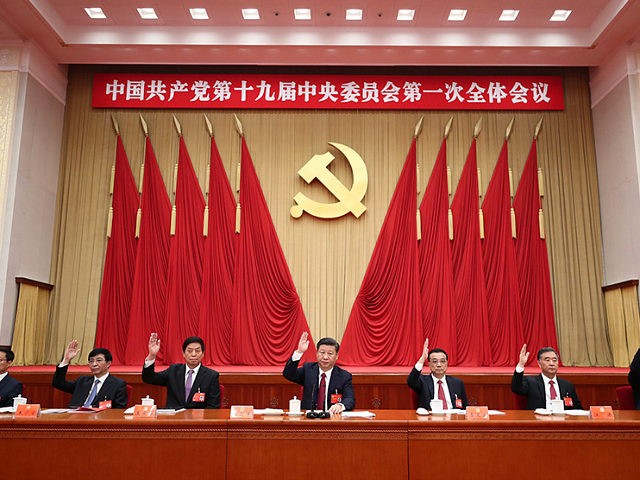
BEIJING, Oct. 25, 2017 -- Xi Jinping (C), Li Keqiang (3rd R), Li Zhanshu (3rd L), Wang Yang (2nd R), Wang Huning (2nd L), Zhao Leji (1st R) and Han Zheng (1st L) attend the first plenary session of the 19th Communist Party of China (CPC) Central Committee at the …
Xinhua/Ju Peng via Getty Images

The Global Times wrote that African entrepreneurs are hailing “China’s offer of $60 billion in financing for the development of the continent” and anticipating “huge business opportunities in the future.”

The latter talking point is an effort to refute allegations that some of the expensive projects Beijing is bankrolling in Africa can never turn enough of a profit to repay the loans. China’s response is that Belt and Road projects are necessary to access Africa’s oil and mineral wealth, which will generate the profits needed to make the loan payments.

As for the loans that have so many observers worried, the Global Times found analysts who said there is little reason to worry about huge debt loads taken on by private corporations in Africa. The theory is that China would only be able to use its loans as political leverage if African government entities were borrowing all the money. Also, Chinese leaders promise they have no political motivations and would never dream of interfering in the governance of African nations.

This defense is disingenuous for several reasons, not least of which is that the line between private corporation and public entity has a way of blurring in the Third World. Even when African governments do not wholly or partially own corporations, they would likely feel obliged to step in to prevent the collapse of major enterprises. And in any event, African government entities are borrowing huge amounts of money from China, in many cases crossing the threshold of debt above 50 percent of GDP, which is considered dangerous for developing economies.

Even as the Global Times was publishing its apologia, news broke that Sri Lanka is even further in debt to China than previously believed, and Sri Lanka already lost an entire city to its Chinese creditors. Sri Lanka’s total debt load currently stands at roughly 77 percent of its GDP.

The Global Times defensively insisted that Chinese loans are not “free money” for Africa, which is exactly the point: the money comes with strings attached, but the strings are woven of pure Chinese geopolitical interest. Those strings are longer and harder to see than the fiscal reforms demanded by Western lending institutions.

Chinese loans look attractive to Third World governments precisely because they do not expect the kind of fiscal discipline the International Monetary Fund does. Instead, the Global Times frets over establishing anti-corruption measures to ensure “good governance” and prevent local “corruption and bureaucracy” from hindering Chinese investment. That sounds a lot like the kind of interference with local government China supposedly avoids.

It should also be noted that even some defenders of Beijing’s lending policies to Africa have complained about policies that require Chinese companies to be hired for work on projects financed with Chinese loans.

The L.A. Times on Monday detected a growing backlash from within China against Belt and Road, despite incessant government propaganda, as Chinese citizens wonder why so much of their national wealth is being diverted to other countries.

“Why is China, a country with over 100 million people who are still living below the poverty line, playing at being the flashy big-spender? How can such wanton generosity be allowed?” law professor Xu Zhangrun asked in July.

China’s extravagant spending in Africa was one of the topics 84-year-old retired professor Sun Wenguang was talking about in early August in a live interview with Voice of America when police barged into his home and dragged him away. Sun was released after ten days but said he believes he is still under surveillance. His wife was forced to issue a false statement that the couple went on vacation.

https://www.breitbart.com/asia/2018/09/05/china-insists-loans-to-africa-are-not-free-money/

Local Media: ‘Nigerians Are Slaves in Their Country to Chinese Exploiters’

 Nigeria’s This Day published an extensive, scathing report Sunday on Chinese colonialism in its economy, accusing the Communist Party of “labour casualization, tax evasion, customs duty under-payment, forgery and outright sabotage” and individual Chinese immigrants of irresponsibly impregnating young Nigerian woman and abandoning them.

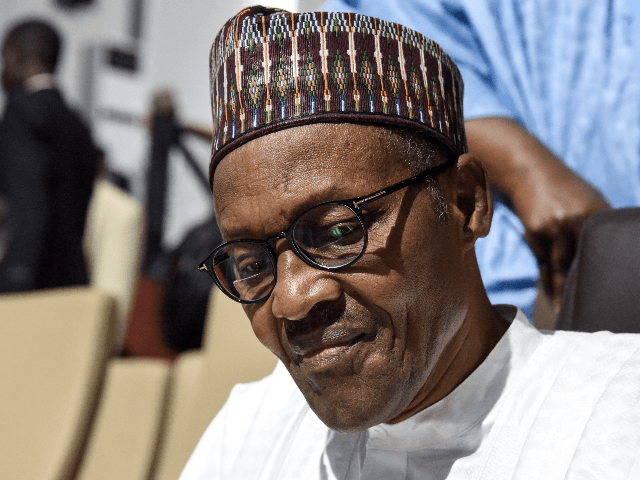
Nigerian president Muhammadu Buhari looks on during the African Union summit at the palais des Congres in Niamey, on July 7, 2019. - Heads of state meet for an African Union (AU) two-day summit in Niger. (Photo by ISSOUF SANOGO / AFP) (Photo credit should read ISSOUF SANOGO/AFP/Getty Images)

ISSOUF SANOGO/AFP/Getty Images
5:58

“The reason Chinese corporations are in Africa is simple; to exploit the people and take their resources,” reporter Adedayo Adejobi wrote. “It’s the same thing European colonists did during mercantile times, except worse.”

China is investing billions into a variety of Chinese economies as part of its Belt and Road Initiative (BRI), a plan to control the most important roads, ports, and railways in the world by building them through the use of predatory loans and then seizing the properties. China has already seized a major port in Sri Lanka and has begun construction of projects throughout Africa and the Middle East, exploiting weak economies.

The American State Department has repeatedly warned developing countries to stay away from Chinese “predatory loans,” but the governments of many African states – prominently Nigeria, South Africa, and Kenya – have chosen to take the fast loan money and greenlight the projects.

In Kenya, workers have repeatedly complained of being subjected to “apartheid” racism on the part of Chinese work supervisors. In September, authorities deported a Chinese businessman caught on tape referring to one of his workers, and President Uhuru Kenyatta, as a “monkey.” Chinese workers, acting on behalf of the communist regime, have also grossly overburdened the immigration system and illegally used tourism stays to work on Belt and Road projects in the country, taking the jobs Beijing promised away from Kenyan citizens.

Adejobi expressed concerns that business with China will create the same problems in Nigeria. He notes that, according to Chinese numbers, the Communist Party has already invested $20 billion in Africa through its shell companies (there are no corporations in China that act independently of the will of the Party).

“This humongous figure is traceable to over 160 Chinese firms operating in the country which also employed less than 200,000 Nigerians,” the author noted. “For every Chinese factory in the hinterlands of Nigeria, the Nigeria workforce is not usually more than seven percent, of which engage in the menial and lower rung of the ladder jobs.”

Employing mostly Chinese workers, who then reinvest their salaries paid by Chinese loans into the Chinese economy, rather than Nigerians is one of the many accusations Adejobi listed of ill business behavior by the companies in Nigeria. Add to this accusation, he wrote, “labour casualization, tax evasion, customs duty under-payment, forgery and outright sabotage.”

It starts with the existence of the companies, the article claimed. Citing the McKinsey consulting firm, Adejobi found that, “out of the 930 Chinese companies operating in Nigeria, only 317 are documented by the Chinese ministry of commerce.” That means the rest, more than half, are operating outside of the law.

Chinese mining companies, the report claimed, routinely violate laws prohibiting foreigners from mining small land plots. Chinese companies are building large factories and evicting locals, the report continues, and Nigerians working there “are being utilised for cheap labour while being exposed to hazardous work conditions and accumulating billions of dollars in debt.” Chinese men in Nigeria “impregnate young naïve Nigerian girls and run back to their countries without recourse to the children and women they have put in the family way.”

Adejobi cited one company in particular, Zhe Long Investment Limited, which he found evidence accusing of “false declaration, tax evasion, forgery, illegal immigration, concealment, and customs duty evasion.” Specifically, Zhe Long claims to dedicate itself to shipping key chemical materials for the manufacture of various goods. To avoid paying the requisite fees for shipping sensitive materials by allegedly mislabeling them as products under cheaper duties.

Adejobi wrote that he attempted to get answers by visiting Zhe Long’s headquarters in Nigeria, but found “a mushroom company running a shady business by stark illiterates who cannot engage in simple conversations.”

The company representatives reportedly curtly denied the allegations.

As for racism, Adejobi quoted a pharmaceutical executive named Thomas Liu as once publicly stating, “Nigeria has the most thieves in the world,” seemingly justifying Chinese businesses’ illegal behavior.

“With stakes worth billions of dollars in businesses ranging from agriculture to oil, gas, and construction, China’s Greek-gift economic assistance is increasing unemployment and worsening job creation in Nigeria,” Adejobi concluded. “It’s such a pathetic situation that Nigerians are slaves in their country to Chinese exploiters!”

Nigerian President Muhammadu Buhari has welcomed Chinese investments, like much of his peers on the continent. He has called Chinese investment in the Nigerian economy, Africa’s largest, as “vital” and promised “railway projects, power infrastructure, airports and numerous roads through Chinese financing.”

In Kenya, on the other side of the continent, China is further along in the takeover process. Kenya has taken billions in loans, largely for the construction of a coal power plant and the Standard Gauge Railway (SGR), a project designed to provide easy transportation among several national capitals in the region, including those of Rwanda and Uganda. The SGR’s construction has resulted in a major international scandal as Kenyan workers revealed the Chinese forced them to use separate buses to get to construction sites, eat in different cafeterias, and overall not interact with the Chinese. The Chinese kept skilled Kenyans from skilled jobs and brought all the SGR’s instruction manuals with them in Chinese, meaning Kenya will forever need China’s help to repair or refurbish any part of the railway.

Kenyan publications such as the Standard revealed many of the “apartheid” claims and have demanded further transparency in the Belt and Road process. Joining them have been journalists in Zambia, Zimbabwe, and Tanzania, among others, who have expressed that their leaders are more concerned with bringing in quick cash than creating a self-sustaining economy.

China’s state propaganda outlets have been transparent as to the goal of BRI.

“In the future, BRI will be responsible for the majority of infrastructure projects worldwide,” the state-run Global Times newspaper declared last year. “By generating benefits for those involved, a higher level of fairness will bloom.”

https://www.breitbart.com/africa/2019/08/05/local-media-chinese-increasing-unemployment-nigeria/

Experts: China Pushing ‘New International Order’ Through Communism in Africa

 WASHINGTON, DC — China is using its economic clout in Africa to promote a “new international order” and encourage countries to adopt its communist ideology, experts told lawmakers on Wednesday.

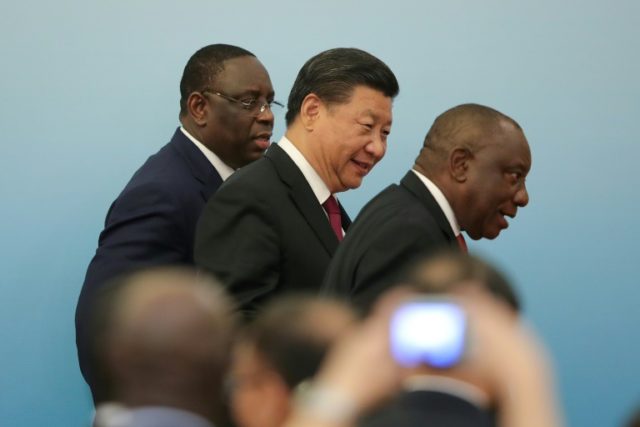
Chinese President Xi Jinping (C) with South African President Cyril Ramaphosa (R) and Senegalese President Macky Sall (L) attend a joint press conference
AFP Lintao Zhang
4:20

While testifying before the Senate Armed Services Subcommittee on Emerging Threats and Capabilities, Judd Devermont, the director of the Africa program at the Center for Strategic and International Studies (CSIS) think-tank, acknowledged that not all Chinese activities in Africa are anti-ethical to U.S. goals, noting that “some are neutral or complementary to U.S. objectives and may actually benefit American interests.”

Nevertheless, some of the witnesses noted that communist China is actively pursuing a new Beijing-led order on the continent.

Yun Sun, Co-Director, the director of the East Asia and China program at the Stimson Center think-tank, told lawmakers via written testimony:

Through its economic engagement, China is pursuing a targeted list of political, ideological and strategic goals in Africa. As China’s global ambition grows under President Xi Jinping, Africa is increasingly tied into the Chinese orbit that advocates for a new international order and a community of common destiny. … China’s economic statecraft in Africa has become one of the most prioritized and effective instruments in China’s challenge to the current international order.

Beijing is also promoting its communist political and economic system as a solution to Africa’s ills.

“In recent years, China has begun to actively promote other developing countries to adopt such [communist] political and economic policies. China uses its own development model, which combines political authoritarianism and economic capitalism, to prove to some African countries that economic development and political stability could exist without a democratic system,” Sun testified.

Echoing Sun, Joshua Meservey, an Africa expert at the Heritage Foundation think-tank, warned that Chinese activities in Africa would undermine America’s efforts to promote democracy, telling lawmakers:

Beijing’s activities create an influence towards, and facilitation of, illiberal governance in Africa. This undermines the U.S.’s decades-long attempts to encourage the global growth of democracy. Chinese officials criticize democracy to African counterparts, claiming that the West’s advocacy of it is a Trojan horse to enable meddling in African affairs. Chinese officials have also blamed multi-party democracy for bringing chaos and poverty to Africa, and cheer what they see as the continent’s increasing rejection of Western-style democracy.

The Trump administration has accused China of encouraging dependency among African countries by using predatory lending practices “to mire nations in debt and undercut their sovereignty.”

However, Devermont told lawmakers that “the debt trap narrative is overdone and glosses over the facts.”

“It is my view that Chinese investments and loans are not necessarily contrary to U.S. interests. When executed in a transparent and responsible manner, Chinese infrastructure projects address a critical deficiency and persistent drag on African economies,” he argued.

The CSIS expert stressed that no all Chinese engagements in Africa harm U.S. objectives on the continent.

Devermont did concede that “Chinese engagement undercuts and potentially degrades U.S. capacities and influence in sub-Saharan Africa.”

However, he added, “it is important to draw a finer distinction between which Chinese activities threaten U.S. national security priorities and which Chinese engagements are neutral or complimentary to U.S. objectives.”

“I believe Chinese activities pose the greatest danger to U.S. military access and operations, U.S. information and communication platforms, and U.S. relations with current and emerging African leader,” he also declared.

China established its first overseas military base in Djibouti. In March, Gen. Thomas Waldhauser, the top U.S. commander in most of Africa, told lawmakers he expects Beijing will build more military bases in Africa.

China has emerged as the chief U.S. competitor in Africa, the experts testified.

https://www.breitbart.com/national-security/2018/12/12/experts-china-pushing-new-international-order-through-communism-africa/

Wednesday, 2 December 2020

SCMP - Coronavirus runs roughshod over debt-laden belt and road projects


Developing countries’ ‘hidden debts’ to China totalled US$380 billion well before the global health and economic crisis, analysts estimate

Montenegro, which has a US$750 million Chinese loan for highway construction, is among the borrowers seeing commodity prices plunge and exchange rates shift


In 2014, the tiny Eastern European country of Montenegro saw an opportunity to catapult onto the world stage when it borrowed US$750 million from China to build a highway between the Adriatic Sea and Serbia. The highway, funded as part of President Xi Jinping’s signature Belt and Road Initiative, would spur the economy and help pave the young nation’s entry into the European Union.


Six years later, with the coronavirus pandemic destroying lives and economies worldwide, massive debt and “highway to nowhere” concerns hound the 103-mile Bar-Boljare venture and scores of other BRI projects across Asia, Africa and Eastern Europe.

The project has increased Montenegro’s public debt to 80 per cent of its gross domestic product (GDP). Its vital tourism industry is reeling. And rating agency Moody’s in March downgraded its credit outlook to stable, citing the highway project.

“The Bar-Boljare motorway is not just a roadway, it is a path to the Western value system,” Prime Minister Dusko Markovi said last month in the capital of Podgorica, defending his pet project. A government statement added: “Markovi underlined that there was no talk of bankruptcy or ‘debt bondage’, as it has often been speculated.”

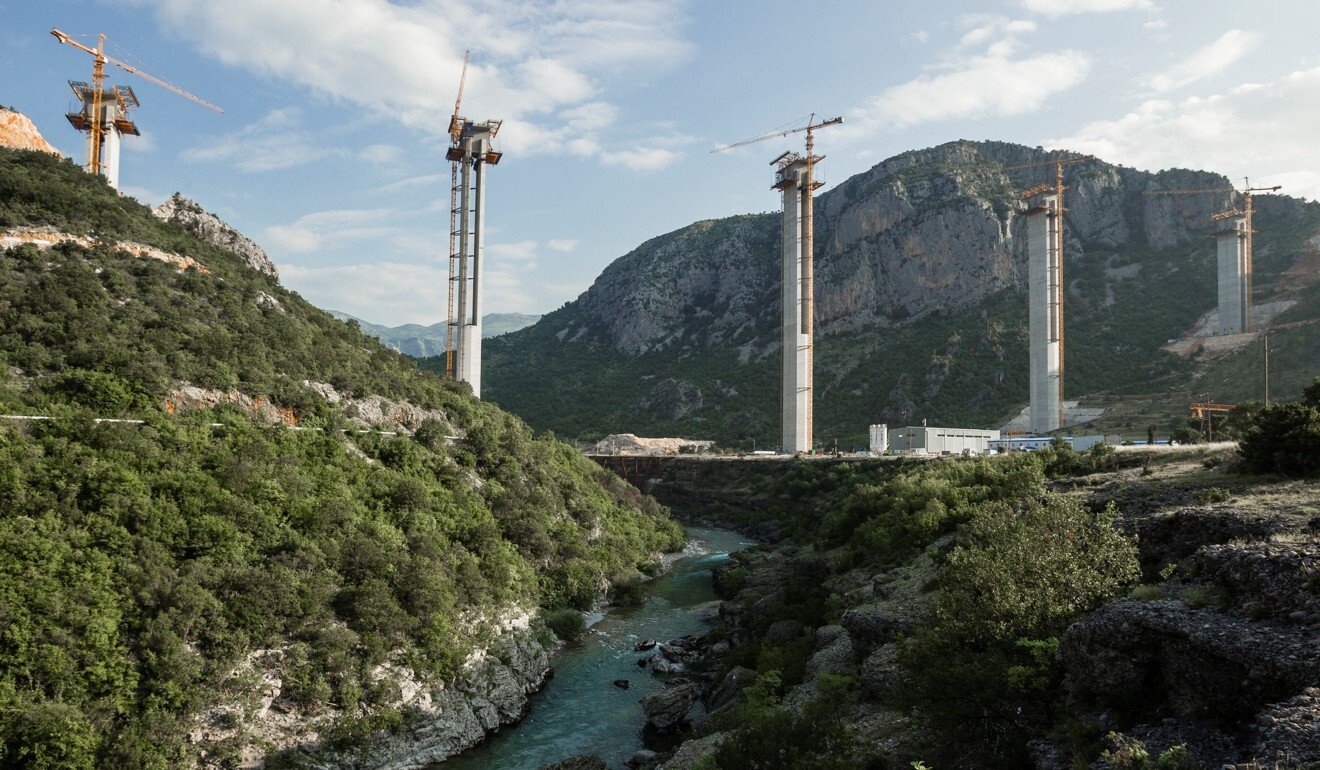
Cement pillars rise above the Moraca River as part of the Bar-Boljare highway construction project in Montenegro in 2018. Photo: Reuters


BRI countries such as Montenegro, already deeply indebted to Beijing, face mounting difficulties related to the pandemic as commodity prices plunge, trade falters and exchange rates shift.

“A debt crisis with Chinese characteristics?” warned Germany’s Kiel Institute for the World Economy in a report last year citing growing default risks.

Adding to the challenge of managing mounting global indebtedness is Beijing’s characteristic lack of transparency.

“The Chinese government considers the details of its overseas lending programme a state secret. No one really knows the numbers,” said Brad Parks, executive director of AidData, part of the College of William & Mary in Virginia, and co-author of a study on Chinese lending practices released last month by the Centre for Global Development (CGD).


Experts estimate that developing countries’ “hidden debts” to China totalled US$380 billion well before the crisis, more than their obligations to the Paris Club, a group of 19 wealthy creditor nations, combined; the World Bank; or the International Monetary Fund.


“It’s hard to identify one weak link in the chain,” said Scott Morris, co-author of the study, titled “Chinese and World Bank Lending Terms: A Systematic Comparison Across 157 Countries and 15 Years”, and a CGD fellow. “It’s the whole chain.”


Chinese loans have helped fund much-needed energy, mining, hydropower and other infrastructure projects in more than 100 developing nations under the estimated US$8 trillion Belt and Road Initiative, spurring economic growth and improved living standards.

But analysts say China’s singular lending practices leave many developing countries increasingly vulnerable in the current environment.


Kiel cites eerie similarities with the 1970s debt crisis that devastated many of the same vulnerable countries in Latin America and Africa for over a decade.


“It is stunning that almost all of these characteristics apply to the ongoing Chinese overseas lending boom,” the institute said, citing weak oversight and limited transparency. “The two lending booms can largely be seen as ‘twins’.”


Among the more at-risk countries, analysts say, are commodity-dependent Angola, Ecuador, Niger and Venezuela; smaller Asian economies such as Laos, Cambodia and the Kyrgyz Republic; and countries in Sub-Saharan Africa and Latin America.


CGD finds that 15 of some 68 belt and road countries face significant risk of debt distress – essentially a default or related inability to repay what they owe – with another eight are at high risk.


China has huge hard currency reserves, and its economy is expected to surpass the US’ in absolute size in coming years. But any BRI defaults would hit as China’s economy staggers, unemployment hits a record 6.2 per cent, bad debts from “zombie” state-owned companies mount and 460,000 Chinese firms close permanently.


Drawing on 2,453 Chinese loans to 157 countries, Parks and Morris found that 23 per cent went mostly to the poorest countries on preferential terms, even at zero interest, essentially becoming an extension of China’s foreign policy. These include loans to Cameroon, Botswana, Lesotho and Sudan that have been forgiven in recent years.


Most of these involve projects that bind the nation’s leadership to Beijing, including stadiums, convention centres and vanity projects in a leader’s hometown, Parks said. Also in this category was the US$200 million African Union headquarters in Ethiopia, built amid allegations that Chinese construction crews embedded listening devices in “China’s gift to Africa”.


China has “selflessly” bolstered African economic development while other countries have their own agendas, Chinese Foreign Minister Wang Yi said in 2018 in response to the bugging allegations, which he called a bid to divide Africa and China.


“The payoff that China is getting is not economic or commercial, it’s political,” said Parks. “It helps China get countries to vote with them in the UN General Assembly.”


But the other roughly 77 per cent of the Chinese loans, more worrisome as developing countries founder, are quasi-commercial. These carry, on average, interest rates 2 percentage points higher, of shorter durations with larger collateral requirements than IMF, World Bank or Paris Club counterparts.


While 2 percentage points may sound small, the difference would cost a poor country US$56 million to repay over the 17-year life of an average US$300 million loan.
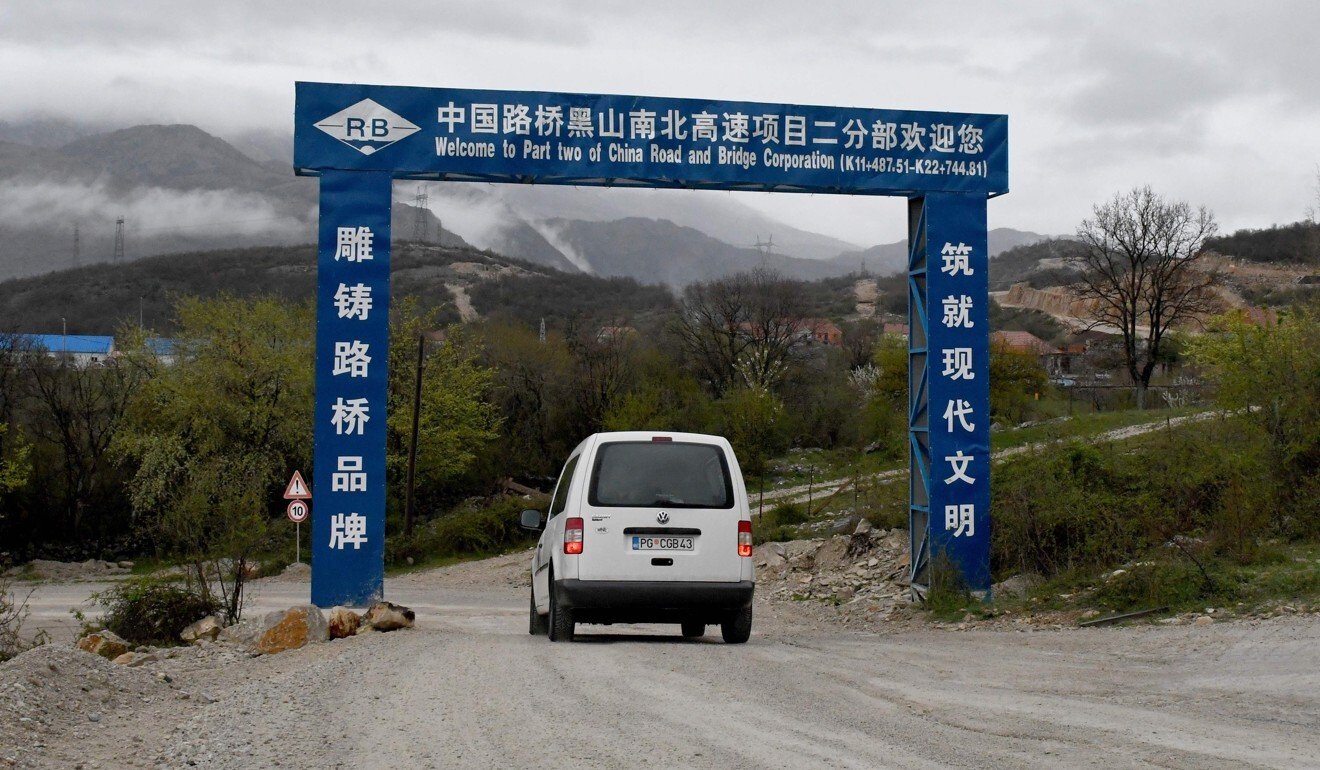
A van drives along a section of the Bar-Boljare highway under construction in 2019. Photo: AFP
A van drives along a section of the Bar-Boljare highway under construction in 2019. 
Photo: AFP

The poorest countries have tended in recent years to borrow more Chinese quasi-commercial loans from China’s four largest commercial banks, the China Development Bank (CBD) and the Export-Import Bank of China that holds Montenegro’s debt, analysts say, which are extremely reluctant to forgive debt.


In recent weeks, the IMF, World Bank, UN Economic Commission for Africa and the Jubilee Campaign, a civic movement to reduce developing nations’ debt, have urged wealthy lenders to restructure and forgive the massive sums owed by poor nations, so far with little response from Beijing or other capitals.


Complicating matters, analysts add, is Beijing’s secrecy, lack of creditor experience during a debt crisis and tendency to go it alone, seen in its turning down repeated invitations to join the 65-year-old Paris Club, a repository of hard-won lessons.


“They have their own set of rules,” said Morris. “But they lack transparency so it’s hard to judge those rules.”


China doesn’t set out to ensnare BRI countries in a “debt trap”, encouraging them to get in over their heads for political control, as Western critics allege, according to the Centre for Global Development.


But the huge collateral it demands for quasi-commercial loans can achieve some of the same results, say Parks and Morris, as seen when Sri Lanka defaulted and China acquired the port in Hambantota.


Chinese loan documents routinely mandate specific Chinese contractors – including Huawei, ZTE, China Harbour Engineering and China Road and Bridge Corporation (CRBC) – and tax-free imports of Chinese steel, glass, aluminium and other materials, which helps China absorb some of its excess factory production.


The IMF, World Bank and others generally avoid this so-called circular lending and insist on competitive bidding to stem corruption and nepotism.


“The cake is baked from the beginning,” said Parks.


Montenegro’s highway project follows the typical pattern, analysts say. It’s held by the Ex-Im Bank of China, names CRBC as the lead contractor.


Collateral – should the loan default – includes coal mines, ports and railroads, said Dejan Milovac, the Podgorica-based investigative director of the civic group Network for Affirmation of the NGO Sector. “It could be all the property of Montenegro,” he added.


The loan only covers the highway’s initial 26-mile phase, now behind schedule, with the remaining 77 miles slated to cost up to US$1 billion more. Before China arrived, two international consortiums rejected the plan after feasibility studies suggested that it needed at least 22,000 vehicles using it daily to break even compared with actual traffic of 6,000.


A tunnel construction site along the Bar-Boljare highway in 2018. Photo: Reuters

“The government offered incentives, including tax-exempt salaries and materials, that no country in the region was ready to offer the Chinese,” said Jovana Marovic, executive director of Politikon Network, a Montenegrin civic group.


The IMF suggested in September that Montenegro stop building, at least until the economics improved. The loan at 2 per cent interest is priced in dollars with recent exchange rate shifts increasing repayment costs by up to 18 per cent.


A further concern is corruption. Dealings between China and Montenegro’s ruling party are kept secret, opening the way for questionable subcontracting deals with cronies of the party in power, Milovac said, adding: “It’s like a paradise for investigative journalists.”


The Montenegrin and Chinese embassies in Washington did not respond to requests for comment.


Watchdog Transparency International rated Montenegro 45 out of 100, with 100 considered squeaky clean, on its most recent corruption perception index in 2019, the same year a video surfaced purportedly showing a ruling party politician receiving an envelope with 100,000 euros (US$110,000) for election expenses. The party has been in power since Yugoslavia broke apart in 1989.


“Corruption is prevalent in many areas and remains an issue of concern,” the European Commission said in a 2019 country report, citing infrastructure deals as particularly vulnerable. It added: “The ‘envelope’ affair requires a credible, independent and effective institutional response.”

Some 80 per cent of the Montenegro highway’s first 26 miles are bridges and tunnels through rough terrain, making it among the most expensive per mile in Europe.


The project has left Montenegrins divided between those who welcome the infrastructure, the country’s first ever highway, and those who see it as inordinately expensive given the tiny economy and 600,000 population, said Jacob Mardell, a researcher with Germany’s Mercator Institute for China Studies, who has reported from the Balkan country.


Most Montenegrins who oppose the project tend to be more angry at their government than China, said Mardell and Milovac.


“The Chinese are just behaving like they’re meant to behave,” Milovac said. “China is here to gain a profit. Our government is supposed to protect us.”


The project is attractive to China for its challenging engineering, an opportunity to learn business practices on western Europe’s periphery – and it gives Beijing a beachhead if Montenegro eventually enters the EU, said Mardell.


“It’s good practice for working in the EU market, which is their end game. In theory, they have nothing to lose,” he said, before adding, “well, as long as the loan is paid back.”


https://www.scmp.com/news/china/diplomacy/article/3079918/coronavirus-runs-roughshod-over-debt-laden-belt-and-road