Showing posts with label Vaccine Diplomacy. Show all posts

Wednesday, 1 September 2021

BBC: Fort Detrick, a centre for Chinese conspiracies

Wuhan lab leak theory: How Fort Detrick became a centre for Chinese conspiracies

Published


A disinformation campaign claiming that the Covid-19 virus originated from an American military base in Maryland has gained popularity in China ahead of the release of a US intelligence report on the virus origins.

In May, US president Joe Biden ordered a 90-day probe into whether the Covid-19 virus came from a lab accident or emerged from human contact with an infected animal.

Until then, the "Wuhan lab leak" theory had been dismissed by most scientists as a fringe conspiracy theory.

But now as the report is due to be released, China has gone on the offensive. In the past few weeks, Chinese sources have been amplifying a baseless claim that Covid-19 was made in the US.

Using everything from rap music to fake Facebook posts, experts say the propaganda efforts have been successful at convincing the domestic Chinese audience to cast scepticism on international criticism of the country's role in the Covid-19 pandemic. But, experts say, it has done little to legitimise China to the outside world.

What are the allegations?

Most Americans may have never heard of Fort Detrick, but it is becoming a household name in China.

Chinese propagandists have pushed a conspiracy suggesting that the Covid-19 coronavirus was made and leaked from the military installation in Frederick, Maryland, about 80 km (50 miles) north of Washington DC.


Once the centre of the US biological weapons programme, it currently houses biomedical labs researching viruses including Ebola and smallpox. Its complicated history has sparked speculation in China.

A rap song by the Chinese nationalist group CD Rev suggesting nefarious plots being hatched by the lab was recently endorsed by Zhao Lijian, the Chinese foreign ministry spokesman.

The rhythms of the song -"How many plots came out of your lab/How many dead bodies hanging a tag/What are you hiding/Open the door to Fort Detrick" - are awkward, but its sentiment "speaks our mind," Mr Zhao wrote in a tweet in August.


Mr Zhao, who is known for his aggressive style of diplomacy, has played an important role in spreading the "US origin" theory. Several tweets from his account last year first drew wide attention to Fort Detrick. "What's behind the closure of the biolab at Fort Detrick?" he wrote in July 2020, "When will US invite experts to investigate the origin of the virus in US?"

In recent months, his calls have been joined by Chinese diplomats based in various countries, and the Chinese state broadcaster CCTV even aired an hour-long special report, "The Dark History behind Fort Detrick", focusing on breaches of containment at the lab in 2019, to bolster claims of lax lab security echoed by Chinese officials and state media. A related hashtag has had more than 100 million views on Weibo, China's Twitter equivalent.

"We see a more sustained campaign involving more numerous and geographically spread accounts to promote the narrative," about Fort Detrick, says Ira Hubert, a senior investigative analyst at social analytics firm Graphika.

Another popular theory, pushed by the nationalist tabloid the Global Times, attempts to connect the virus's origins to a US coronavirus expert, Dr Ralph Baric, and researchers at Fort Detrick.

The newspaper suggested that Dr Baric created a new human-infecting coronavirus, citing a paper the North Carolina-based researcher co-authored about the virus's transmission from bats in Nature Medicine.

In an editor's note, the journal said it was aware the paper was being used to spread the false theory, but the note was not included in the Global Times report.

The newspaper also launched an online petition calling for Chinese netizens to sign an open letter demanding a World Health Organisation (WHO) investigation into Fort Detrick. People could "sign" the letter with a single click, and the appeal reportedly gathered more than 25 million "signatures".

Propaganda from Switzerland to Fiji

Experts say Beijing is seeking to bring non-Chinese audiences into the dispute about Covid-19 origins to further muddy the waters.

A clear example unfolded in July, when Chinese state media outlets began relentlessly reporting on criticism written in a Facebook post by "Wilson Edwards", a user claiming to be a Swiss scientist.

"Mr Edwards" argued that Washington was "so obsessed with attacking China on the origin-tracing issue that it is reluctant to open its eyes to the data and findings."

But the Swiss embassy in China later said that there is no registry of a Swiss citizen with the name, and urged Chinese media to remove "false" news reports.

Experts believe "Wilson Edwards" likely does not exist, but is instead a fictitious propaganda profile. His Facebook page was launched on the day that he published the Covid-19 post. A new Twitter account under the name of "Wilson Edwards" also tweeted out the same message on that day.

The "Wilson Edwards" story appears to have first been reported through an obscure Fiji-based Chinese-English bilingual outlet, the Voice of South Pacific.

Though it is unclear whether Voice of South Pacific is backed by the Chinese state, its mobile app is developed by a wholly-owned subsidiary of state news agency China News Service, the first major Chinese state-owned outlet to report on Edwards' claims.

The BBC found that even before Edwards' Facebook post drew wide media attention, it had been shared by hundreds of Facebook accounts which claim to be based in Southeast Asia, for example, "Eastman Tyla" in Malaysia and "Tyree Schmidt" in Indonesia.

"Tyla" and "Schmidt" also circulated a long and identical list of pro-China news stories on their Facebook pages, praising Beijing's handling of the pandemic.


There is no conclusive evidence as to who operates these social media accounts, they often direct-quote phrases used by China's state spokespersons or from major Chinese state media outlets.

And Graphika, the social analytics firm, has identified a network of fake and covert pro-China accounts on Twitter, Facebook and YouTube who are key amplifiers of the Fort Detrick theory.


What does this say about China's propaganda?

China's latest global influence campaign over Covid-19 may not have made the country many new friends overseas, but analysts say it has been successful in convincing Beijing's domestic audience.

"For the most part, the biggest concern [of the Chinese government] is domestic legitimacy," Georgia State University Global Communication Assistant Professor Maria Repnikova told the BBC.


Covid-19: The disinformation tactics used by China


More Chinese diplomats have recently surged onto Twitter, which is banned in the country, but their combative messages appear to aim at a domestic audience.

Prof Repnikova says China has blurred the boundaries between domestic and external propaganda for years, but this strategy doesn't come without risks, as the less effective external messaging could put strain on China's foreign relations.

Meanwhile, Chinese state media have cherry-picked more foreign sources, and foreign video bloggers have played an increasingly prominent role in Beijing's disinformation drive. These efforts aim at "legitimising China from the outside," according to Prof Repnikova.

The uptick of foreign elements in China's disinformation campaign signals a change in Beijing's propaganda strategy.

"It's not just about telling a story," Prof Repnikova says, "It's about creating a story."


Friday, 23 April 2021

Beijing’s diplomacy more effective than its vaccines

 China may be behind on the science battle, but it’s still winning the narrative war.

A temporary vaccination site in Kunming, China, on April 15, 2021 | Liu Ranyang/China News Service via Getty Images

China may not have fully mastered the science of vaccine development — but it’s turned out to be an expert at the expectations game.

Growing evidence that the Sinopharm and Sinovac immunizations don’t work as well as most Western counterparts show few signs of denting Beijing’s vaccine diplomacy efforts.

With Hungary, Turkey and Serbia leaning heavily on Chinese jabs, political backlash has been minimal, even as a top Chinese official acknowledged that they don’t measure up.

By selling shots to willing takers — before regulatory approval and without prioritizing its own population — China cemented its position as the go-to country for urgent supplies, experts say. China won the race by being first; no one really expected it to be the best.

“The geopolitical dimension is to some extent decoupled from the efficiency of the vaccine,” said Moritz Rudolf, who has been tracking China’s health diplomacy for the German Institute for International and Security Affairs.

Neither Sinopharm nor Sinovac has been approved by top regulators; the World Health Organization plans to decide whether to grant them emergency use listing in the coming weeks. Based on available data, they both appear to meet or exceed the WHO’s efficacy threshold of 50 percent. (The European Medicines Agency has not yet begun reviewing the Chinese jabs.)

Yet a rare acknowledgment of the vaccines’ disappointing performance came earlier this month, when the head of the Chinese Centers for Disease Control said the country should consider tweaks to “solve the problem that the efficacy of the existing vaccines is not high.” He quickly backtracked, but his comments stood in stark contrast to the Chinese social media campaign to deride Western vaccines.

Brazil and Chile are essentially testing Sinovac in the real world — and studies emerging from those countries and others in recent weeks show a range of 51 to 82 percent efficacy. 

Beijing Biological Products Institute hasn’t released trial data for the Sinopharm vaccine — a major component of Hungary’s campaign. Yet the developers claim it’s 79.3 percent effective, even as the United Arab Emirates has started offering a “very small number” of people third doses due to low immune response. 

In Hungary, the public relations for Prime Minister Viktor Orbán — who said on Facebook he received the Sinopharm jab —  couldn’t be better. While much of the political provocation around Europe has centered on Russia’s Sputnik V, it’s the Sinopharm jab that’s helped Budapest race to the top of the EU rankings on vaccinations, with some 30 percent having received a first dose.

And you don’t have to take Orbán's word for it: On April 21, WHO European Regional Director Hans Kluge stood next to Hungarian Foreign Minister Péter Szijjártó as he praised Budapest and declared at the end of his visit: “Vaccination rates are testament to planning, collaboration and resourcefulness.” Hungary used a loophole in EU rules to green-light the Chinese and Russian jabs at national level.

Meanwhile, while long-stalled EU donations of the BioNTech/Pfizer vaccine to the Western Balkans are only scheduled to start flowing in May, Albania and Bosnia were able to substantially expand their vaccination campaigns in late March thanks to Sinovac orders, with some doses acquired from Turkey.

Prompt delivery of more than 1 million Sinopharm jabs helped Serbia become a global leader on vaccinations. President Aleksandar Vučić received the Chinese jab on live TV in early April, just as concerns that a third shot would be necessary started cropping up.

Dueling narratives

“It’s mostly just a fight about the narrative,” said Rudolf.

Given Beijing’s lack of transparency, the underwhelming efficacy results are “not that surprising,” Rudolf said. It’s a missed opportunity for China to assert some R&D prowess; however, the Western narrative that Beijing can’t deliver on its promises isn’t likely to resonate in places where there are no alternatives.

The playbook looks similar to China’s face-mask diplomacy efforts earlier in the pandemic. Desperate countries were grateful to have supplies quickly, even if some PPE ultimately malfunctioned.

Beijing has also mastered on-the-ground optics. It’s mostly selling these vaccines, not donating them, noted Agatha Kratz, who leads research on EU-China relations at the Rhodium Group. Yet those sales are bilateral, rather than through some international effort like COVAX. “Every single country that they deal with will issue a statement ... saying, ‘We received Chinese vaccines,’” she said.

It’s similar to the situation with development assistance, said Kratz. The EU gives more of it, but because the Belt and Road Initiative is done on a bilateral basis with extensive press coverage, it looks like China is “doing much more.”

While subpar efficacy may be shrugged off by many, Kratz said, the emergence of severe side effects — like the blood clots under investigation in the Oxford/AstraZeneca and Johnson & Johnson vaccines — could be a bigger problem.

So China’s advantage may be a combination of luck and timing: They supplied the shots well ahead of major regulatory scrutiny, and so far, there don’t seem to be major side effects.

China’s vaccine customers seem more concerned about quantity than quality. Turkish President Recep Tayyip Erdoğan publicly scolded China’s foreign minister last month over delays fulfilling a 100 million-dose Sinovac order. Ankara “may be more cautious” in the future “if China overpromises,” a Turkish official told the Washington Post. 

Political science

As with the Russian vaccine, backlash against China’s vaccines has been more about politics, both foreign and domestic.

Uyghurs in Turkey have accused Ankara of staying mum on persecution of the Muslim minority in China in exchange for Sinovac shipments. Paraguay is reportedly reconsidering its relationship with Taiwan in hopes of buying Chinese shots. And in North Macedonia, negotiations with Sinopharm fell apart amid allegations that Health Minister Venko Filipče was using a dodgy shell company to buy them.

Orbán also faces questions about purchasing Sinopharm through a murky middleman. In a radio interview earlier this month, he excoriated opposition parties in parliament for pushing a ban on the Chinese jab, saying Hungary’s vaccination rate would be halved without the Russian and Chinese shots.

He also addressed an expected shortfall of 580,000 Johnson & Johnson vaccines, paused amid safety reviews. Those doses will likely be replaced, Orbán said, “with others from elsewhere, mainly from China.”

Lili Bayer contributed reporting.

https://www.politico.eu/article/china-diplomacy-effective-sinopharm-sinovac-coronavirus-vaccine/

Thursday, 8 April 2021

8 Apr 2021: How COVID-19 vaccines are being weaponised as ... MUST READ

Commentary: How COVID-19 vaccines are being weaponised as countries jostle for influence

08 Apr 2021 

A new hybrid Cold War is underway, with US, China and pivotal states engaging in a power play, says NUS Business School’s Alex Capri.


Virus Outbreak Hong Kong Vaccines
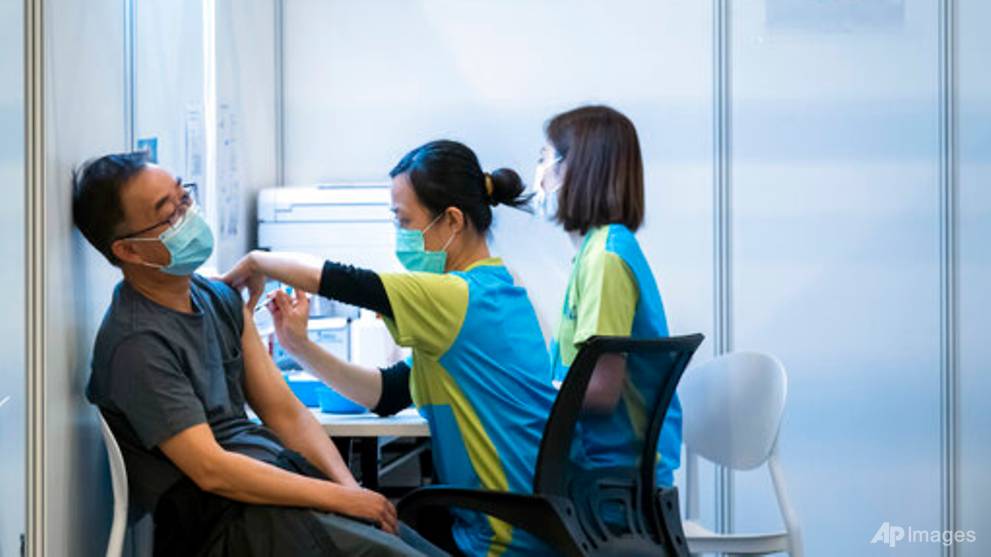
A man receives a dose of the Sinovac Biotech COVID-19 vaccine at a community vaccination centre in Hong Kong, Feb 23, 2021. (File photo: Paul Yeung/Pool via AP)


SINGAPORE: Mario Draghi, the Prime Minister of Italy, recently blocked the export of 250,000 AstraZeneca vaccine doses from his country to Australia.

To many in the international community, this was an act of “vaccine nationalism”. In fact, Mr Draghi’s decision reflected different variants of nationalistic behaviour, spurred on by geopolitical forces and compounded by COVID-19.

At the outbreak of the pandemic in early 2020, for example, China, the US, the EU, India and the UK all imposed export restrictions on personal protective equipment (PPE). Shipments of ventilators and antiseptic chemicals were also blocked as national health services competed for scarce supplies. 

This behaviour contradicted the norms of international commerce, science and social exchange, which, for decades, have benefitted from a highly interconnected and interdependent global system.

Worse, vaccine nationalism may be the precursor to “vaccine diplomacy,” a form of realpolitik that compels nations to leverage their nation’s vaccine capabilities for geopolitical gain.

Virus Outbreak Cambodia
Boxes containing Sinovac's COVID-19 vaccines arrive at Phnom Penh International Airport, in Phnom Penh, Cambodia, Friday on Mar 26, 2021. (Photo: AP/Heng Sinith)


But vaccine diplomacy has shed light on an even more fundamental truth: A hybrid cold war is underway, involving the US, China and other pivotal states.

Its by-product is hybrid warfare, a mix of diplomatic, economic, cyber and information-related actions, all of which fall below the threshold of armed conflict but are, nonetheless, disruptive to the workings of the international system.

There will be no returning to the kind of globalisation the world experienced over the past four decades. Consequently, state and non-state actors must adapt.

VACCINE DIPLOMACY

Consider what has been playing out on the world stage. 

Beijing recently eased restrictions on travel into China for international travellers, on the condition they show proof of vaccination with China-made brands such as Sinovac and Sinopharm - despite lack of complete final stage clinical trial data over the actual efficacy of Chinese vaccines.

When Russia became the first nation to authorize a vaccine (the Sputnik V, which now has a reported efficacy rate of 92 per cent) American, British and other Western diplomats stationed in Moscow rejected offers from the Putin government for free vaccinations, despite not having access to alternative vaccines at the time. 

Although Phase 3 data wasn’t yet available at the time, the optics of British or American diplomats receiving a Russian vaccine would have been a propaganda coup for Moscow.diplomacy in a very tangible way.

In March, a surge in COVID-19 cases threatened to wreak havoc across the nation, which prompted the Rodrigo Duterte government to turn to China for more vaccines - even though both countries were locked in an escalating confrontation over disputed territory in the South China Sea.

Over two hundred ships were first spotted on March 7 at Whitsun Reef, around 320 kilometres (175
More than two hundred ships were first spotted on Mar 7, 2021, at Whitsun Reef, about 320km west of Palawan Island in the South China Sea. (File photo: AFP/Handout)

As Beijing was supplying its vaccines to Manila, some 200 Chinese vessels were moving to occupy Whitsun reef, an atoll claimed by both China and the Philippines.

The timing of Beijing’s South China Sea gambit was no coincidence: Manila’s dependence on Chinese vaccines meant the Duterte regime had essentially agreed to forfeit its challenge to Beijing’s power play.

Beijing’s move in the Philippines sparked a reaction from the US and its allies. Even as Chinese vessels were dropping anchor at Whitsun reef, US Secretary of State Antony Blinken was conducting meetings with his counterparts from Japan, Australia and India - all members of the Indo-Pacific Quad security forum - to begin preparations for a multilateral vaccine diplomacy campaign.

One country with a lot to gain from vaccine diplomacy is India. The Serum Institute of India (SII) is the world’s largest manufacturer of vaccines, making approximately 1.5 billion doses per year under license from, among others, companies such as AstraZeneca.

In January, India launched the Vaccine Friendship initiative, which aims to supply made-in-India vaccines, gratis, to developing countries around the world - a direct challenge to China’s vaccine diplomacy. New Delhi has already reached out to Manila and will provide the Philippines with a steady supply.

India, which views China’s rise as a strategic threat, has been looking to capitalise on its growing importance to Washington in the broader context of a US-China hybrid cold war.

Its vaccine manufacturing capabilities are a major asset, particularly as New Delhi hopes to promote Make-in-India initiatives to attract strategic supply chains as they decouple from China. Having Washington’s endorsement provides New Delhi with a historic opportunity.

THE BATTLE IN CYBERSPACE

Vaccine nationalism has been linked to state-backed disinformation, propaganda and cyber intrusions - all key elements of hybrid warfare.

FILE PHOTO: Man holds laptop computer as cyber code is projected on him in this illustration picture
A man holds a laptop computer as cyber code is projected on him in this illustration picture taken on May 13, 2017. (Photo: REUTERS/Kacper Pempel/Illustration)

On the information front, for example, Russia, allegedly engaged in digital disinformation operations to undermine confidence in Pfizer’s and other vaccines produced in the US and Europe. This was done not only to promote its own vaccine, the Sputnik V, but to sow confusion and mistrust among citizenry of other countries.

In cyber-space, vaccine nationalism has been linked to a surge in cyber-intrusions and the theft of data at pharmaceutical companies, NGOs and government agencies.

In the early days of the pandemic, for example, in 2020, Pfizer, an American company, and its German partner, BioNTech, reported that sensitive documents had been hacked in a cyberattack on the European Medicine Agency (EMA). Like other regulatory agencies, the EMA regulates and approves medicines and has extensive information on trial drugs.

(Listen to the behind-the-scenes considerations and discussions going into what might be Singapore’s biggest vaccination programme ever on CNA's Heart of the Matter podcast:)

ECONOMIC AND TECH NATIONALISM

Early on, COVID-19 wreaked havoc with decentralised, pluralistic governments in the US and Europe, leaving them conspicuously absent from the world stage.

As Western governments turned inward to cope with COVID-19, China’s “wolf-warrior” diplomats used social media to paint American and European pharmaceutical companies as greedy opportunists peddling unsafe vaccines while depicting their governments as self-serving and callous. This narrative has resonated on both social media and traditional media in many of the world’s poorer countries.

China moved quickly to launch a global vaccine diplomacy campaign, promoting itself as the provider of a sorely needed public good.

READ: Commentary: The Quad has a plan and it’s not all about China

Beijing has announced it will supply its Sinopharm and Sinovac vaccines in more than 60 nations, targeting its neighbours as well as strategically important states in Africa, Southeast Asia and the Middle East. It has made early inroads with its vaccine offers in Latin America and the Caribbean, as well as in Eastern and Central Europe.

China’s vaccines are to be distributed as limited “donations” or as “samples” for larger purchases in the future. In other instances, the vaccines will be offered with credit guarantees from Chinese State-owned banks, a familiar practice used to push Chinese telecommunications technology and other infrastructure into countries along its Belt and Road initiative (BRI).

Here, an economic-diplomatic-technology feedback loop becomes apparent as Beijing-administered vaccines are linked to other essential services and products provided by Chinese companies. 

For example, as telemedicine and medical technologies become ubiquitous, an ocean of private data will become accessible through a worldwide vaccination campaign administered by state-backed entities.

READ: Commentary: Requiring proof of vaccination for travel raises bigger questions

Chinese state-funded company BGI, for example, which already provides COVID-19 testing and DNA sequencing services for 80 countries, offers a compelling example of the kind of scale, depth and power of vaccine diplomacy.

It obtains DNA samples from billions of people around the world, which has triggered fears of digital dystopia on a massive scale.

The US and its allies are mobilising. A report from the non-profit ONE Campaign found that five nations, along with the European Union, are on track to have over 1 billion surplus doses after vaccinating their populations. Many of these will be donated to countries around the world, under the banner of vaccine diplomacy.

Mass vaccination program for the elderly people, in Bogota
A box with China's SINOVAC vaccines against COVID-19 is seen during the mass vaccination program for the elderly people at Movistar Arena in Bogota, Colombia on Mar 9, 2021. (Photo: REUTERS/Luisa Gonzalez)


CONTRADICTIONS: STATES, FIRMS AND MARKETS

While governments pursue self-serving realpolitik, the scientific, medical and corporate communities, to a large extent, remain country-agnostic.

This was on display during the initial race for a vaccine, as researchers, health professionals and other stakeholders shared data and collaborated using open-sourced genome sequencing software on the internet.

Scientific data was available throughout the digital global commons. Open-sourced artificial intelligence and powerful machine learning helped produce effective vaccines in less than a year - an absolute wonder of science and technology.

Hybrid cold war has produced contradictions between governments, markets and non-state actors, therefore, which will extend beyond vaccines. Affected parties must learn how to navigate through these contradictions.

READ: Commentary: Taiwan is becoming the biggest test in US-China relations

Just weeks after the Draghi proclamation, police in Italy discovered another 29 million doses of AstraZeneca vaccines, stashed away in a warehouse in Anagni, Italy. 

It was not surprising, then, that AstraZeneca’s official response was that the company was trying to keep out of the political fray while it awaited the outcome of highly charged negotiations between the UK and the EU, and which countries would win the right to receive its COVID-19 vaccines.

Alex Capri is Research Fellow, Hinrich Foundation and Visiting Senior Fellow, NUS Business School. His new book Techno-Nationalism: How its Reshaping Trade, Geopolitics and Society” (Wiley) is due in stores in September.

Source: CNA/sl

https://www.channelnewsasia.com/news/commentary/covid-19-vaccines-weaponised-coronavirus-china-us-russia-14564748