Showing posts with label Good Friday Agreement. Show all posts

Friday, 5 February 2021

Yanis Varoufakis destroys 'glorified cartel' EU - Jab chaos exposes bloc's 'true weakness'

The former Greek finance minister blamed the vaccine disaster on a lack of democracy and the EU originating as a "glorified cartel". There is outrage across Europe at the number of vaccines acquired by the European Commission, which was put in charge of procurement.

 4 February 2021 

James Bickerton   Express

The failure of the French Sanofi vaccine to work, and a smaller than expected delivery from British-Swedish company AstraZeneca, has plunged the continent into crisis.

Mr Varoufakis said: "The EU vaccines procurement fiasco is yet further proof that inefficient bureaucracy was never the EU's true weakness

"The roots of the union's multiple failures can be traced to its origins in a glorified cartel.

"The rules that have caused so much avoidable pain across the continent, and have guaranteed the oligarchy immunity from anything resembling a democratic process, are embedded in the unwritten corporatist covenant at the centre of the EU.

© GETTY Coronavirus

"Unlike nation-states that emerge as stabilisers of conflicts between social classes and groups, the EU was created as a cartel with a remit to stabilise the profit margins of the large, central European corporations.

"We also know that, unlike proper states, cartels will resist any democratisation of their decision-making, whether it is about debt or vaccines."

Last week the EU caused global outrage by threatening to stop vaccine exports from the bloc and reimpose a hard-border between Ireland and Northern Ireland to block a potential backchannel into the UK.

Following fury in London, Dublin and Belfast the EU was forced to back down.

It was also criticised by the World Health Organisation which warned Brussels could unleash a wave of Covid vaccine protectionism.

Mr Varoufakis argued the EU's vaccine procurement policy was undermined by political considerations.

Writing in the New Statesman, he said: "The European Commission's policy for ordering vaccines was driven by one imperative: to keep the Franco-German axis in balance.

"Why else did Brussels split the lion's share of the EU's vaccine budget straight down the middle between German company BioNTech and French company Sanofi (placing an order for 300 million vaccines from each), while procrastinating for three months over the Brexit-tainted AstraZeneca vaccine?

"When the French vaccine was significantly delayed in clinical trials, leaving the Commission with a serious vaccine shortage, the panicked reaction came straight out of the euro crisis book of malice.

"The EU lashed out by threatening to impose a 'vaccine border' on the island of Ireland, exposing the mendacity of its professed commitment to the Good Friday Agreement."

Mr Varoufakis, an economist, served as Greek Minister of Finance from January to July 2015.

© EXPRESS Coronavirus

During this time he helped lead Greece's negotiations with its creditors during the Eurozone crisis.

He resigned after the Greek government decided it had to make concessions to Brussels.

Mr Varoufakis argued the coronavirus crisis has again exposed the inflexibility of EU institutions.

He commented: "Together, EU officials and the oligarchs of Europe's south and north have contrived to rob European peoples, both in sickness and in health, of any capacity to participate in the decision-making process.

"As a result, 13 years after the 2008 crisis, the pandemic has hardened the reality of Europe as the world's richest and at once sickest continent.

"They have done so by turning the EU into a cash cow that must be at once submitted to unquestioningly and blamed by our domestic oligarchies for their failures."

https://www.msn.com/en-gb/news/world/yanis-varoufakis-destroys-glorified-cartel-eu-jab-chaos-exposes-blocs-true-weakness/ar-BB1dnjTh


READ MORE: EU humiliated as bloc 'keeping members equally discontented'


DON'T MISS

Gove explodes at EU as bloc accused of breaking Brexit deal trust [SHOCK]

Take that Brussels! Finland follows UK's lead on vaccine dosage [REVEAL]

Switzerland bans AstraZeneca vaccine for ALL citizens [INSIGHT]

Saturday, 30 January 2021

Why Has The EU Backtracked On Its Vaccine Threat On Northern Ireland?

 The bloc drew widespread condemnation for its plan to override part of the Brexit deal as part of its export controls on coronavirus vaccines.

REUTERS
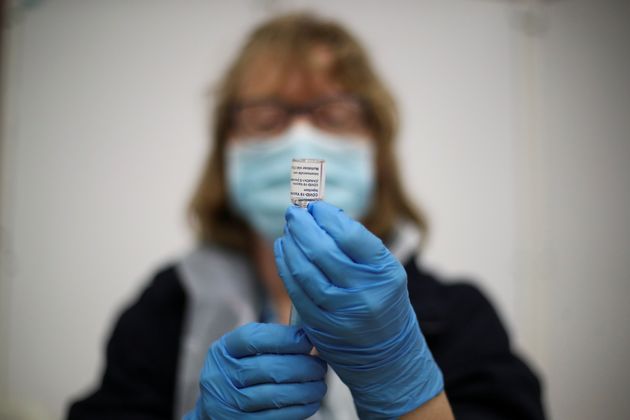
A healthcare worker prepares a dose of the Covid vaccine in Derby.

The European Union has received widespread condemnation of its plan to override part of the Brexit deal on Northern Ireland as part of its export controls on coronavirus vaccines.

The bloc was forced to perform an embarrassing U-turn late on Friday night and withdraw plans to effectively create a hard border in Ireland.

It comes amid a deepening bitter row between the EU and the pharmaceutical giant AstraZeneca.


What’s the row about?

AstraZeneca – which developed and manufactures the Oxford Covid-19 vaccine – has not been able to make enough jabs in time to fulfil the contracts it signed with the EU.

The pharmaceutical company said a “production glitch” at a factory in Belgium means initial deliveries to the union would fall short. 

This issue resulted in the fact that “we are basically two months behind where we want to be” in terms of supplying the EU with vaccines, said AstraZeneca chief executive Pascal Soriot.

AstraZeneca manufactures the jabs in four different factories: two are in the UK and two are in the EU. The British government has said it expects those manufactured in the UK to be administered in the UK – but the EU disagrees. 

With the UK’s vaccine rollout outstripping European countries, the EU suggested doses produced in Britain should be directed elsewhere to make up the shortfall. 

European Commission president Ursula von der Leyen called for an explanation from AstraZeneca for the shortfalls in the delivery of vaccines, insisting the supply orders are “binding” and “the contract is crystal clear”.


Where does Northern Ireland come in?

REUTERS
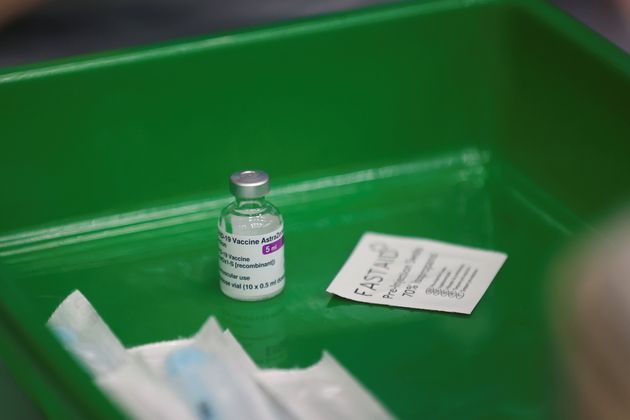
A vial of the AstraZeneca's vaccine for the coronavirus disease (COVID-19) is pictured at the Derby Arena velodrome in Derby, Derbyshire, Britain, January 29, 2021. REUTERS/Carl Recine

On Friday, the European Union said it would invoke Article 16 of the Northern Ireland Protocol to stop the country being used as a back door to move coronavirus vaccines from the bloc into the UK.

The NI Protocol, which is part of the Brexit Withdrawal Agreement, is designed to allow the free movement of goods from the EU into Northern Ireland, preventing the need for a hard border on the island of Ireland.

Under the terms of the protocol, goods should be able to move freely between the EU and Northern Ireland as the region remains in the single market for goods and still operates under EU customs rules. 

But triggering Article 16 would have meant Northern Ireland was considered an export territory for the purposes of vaccine sent from the EU/the Republic of Ireland, temporarily placing export controls on the movement of vaccines.


How was the EU’s move received?

The move to impinge on the protocol left the UK, Northern Ireland and Ireland blindsided.

Stormont first minister Arlene Foster branding the initial move an “incredible act of hostility”, adding: “By triggering Article 16 in this manner, the European Union has once again shown it is prepared to use Northern Ireland when it suits their interests but in the most despicable manner – over the provision of a vaccine which is designed to save lives.

“At the first opportunity, the EU has placed a hard border between Northern Ireland and the Republic of Ireland over the supply chain of the coronavirus vaccine.”

Boris Johnson warned von der Leyen of his “grave concerns” over Brussels’ move, and even the Archbishop of Canterbury Justin Welby weighed in, criticising the EU for undercutting its own ethics.

On Saturday, former Northern Ireland secretary Julian Smith described the move as an “almost Trumpian act” that had been taken without “anywhere near the understanding of the Good Friday Agreement”.

Foster has called on Johnson to replace the Northern Ireland Protocol, reiterating calls to invoke Article 16 over food shortages being faced in her nation because of Brexit.

Warning of “great unrest and great tension” in the region, she added: “The protocol is unworkable, let’s be very clear about that, and we need to see it replaced because otherwise there is going to be real difficulties here in Northern Ireland.”


Why did it U-turn on its decision?

THIERRY MONASSE VIA GETTY IMAGES
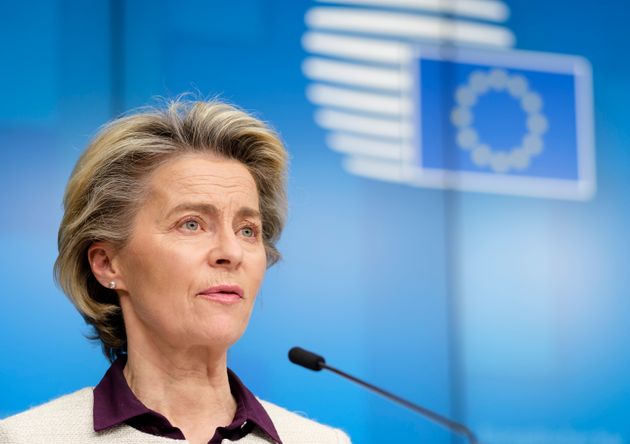
President of the European Commission, Ursula von der Leyen

Late on Friday night, the EU said it would be “not triggering the safeguard clause” to ensure the Northern Ireland Protocol is “unaffected”.

After Irish premier Micheal Martin and the Johnson both held calls with von der Leyen, the commission issued a statement to back down on Article 16, a move it earlier justified over a lack of vaccine supplies.

In a statement late on Friday night, the European Commission said: “To tackle the current lack of transparency of vaccine exports outside the EU, the Commission is putting in place a measure requiring that such exports are subject to an authorisation by member states.

“In the process of finalisation of this measure, the Commission will ensure that the Ireland-Northern Ireland Protocol is unaffected. The Commission is not triggering the safeguard clause.”

Have things settled down now?

Not quite. Despite its statement on Friday the commission has continued to threaten further action, saying: “Should transits of vaccines and active substances toward third countries be abused to circumvent the effects of the authorisation system, the EU will consider using all the instruments at its disposal.

“In the process of finalising the document, the commission will also be fine-tuning the decision-making process under the implementing regulation.”

Regardless of the protocol U-turn, preventing vaccines made within the EU from being exported could hinder the UK’s access to further supplies, particularly to the Belgian-made Pfizer jab. The UK is scheduled to get 3.5 million doses of the jab over the next three weeks. 

The “vaccine export transparency mechanism” will be used until the end of March to control vaccine shipments to non-EU countries and to ensure that any exporting company based in the EU first submits its plans to national authorities.

Officials have insisted the measure is not an export ban and that the move is intended to ensure member nations receive doses they bought from vaccine producers.

REUTERS
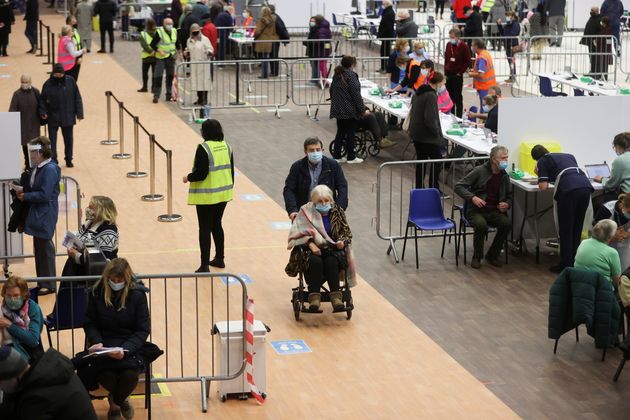
People receive the COVID-19 vaccine at the Derby Arena velodrome in Derby, Derbyshire, Britain, January 29, 2021. REUTERS/Carl Recine


 What has AstraZeneca said?

In an interview with Italy’s la Repubblica newspaper, AstraZeneca chief executive Pascal Soriot had said the contract only committed to meet the EU’s demands to its “best effort”.

He said the EU’s deliveries were delayed in part because the bloc signed its contract later than the UK, and therefore EU manufacturing facilities were still catching up.

AstraZeneca and its partner Oxford University signed a deal with the UK Government for 100 million doses three months before the EU deal for 400 million doses was agreed, according to Mr Soriot.

The company has published a redacted version of its contract with the EU, which the bloc said was important for “accountability”. 

The contract mentions that the firm would make “best reasonable efforts” to use European plants, including two in the UK, as production sites for vaccines destined for the EU.


What has the EU said?

 Speaking on BBC Newsnight, Spanish foreign minister Arancha Gonzalez-Laya said the EU’s triggering of the article was “an accident”, while an EU source told PA news agency the move had been a “misjudgment”.

Irish foreign affairs minister Simon Coveney said “lessons should be learned” and warned the Article 16 protocol “is not something to be tampered with lightly, it’s an essential, hard-won compromise, protecting peace and trade for many”.

Regardless of the U-turn, French President Emmanuel Macron backed the EU seeking to “control” vaccine exports as he raised questions about a lack of doses being delivered by AstraZeneca.

“It should be controlled because there is questionable behaviour and we will be receiving fewer deliveries that do not honour the contractual engagements agreed,” he said in an interview with media.

Brussels has also demanded doses of the AstraZeneca vaccine manufactured in British plants to solve its supply shortage issues, as member states have been forced to pause or delay their rollouts.


What has the UK said?

 In a statement, Downing Street said: “The UK has legally binding agreements with vaccine suppliers and it would not expect the EU, as a friend and ally, to do anything to disrupt the fulfilment of these contracts.”

Health secretary Matt Hancock has spoken to his counterpart in Northern Ireland, Robin Swann, over the supply of coronavirus vaccines after the EU imposed export controls.

A Department of Health and Social Care spokesperson said: “The health secretary and minister of health for Northern Ireland had a constructive discussion on the supply of Covid-19 vaccines.”

Thursday, 29 October 2020

21 Oct 2020 The EU’s bad faith needn’t deprive us of a good deal - MUST READ

 AS A retired Higher Courts Solicitor-Advocate (Criminal Law), I shall do my best to enlighten you as to the latest Brexit negotiations and legalities.

-


Theresa May negotiated with Brussels and allowed them to run rings round her. Boris Johnson took up the baton and, under pressure, accepted a Withdrawal Treaty that was imperfectly negotiated by Government lawyers and had holes in it. Add to the mixture the bad faith of the EU negotiators and we have the present stand-off.

These are the difficulties:

1: The Northern Ireland Protocol of the Withdrawal Treaty raises the risk that there will be barriers to trade between Northern Ireland and Britain. Without a trade agreement, the protocol will apply. In that case, for goods transported from Britain to Northern Ireland, there will be customs controls and checks and further regulatory checks for agri-foods and other products to ensure compliance with EU rules. Even EU tariffs will apply for some goods.

But in the Withdrawal Treaty the EU promised to recognise Northern Ireland’s integral place in the UK’s internal market. It pledged its best endeavours to facilitate the trade between Northern Ireland and other parts of the UK, avoiding controls at the ports and airports of Northern Ireland to the extent possible.

The EU promised to develop ‘in good faith’ agreements giving effect to this relationship, to come into force at the end of 2020. Unfortunately, the EU negotiators have refused to negotiate in good faith and failed to meet their commitments. They have even threatened to refuse to list Britain as a country from which they can accept food imports. This is despite Britain already complying with all relevant EU laws and promising to notify the EU of any changes in its regulations, in common with other countries approved for food imports by the EU.

Refusing to list Britain would mean a food blockade between Northern Ireland and Britain, which would be a clear breach of the EU’s commitments in the Withdrawal Treaty.

2: Britain does not wish to be governed by EU state aid regulations. Under the Northern Ireland protocol, the UK must notify the EU of any subsidies that could affect trade between Northern Ireland and the EU single market.

Brexiteers believe that ambiguity in the protocol could be exploited by the EU to interfere with subsidies for businesses in Britain which have only a limited link to Northern Ireland. The Government intends to address this by making clear that EU state aid rules apply only to Northern Ireland.

3: Another issue is the requirement that Northern Ireland businesses must complete export summary declarations when they send goods to Britain. This is incompatible with the promise that the province will enjoy unfettered access to the UK internal market. The government will legislate to waive this requirement.

4: Another issue is ‘at risk’ goods heading into Northern Ireland from Britain, which could enter the single market (via the Irish Republic) and must be subject to tariffs.

Goods shown to have been consumed in Northern Ireland can have the tariff rebated, but this will be an administrative nightmare adding to costs. The Government will hand ministers the power to determine the goods ‘at risk’.

5: On January 9, 2020, the European Union (Withdrawal Agreement) Act 2020 was passed. It contained Section 38, which says that nothing in this Act derogates from the sovereignty of the Parliament of the United Kingdom. The 27 member states agreed to the terms of the Withdrawal Act as it was given Royal Assent on January 23.

The EU has used Northern Ireland for strategic and tactical reasons in the negotiations to demand that Britain remains in the Common Fisheries Policy. The EU wants to turn the screw until the Government relents in its pursuit of independence and sovereignty.

Given the failure of the EU to negotiate in good faith and its threats to Northern Ireland, the Prime Minister can legitimately argue that Britain is not breaching its commitments in international law, but the EU is.

Brussels is also undermining the Good Friday Agreement, which guarantees that Northern Ireland’s constitutional status cannot be changed without its people’s consent. If there is no deal, the Government will legislate in the Internal Market Bill and a future Finance Bill to disapply parts of the Northern Ireland protocol.

And so the EU leaders can either negotiate in good faith and conclude the trade agreement they once said they wanted. Or they can accept a no-deal outcome, in which the UK will defend its territorial integrity.

The Internal Market Bill must be supported by Parliament. It readies the country for Brexit and makes a good deal more likely.

https://www.conservativewoman.co.uk/the-eus-bad-faith-neednt-deprive-us-of-a-good-deal/