Showing posts with label Comments. Show all posts

Wednesday, 6 January 2021

EU rules to disapply now

Daniel Hannan: Britain is skint – so we should use our post-EU freedom to grow ourselves out of this mess.


 Published: 

Daniel Hannan is a writer and columnist. He was a Conservative MEP from 1999 to 2020, and is now President of the Initiative for Free Trade.

Remainers were right after all. Almost every catastrophe they predicted has come about. Our economy has collapsed, unemployment is rising, several countries have closed their borders to us, civil liberties have been suspended and lorries have piled up in Kent. We have seen empty shelves and angry protesters and even (in East Africa) a plague of locusts.

True, none of these things happened as a result of our leaving the EU. Indeed, January 1 saw a smooth flow of traffic at the Channel ports – in marked contrast to the previous week when, still under EU law during the transition period, hundreds of mainly Eastern European drivers were trapped in Kent by France’s border closures. Still, however you cut it, we are in a worse place than anyone could have imagined a year ago.

These various catastrophes were, of course, supposed to be triggered by what Opposition politicians used to call (as if it were a single noun) “a-disastrous-no-deal-Brexit”. It is already becoming hard to remember how widely that outcome was expected. Several Conservative MPs, some of them good and sensible people, left their party because they did not believe that Boris Johnson would sign an agreement with the EU. In the event, he came back with the most comprehensive trade deal that the EU has with any sovereign country.

That gain, though, is insignificant next to the cost of Covid and its associated lockdowns – costs which, through a tranche of bad luck and a sprinkling of bad judgment, are higher for Britain than for almost any other country.

Eleven months of bad economic news have dulled our sensitivity to big numbers. Still, it cannot be repeated to often: we are utterly skint. The first lockdown caused a sharper contraction than any comparable period during the Great Depression or the two world wars. We have not yet had the chance to assess the cost of the second. Now we are in a third. The economist Julian Jessop reckons that every month of lockdown costs around £18 billion – 10 per cent of our GDP.

How are we going to recover? It may sound obvious, even trite, but the only way out of a mess like this is growth. The primary purpose of economic policy for the next five years should be to generate revenue. That doesn’t mean that we give up on improving public services, improving the environment, levelling up and all the rest. It simply means acknowledging the reality: without money in the kitty, these other things are impossible.

What can governments do to stimulate growth? They can stop putting barriers between businesses and their customers. Some of those obstacles are fiscal. Countries with lower, flatter and simpler taxes tend, other things being equal, to grow faster than countries with higher and more distortive taxes. We need to cut some taxes and suspend others – especially, in the short term, taxes on investment and employment.

Then there are the regulatory barriers – everything from planning restrictions that inflate the cost of housing to staff ratio rules that give us the most expensive childcare in Europe. I could fill a longer article than this one simply by listing them. Consider, as just one subsection, the EU laws we can now disapply: the Temporary Workers’ Directive, the REACH Directive, the End of Life Vehicles Directive, the droit de suite rules and other regulations that hurt London’s fine arts market, the Alternative Investment Fund Managers Directive, chunks of MiFID II, GDPR, the bans on GM.

Even as I ran through that list, you will have spotted the problem. A consequence of the pandemic has been to make voters around the world, including here, more authoritarian, more dirigiste, more demanding of state intervention.

It is hard enough in normal times to make the case for smaller government. Every privatisation is unpopular until it happens. Every regulation calls into existence a tribe of beneficiaries who arrange their affairs around it. But the perception of a common threat, as any psychologist will tell you, makes us even more collectivist and change-averse.

Our reaction may be irrational and atavistic, but it is no less real for that. If we were looking at the past year logically, we would see that the private sector often succeeded where state bureaucracies failed. Public Health England, Ofqual, NHS procurement and a hundred other agencies were unable to discharge their basic functions. But Tesco kept its shelves full, Amazon expanded to meet our demand and Pfizer found a vaccine.

The trouble is that we rarely think logically in a crisis. We instead fall back our Stone Age instincts, turning inwards, sticking to our tribe and demanding strong leadership. There might be a perfectly rational case to the effect that, for example, rising unemployment and falling wages make it impossible to keep increasing the minimum wage. But find me a politician who is prepared, in the current climate, to articulate that case. There might be an argument that a diminished private sector cannot continue to fund the public sector as though nothing had happened, and that the pain of lower wages should be spread. But, again, find me any MP who is prepared to explain that there is no money to Give Our NHS Heroes A Pay Rise.

We have won the right to make different decisions outside the EU. But the Coronavirus has diminished our appetite to exercise that right, just as it has made the need for reform more urgent.

Still, one way or another, change is coming. To succeed outside the EU, we need to be fitter, leaner and more globally engaged. The only question is whether we make the necessary decision now, or whether we wait to have our hand forced by economic reality.

https://www.conservativehome.com/thecolumnists/2021/01/daniel-hannan-covid-has-left-britain-utterly-skint-its-time-use-our-post-eu-freedom-and-grow-ourselves-out-of-this-mess.html

Monday, 30 November 2020

Why do smart people still choose Keynes over Hayek?

Looking back over the last few years you have to ask how intelligent people, examining the evidence, can still choose Keynes over Hayek

John Phelan

On 4 December 2012 10:17

On October 17th a group of concerned economists wrote to the Times. The current economic woes, they wrote, were down to insufficient spending/increased saving. “[W]hen a man economizes in consumption”, they argued, “and lets the fruit of his economy pile up in bank balances or even in the purchase of existing securities, the released real resources do not find a new home waiting for them.” Crucially, “In present conditions their entry into investment is blocked by lack of confidence.” The government should step in and spend to make up the shortfall they said.

On October 19th another group of economists replied with their own letter to the Times. They believed that the cause of the economic problems was monetary mismanagement which had created “a deficiency of investment-a depression of the industries making for capital extension, &c., rather than of the industries making directly for consumption.” They argued for the necessity of increased saving to readjust this and explicitly rejected any role for government spending, writing that “many of the troubles of the world at the present time are due to imprudent borrowing and spending on the part of the public authorities.”

But this was October 1932 and the letters were written by John Maynard Keynes and Friedrich von Hayek. It says much about the essentially static nature of economic knowledge that an 80 year old debate remains so compelling today that it continues to inspire radio shows, debates, books, and even rap-offs. 

Keynes’s economics, in a nutshell, argues that of the two components of ‘effective demand’, consumption and investment, investment is prone to volatile swings. As Keynes put it, investment spending was reduced when their expected payoff, the Marginal Productivity of Capital, dipped below the cost of financing them, the interest rate.

Why might this happen? “Animal spirits” was Keynes’ answer; “Don’t ask me guv” in other words. Whatever it was that tipped investors from optimism into effective demand-sapping pessimism is exogenous to the model; it cannot be accounted for by it.

Either way, the policy prescriptions of the Keynesian model are obvious. Financing costs must be held down with low interest rates and the Marginal Productivity of Capital must be underwritten by a government guarantee to purchase, with deficit spending if need be, whatever output industry might produce. Low interest rates and deficit spending. That is the Keynesian prescription for prosperity.

Hayek’s theory is very different. For Hayek, when low interest rates cause an expansion of credit, this credit flows into some parts of the economy before others. This blows up bubbles in the affected part of the economy, be it in housing, internet stocks, or tulips.

At some point, Hayek argues, the inflationary effect of this credit expansion overwhelms any wealth effect and interest rates begin to rise. With no further credit available to purchase the bubble assets the prices of these assets and their attendant industries collapse. This is the bust.

A major difference between Hayek’s theory and Keynes’s is that for Hayek the bust as well as the boom is endogenous to the model, it is explained by it. The bust isn’t caused by “animal spirits” switching inexplicably out of the clear blue sky, but by the predictable outcome of actions undertaken in the boom.

As Hayek’s model is radically different from Keynes’s, radically different prescriptions follow from it. Viewing the cycle as a whole Hayek believed that preventing a future bust was as important as fighting the current one and he proposed measures to limit the ability of banks to swell credit, his favoured solution being competing currency issue by banks.

More immediately, Hayek argued that as the bubble assets and attendant industries had been pumped up by unsustainable injections of inflationary credit, they could only be liquidated; any attempt to preserve their value would only prolong the bust or, as bad, set another cycle in motion. Sound money and non-intervention was the prescription of Hayek and his fellow Austrian Schoolers.  

Looking back over the last few years you have to ask how intelligent people, examining the evidence, can still choose Keynes over Hayek. In both Britain and America we had monetary policy makers working to keep financing costs down with low interest rates. We had governments running budget deficits and applying fiscal stimulus to economies which were already growing. We followed the Keynesian prescription for prosperity and we still ended up with a bust – a bust which Hayekians, with their superior model, saw coming.

The answer lies in the prescriptions. Keynes, with his cheap credit and shower of borrowed money, is a pleasant prospect. Indeed, Paul Krugman, one of the most uncompromising modern Keynesians, believes that “Ending the depression should be incredibly easy”, all we need is cheaper credit and more borrowing. Just, in fact, what we had going into the crisis.

Hayek, on the other hand, offers a more painful prospect. As his mentor Ludwig von Mises put it:       

“There is no means of avoiding the final collapse of a boom brought about by credit expansion. The alternative is only whether the crisis should come sooner as the result of a voluntary abandonment of further credit expansion, or later as a final and total catastrophe of the currency system involved”

Which of these vistas would you prefer to gaze upon?

But these theories should be judged not on how warm and fuzzy they make us feel but on how accurate they are. On that score Hayek wins hands down yet some still cling doggedly to Keynes. It’s for the same reason the aunt who gives you chocolates is preferred to the aunt who makes you do your homework.  

John Phelan is a Contributing Editor for The Commentator and a Fellow at the Cobden Centre. He has also written for City AM and Conservative Home and he blogs at Manchester Liberal. Follow him on Twitter @TheBoyPhelan

http://www.thecommentator.com/article/2199/why_do_smart_people_still_choose_keynes_over_hayek

Wednesday, 21 October 2020

We May Never Know the Full Story of COVID-19

  Grit plus luck was sufficient to break open the SARS story. I doubt the same will be true for COVID-19.

GETTY / THE ATLANTIC

Journalism, even practiced at its highest levels, has an element of chance. Reporters spend hours riding in taxis or trains or airplanes, or on the telephone or online, hoping to land that meeting that might yield a quote or secreted document resulting in a story. And if the story is particularly noteworthy, that’s a scoop. A big scoop for a reporter is like hitting your number at a roulette table.

In 2003, when SARS was threatening to become a global calamity, those of us covering China had to work long hours and put our chips down. SARS barely registered in the United States. The invasion of Iraq was looming, and the resources of big news operations were devoted to the Middle East. But for those of us in East Asia—I was the editor of Time Asia—SARS was what mattered. I never had a big scoop. I told myself that was because I’m not lucky. But others were able to report on the disease with a remarkable level of detail.

Looking back on the SARS outbreak from the vantage point of the 2020 pandemic, I’m struck by how easy we had it. I would never have used that word at the time, but I see now that grit plus luck was sufficient, for some, to break open the SARS story. I doubt the same will be true for COVID-19.

For reporters, uncovering the 2003 outbreak often meant seemingly interminable drives on treacherous Chinese highways to provincial capitals where the local public-health officials would refuse to see you. Although the United States’ Centers for Disease Control and Prevention and the World Health Organization both frequently cooperated with reporters to provide reliable data, Chinese officials were reluctant to speak with Western reporters. By their career calculus, the risks of being seen to have revealed an embarrassing truth outweighed the potential contribution to the commonweal. Most of my long drives ended at closed doors to empty offices.

Better journalists than I got lucky, however: John Pomfret and Philip Pan of The Washington Post, Charles Hutzler of The Wall Street Journal, and Susan Jakes of Time magazine among them. They developed contacts and methodically interviewed doctors and scientists and discovered where and when the virus emerged and who were the index patients. They reported that the SARS coronavirus jumped from bats to civet cats to human beings in Guangdong Province in late 2002, where it first infected workers in the wild-animal trade.

Some of these doctors and scientists, many of whom had been educated in the West, were ultimately willing to speak with American journalists in part because they had seen how independent scientific apparatuses functioned. The Chinese Center for Disease Control and Prevention, obfuscating and hiding data, was not acting up to the international standards these doctors and scientists had witnessed firsthand. “They were pissed off at the [Chinese Communist] Party and how they had done some foolish things as a result of covering up,” John Pomfret, who covered the 2003 outbreak for The Washington Post, told me. “They looked at Western news media as an outlet for truth about Chinese society because those stories could be refracted back into Chinese society.” Journals such as Caijing, published in Beijing, wrote up digests and analyses of foreign stories under the pretense of criticizing or analyzing foreign media with the net result that important stories could reach the Chinese public.

The SARS outbreak also coincided with a period of relative press freedom, particularly in Guangdong where Southern Metropolis Daily was publishing aggressive articles questioning the central government. The 2003 death of Sun Zhigang, a migrant worker, in police custody became a national scandal because dogged Chinese journalists did the work—and got lucky and got the scoops. Such relative press freedom was also due to the looming Beijing Olympics. The Chinese Communist Party was courting international goodwill, lest the Games, something of a global coming-out party, be imperiled.

We were already worried our phones were being monitored. But we could easily switch out SIM cards or use the ubiquitous pay phones at local grocery stores. The surveillance system back then still relied on people following other people. And even trained state security agents can lose track of people. Under this relatively lax regime, Jakes, the Time reporter, was able to contact a trauma surgeon from Beijing’s 301 Hospital, Jiang Yanyong, who revealed the true extent and scope of the outbreak and the astonishing scale of the cover-up, including patients being wheeled out of hospitals via back exits as WHO inspectors were entering the front. Jakes had gotten lucky when Jiang’s daughter reached out to her and said her brother wanted to write an open letter on what he had seen. Jiang told Jakes that the Chinese government could not be relied on to tell the truth about the number of infected, sick, and dying.

The mayor of Beijing and the minister of health would both resign after Jakes’s stories, the only instance I can recall of high-level Chinese government ministers resigning due to a scoop.

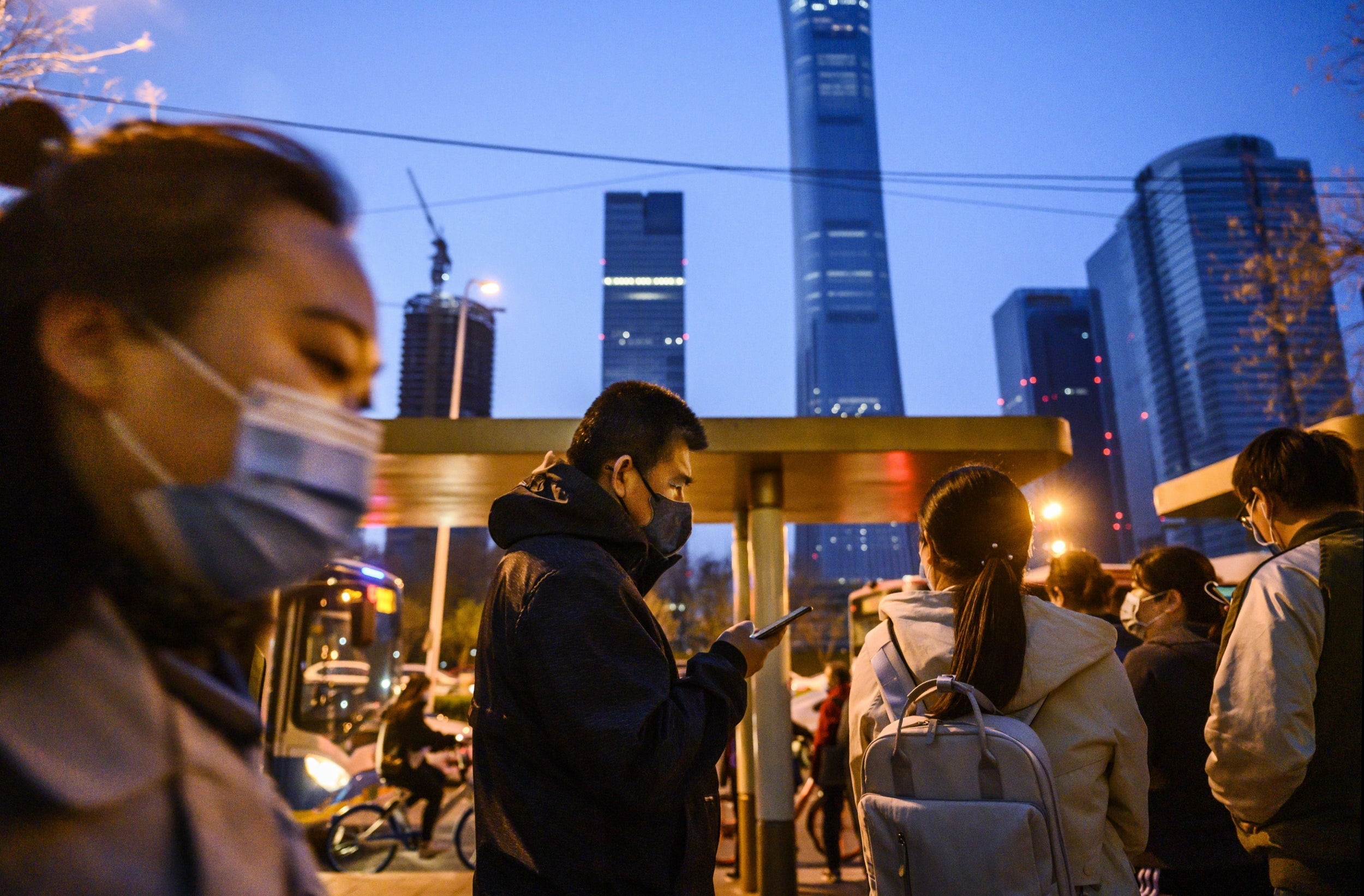
Because of changes in China and the United States, reporting on the COVID-19 outbreak is more challenging. For a few weeks in January and February, journalists in Wuhan, some of them ordinary citizens, told the world what was happening at great personal risk. Then, in March, Chen Qiushi, one citizen journalist who wrote critical stories of the Chinese government’s initial handling of the outbreak, simply vanished. Chinese journalists and scientists have since been wary of speaking out. And very few Westerners have managed to report from Wuhan. We haven’t definitively learned much more about the origins of the disease since those first reports last year: Who was the index patient? Where does the host species reside? What species was the intermediary, if there was one? In other words, the answers to the journalistic questions who, what, when, and where.

The Communist Party’s security services have become so ruthless at shutting down dissent that today, a whistleblower like Jiang might hold back. “The willingness to enlarge the circle of pain has made a difference,” Pomfret told me. “Talk to a journalist now, and that could mean ruining your children’s life, your grandchildren’s. That has had a stultifying effect.”

These extreme measures are in part due to disease outbreaks being particularly embarrassing for governments that tout prosperity and “law and order” as primary claims to legitimacy.

The surveillance situation is far more extreme, as well. China is practically a cashless society, where transactions are made via smartphone. And buying a new SIM card requires an official, state-issued identification card that is duly noted and logged. A system that tracks you by your smartphone can always find you via your smartphone. In 2003, Jakes talked with Jiang on a pay phone before going to meet him on a subway; that sort of scenario is improbable now.


This time, the U.S., along with China, has been accused of manipulating scientific data for political ends, as the Trump administration has, among other attempts at interference, requested that some COVID-19 data be sent from the CDC and the FDA to the White House before being released to the public. China might still be manipulating scientific data for political ends. That’s not news. But now the U.S. appears to have joined in, casting doubt at a crucial time on the veracity of what had been one of the global standards for scientific probity, the CDC. (So highly regarded was the American CDC that China chose the same acronym for its own infectious-disease bureau.) The U.S. appears to have adopted part of the authoritarian playbook, subsuming science to politics, without any of the benefits. China has largely contained the outbreak; the U.S. has the world’s highest death toll.

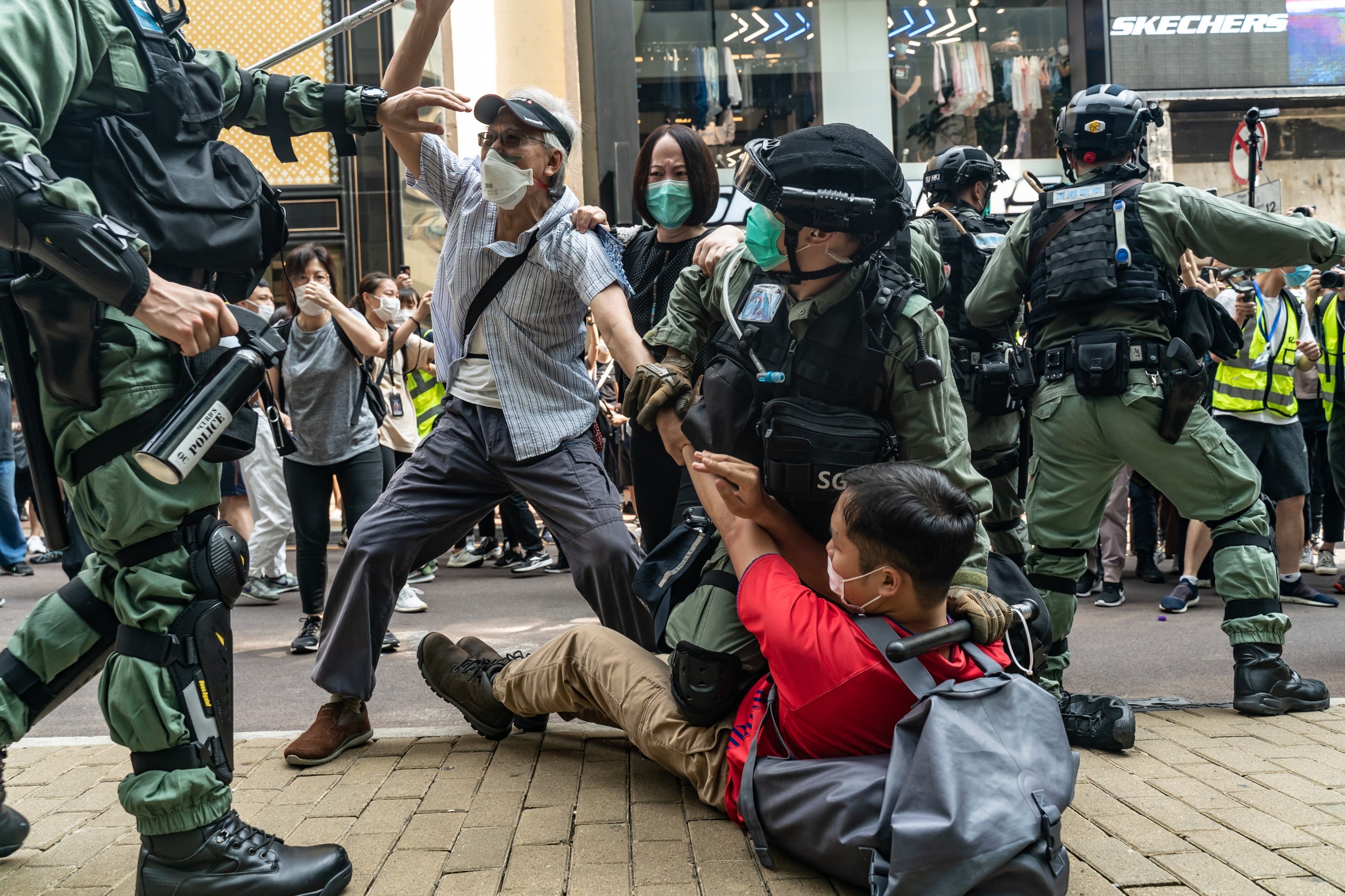
America’s failure to contain the pandemic has resulted in an emboldened China much less concerned about its global public image, taking advantage of a distracted United States to implement a national security law that strips Hong Kong of press and individual freedoms. Journalism visas used to be freely issued to international news organizations in Hong Kong. No longer. Hong Kong public-health officials, who used to reliably answer the press and provide accurate data, have become as elusive and dissembling as their mainland colleagues. We might never know the full truth of what happened in Wuhan. And if we don’t know where the host species resides and exactly how the virus jumped to humans, we might be damned to continue this cycle of outbreaks.

In 2003, after repeated requests for an interview for my book on the SARS outbreak, the newly appointed minister of health, Wu Yi, agreed to meet with me in Beijing on November 18. I flew there from Hong Kong and met with her in a gilded, red-carpeted office with high-backed chairs. It was exceedingly rare for a politburo member to meet a member of the foreign press, so I was stunned when my assistant told me we had the interview. “No way that interview happens today,” Ian Johnson, a reporter for The Wall Street Journal who won a Pulitzer Prize for his reporting on China, told me. “There is basically no upside to talking to a foreign journalist. There is only risk.” The meeting didn’t result in any scoops, and fell into the broad category of “building good relations.” Still, as a reporter working on a book about a disease outbreak, I felt it was important to get the highest-ranking officials in the country on the record.

I had another meeting in Shenzhen that afternoon and so flew back to that city across the border from Hong Kong. I then took the train from Lo Wu to Hong Hum station, where I set down my briefcase to buy an Octopus card, as the local subway passes were called. My briefcase, with my computer and notes in it, was snatched. I lost the first 40,000 words of the book and a huge trove of my notes, which I had been backing up on an iPod, which back then could be used as a hard drive, and which I had reflexively shoved into the briefcase before beginning my transaction. I reported the theft to the nearest Hong Kong police station, where a Sergeant Yiu took down my statement and the theft officially became case No. 03027895. He made it very clear that there was little the police could do to find the thief.

It was one of the worst nights of my life. I had never felt so unlucky. Nearly a year of reporting and writing was gone. I felt as if all my dreams had been destroyed. It took more than a month for me to even begin thinking about starting my book again.

My wife and several other reporters raised the possibility that the Chinese government had set me up, had snatched my briefcase and computer to see what I knew, indeed, to check to see if I had a scoop. I dismissed this speculation. It seemed grandiose to imagine that I was important enough for the Chinese government to monitor, track, and then rob. I hoped it had been a simple theft, rather than a government operation, for the safety of my sources. But if they wanted to be absolutely sure I didn’t have anything truly embarrassing to the state, that was the only way.

Now they could just hack my phone.

We want to hear what you think about this article. Submit a letter to the editor or write to letters@theatlantic.com.

Monday, 5 October 2020

The NYT continues its Brexit obsession


5 October 2020, 7:58pm


You do have to wonder what liberal America must think of Britain. We are, according to its paper of record, swamp-dwelling, boiled mutton munching, insular little Englanders. Indeed, the New York Times's latest profile of Covid Britain only serves to compound this mythical vision of a floundering, backwards country. 

The report in question presents a country unable to conform to even basic Covid measures — Brits refusing to mask up in crowded grocers and crammed onto public transport. Via an awkward segue, with an apparent lack of irony, the author invokes the London of the Blitz (we're the ones obsessed with world war two, huh?) before asking: 'How did that society turn into this one?'

The answer is, of course, Brexit. The United Kingdom is now a nation in decay: 
“When my family moved to London from New York in 2016, we were immediately struck by how tightly regulated everything seemed to be.

In place of the crumbling New York subway, we encountered well-functioning facilities overseen by uniformed people who were pleasantly available for counsel. The post office was not an ordeal. Heathrow Airport was a marvel of efficiency. Competent people appeared to be in charge.

The first alteration to this impression came courtesy of Brexit, Britain’s bewildering, torturous (and continuing!) abandonment of the European Union.

Mr S should have guessed. Our Covid woes are down to Brexit. What else could it be when it's the New York Times writing the story? 

WRITTEN BY Steerpike

Steerpike is The Spectator's gossip columnist, serving up the latest tittle tattle from Westminster and beyond. Email tips to steerpike@spectator.co.uk.

https://www.spectator.co.uk/article/nyt-continues-its-brexit-obsession

Friday, 11 September 2020

See EU in court

The EU has given Boris Johnson a 20-day ultimatum to back down on his Brexit plans or risk the collapse of trade talks

The TelegraphFriday September 11 2020

Front Bench

 
Good morning. I'm looking after Front Bench for Daniel Capurro today. The EU has given Boris Johnson a 20-day ultimatum to back down on his Brexit plans or risk the collapse of trade talks

EU gives Boris Johnson 20 days to retreat on Brexit Bill

Asa BennettBy Asa Bennett,
Brexit Commissioning Editor
Around this time last year, Boris Johnson had made his now notorious declaration that he would rather be "dead in a ditch" than see Brexit delayed.

Some Eurocrats must be wishing the Prime Minister had met as grim a fate as that, as long as they were spared from dealing with the spanner he has since inserted this week into the diplomatic works.

The EU has now given the British until the end of the month to gut their Internal Market Bill and remove the parts that would have allowed ministers to override the Irish protocol, otherwise it would constitute an "extremely serious violation of the Withdrawal Agreement and of international law."

This Brussels ultimatum came after Maros Sefcovic, a vice-president of the European Commission, came to London to meet his British counterpart for an emergency meeting of the UK-EU joint committee. But Michael Gove stood firm, saying afterwards he had been "perfectly clear ... that we would not be withdrawing this legislation".

With both sides at even greater loggerheads, how will this pan out? Clearly, caving into the EU's demands would be anathema for Mr Johnson's government, but that doesn't stop others intervening to force a compromise.

Such a prospect depends on the Houses of Parliament, which will shortly be scrutinising the bill that the Government has indicated it wants to push through at pace.

Bob Neill – the Tory MP whose question earlier this week prompted Brandon Lewis to make his infamous pronouncement about international law – has tabled an amendment, with the support of ex-minister Damian Green and others. It would give MPs the right to decide whether the Government can override the Brexit deal in individual cases.

If Mr Johnson's chunky majority ensures such efforts amount to naught, the bill will not have the same numbers in its favour in the House of Lords.

Tory grandees on the red benches, like former party leader Lord Howard and former chancellor Lord Lamont, have been sounding off about the "scant regard" shown by the Government for the UK's treaty obligations. Ministers would need peers like these to ensure the bill got anywhere in the Lords, given the lack of a majority in that chamber, suggesting the legislation will be highly vulnerable if it makes it that far.

How much of a problem could the Lords prove? The 1911 Parliament Act cemented the superiority of the Commons, so if MPs back the bill, it will prevail in the end. But perhaps peers will focus on ensuring an amendment like Mr Neill's survives.

Despite this legislation provoking the sourest tone yet in post-Brexit dialogue, David Frost has offered the news that may surprise some after the seventh round of negotiations – they want to keep talking.

"We have agreed to meet again, as planned, in Brussels next week to continue discussions," the UK's chief negotiator confirmed last night, describing this week's talks as "useful exchanges".

However, the newly ennobled negotiator made clear "a number of challenging areas remain and the divergences on some are still significant." So anyone who thought this legal row might provide cover for both sides to pull a deal out of the hat will be disappointed.

Nevertheless, one should not gloss over the fact negotiators still feel there is something worth talking about. That is worth remembering amid the political chest-beating from both sides.

That said, you would be forgiven for thinking after reading my analysis of yet another Brexit bill facing parliamentary trench warfare, and the risk of various amendments, that it feels highly reminiscent of 2019.

Will this week's legal row end up being the 2020 version of Mr Johnson's "dead in a ditch" brinkmanship – i.e. a big show of strength that paves the way for compromise by showing both sides have fought their corner to the utmost? Or is this an even greater stand that will lead to an explosive no-deal finale?

Only a few people know for sure. In a process dominated by Michel Barnier's ticking clock, time will truly tell whether a deal can still be salvaged.

Thursday, 3 September 2020

Here is the magic key to unlock the path to a win-win post-Brexit deal

There is a “magic key” that would ensure the UK leaves the transition at the end of the year with full sovereignty and a highly attractive win-win trade deal.


Understanding how this key works requires an understanding of the implications of the half-built legal structure of the Eurozone and the processes that support it. The Eurozone’s structure, which artificially suppresses the euro currency value, leads to dumping of underpriced Eurozone goods on the UK market. Eurozone exporters are also subsidised through unique mechanisms, including the highly technical TARGET2 system. These represent systematic breaches of WTO law.
Additionally, the Eurozone structure and associated financial regulations provide artificially cheap banking that runs itself at the expense and risk of the rest of the world, in breach of international capital standards.
Dealing with these characteristics means the magic key needs to be turned three times – benefitting the UK, but also the EU.
The first turn of the key leads to replacing the Withdrawal Agreement and Northern Ireland Protocol at year end. The Protocol, if maintained, would deny Northern Ireland business operations the WTO’s protective shield of anti-dumping and anti-subsidisation measures that would safeguard them from unfairly priced Irish and other Eurozone imports.
If the EU fails to agree a satisfactory future relationship that properly respects UK sovereignty and its internal market - as the EU has committed to do - the UK can and should tear up the Withdrawal Agreement, including the Protocol, on the basis that the EU is in breach.
Once the Protocol is seen to be capable of falling away, the invisible north-south border is properly up for renegotiation and the dynamics will change instantly. The only solution that would avoid arguments over equal treatment with others and would satisfy Ireland is a truly invisible border. This would require the EU to strike an all-in deal with the whole of the UK that includes an FTA, since only then would it fall outside the WTO’s MFN equal treatment rules. And the more generous the FTA arrangements in removing tariffs and recognising UK standards, the less the EU would need to agree to place its reluctant reliance on the UK for the more complex joint arrangements for an invisible border.
True, the EU could refuse to agree a favourable FTA and wider arrangements to manage the border with the UK at year end. But the EU would then need to ignore the north-south border; or to adopt unilateral arrangements for an invisible border; or erect border posts.
Ignoring the border would likely lead to other Member States having to introduce checks for Irish goods going to and from the rest of the EU – effectively taking Ireland out of the Single Market. And, either ignoring the border or adopting unilateral arrangements would cause problems for the EU on its other 44 borders, since those countries would rightly ask for the same.
WTO non-discrimination rules require the EU to apply equal treatment to those borders absent a very good reason. Although the EU could cite security reasons for denying this to them, doing so would involve difficult discussions that it hitherto has managed to avoid. Finally, erecting border posts on the island of Ireland is something the EU and Ireland have repeatedly ruled out.
The second turn of the key justifies the imposition of WTO anti-dumping tariffs and countervailing duties on incoming EU goods. This would bolster the UK’s negotiating leverage. In negotiating an FTA, the UK would not give up those protections but could agree arrangements for enhanced transparency, notification and regular consultations prior to determining tariffs and duties – a considerable benefit to the EU.
The magic key should be turned a third time to ensure any FTA addresses services properly. The Eurozone is not just dumping products on the UK’s valuable markets; it is dumping financial risk on the UK and the rest of the world. At present, the UK mitigates that risk for itself and the world by ensuring that UK-based global financial institutions offering services across the EU do so under the UK’s regulatory regime, which imposes top-up requirements to mitigate Eurozone risk.
If the EU were to agree to an Enhanced Equivalence chapter in the FTA that recognises UK financial regulation, UK-based firms could carry on servicing EU customers from the UK cross-border and the UK could carry on performing its mitigating role. Other matters, such as the provision of data on Eurozone exposures and the recognition of legal services and of data protection standards, would need to be included to make this work.
If the EU were to refuse, the UK and the US (as the other host of global financial markets) would be obliged to impose punitive capital, collateral and liquidity requirements on all global exposures to EU financial institutions on worst-case assumptions as to Eurozone risk. This would include intra-group exposures to Eurozone-based subsidiaries of UK/US-headquartered institutions. It is demonstrable that EU law and supervision fails to address such risks.
These requirements would leave EU corporate and government customers with two options. Either reach out from under the blanket of EU law and purchase their financial services directly from London, as now (which is something they are entitled to do but which the EU is currently discouraging). Or face being significantly constrained in their access to the world’s capital markets.
Being subjected to international regulatory standards in this way would be very damaging to the Eurozone financial system and make it a pariah for not only failing to apply those standards to itself but also failing to cooperate with the UK in continuing to mitigate the risk for the world’s investors and savers.
Every indication is that the EU is keen to have a deal. They would prefer one that damages the UK (were the UK to agree to that), but when it becomes clear this option is not available, discussions will normalise rapidly. The only remaining point is to ensure clever transactional negotiation and sophisticated drafting of legal text, but that is for the finishing touches, once the magic key has been fully turned.
Barnabas Reynolds is a partner at Shearman & Sterling, co-author of Replacing the Withdrawal Agreement, published by the Centre for Brexit Policy; and author of A Template for Enhanced Equivalence, and co-author of Managing Euro Risk, both published by Politeia.