Showing posts with label Indicative votes. Show all posts

Tuesday, 22 October 2019

Boris Johnson’s last-ditch push for Brexit deal

The British prime minister may get a Brexit vote Tuesday but more parliamentary hurdles stand in his way.

Updated 

Boris Johnson's ambitious timetable leaves little time for scrutiny as he strives to meet his self-imposed deadline of delivering Brexit by October 31. | Isabel Infantes/AFP via Getty Images

LONDON — Boris Johnson will finally get a vote on his Brexit deal Tuesday — but that doesn't mean he's home and dry.
After two false starts in which the British prime minister was thwarted in his attempts to demonstrate MPs back his exit agreement, the House of Commons will vote on the deal Johnson brought back from Brussels last week, as his government attempts to push legislation required to turn the agreement into U.K. law through the entire parliamentary process in just a matter of days.
The ambitious timetable — which would see an initial vote on the legislation on Tuesday night with the Commons process wrapped by Thursday when the bill then passes to the House of Lords — leaves little time for scrutiny as Johnson strives to meet his self-imposed deadline of delivering Brexit by October 31.
Several hurdles stand in his way: First, MPs could refuse to back the bill itself on Tuesday. They could also oppose the unusually short timetable, with a vote on that planned for later the same day.
Even if Johnson wins both of Tuesday's votes, MPs could then attempt to attach amendments to the bill, with opponents signaling either a second referendum or a requirement to stay in the EU's customs union might gather support from a majority in the Commons. Either would wreck Johnson's plan and instead renew the government's push for a general election.
"I hope parliament today votes to take back control for itself and the British people and the country can start to focus on the cost of living, the NHS, and conserving our environment," Johnson will tell MPs ahead of Tuesday's vote, according to a press briefing.
"The public doesn’t want any more delays, neither do other European leaders and neither do I. Let’s get Brexit done on 31 October and move on."
The Labour Party's Shadow Brexit Secretary Keir Starmer told MPs on Monday that the government was “trying to bounce MPs into signing off a bill that could cause huge damage.”
"The truth is Boris Johnson knows that the more time people have to read the small print of his deal, the more it will be exposed for the risks it represents to our economy and communities across the country,” he said.
The Scottish National Party's Westminster leader, Ian Blackford, echoed the sentiment, saying it was "an insult to democracy that the Tory government is trying to push this bill through on limited time."
For now, the EU is holding its breath, but if word comes that leaders in Brussels will grant an extension to negotiations, opposition MPs will see little incentive to stick to Johnson’s timetable.

Downing Street plan

Downing Street officials are still hopeful they will get the numbers to push the deal through.
Michael Gove, the minister in charge of no-deal preparations, said Sunday that he could “guarantee” Brexit would be done in time. “We have the means and the ability to do so,” he told Sky News' Sophy Ridge.
On Monday, he attempted to drive home the consequences of failure, announcing to MPs that he had triggered Operation Yellowhammer, the government's no-deal contingency plan, and officials would now meet seven days a week to discuss no-deal preparations.
Johnson has the support of most of the hardline Brexiteers in his own Conservative Party, including Steve Baker, Owen Paterson and Anne Marie Morris. He also has secured the votes of several Labour MPs, including Melanie Onn, Gareth Snell and Sarah Champion. None of them voted for former Prime Minister Theresa May's deal, which was defeated by 58 votes on the third attempt.
But like May, Johnson is missing the support of the Conservative Party’s informal partners in government, Northern Ireland's Democratic Unionist Party (DUP).
The DUP has been resolute in its opposition to the deal, because it says it creates a divergence in rules and regulations between Northern Ireland and the rest of the U.K.
In a House of Lords committee hearing on Monday afternoon, a slip-up by the Brexit Secretary Stephen Barclay was a gift to those making this point.
Asked whether Northern Irish businesses would have to fill out customs declarations when sending goods to Great Britain, Barclay initially replied: “We’ve said in terms of [trade] from NI to GB that it will be frictionless, and so there wouldn’t be [declaration forms].”
But a few minutes later, he interrupted the hearing to read out a correction: “The exit summary declarations will be required in terms of NI to GB.”
Exit summary declarations are required when goods leave the EU’s customs territory. The implication is that the exporters in Northern Ireland would have to complete paperwork in order to sell goods within their own country, the U.K.
The DUP’s Brexit spokesman Sammy Wilson did not pull his punches. “Clear breach of U.K. government commitment in Joint Report of 2017 [negotiated by May] to allow unfettered access to GB market for NI businesses,” he tweeted. “How can any Conservative & Unionist MP argue this does not represent a border in the Irish Sea?!”
The slip-up served to demonstrate the complexity of what MPs must consider in the starkest of ways: the U.K.’s own Brexit secretary could not accurately recall the details of the deal’s implications.
Throughout the day Monday, MPs and peers expressed serious concerns at being asked to rush through such a momentous piece of legislation. Barclay’s response was that they would have time to scrutinize it during the Brexit transition period — after it had passed.

One day at a time

Even if the bill survives its first Commons vote with a narrow majority, it could yet be sunk on Wednesday.
Any majority that exists for the proposal is fragile, made up of disparate factions of MPs, who only agree that some form of Brexit should occur.
Once amendments can be proposed to the legislation on Wednesday, the government faces the threat of a customs union or even a second referendum being appended to the deal.
Gloria De Piero, a Labour MP who has expressed her intention to vote for a deal and announced she is standing down at the next election, has tweeted that she will be backing a customs union amendment.
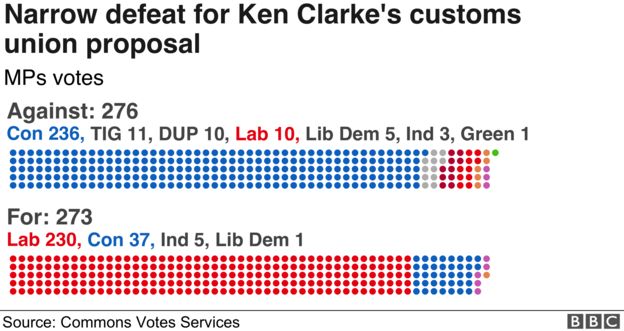
When MPs held non-binding indicative votes in April on a series of possible Brexit outcomes, a customs union came the closest to getting a majority in the Commons. It was defeated by just three votes — 276 to 273 — with a number of abstentions.
Those who voted in favor of a customs union included most of the parliamentary Labour party, as well as 36 Tories — several of whom have since been expelled from the party, such as Ken Clarke, Alistair Burt, Margot James, Anne Milton, Oliver Letwin, and Stephen Hammond. The Liberal Democrats' Norman Lamb also backed the idea in the indicative vote.
https://www.politico.eu/article/boris-johnson-last-ditch-push-for-brexit-deal/


Thursday, 4 April 2019

Your guide to Brexit jargon - BBC


Your guide to Brexit jargon


Withdrawal agreement

Theresa May has agreed a deal with the EU on the terms of the UK's departure. It does not determine the UK-EU future relationship. It does include how much money the UK must pay to the EU as a settlement, details of the transition period, and citizens' rights. It also covers the so-called "backstop", which ensures that no hard border exists between Northern Ireland and the Republic of Ireland after Brexit even if there's no deal on the future relationship in place by the end of the transition period.

WTO rules

If countries don't have free-trade agreements, they usually trade with each other under rules set by the World Trade Organization. Each country sets tariffs - or taxes - on goods entering. For example, cars passing from non-EU countries to the EU are charged at 10% of their value. But tariffs on some agricultural products are much higher - dairy averages more than 35%. If the UK chooses to put no tariffs on goods from the EU, it must also have no tariffs on goods from every WTO member.

No deal

A no-deal Brexit would mean the UK leaving the European Union and cutting ties immediately, with no agreement at all in place. If MPs do not approve Theresa May's deal, and there is no alternative deal or move to delay or stop Brexit, the UK will leave with no deal on 29 March. The UK would follow World Trade Organization rules to trade with the EU and other countries, while trying to negotiate free-trade deals.

Backstop plan

Currently, there are no border posts, physical barriers or checks on people or goods crossing the border between Northern Ireland and the Republic of Ireland. The backstop is a measure in the withdrawal agreement designed to ensure that continues after the UK leaves the EU. It comes into effect only if the deal deciding the future relationship between the UK and EU is not agreed by the end of the transition period (31 December 2020). Until the deal on the future relationship is done, the backstop would keep the UK effectively inside the EU's customs union but with Northern Ireland also conforming to some rules of the single market. Critics say a different status for Northern Ireland could threaten the existence of the United Kingdom and fear that the backstop could become permanent.

Customs union

A trade agreement under which two or more countries do not put tariffs (taxes) on goods coming in from other countries in the union. The countries also decide to set the same tariff on goods entering from outside the union. The EU customs union includes EU member states and some small non-EU members and forbids members from negotiating trade agreements separately from the EU. Instead trade agreements are negotiated collectively.

Irish border

The border between Northern Ireland and the Republic of Ireland. After Brexit, it will become the only land border between the UK and the European Union.

Single market

A system that enables goods, services, people and capital (money) to move between all 28 EU member states, as well as Iceland, Norway, Liechtenstein and Switzerland. Countries in the single market apply many common rules and standards. A UK company can sell its product (goods) in Portugal as easily as it can in Portsmouth, bring back the cash (capital), offer maintenance (services) and despatch a repair team (people). 

Free trade agreement

A deal between countries to reduce, but not necessarily eliminate, trade barriers. These barriers include import or export taxes (tariffs), quotas or licences that limit imports, and differing regulations on things such as safety or hygiene or labelling. The aim is increase trade in goods but also services.

Canada model

Canada has a free trade deal with the EU known as the Comprehensive Economic and Trade Agreement (CETA). Under the deal, most imported goods are not taxed, although there are some additional customs checks. There are some limits, or quotas, on the amount of certain food products like meat and cereals that can be imported. Services, like banking, are much more restricted. Canada does not contribute to the EU budget and the principle of free movement does not apply, so Canadians are not free to live and work in the EU.

Canada plus

Some people in favour of leaving the EU have campaigned for the Canada plus or Canada plus plus model. Under the Canada deal, most imported goods are not taxed, although there are some additional customs checks. There are some limits, or quotas, on the amount of certain food products like meat and cereals that can be imported. Services, like banking, are much more restricted. The UK would like all the benefits of the Canada deal, plus greater access to the EU for its financial institutions, as well as fewer restrictions on food products and an agreement to recognise the same standards on things like food production to avoid the need for border checks.

Norway model

The UK would remain in the EU single market, able to trade freely, but in return it would have to allow free movement of people - which has been a key sticking point for many in the Brexit debate who want to be able to control immigration from the EU. The UK would also have to make a contribution to the EU budget - smaller than it currently makes - and abide by many of the EU's rules.

Four freedoms

The free movement of goods, capital, services and people in the EU's single market.

Free movement

One of the four freedoms associated with the single market is free movement of people. This lets EU citizens travel, live, study and work in any member country. There can be no discrimination in access to public services and benefits.

Hard Brexit

A hard Brexit would be one where few of the existing ties between the UK and the EU were retained. The UK would give up membership of the EU's single market and its customs union, instead setting up its own trade deals and rules. It is a phrase often used by critics of Brexit who think it will harm the UK economy.

Soft Brexit

Leaving the European Union but staying as closely aligned to the EU as possible. This could mean keeping the UK in the single market or the customs union or both. It could involve free movement of people continuing. EU citizens would retain the right to settle and work in the UK and have access to public services and benefits; UK citizens would retain the same rights in the EU.

Eurosceptic

Someone who is opposed to the European Union having too much control, because they think it compromises the power of individual countries to make rules and decide their own destiny. Eurosceptics include those who want to return powers from the EU to member states and those who want their country to leave the EU altogether."

EU referendum

A national vote held on 23 June 2016 to decide whether the UK should leave or remain in the European Union. It was decided on a simple majority and the Leave campaign won by 52% to 48%.

Indicative vote

Indicative votes are where MPs vote on a series of options designed to test the will of Parliament to see what, if anything, would command a majority. They could be used to test support in the House of Commons for a range of different Brexit outcomes.

Meaningful vote

The government said Parliament would be given a 'meaningful vote' on the withdrawal deal negotiated by Theresa May with the European Union. This took place on 15 January 2019 and MPs voted by 432 to 202 to reject the deal. Parliament still needs to approve a deal before it can be implemented.

Mandate

The authority to carry out policy. In relation to Brexit it often refers to the referendum result giving a mandate to the government to take Britain out of the European Union.

Chequers plan

This plan for Brexit was agreed by the Cabinet at the Prime Minister's country residence, Chequers, in July 2018. It proposed tax or tariff-free trade with the EU, while leaving the UK free to pursue trade deals outside the EU. Under the plan, the UK would collect tariffs on the EU's behalf for any goods entering the country but destined to be sent on to EU countries. Because EU tariffs had been collected, there would not need to be a separate border between Northern Ireland and the Republic. But the UK would have to follow EU rules, "the common rule book", on things like food standards to avoid unnecessary border hold-ups. The plan also proposed ending the free movement of people, giving back the UK control over immigration rules. Former Brexit secretary David Davis and former foreign secretary Boris Johnson both resigned their posts over the Chequers plan because they believed it meant the UK would still be too closely tied to the EU.

Malthouse compromise

The Malthouse compromise is named after the housing minister Kit Malthouse. Its supporters are mostly Conservative Leavers and Remainers. The plan proposes two options. Under the first, the prime minister would try to renegotiate the backstop plan to replace it with a free trade agreement - and an extended transition period until December 2021. The second option would apply if the attempted renegotiation failed. In this scenario the UK would leave the European Union without a formal withdrawal agreement, but before leaving, the UK would try to negotiate a three year transition with the EU to prepare for a no deal outcome. During that time the UK would continue to contribute financially to the EU.

Political declaration

Document which sets out proposals for how the UK's long term future relationship with the EU will work after Brexit. The political declaration is not legally binding but will be worked up into a full agreement during the transition period.

Remoaners

A derogatory term meaning a person who complains about Britain leaving European Union and/or the outcome of the Brexit referendum.

Schengen area

This is reputed to be the largest free travel area in the world. It is made up of 26 European states that have abolished passport controls at their mutual borders so people can travel freely. Some European Union member states, including the UK, are not in the Schengen area. Some countries that are not members of the European Union, like Norway and Iceland, are in the Schengen area.

MEP

Member of the European Parliament. There are currently 73 UK MEPs, representing 12 electoral regions made up of the nations and regions of the UK. Elections take place every five years, the next vote is due to be held in 2019, but will not take place in the UK if Brexit has happened.

Managed no deal

Also sometimes called a negotiated no deal. View being promoted by some Brexiteers who want to allay fears about what would happen if the UK left the EU without a deal. They are proposing a transition period during which time the UK would negotiate a free-trade deal as a third country. The UK could also strike a number of mini deals to avert chaos in sectors of the economy. Critics say a transition or implementation period is a key component of the Withdrawal Agreement and if that has been rejected the UK would immediately be subject to WTO rules and have to rely on the goodwill of the EU to resolve any problems.

Transition period

If Theresa May's deal was accepted, this period would last 21 months from Brexit day, on 29 March 2019, to 31 December 2020. It could be extended by up to two years if both the UK and the EU wanted. The transition is intended to allow time for the UK and EU to agree their future relationship. The UK would have no say in the making of new EU laws during the transition but would have to follow all EU rules, including freedom of movement.

White Paper

A white paper is a report produced by the government outlining how it is going to approach a particular issue. The government published a white paper on the UK's future relationship with the EU in July 2018 in which it spelled out its proposals for free trade with Europe, new arrangements for financial services, like banking, as well as plans to allow trade to continue to flow between Ireland and Northern Ireland.

Frictionless trade

Trying to do business between the UK and the European Union with the minimum of tariffs, quotas, customs checks and other obstructions.


Tuesday, 2 April 2019

Brexit 2nd indicative votes results: MPs fail to back proposals again - Mon 1 April 2019 BBC

MPs have again failed to agree on proposals for the next steps in the Brexit process.
The Commons voted on four alternatives to Theresa May's withdrawal deal, but none gained a majority. One Tory MP resigned the whip in frustration.
2 April 2019 5.00am Tuesday

Theresa May

Mrs May will now hold a crucial cabinet meeting to decide what to do and whether to put her deal to MPs again.
The UK has until 12 April to either seek a longer extension from the EU or decide to leave without a deal.
The so-called indicative votes on Monday night were not legally binding, so the government would not have been forced to adopt the proposals. But they had been billed as the moment when Parliament might finally compromise.


  • As it happened: Indicative votes round two
  • How did my MP vote on Brexit options?
  • MPs debate stop-Brexit petition
  • What does a soft Brexit mean?
  • Mrs May's plan for the UK's departure has been rejected by MPs three times.
    As a result of that failure, she was forced to ask the EU to agree to postpone Brexit from the original date of 29 March.
    Meanwhile, Parliament took control of the process away from the government in order to hold a series of votes designed to find an alternative way forward.
    Last week, eight options were put to MPs, but none were able to command a majority, and on Monday night, a whittled down four were rejected too. They were:


    • Motion C: Committing the government to negotiating "a permanent and comprehensive UK-wide customs union with the EU" as part of any Brexit deal.

    Graphic of customs union vote


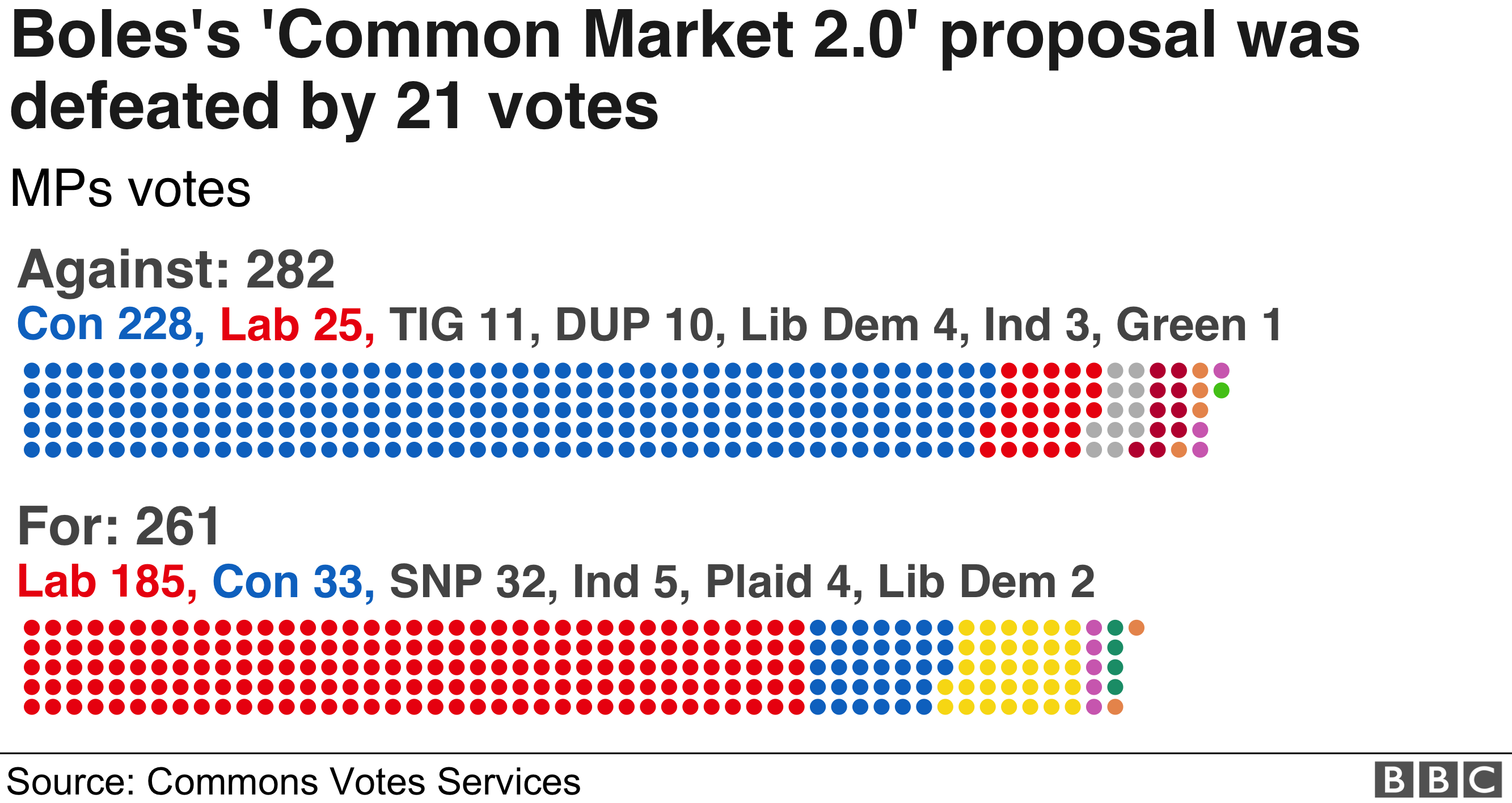
    • Motion D: Referred to as Common Market 2.0, this option would mean joining the European Free Trade Association and European Economic Area.

    Graphic of Common Market 2.0 vote


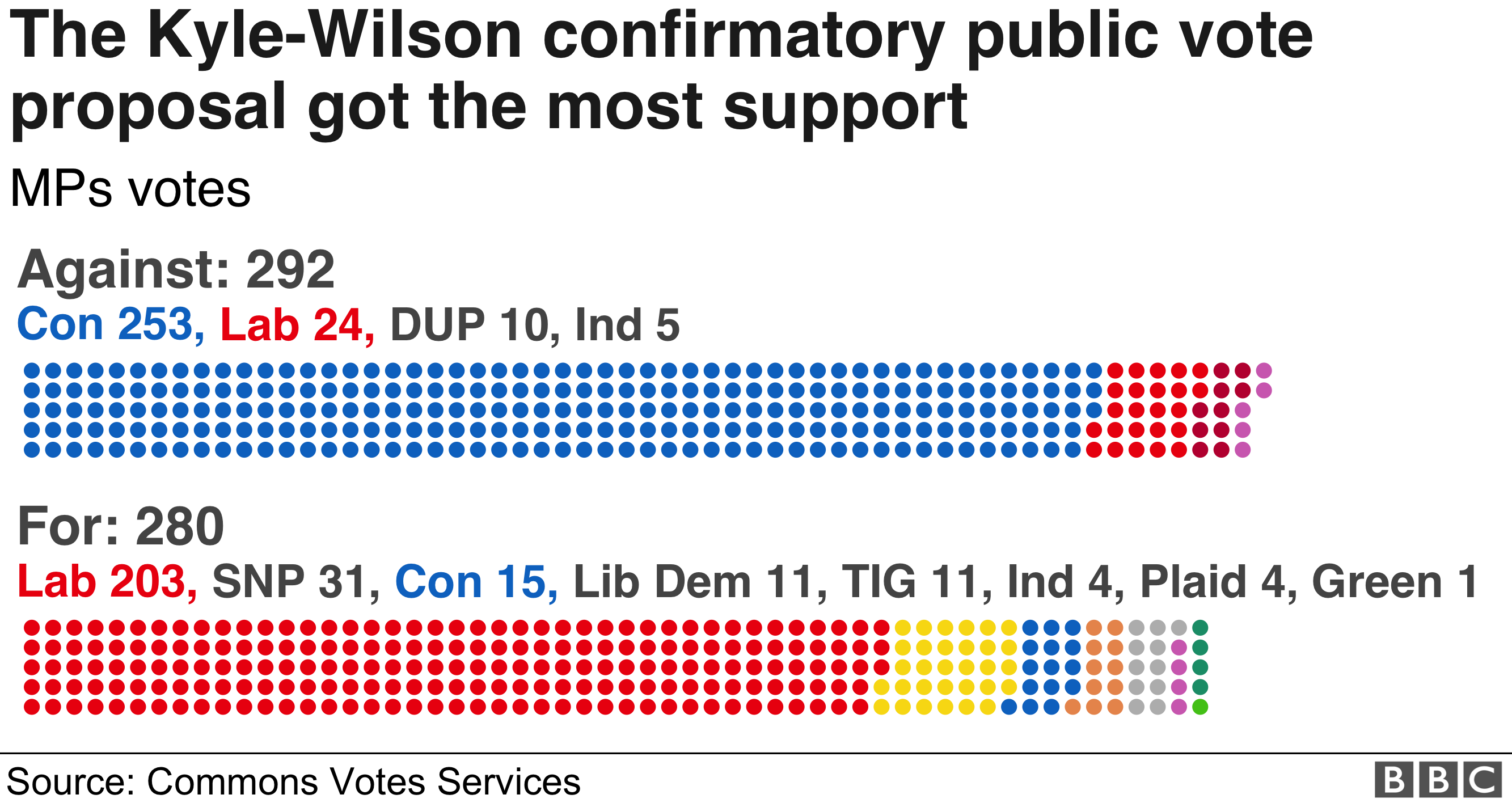
    • Motion E: Calling for a confirmatory referendum, giving the public a vote to approve any Brexit deal passed by Parliament before it can be implemented.

    Graphic of confirmatory public vote


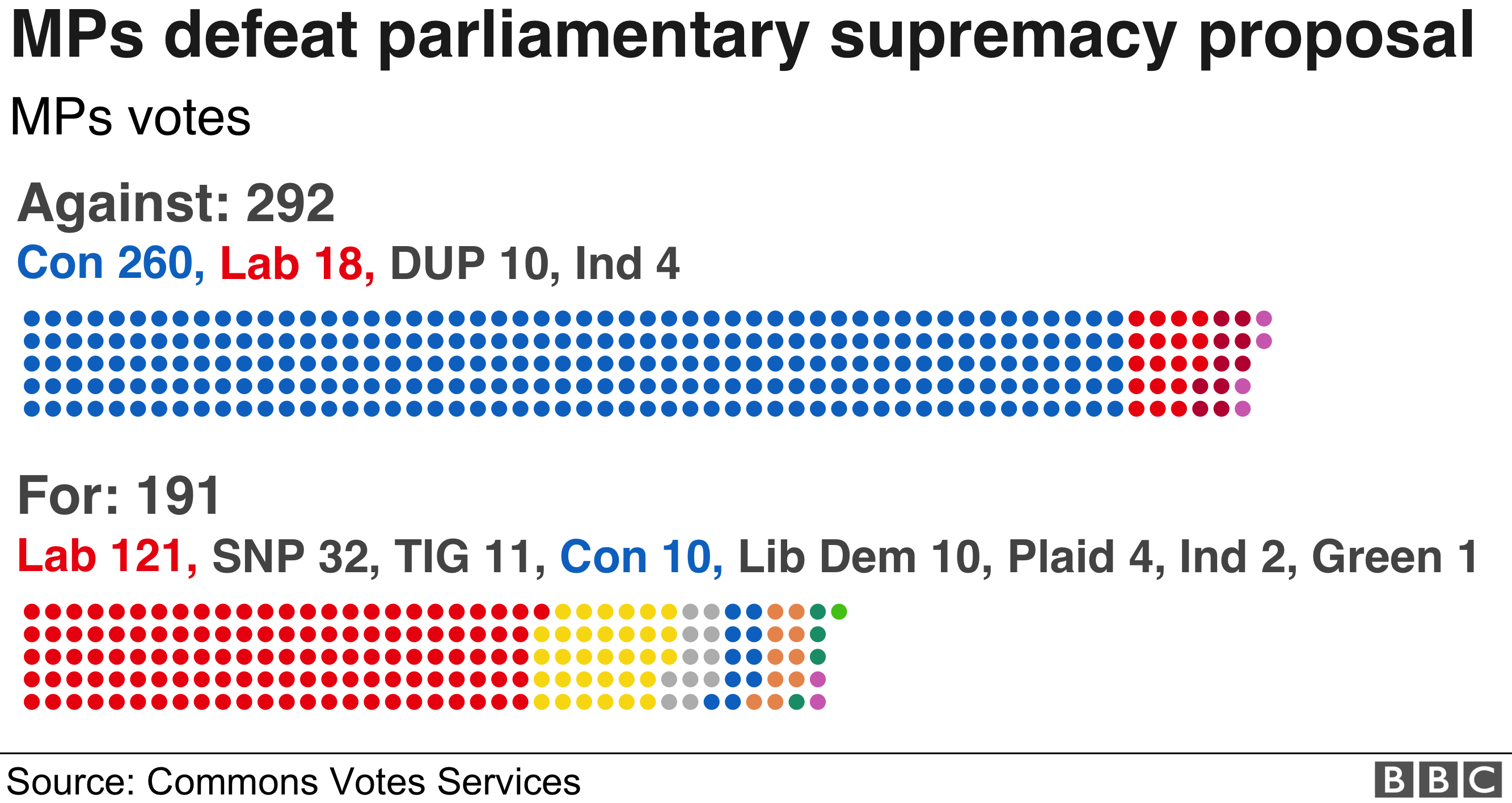
    • Motion G: Aiming to prevent the UK leaving without a deal, including a vote on whether to revoke Article 50 - stopping Brexit altogether - if the EU does not agree to an extension.

    Graphic of parliamentary supremacy proposal


    Those pushing for a customs union argued that their option was defeated by the narrowest margin, only three votes.
    It would see the UK remain in the same system of tariffs - taxes - on goods as the rest of the EU - potentially simplifying the issue of the Northern Ireland border,but preventing the UK from striking independent trade deals with other countries.
    Those in favour of another EU referendum pointed out that the motion calling for that option received the most votes in favour, totalling 280.
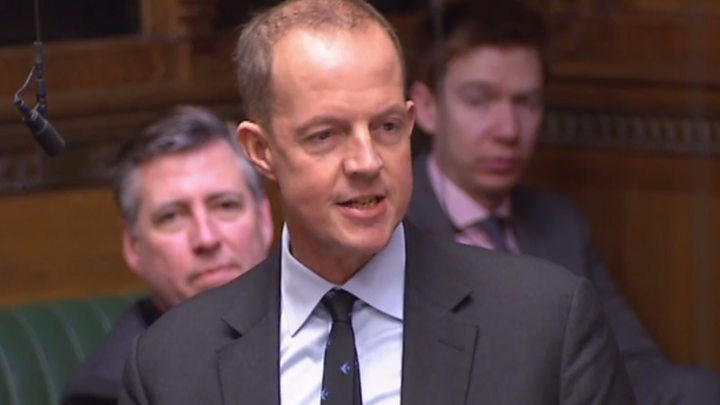
    Following the failure of his own motion, Common Market 2.0, Conservative former minister Nick Boles resigned from the party.
    The MP for Grantham and Stamford said he could "no longer sit for this party", adding: "I have done everything I can to find a compromise."
    As he left the Commons, MPs were heard shouting, "don't go Nick", while some MPs from other parties applauded him.
    He later tweeted that he would remain an MP and sit in the Commons as "an Independent Progressive Conservative".


    Media captionNick Boles: "I have failed, chiefly, because my party refuses to compromise"

    Brexit Secretary Stephen Barclay said the "only option" left now was to find a way forward that allows the UK to leave the EU with a deal - and the only deal available was the prime minister's.
    If that could be done this week, he added, the UK could avoid having to take part in elections to the European Parliament in May.
    Health Secretary Matt Hancock agreed it was time for Mrs May's deal to be passed.

    Presentational white space

    But Labour leader Jeremy Corbyn said that while it was "disappointing" that none of the proposals secured a majority, he said he wanted to remind the Commons that Mrs May's deal had been "overwhelmingly rejected".
    He urged MPs to hold a third round of indicative votes on Wednesday in the hope that a majority could yet be found for a way forward.

    Presentational grey line
    Analysis box by Laura Kuenssberg, political editor

    For months, Parliament has been saying "Let us have a say, let us find the way forward," but in the end they couldn't quite do it. Parliament doesn't know what it wants and we still have lots of different tribes and factions who aren't willing to make peace.
    That means that by the day, two things are becoming more likely. One, leaving the EU without a deal. And two, a general election, because we're at an impasse.
    One person who doesn't think that would be a good idea is former Foreign Secretary and Brexiteer Boris Johnson.
    He told me going to the polls would "solve nothing" and would "just infuriate people". He also said that only somebody who "really believes in Brexit" should be in charge once Theresa May steps down. I wonder who that could be...


    Presentational grey line

    Liberal Democrat Norman Lamb told BBC Look East he was "ashamed to be a member of this Parliament" and hit out at MPs in his own party - five of whom voted against a customs union and four of whom voted against Common Market 2.0.
    He said the Commons was "playing with fire and will unleash dark forces unless we learn to compromise".
    But prominent Brexiteer Steve Baker said he was "glad the House of Commons has concluded nothing".
    He said the prime minister must now go back to the EU and persuade them to rewrite the withdrawal deal - something they have so far refused to do - otherwise the choice was between no deal or no Brexit.

    'Disbelief'

    Senior figures in the EU, though, showed their frustration at the latest moves in Westminster.
    European Parliament Brexit coordinator Guy Verhofstadt tweeted that by voting down all the options, a "hard Brexit becomes nearly inevitable".
    BBC Europe editor Kayta Adler said the mood in Brussels was one of disbelief - that the UK still does not seem to know what it wants.
    She said EU leaders were also questioning the logic of arguing over things like a customs union or Common Market option at this stage, because right now, the UK has only three options as they see it - no deal, no Brexit or Theresa May's deal - and anything else is a matter for future talks once the UK has actually left.


    Presentational grey line

    What next?

    • Tuesday 2 April: Five-hour cabinet meeting from 0900 BST
    • Wednesday 3 April: Potentially another round of indicative votes
    • Thursday 4 April: Theresa May could bring her withdrawal deal back before MPs for a fourth vote
    • Wednesday 10 April: Emergency summit of EU leaders to consider any UK request for further extension
    • Friday 12 April: Brexit day, if UK does not seek/EU does not grant further delay
    • 23-26 May: European Parliamentary elections