Showing posts with label Policy - Security. Show all posts

Sunday, 13 April 2025

The Observer view on British Steel: saved for now, but for how long?

The UK’s last two remaining blast furnaces have hovered on the brink of shutting down over the past week. It has emerged that Jingye, the Chinese owner of Scunthorpe-based British Steel, was poised to refuse to buy further supplies of the coke and iron ore required to keep them running ...

 Story by Observer editorial 14h • 4 min read

... at which point it would not have been possible to restart them; effectively, a unilateral decision to put an end to Britain’s capacity to produce primary steel. 

In these circumstances, the government had no choice but to recall parliament for an emergency sitting to pass legislation to give business secretary Jonathan Reynolds the power to direct British Steel.

The British Steel site in Scunthorpe, owned by the Chinese conglomerate Jingye.
© Photograph: Ryan Jenkinson/Getty Images

The UK is starting from a low steel-producing base: it produced just 7.2m tonnes in 2021, compared with 13.9m tonnes in France, 24.4m tonnes in Italy and 40.1m tonnes in Germany. If British Steel were to shut its furnaces, this would leave the UK as the only G7 nation without primary steel-making capacity, with significant economic and security consequences. 

A range of industries rely on steel: construction, defence, transport, green energy. Without British-produced steel, global giant ArcelorMittal would attain what the defence thinktank Rusi has described as a “virtual monopoly” in the production of structural steel building frames for the UK market. Network Rail sources about 95% of its track from Scunthorpe. Parts of the defence industry are heavily reliant on British-produced steel; 90% of the steel used in Queen Elizabeth-class aircraft carriers was produced by Tata Steel at Port Talbot, for example.

There would be significant risks if UK industry were to become wholly reliant on steel imports, in a world characterised by increasing instability and the trade protectionism of Donald Trump’s White House. Europe may be considered a reliable trading partner, but the steel tariffs imposed by the US, combined with pressures for increased defence capability as the US goes cold on Nato, means the UK may not be able to count on sufficient supply from our European allies.

So the government had to intervene in this way: to let the furnaces in Scunthorpe go out would have been not only to lose thousands of jobs, affecting the community, but to put Britain’s security at risk. 

The power to direct British Steel does not amount to nationalisation, but this seems an all-but-certain outcome, given the situation with Jingye. It could end up costing the British taxpayer dear, but the risks of not maintaining domestic primary steel production would be even more costly.

There has been a complete lack of strategy for nurturing competitive British companies and removing barriers to their growth

It is far from ideal that ministers have found themselves in this situation, and for that governments of both colours over decades bear responsibility. The history of British steel-making has been lurching from crisis to crisis: the Scunthorpe furnaces were sold by Tata Steel to the private equity fund Greybull Capital in 2016, which left just three years later. The only buyer on the market was Jingye, which Boris Johnson, the then prime minister, saw as a more palatable option than closure or nationalisation. 

No government has set out a long-term strategy for maintaining British primary steel-making capacity, including realistic plans for decarbonisation, given it is a huge polluter. While steel producers in France and Germany have been relatively protected from high wholesale energy costs through government intervention, UK producers have been paying up to 50% more for electricity, a huge input cost into steel-making, than their competitors from these countries; Conservative business secretaries never addressed this asymmetry. The last government could also have done more to increase the market for low-carbon steel through regulation. It is an all-too-common aspect of British industrial policy: a complete lack of long-term strategy for nurturing competitive British companies and removing barriers to their growth.

There is a risk that, without a broader strategy for British Steel, the government nationalises the Scunthorpe furnaces in a way that will drain billions of taxpayer funds but is not part of a sustainable strategy for the future of primary steel-making in the UK.

 That needs to be the priority once the immediate crisis is averted. But the business secretary needs to learn the broader lessons of this sorry saga for industrial policy across the board. 

The UK is in a precarious position economically: long-term structural issues including low productivity growth and business investment and stagnant living standards have been compounded by the pandemic, by the energy crisis and by the global instability created by Trump’s tariffs policy. Britain’s long-term growth potential has been harmed irrevocably through Brexit and the erection of significant trading barriers with our largest and closest trading bloc.

We are living in a world in which Britain has declining economic and diplomatic agency. It is more important than ever to limit our dependence on other countries, including China, for the production of materials of strategic importance. 

The government deserves praise for taking swift action to prevent its primary steel-making capacity from being shut down. But that’s the easy bit: the much more difficult question is whether it’s possible to improve the competitiveness of British Steel in the medium term, while decarbonising, in a way that ensures the future of steel-making in the UK without it being forever reliant on huge subsidies from the taxpayer.

https://www.msn.com/en-gb/money/other/the-observer-view-on-british-steel-saved-for-now-but-for-how-long/ar-AA1CO1Em

Sunday, 27 December 2020

BBC - Brexit deal: What is in it?

A post-Brexit agreement on trade and other issues has been agreed, just a week before the transition period between the UK and the EU comes to an end.

By Chris Morris
Reality Check correspondent, BBC News

Published
26 December 2020
Related Topics
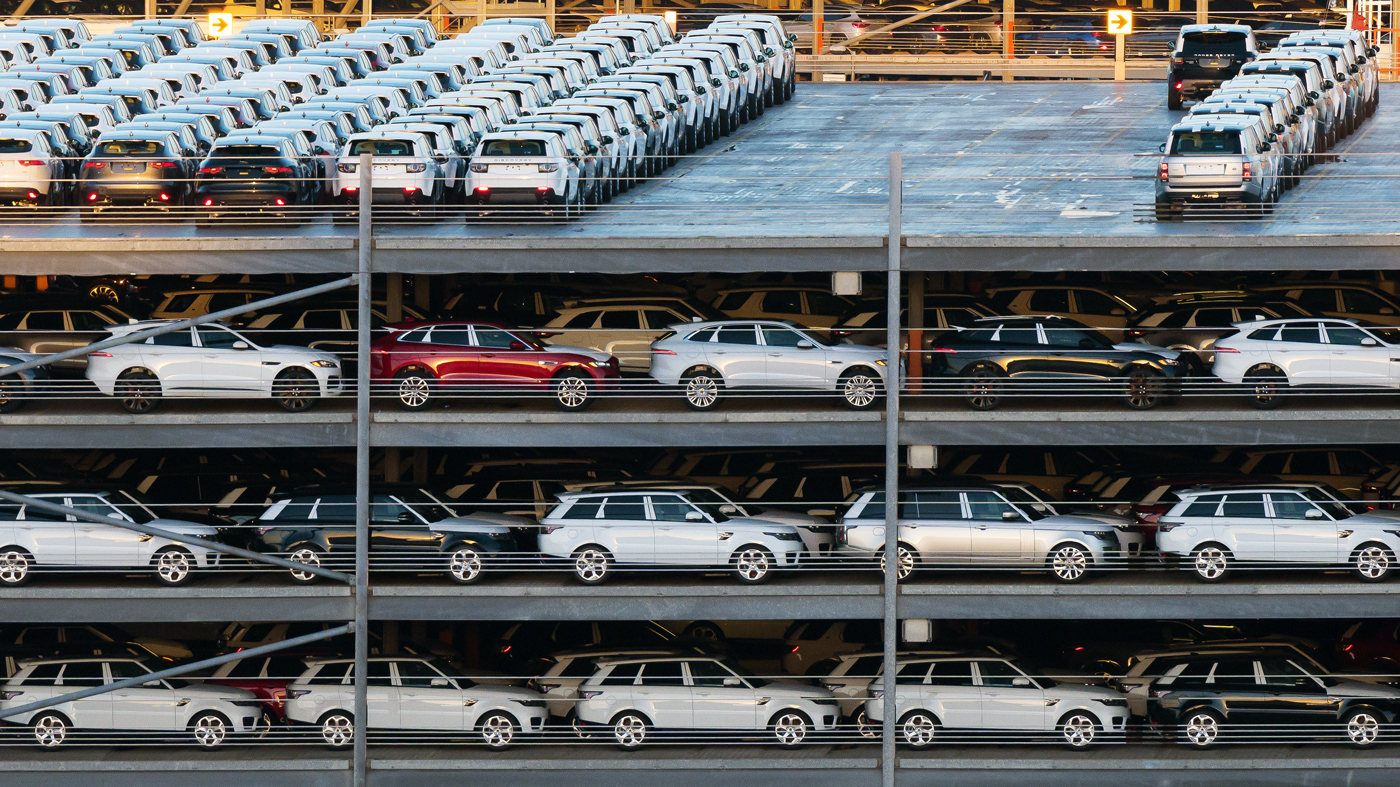
New cars in Southampton waiting to be exportedIMAGE COPYRIGHTGETTY IMAGES

A post-Brexit agreement on trade and other issues has been agreed, just a week before the transition period between the UK and the EU comes to an end.

It avoids the disruption of a no-deal Brexit in the middle of the Covid pandemic, and marks a new era after more than 40 years of UK membership of the European Union.

We've now seen a copy of the text - more than a thousand pages of dense legal text which outline how the relationship will operate in the future. Here are 10 initial questions and answers:

1. Fishing

One of the most difficult issues in the negotiations: how many fish will EU boats be able to catch in UK waters in future, and how long will any transition period last before new measures come into full force? Officials involved in the negotiations say the UK initially wanted an 80% cut in the value of the fish caught by EU boats in UK waters, while the EU initially proposed an 18% cut. Who has given more ground?

Answer: The value of the fish caught by the EU in UK waters will be cut by 25% - which is a lot less than the UK initially asked for. The cut will be phased in over a transition period lasting five and a half years - which is a lot shorter than the EU initially asked for. Once the transition period is over, the UK will fully control access to its waters, and could make much deeper cuts. If it decides to exclude EU fishing boats they can be compensated for their losses, either through tariffs on UK fishing products (or other goods) exported to the EU or by preventing UK boats from fishing in EU waters.

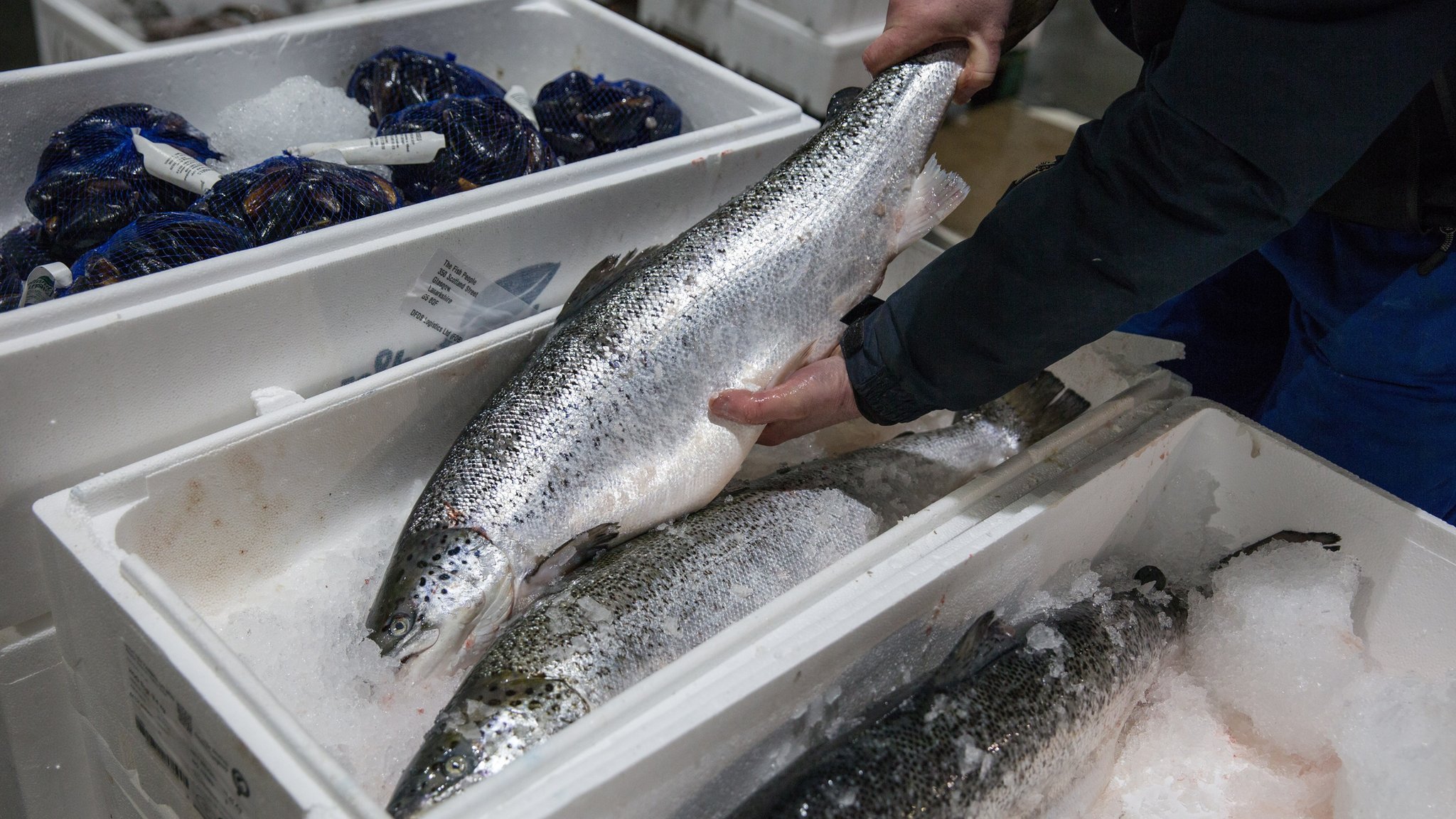
Inspecting a salmon at the Glasgow Fish MarketIMAGE COPYRIGHTEPA
image captionFishing was one of the most difficult areas of the negotiations

2. The "level playing field"

What will the rules on fair competition look like, to ensure that businesses on one side don't gain an unfair advantage over their competitors on the other? The definition of what constitutes reasonable levels of state aid, or government subsidies for business, will be important.

Answer: There are level playing field measures which commit both the UK and the EU to maintain common standards on workers rights, as well as many social and environmental regulations. This was a key EU demand. They don't have to be identical in the future, so the UK does not have to follow EU law, but they do have to be seen to protect fair competition.

The UK has also agreed to stick to common principles on how state aid regimes work, and to an independent competition agency which will assess them. But it can choose to develop a system which only makes decisions once evidence of unfair competition is presented. That is different from the EU system which assesses the likely impact of subsidies before they are handed out.

3. Dispute resolution

This will be the subject of years of negotiations to come. How will the deal actually be enforced if either side breaks any of the terms and conditions? If the UK chooses to move away more radically from EU rules in the future, how quickly can the EU respond? Will it have the ability to impose tariffs (or taxes on UK exports) in one area (for example on cars) in response to a breach of the agreement in another (fish, for example)?

Answer: If either side moves away from common standards that exist on 31 December 2020, and if that has a negative impact on the other side, a dispute mechanism can be triggered which could mean tariffs (taxes on goods) being imposed. It is based around a "rebalancing" clause which gives both the EU and the UK the right to take steps if there are significant divergences. This clause is much stricter than measures found in other recent EU trade deals, and was a key demand on the European side. It is a mechanism we may hear a lot more about in the coming years.

The overall policing of the trade agreement also means that tariffs can be targeted at a specific sector as a result of a dispute in another. There will be a binding arbitration system involving officials from both sides. It means that even though this is a tariff-free agreement, the threat that tariffs can be introduced as a result of future disputes will be a constant factor in UK-EU relations.

4. European Court of Justice (ECJ)

The EU's highest court will remain the ultimate arbiter of European law. But the UK government has said the direct jurisdiction of the ECJ in Britain will come to an end. So, will the European court play any role in overseeing the future relationship agreement?

Answer: The EU has dropped its demand that the ECJ should play a direct role in policing the governance of the agreement in future. That was a clear British red line. One place where the ECJ will still play a role is Northern Ireland, which has a special status under the terms of the Brexit withdrawal agreement. It will remain subject to EU single market and customs union rules, which means the European Court will remain the highest legal authority for some disputes in one part of the UK.

5. Travel

Holidaymakers in SpainIMAGE COPYRIGHTGETTY IMAGES

What will the rules be for British people who want to travel to the EU from 1 January 2021? We already know some of the details but will there be any additional agreements on things like social security or vehicle insurance? And will there be any detail on any arrangement to replace the European Health Insurance Card (EHIC)?

Answer: UK nationals will need a visa if they want to stay in the EU more than 90 days in a 180-day period. They will still be able to use their EHICs which will remain valid until they expire. The UK government says they will be replaced by a new UK Global Health Insurance Card (GHIC), but there are no further details yet on how to obtain it.

EU pet passports will no longer be valid, but people will still be able to travel with pets, following a different and a more complicated process.

The two sides agreed to co-operate on international mobile roaming, but there is nothing in the agreement that would stop UK travellers being charged for using their phone in the EU and vice versa. According to the UK government's mission to Brussels, UK citizens will not need an International Driver's Permit to drive in the EU.

6. Financial services

The trade agreement is primarily about the rules for goods crossing borders. It will say far less about the trade in services. Is there going to be a separate statement from the EU which will recognise UK rules governing financial services as roughly "equivalent" to EU rules? That would make it much easier for UK firms which export services to continue doing business in the EU market.

Answer: There is, as expected, not a lot in this agreement for service companies to cheer about. The UK will still be hoping that the EU issues an "equivalence" decision on financial services in the near future, but service companies in general have not got as much help in this deal as the British government had been pushing for. The guaranteed access that UK companies had to the EU single market is over.

7. Data

This is a really important issue. What will the data protection rules be for UK companies that deal with data from the EU? Again, the UK is hoping the EU will issue separately what's known as a data adequacy decision recognising UK rules as equivalent to its own. But the detail will need to be scrutinised carefully.

Answer: Both sides say they want data to flow across borders as smoothly as possible, but the agreement also stresses that individuals have a right to the protection of personal data and privacy and that "high standards in this regard contribute to trust in the digital economy and to the development of trade."

That's why an EU decision to recognise formally that UK data rules are roughly the same as its own is so important - and we're still waiting for that. In the meantime the EU has agreed to a "specified period" of four months, extendable by a further two months, in which data can be exchanged in the same way it is now, as long as the UK makes no changes to its rules on data protection.

8. Product standards

We know there will be more bureaucracy and delays at borders in the future, for companies trading between the UK and the EU. But will the two sides agree any measures to make things a little easier? There's something called "mutual recognition of conformity assessment" which would mean checks on products standards would not need to be nearly as intrusive as they otherwise might be.

Answer: There's no agreement on conformity assessment even though the UK government had hoped there would be. It's just one reminder of how many new barriers to trade there are going to be. In future, if you want to sell your product in both the UK and the EU, you may have to get it checked twice to get it certified.

On other border issues, there is also no agreement on recognising each other's sanitary and safety standards for exporting food of animal origin, which means there will have to be pretty intrusive and costly checks for products going into the EU single market.

There will however be some measures which cut technical barriers to trade, and the mutual recognition of trusted trader schemes which will make it easier for large companies to operate across borders.

9. Professional qualifications

A lot of people, from accountants to chefs, work in different EU countries and didn't have to worry about crossing borders multiple times while the UK was part of the EU. But will UK professional qualifications be recognised across the EU in the future, and what restrictions will there be?

Answer: The short answer is no - they won't be recognised automatically. That will make it harder for UK citizens supplying any kind of service to work in the EU. They will often have to apply to individual countries to try to get their qualifications accepted, with no guarantee of success. There is a framework in the deal for the UK and EU to agree on mutually recognising individual qualifications but that's weaker than what professionals have now.

10. Security

It's not just about trade. The UK will lose automatic and immediate access to a variety of EU databases which the police use every day - covering things such as criminal records, fingerprints and wanted persons. So what kind of access will they have, and how will security co-operation work in the future?


Answer: The UK loses access to some very key databases but will have continued access to others, including the system which cross-checks fingerprints across the continent. But overall, security cooperation will no longer be based on "real time" access. And in some cases, such as access to data on which flights people take, that data will only be made available under much stricter conditions.

An agreement has been reached on extradition, and the UK's role in Europol, the cross-border security agency, allows it to sit in on meetings but not have a direct say in decisions. Both of these are positive, and on a par with the best other countries have achieved.

Disagreements over data will be dealt with by a new committee, not by the European Court of Justice - again, a red line for the UK. But taken together, the speed with which the UK gets important data, and the influence it has on decisions, has been reduced.

There are many other questions to answer - this agreement will form the basis for UK-EU relations for years if not decades to come. And the two sides will have to continue to talk about how to implement it most effectively.

The team will continue to read through the text of the agreement and will add more to this story if necessary.

https://www.bbc.com/news/55252388

Tuesday, 4 September 2018

Where do the Brexit negotiations stand? - MUST READ

After two years, Britain finally produced its white paper on what it wants from a future relationship with the EU. It cost Theresa May a large chunk of her cabinet, and the response from Brussels has been distinctly lukewarm. This is how we got here
Tuesday 4 September 2018

There are multiple channels in the talks, to settle questions such as what happens to EU citizens already living in Britain, and who will certify British medicines after Brexit. Some are now settled in general, though specifics remain to be ironed out
Channel 1 of 8

Trade 🚚

25 members Last update 3 September
On trade, both sides say they want frictionless, tariff-free movement of goods. But the EU is adamant that membership of the single market must mean freedom of movement, and the UK is adamant that no deal can include jurisdiction for the European Court of Justice (ECJ or CJEU) in Britain.
Channel opened 29 March 2017
Show earlier statements
The Chequers proposal will create a UK - EU free trade area which establishes a common rule book for industrial goods and agricultural products. 🙏 🏳️ 🏳️ 🦄
Anyone defending the proposal will find it like trying to polish a turd. Luckily, we have some expert turd-polishers in this government. 💩 💅 🤡
We will now analyse the #Brexit White Paper w/ Member States & EP, in light of #EUCO guidelines. EU offer = ambitious FTA + effective cooperation on wide range of issues, including a strong security partnership. 🕵️ 🤨
 
The EU cannot - and the EU will not - delegate the application of its customs policy and rules, VAT and excise duty collections to a non-member who would not be subject to the EU’s governance structures. 🚪
 
On geographical indications - 3000 geographical indications in the 28 countries of the Union - I expressed again my worry. We must protect the entire stock of geographical indications. 🧀 🤦
 
There is another reason why I strongly oppose the Chequers proposal. There are services in every product. In your mobile phone, for example, it is 20 to 40 percent of the total value. 🏁 🚮
 
Mr Barnier and I found considerable agreement that Chequers is complete rubbish and we should chuck it and have a Canada-style free trade deal. 🏁 🚮
Channel 2 of 8

Ireland and Northern Ireland ☘️

12 members Last update 31 August
The EU has always placed Northern Ireland and its relationship with the Irish Republic on the same footing as the other major areas of the talks. The December 2017 deal included a 'backstop' - guaranteeing that there would be no hard border on the island, even at the cost of keeping the whole UK in the customs union. This made the issue a keystone
Channel opened 29 March 2017
Show earlier statements
If in London someone assumes that the negotiations will deal with other issues first before moving to the Irish issue, my response would be 'Ireland First'. 🗿 🗿
 
I object, in the strongest terms, to people who have limited experience of the Troubles in Northern Ireland throwing threats of violence around as some kind of bargaining chip in the negotiating process.
We agree today that the back stop solution [of NI staying in the customs union] must form part of the legal text of the withdrawal agreement. 🗿 🗿
 
We agree on the need to include legal text detailing the back stop solution ... but it remains our intention to achieve a partnership that is so close as to not require specific measures in relation to Northern Ireland. 🙏 🏳️ 🏳️ 🦄
We’ve yet to see anything that remotely approaches a workable UK proposal. If we are not making real and substantial progress by June then we need to seriously question whether we’re going to have a withdrawal agreement at all. ⏳ ☠️
 
Statement by British Govt on #Brexit last night needs and deserves detailed consideration. We look forward to publication of white paper next week so that the EU task force can examine new UK approach. Lots of work ahead. 🕵️
 
It is urgent to work on the text of an operational backstop. For that, I asked Dominic and his team to provide us with the data for the technical work which we need to do now on the necessary controls. 🤔 ❓
 
Channel 3 of 8

Citizens' rights 👪

11 members Last update 19 March
The EU says simply that it wants all EU citizens living in the UK at Brexit, and all UK citizens living in the EU, to enjoy the same rights as now. But that would mean the protection of the European Court of Justice (ECJ or CJEU), which is Theresa May's main red line in the talks
Channel opened 29 March 2017
Show earlier statements
The sovereignty of our courts remains a key priority for the United Kingdom. 🖍️ 👩‍⚖️ 🇬🇧 😝
In the context of the application or interpretation of citizens' rights, UK courts shall therefore have due regard to relevant decisions of the CJEU after withdrawal. 🏳️ 🏳️ 🏳️ 🏳️ 🏳️ 🏳️ 🏳️
Today, we bring back the certainty. The Commission's negotiators have made sure that the choices made by EU citizens living in the UK will be protected. We have made sure that their rights will remain the same after the UK has left the EU. 💪 💪 🎉
 
I’m clear there is a difference between those who came prior to us leaving and those who will come when they know the UK is leaving. 🚪
Citizens’ rights during the transition is not negotiable. We will not accept that there are two sets of rights for EU citizens. For the transition to work, it must mean a continuation of the existing acquis with no exceptions. 🙅
 
Citizens who arrive during the transition period will receive the same rights and guarantees as those who arrived before the day of Brexit. 🗿 🗿
 
We’ve reached agreement on the package that should apply to those who arrive during the implementation period itself. 🏳️ 🏳️ 🏳️ 🏳️
Advertisement
Channel 4 of 8

Financial settlement 💸

18 members Last update 27 July
Britain has committed to EU spending in the 'multi-annual financial framework' or MFF; the EU budget for 2014 - 2020. It also has commitments to financial funds, aid programmes and to EU employee pensions. In some cases, withdrawal will mean the return of money to Britain, but the balance will be negative. A December 2017 deal agreed an amount of around £40bn, but by summer 2018 the UK was again trying to make this conditional on other areas
Channel opened 29 March 2017
Show earlier statements
Around £45bn would appear to be the price Johnson and Gove et al are willing to pay for a deluded vision of an imperial Britain post-Brexit. 🤡 🔥 🔥
The price is meeting the obligations that we built up, no more, no less than that. I don’t think people in this country would expect us to just walk away from things we’ve already said we’d pay for. 🏳️ 🏳️ 🏳️ 🏳️ 🏳️ 🏳️ 🏳️
We’re hoping very much that the offer that the prime minister is able to make at that council will be one that guarantees sufficient progress ... Now is the time to get the ship off the rocks. ⛵ 🏳️ 🏳️ 🏳️ 🏳️ 🏳️
On the settling of accounts, the Prime Minister said in her remarkable Florence speech that the United Kingdom would honour its commitments, including beyond 2020. 💪 💪 🎉
 
I did come round to the British viewpoint on some things. For instance, I didn't insist on the UK covering the removal costs of the departing EU agencies. 😂 😂 😂
 
There is a link between the withdrawal agreement and the political declaration on the future framework. 🤑 🐍
But what is perfectly clear to the 27 EU member states and the European Parliament is that what has been agreed in December and March has been agreed for good. 🗿 🚧
 
Channel 5 of 8

Jurisdiction and legal structure 📜

10 members Last update 27 July
The EU has been keen to settle early on the question of dispute resolution after Brexit; if for instance, a trade agreement bound the UK not to subsidise its steel industry, who would decide if infrastructure spending around a plant amounted to subsidy? The EU's starting position is that the ECJ is its court, but Britain's (or at least May's) opening stance was that the ECJ would have no jurisdiction in the UK after Brexit
Channel opened 29 March 2017
Show earlier statements
We may start off with the European Court of Justice still governing rules we’re part of for that [implementation] period. 🤷 😙
If the ECJ still has jurisdiction, we will not have left the EU. It is perhaps the most important red line in ensuring the leave vote is honoured. 🖍️ 👹
If on 30 March 2019, the UK is subject to the jurisdiction of the ECJ, takes new rules related to the single market and is paying into the European budget, are we not a vassal state? ⛓️ ⛓️ 😭 😭
We’re going from one state to another; you can call it what you like, but I don’t think it’s a vassal state. 🙄 💅
Even after we have left the jurisdiction of the ECJ, EU law and the decisions of the ECJ will continue to affect us. Where appropriate, our courts will continue to look at the ECJ’s judgments. 🏳️ 🏳️ 🏳️
Where the UK and the EU had agreed to retain a common rulebook, it is possible that a dispute could relate to whether these rules had been interpreted correctly. The UK recognises that only the CJEU can bind the EU on the interpretation of EU law, and therefore in these instances, there should be the option for a referral to the CJEU for an interpretation.
The white paper commits the UK to membership of the European convention on human rights. It recognises the European court of justice as the only arbiter of EU law. These are important safeguards. 👏 💯
 
Channel 6 of 8

Security 🔐

5 members Last update 7 March
In her January Lancaster House speech, May threatened to withdraw security cooperation if talks soured. In reality, this should be an area of mutual benefit, whatever happens in the other strands of discussion. Should be ...
Channel opened 29 March 2017
If, however, we leave the European Union without an agreement, the default position is that we would have to trade on World Trade Organisation terms. In security terms, a failure to reach agreement would mean our cooperation in the fight against crime and terrorism would be weakened. ☠️ 🤷
I tried to be a gentleman towards a lady, so I didn’t even use or think about the use of the word blackmail. ⚠️ 🐍
 
The current terrorist threat is very much a European dimension issue. The Schengen database and knowing about who has moved where are all intimately dependent on European systems and we have got to try to remain in them. 🕊️ 😨
We are proposing a bold new strategic agreement that provides a comprehensive framework for future security, law enforcement and criminal justice co-operation: a treaty between the UK and the EU. 🕊️ 🕊️ 😨
The United Kingdom is unconditionally committed to maintaining Europe’s security and we will continue to offer aid and assistance to EU member states that are the victims of armed aggression, terrorism and natural or manmade disasters. 🕊️ 😙 😙
The UK will no longer be a member of the European Defence Agency or Europol. The UK will no longer be involved in decision-making, nor in planning our defence and security instruments. 👮 🚫 💂 🚫
 
I propose that the EU and the UK continue our common fight against terrorism and international crime. The increasing global instability requires our uninterrupted cooperation in defence and foreign affairs. 🕊️
 
Channel 7 of 8

Sequencing ⏰

4 members Last update 19 June
The first item to be concluded was a disagreement about whether trade talks could run in parallel to 'divorce' talks; the UK said yes, and the EU said no. On the first day of negotiations, Britain conceded the point.
Channel opened 29 March 2017
We believe it is necessary to agree the terms of our future partnership alongside those of our withdrawal from the European Union. 🙏 🙏
The negotiations must first clarify how we will disentangle our interlinked relationship. Only when this question is dealt with can we – hopefully soon after – begin talking about our future relationship. ಠ_ಠ ಠ_ಠ
 
This will be the row of the summer 👹 👹
Today, we agreed on dates. We agreed on organisation. We agreed on priorities for the negotiation. In a first step, we will deal with the most pressing issues. We want to make sure that the withdrawal of the UK happens in an orderly manner. Then, in a second step, we will scope our future relationship. 💪 💪
 
It is not when it starts, it is how it finishes. ¯\_(ツ)_/¯ 🏳️
Channel closed 19 June 2017
Channel 8 of 8

Other areas of cooperation 📚

9 members Last update 31 August
The UK is keen to maintain active cooperation in a number of areas, especially medicines and science, where the alternatives would be to create its own expensive regulators to duplicate EU activity. Early in the talks this led to the prospect of reversing an earlier decision to leave Euratom, the EU's nuclear energy programme, even if that meant accepting a limited role for the ECJ, so this miscellany still has the potential to change the direction of the other strands
Channel opened 29 March 2017
Show earlier statements
Leaving Euratom is a result of the decision to leave the EU as they are uniquely legally joined. The UK supports Euratom and will want to see continuity of co-operation and standards. 🤷 ⚖️
What is not possible is to go out of the Union but to stay a full member of Euratom 🚫 ⚛️ 🙄
 
The UK could remain part of EU agencies such as those critical for the chemicals, medicines and aerospace industries. We accept that this would mean abiding by the rules and making an appropriate financial contribution. 💰 🏳️ 🏳️
We invite the UK to participate in EU programmes in the fields of research and innovation, as well as in education and culture. 🕊️
 
If we shared sensitive information about plans for the Galileo satellite network with the UK (which will become a third country) it would irretrievably compromise the integrity of these systems for many years after the withdrawal 🛰️ 🤫
 
Our plan has always been to work as a core member of the Galileo project, contributing financially and technically to the project. If that proves impossible then Britain will have to go it alone. 💪 🛰️ 🤞
Galileo's civil and commercial signal will obviously still be accessible to the UK and its businesses. Our offer also includes the PRS (Public Regulated Service) signal, as is the case with other allies such as the US or Norway. 🕊️ 🛰️
 
https://www.theguardian.com/politics/ng-interactive/2017/jul/20/where-are-we-up-to-in-these-brexit-talks