Showing posts with label Brexit Deal. Show all posts

Wednesday, 1 September 2021

What next for the Northern Ireland Protocol?

The UK and EU remain at odds on the way forward for the Northern Ireland Protocol but some decisions will have to be made soon, with some significant grace periods set to end in a month's time.

By John Campbell
BBC News NI Economics & Business Editor

Published


Trucks passing through controls at Larne Harbour


Northern Ireland's Economy Minister Gordon Lyons on Tuesday called for further delays to Irish Sea border checks.

Mr Lyons said there would be "real problems" if grace periods expire as planned on 1 October.

So what comes next?

What is the protocol?

It is the deal agreed by the UK and EU to prevent a hard border between Northern Ireland and the Republic of Ireland after Brexit.

It does this by keeping Northern Ireland in the EU's single market for goods.

This means goods don't have to checked as they cross the Irish border, instead some checks and controls are required on goods entering Northern Ireland from the rest of the UK.

This has caused difficulties for some businesses and is opposed by unionist parties in Northern Ireland, which say it undermines Northern Ireland's constitutional position as part of the UK.

In July the UK published a "command paper" proposing radical changes to the protocol but the EU says it will not renegotiate.

What has to happen now?

The protocol has not been fully implemented due to what are know as "grace periods".

These are delays to some of the new checks and controls to give businesses more time to adapt and prepare.

Some significant grace periods are due to expire on 1 October.

At that point some Great Britain-made meat products would be prohibited in Northern Ireland - what has become known as "the sausage ban".


Aodhán Connolly says the conditions are not in place to end the grace periods

A much bigger concern for supermarkets is they would need to start using export health certification for all products of animal origin (meat, dairy, fish and eggs) going from Great Britain to Northern Ireland.

This would be a significant increase in administration and complexity.

The economy minister said Northern Ireland would not be able to cope with the additional administrative burden.

"There will be real problems for our supplies particularly in terms of food," he added.

Aodhán Connolly from the Northern Ireland Retail Consortium said the conditions were not in place to end the grace period.

"It was put in place to allow a new system to come in that would remove friction from moving goods [from] Great Britain to Northern Ireland," he told BBC News NI.

"That isn't in place and so we need a standstill.

"Otherwise there will be new certification required that will need signed off by a vet.

"That means friction, which means costs that neither retailers nor Northern Ireland householders can afford."


What are the options for extending grace periods?

Grace periods have been extended twice before but in radically different circumstances.

It delayed the introduction of new checks on food, parcels and pets.

It also moved unilaterally to ease the trade in horticultural products across from Great Britain to Northern Ireland.

That met with a furious response from the EU, which said that by acting alone the UK was in clear breach of the protocol.

The European Commission began a legal action against the UK, which is still continuing.

The EU said it was being "accommodating' and the UK described the move as "sensible".

So the nature of any extension will set the tone for UK-EU relations in the months ahead: conflict or conciliation.

Mr Lyons' party, the DUP, wants the Protocol to be entirely scrapped but he said extension of the grace periods are needed as "an absolute minimum".


Unionists say the protocol damages trade and threatens Northern Ireland's place in the UK

Will the EU definitely agree to an extension if asked?

The UK has not yet made a formal request for a further extension, but in its July proposals it said a "standstill" period was needed, including the continuation of existing grace periods.

At that time a European Commission spokesperson said: "With regards to the request for a standstill, the commission will carefully assess the new proposals made by the UK, in accordance with the necessary consultation procedures, both internally and with the European Parliament."

Officials from the UK and EU have remained in contact over the summer and grace periods have featured in discussions.

A UK government spokesperson said: "There has been ongoing technical contact over the summer with the commission regarding the proposals we set out in the command paper.

"We set out in July the importance of providing certainty for businesses and citizens through "standstill" arrangements as those discussions proceed, and welcomed the EU's decision at the end of July not to proceed to the next stage of its legal proceedings.

'We will update traders in due course as to any developments in this regard."

Sam Lowe, from the Centre for European Reform, said the EU would not be happy at the prospect of further extensions but would not be surprised.

"The question is whether the grace period extensions can be agreed together, as part of a joint exercise designed to work through the issues surrounding the implementation of the protocol, or whether the UK extends them unilaterally," he said.

"Either way, it's difficult to see them falling away any time soon."


More on this story

https://www.bbc.com/news/uk-northern-ireland-58356075

Wednesday, 30 December 2020

UK approves Brexit trade deal

 Prime Minister Boris Johnson says UK will become EU’s ‘best friend’ after Brexit transition ends.


The U.K. House of Commons has endorsed the Brexit trade deal | Christ J Ratcliffe/Getty Images

LONDON — The U.K.'s post-Brexit trade agreement with the European Union has passed into law after receiving royal assent in the early hours of Thursday morning.

Speaker of the House of Commons Lindsay Hoyle told MPs at 12.35 a.m. Thursday that Britain's Queen Elizabeth II had signified her royal assent for the European Union (Future Relationship) Act, after it passed through both Houses of Parliament.

MPs in the House of Commons voted 521 to 73 to pass the bill at its second reading in the Commons. It enshrines into law the 1,246-page Brexit deal struck by the EU and the U.K. on December 24. The deal covers goods and services trade, but also includes investment chapters, provisions on fish and data protection and arrangements for future cooperation on areas such as R&D and space.

Both the Conservative and Labour parties backed the legislation, despite a rebellion of a limited number of MPs from both camps. These included Tory former Northern Ireland Secretary Owen Paterson, who abstained, and former Shadow Home Secretary Dianne Abbott, who explained her decision to vote against the deal saying it falls short on policy areas such as security. The Scottish National Party, the Liberal Democrats, the Green Party, Plaid Cymru and the Democratic Unionist Party of Northern Ireland did not support the bill.

Opening the debate, Prime Minister Boris Johnson said that following the end of the Brexit process, the U.K. will “seize the moment to forge a fantastic new relationship” with the EU “based on free trade and friendly cooperation.”

“With this bill, we are going to become a friendly neighbor, the best friend and ally the EU could have, working hand-in-glove whenever our values and interests coincide with fulfilling the sovereign wish of the British people to live under their own laws, made by their own elected parliament,” Johnson said.

On the opposite benches, Labour Leader Keir Starmer faced criticism for his decision to instruct his party to back the deal in Westminster, while in the Scottish parliament Labour are expected to vote against the deal later Wednesday. Starmer defended Labour’s position saying the two votes are “completely different” and the only choice in Westminster is between a thin agreement and a no-deal outcome.

“When the default is no-deal it’s not a mark of how pro-European you are to reject implementing this treaty. It isn’t in the national interest to duck a question or to hide in the knowledge that others will save you from the consequences of your own vote,” he said.

The U.K. government in Westminster is expected to press ahead with implementing the deal regardless of whether the devolved administrations in Scotland, Wales and Northern Ireland express their consent.

Former Prime Minister Theresa May, who endorsed the agreement, lamented the very thin provisions on services and the loss of access to the Schengen Information System II security and border management intelligence database. But she expressed hope that more ambitious arrangements could be negotiated with the EU in the future. “We have a deal in trade which benefits the EU but not a deal in services which would have benefited the U.K.,” she said.

The bill concluded all its remaining stages in the Commons minutes after the second reading vote, and will now pass to the House of Lords, with peers expecting to vote it tonight. The legislation is expected to receive the royal assent it needs to become law shortly afterwards.

https://www.politico.eu/article/uk-house-of-commons-vote-brexit-trade-deal-eu/

Sunday, 27 December 2020

BBC - Brexit deal: What is in it?

A post-Brexit agreement on trade and other issues has been agreed, just a week before the transition period between the UK and the EU comes to an end.

By Chris Morris
Reality Check correspondent, BBC News

Published
26 December 2020
Related Topics
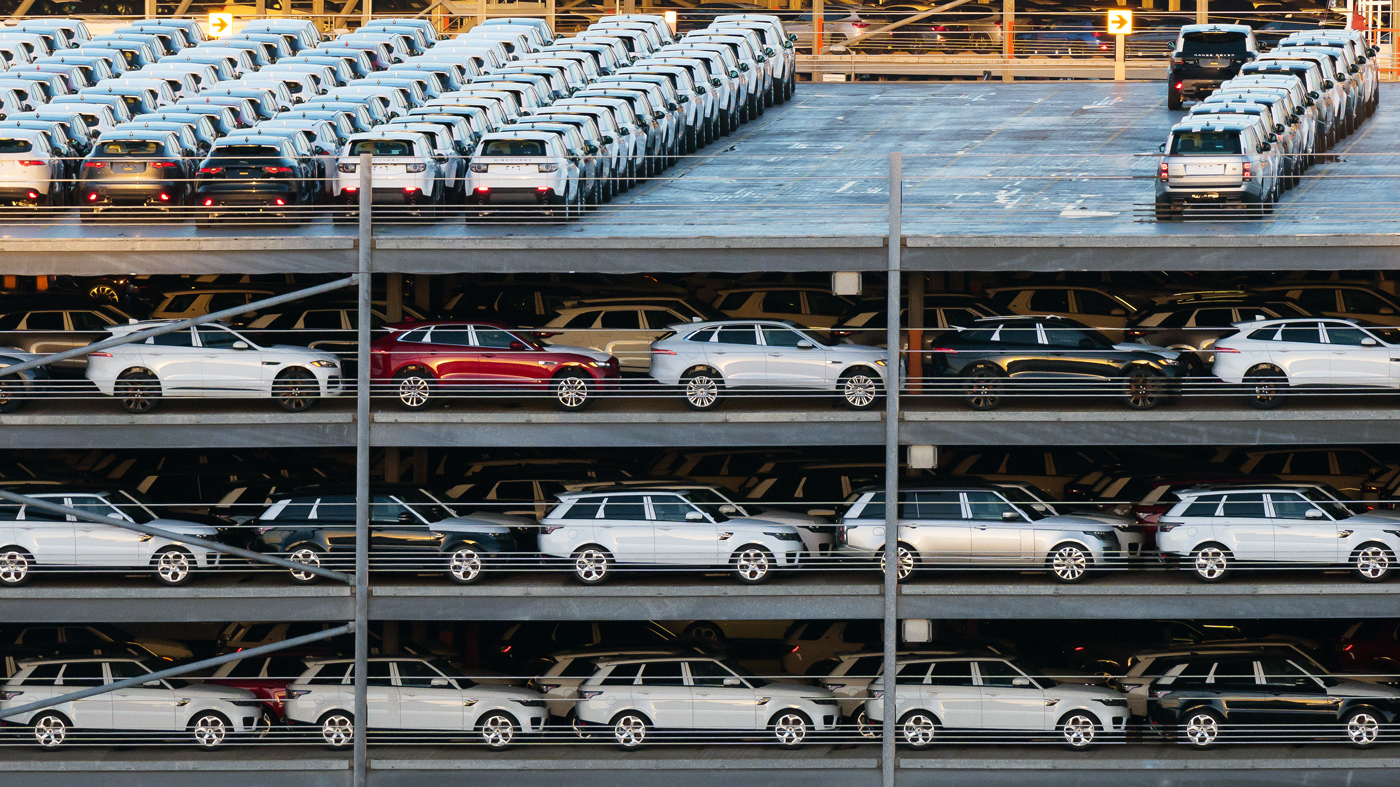
New cars in Southampton waiting to be exportedIMAGE COPYRIGHTGETTY IMAGES

A post-Brexit agreement on trade and other issues has been agreed, just a week before the transition period between the UK and the EU comes to an end.

It avoids the disruption of a no-deal Brexit in the middle of the Covid pandemic, and marks a new era after more than 40 years of UK membership of the European Union.

We've now seen a copy of the text - more than a thousand pages of dense legal text which outline how the relationship will operate in the future. Here are 10 initial questions and answers:

1. Fishing

One of the most difficult issues in the negotiations: how many fish will EU boats be able to catch in UK waters in future, and how long will any transition period last before new measures come into full force? Officials involved in the negotiations say the UK initially wanted an 80% cut in the value of the fish caught by EU boats in UK waters, while the EU initially proposed an 18% cut. Who has given more ground?

Answer: The value of the fish caught by the EU in UK waters will be cut by 25% - which is a lot less than the UK initially asked for. The cut will be phased in over a transition period lasting five and a half years - which is a lot shorter than the EU initially asked for. Once the transition period is over, the UK will fully control access to its waters, and could make much deeper cuts. If it decides to exclude EU fishing boats they can be compensated for their losses, either through tariffs on UK fishing products (or other goods) exported to the EU or by preventing UK boats from fishing in EU waters.

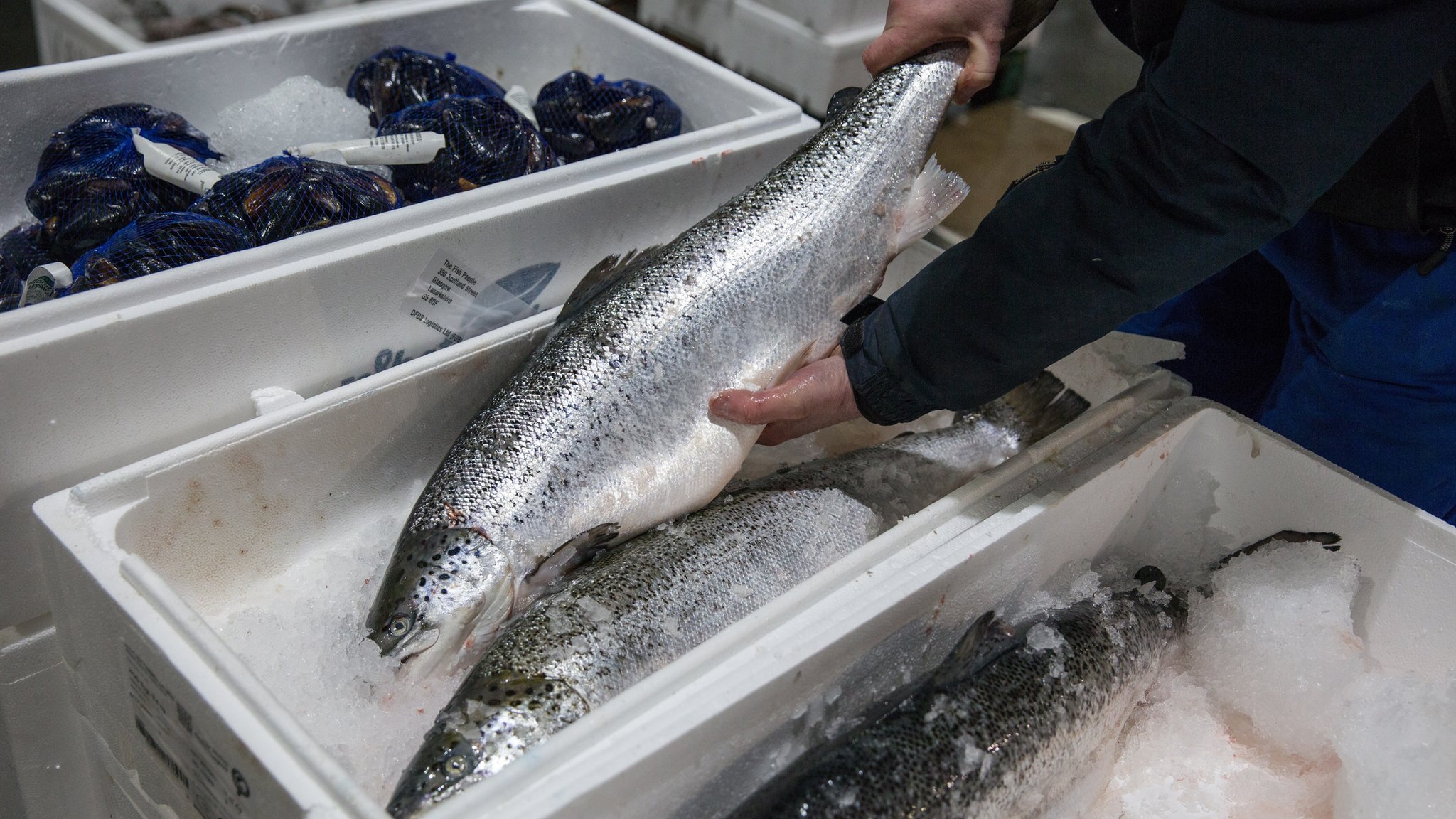
Inspecting a salmon at the Glasgow Fish MarketIMAGE COPYRIGHTEPA
image captionFishing was one of the most difficult areas of the negotiations

2. The "level playing field"

What will the rules on fair competition look like, to ensure that businesses on one side don't gain an unfair advantage over their competitors on the other? The definition of what constitutes reasonable levels of state aid, or government subsidies for business, will be important.

Answer: There are level playing field measures which commit both the UK and the EU to maintain common standards on workers rights, as well as many social and environmental regulations. This was a key EU demand. They don't have to be identical in the future, so the UK does not have to follow EU law, but they do have to be seen to protect fair competition.

The UK has also agreed to stick to common principles on how state aid regimes work, and to an independent competition agency which will assess them. But it can choose to develop a system which only makes decisions once evidence of unfair competition is presented. That is different from the EU system which assesses the likely impact of subsidies before they are handed out.

3. Dispute resolution

This will be the subject of years of negotiations to come. How will the deal actually be enforced if either side breaks any of the terms and conditions? If the UK chooses to move away more radically from EU rules in the future, how quickly can the EU respond? Will it have the ability to impose tariffs (or taxes on UK exports) in one area (for example on cars) in response to a breach of the agreement in another (fish, for example)?

Answer: If either side moves away from common standards that exist on 31 December 2020, and if that has a negative impact on the other side, a dispute mechanism can be triggered which could mean tariffs (taxes on goods) being imposed. It is based around a "rebalancing" clause which gives both the EU and the UK the right to take steps if there are significant divergences. This clause is much stricter than measures found in other recent EU trade deals, and was a key demand on the European side. It is a mechanism we may hear a lot more about in the coming years.

The overall policing of the trade agreement also means that tariffs can be targeted at a specific sector as a result of a dispute in another. There will be a binding arbitration system involving officials from both sides. It means that even though this is a tariff-free agreement, the threat that tariffs can be introduced as a result of future disputes will be a constant factor in UK-EU relations.

4. European Court of Justice (ECJ)

The EU's highest court will remain the ultimate arbiter of European law. But the UK government has said the direct jurisdiction of the ECJ in Britain will come to an end. So, will the European court play any role in overseeing the future relationship agreement?

Answer: The EU has dropped its demand that the ECJ should play a direct role in policing the governance of the agreement in future. That was a clear British red line. One place where the ECJ will still play a role is Northern Ireland, which has a special status under the terms of the Brexit withdrawal agreement. It will remain subject to EU single market and customs union rules, which means the European Court will remain the highest legal authority for some disputes in one part of the UK.

5. Travel

Holidaymakers in SpainIMAGE COPYRIGHTGETTY IMAGES

What will the rules be for British people who want to travel to the EU from 1 January 2021? We already know some of the details but will there be any additional agreements on things like social security or vehicle insurance? And will there be any detail on any arrangement to replace the European Health Insurance Card (EHIC)?

Answer: UK nationals will need a visa if they want to stay in the EU more than 90 days in a 180-day period. They will still be able to use their EHICs which will remain valid until they expire. The UK government says they will be replaced by a new UK Global Health Insurance Card (GHIC), but there are no further details yet on how to obtain it.

EU pet passports will no longer be valid, but people will still be able to travel with pets, following a different and a more complicated process.

The two sides agreed to co-operate on international mobile roaming, but there is nothing in the agreement that would stop UK travellers being charged for using their phone in the EU and vice versa. According to the UK government's mission to Brussels, UK citizens will not need an International Driver's Permit to drive in the EU.

6. Financial services

The trade agreement is primarily about the rules for goods crossing borders. It will say far less about the trade in services. Is there going to be a separate statement from the EU which will recognise UK rules governing financial services as roughly "equivalent" to EU rules? That would make it much easier for UK firms which export services to continue doing business in the EU market.

Answer: There is, as expected, not a lot in this agreement for service companies to cheer about. The UK will still be hoping that the EU issues an "equivalence" decision on financial services in the near future, but service companies in general have not got as much help in this deal as the British government had been pushing for. The guaranteed access that UK companies had to the EU single market is over.

7. Data

This is a really important issue. What will the data protection rules be for UK companies that deal with data from the EU? Again, the UK is hoping the EU will issue separately what's known as a data adequacy decision recognising UK rules as equivalent to its own. But the detail will need to be scrutinised carefully.

Answer: Both sides say they want data to flow across borders as smoothly as possible, but the agreement also stresses that individuals have a right to the protection of personal data and privacy and that "high standards in this regard contribute to trust in the digital economy and to the development of trade."

That's why an EU decision to recognise formally that UK data rules are roughly the same as its own is so important - and we're still waiting for that. In the meantime the EU has agreed to a "specified period" of four months, extendable by a further two months, in which data can be exchanged in the same way it is now, as long as the UK makes no changes to its rules on data protection.

8. Product standards

We know there will be more bureaucracy and delays at borders in the future, for companies trading between the UK and the EU. But will the two sides agree any measures to make things a little easier? There's something called "mutual recognition of conformity assessment" which would mean checks on products standards would not need to be nearly as intrusive as they otherwise might be.

Answer: There's no agreement on conformity assessment even though the UK government had hoped there would be. It's just one reminder of how many new barriers to trade there are going to be. In future, if you want to sell your product in both the UK and the EU, you may have to get it checked twice to get it certified.

On other border issues, there is also no agreement on recognising each other's sanitary and safety standards for exporting food of animal origin, which means there will have to be pretty intrusive and costly checks for products going into the EU single market.

There will however be some measures which cut technical barriers to trade, and the mutual recognition of trusted trader schemes which will make it easier for large companies to operate across borders.

9. Professional qualifications

A lot of people, from accountants to chefs, work in different EU countries and didn't have to worry about crossing borders multiple times while the UK was part of the EU. But will UK professional qualifications be recognised across the EU in the future, and what restrictions will there be?

Answer: The short answer is no - they won't be recognised automatically. That will make it harder for UK citizens supplying any kind of service to work in the EU. They will often have to apply to individual countries to try to get their qualifications accepted, with no guarantee of success. There is a framework in the deal for the UK and EU to agree on mutually recognising individual qualifications but that's weaker than what professionals have now.

10. Security

It's not just about trade. The UK will lose automatic and immediate access to a variety of EU databases which the police use every day - covering things such as criminal records, fingerprints and wanted persons. So what kind of access will they have, and how will security co-operation work in the future?


Answer: The UK loses access to some very key databases but will have continued access to others, including the system which cross-checks fingerprints across the continent. But overall, security cooperation will no longer be based on "real time" access. And in some cases, such as access to data on which flights people take, that data will only be made available under much stricter conditions.

An agreement has been reached on extradition, and the UK's role in Europol, the cross-border security agency, allows it to sit in on meetings but not have a direct say in decisions. Both of these are positive, and on a par with the best other countries have achieved.

Disagreements over data will be dealt with by a new committee, not by the European Court of Justice - again, a red line for the UK. But taken together, the speed with which the UK gets important data, and the influence it has on decisions, has been reduced.

There are many other questions to answer - this agreement will form the basis for UK-EU relations for years if not decades to come. And the two sides will have to continue to talk about how to implement it most effectively.

The team will continue to read through the text of the agreement and will add more to this story if necessary.

https://www.bbc.com/news/55252388