Showing posts with label Huawei. Show all posts

Monday, 25 July 2022

Rishi Sunak opens his arsenal against China

 Ever since Donald Trump told a sleeping world about the excesses of China, countries have been  ...

Rishi Sunak opens his arsenal against China - TFIPOST


Ever since Donald Trump told a sleeping world about the excesses of China, countries have been trying to dissociate themselves from the Communist nation. But, UK, a key ally of the USA was too much dependent on it. That is why, Rishi Sunak is trying to become 3rd Prime Minister in a row whose pitched USP will be being a China hawk and he has his arsenal ready.

Anti-China strategy of Rishi Sunak

Rishi Sunak has told Brits that if he becomes the Prime Minister, then he will eliminate influence of China from the region. And Rishi does not mean lowering only Chinese money on the banks of Thames river. He seems to have a detailed plan for throwing out Chinese soft power in the country as well. Rishi has announced that if he becomes PM, then he will shut down 30 Confucius institutes in Britain. Additionally, on the lines of India keeping a check on foreign funding, Rishi will also ask Universities to disclose foreign funding. This move is specially targeted to what Rishi termed as “kick the Chinese Communist Party (CCP) out of our universities”. Moreover, to counter Chinese military ambitions, Rishi is thinking of building a “NATO-style” military cooperation.

Highlighting how he will change attitude of British political set up towards China, Rishi Sunak said, “They torture, detain and indoctrinate their own people, including in Xinjiang and Hong Kong, in contravention of their human rights. And they have continually rigged the global economy in their favour by suppressing their currency. Enough is enough. For too long, politicians in Britain and across the West have rolled out the red carpet and turned a blind eye to China’s nefarious activity and ambitions. I will change this on Day 1 as PM.”

China’s predatory diplomacy

Like every other country in the western world, UK is also a victim of Bill Clinton’s eagerness to bring China in WTO. Initially, China did not show any intention to increase its political clout in Britain. China utilised the days of Tony Blair and Gordon Brown to build a base upon which they could launch a full-fledged diplomatic offensive. 3 years into David Cameron’s Prime Ministership, Xi Jinping took charge in China and China’s imperial ambitions became overt, especially in its neighbouring regions.

David Cameroon is the culprit

In spite of being aware of China’s predatory approach, David Cameron went out of his way to forge warm ties with China. In his 2013 visit to the China, Cameron went with largest ever trade delegation of 120 people. Both countries signed trade pact worth 6 billion pounds. Next year, Li Keqiang returned the favour on Xi Jiping’s part. Later, George Osborne, then British Finance Minister explicitly declared that Britain is dependent on China for economic growth.

In 2015, Xi Jinping himself visited the country and there the world finally got to know the depth with which China had permeated in Britain’s polity. Cameron’s promise of “golden era” in China-Britain relationship was being manifested in him sharing a pint of beer with Jinping at a pub in the English county of Buckinghamshire. Later, Chinese bought that pub, along with many other key figures in British politics.

Lord Browne, formerly the UK chairman of Huawei Technologies, served as the British government’s Lead Non-Executive Director from 2010 until 2014. Sir Andrew Cahn, a board member of Huawei UK, was in charge of UK Trade and Investment, while John Suffolk, Huawei’s Senior Vice President and Global Cyber Security and Privacy Officer, also served as Cameron’s Chief Information Officer.  Between 2010 and 2016, China invested more than $10 billion in Britain.

Being anti-China is the new USP in Britain’s politics

That is why when David Cameron resigned, it became imminent for upcoming British Prime Ministers to strangulate China. When Theresa May was at the helm of affairs, the level of enthusiasm between London and Beijing went down considerably. Many ambitious projects like an RMB bond issuance and a London-Shanghai stock got sidelined. Later Boris Johnson also continued with May’s legacy and banned Chinese Huawei from participating in Britain’s 5G future.

In March this year, Boris government termed China as the biggest state-based threat to UK’s economic security.

However, Rishi Sunak was believed to be China dove by many. Global times was hopeful of reconciliation with Britain. But, at the end of day, he will always go with domestic demands.

Rishi Sunak opens his arsenal against China - TFIPOST

Sunday, 6 December 2020

What’s the deal with Huawei and a hack at African Union headquarters?

 In 2012, a data theft incident began at the African Union (AU) Headquarters in Addis Ababa, Ethiopia, where information from the AU’s computer systems was allegedly transmitted to servers in China. 

May 31, 2019
Duke University
Image for post

By Justin Sherman

In 2012, a data theft incident began at the African Union (AU) Headquarters in Addis Ababa, Ethiopia, where information from the AU’s computer systems was allegedly transmitted to servers in China. This continued, at the same time every night, for five years, until it was discovered in January 2017. A year following, in January 2018, French paper Le Monde ran a story on it. That’s when the revelations went public.

The reason this has been cropping up today, amidst the U.S.’ intensifying technological confrontation with China, is that the bulk of the computer systems in the African Union Headquarters were supplied by Chinese telecommunications company Huawei and paid for by the Chinese government. When sensitive data was routed from AU servers back to servers located in Shanghai, it raised many suspicions about the Chinese government’s use of Huawei equipment to spy on foreign activity.

Amidst all of the ongoing controversy around Huawei, 5G, and national security, this incident has cropped back up in discussions about the extent to which the Chinese intelligence services do or could plant backdoors in Huawei systems for espionage purposes. If one is going to use this as reason to suspect Huawei, though, it’s worth better understanding this incident and to what extent this serves as reliable grounds for concern. In this blog, I therefore break down what happened, if there was evidence of backdoors in the Huawei systems used by the AU Headquarters, and what this means for the risks around Huawei and 5G.

What happened?

On January 26, 2018, Le Monde reported that the headquarters of the African Union — where heads of state and ministers meet biannually to discuss the continent’s major issues — had been hacked. Yet this was not a one-time incident. Like many data breaches, it took the organization years to notice internally, as sensitive data was exfiltrated again and again.

The $200 million headquarters opened in 2012, funded entirely by the Chinese government. Not only had it been called “China’s gift to Africa,” but Xinhua, the state-run Chinese news agency, in fact said at the time that the complex “is not only a new landmark in Addis Ababa but also the latest landmark in the long friendship between China and Africa.” All seemed well.

Yet in January of 2017, a computer scientist at the African Union noticed that AU servers, from midnight to 2am, were sending large volumes of data from the organization to an outside location, Le Monde reported. According to this individual, the AU’s internal secrets were specifically routed to servers in Shanghai. And this data exfiltration wasn’t a one-off operation. It had been occurring every night, at the same time, from January 2012 through January 2017.

The period of time between internal discovery (January 2017) and public disclosure (January 2018) of the data exfiltration is also worth noting. For one, per Le Monde, this was needed time to address the issue: the African Union purchased new servers in the time since discovering the data exfiltration, and apparently refused Chinese government offers to configure them. Officials at the AU additionally bolstered the encryption of their communications. The type of data exfiltrated and/or the way in which the exfiltration occurred clearly indicated something serious to the African Union, such that it didn’t just stop at replacing the tech. Security experts swept the building and additionally discovered (and removed) bugs planted in desks and walls. (It was not specified to whom these bugs belonged, or if that was known, but the implication in the article seems to be linking this to the server spying.)

But the delay between discovery and public disclosure may also underscore some elements of the relationship between the African Union and the Chinese government. Mailyn Fidler, for instance, argued the fact that “the African Union kept the Chinese surveillance secret for a year after discovering it, suggest[s] that African leaders believed such information, if public, could have explosive consequences for their relationship with China.” And this appears to be a risk — after all, Le Monde’s source was not the African Union itself, but “several” unnamed “internal sources” in the organization that leaked this news to the paper.

Upon publication of the article, the Chinese government denied any such incident occurred. China’s ambassador to the African Union called the Le Monde story “ridiculous and preposterous.” Rather than the expose the truth, he said, this publication was intended to put pressure on the relationship between China and Africa. The new AU chairman, meanwhile (who had just taken the position at the beginning of 2018), denied knowledge of any such event. “I don’t think spying is the specialty of the Chinese. We have spies all over the place in this world. But I will not have been worried about being spied on in this building…I would only have wished that in Africa we had got our act together earlier on. We should have been able to build our own building.”

The information reported by Le Monde was shortly thereafter supplemented by other investigatory work. Financial Times reported its own confirmation of the hack a few days after the initial story broke. While the African Union as an organization declined to officially comment on the story, one African diplomat attending an AU summit told Financial Times that “this is not the sort of thing Africans will entertain and take lightly.” That’s when it got interesting.

Danielle Cave from the Australian Strategic Policy Institute highlighted in July 2018 that Huawei had supplied the bulk of the information and communications technology (ICT) in the AU headquarters: primarily, cloud computing infrastructure. As she quoted from Huawei’s website, “The [Huawei] solution deployed all computing and storage resources in the AU’s central data center where it seamlessly connects to the original IT system. Then, Huawei installed Wi-Fi hotspots and provided the industry’s first Thin Clients (TC) customized with Wi-Fi access.” ZTE had also provided some infrastructure, although not as much as Huawei, and Cave wrote that less public information existed on the ZTE-AU relationship.

Amidst recent controversy around the extent to which Huawei may be involved with, complicit in, or susceptible to having to comply with espionage operations run by the Chinese government, this event has reentered the limelight as possible reason for concern.

Was there evidence of backdoors in the Huawei systems?

First, a quick reminder of important distinctions here: backdoors aren’t normal security vulnerabilities. Backdoors don’t just require the existence of a security flaw, but they also require intent and exploitability. The former, intent, means that the vulnerability exists in the system deliberately; it’s actively placed there so a third party can bypass normal authorization mechanisms for accessing the system. The latter, exploitability, means that there isn’t just a vulnerability in the code that’s sitting there, waiting for somebody to find, but that the actor (a) knows about the vulnerability and (b) has the capability to make use of it.

Together, a deliberately placed vulnerability and the ability to exploit it constitute a backdoor. (If you need more on the differences between vulnerabilities, backdoors, and also bugdoors, read this article my colleague and I wrote on the three, and why conflating them can dangerously mess up one’s risk assessment of the Huawei 5G situation.)

With that distinction in mind — no, there is no evidence of backdoors here, at least publicly. How exactly the data exfiltration occurred remains unknown. Reporting from Le Monde did not provide specifics, and subsequent analyses of this event have remained speculative as to how exactly the hack occurred. Meanwhile, a spokesperson from Huawei recently told the BBC: “If there was a data leak from computers at the AU’s headquarters in Addis that went on for an extended period of time, these data leaks did not originate in technology supplied by Huawei to the AU. What Huawei supplied for the AU project included data centre facilities, but those facilities did not have any storage or data transfer functions.”

Even if one tries to bring in contemporary “evidence” of Huawei backdoors to explain the 2012 AU Headquarters incident, there still actually isn’t any evidence to be presented. The UK’s Huawei Cyber Security Evaluation Center (HCSEC) 2019 report found many vulnerabilities in Huawei systems; the code is full of security holes. But to the earlier point about the need for both intent and exploitability, evidence of vulnerabilities doesn’t equal evidence of backdoors. They’re two different things.

To recap from what my colleague and I wrote on vulnerabilities, backdoors, and bugdoors:

…there exists no public evidence to suggest the known vulnerabilities in Huawei equipment are there to enable backdoors. Of course, just because you haven’t found evidence of intent doesn’t mean there was no intent, or that there’s no evidence to be found. (Think Donald Rumsfeld’s unknown unknowns). But nobody has publicly found evidence of intent yet. Until such time that backdoor or bugdoor evidence is found, then, all we know is that Huawei systems have vulnerabilities.

The same can be said with respect to the data exfiltration from the African Union Headquarters: there exists no public evidence, in any subsequent reporting, to suggest there were in fact backdoors in the Huawei computer systems placed there by Chinese intelligence services.

Le Monde claimed in its original report that backdoors were placed in the Huawei computer systems (des portes numériques dérobées (« backdoors ») qui donnent un accès discret à l’intégralité des échanges et des productions internes de l’organisation). Yet it’s very difficult to distinguish vulnerabilities from backdoors or bugdoors just by looking at the code; human intelligence is often needed to provide evidence of intent. The Le Monde reporting gives no further evidence to this end. As far as I can tell, the claim about backdoors is likely based on allegations from the AU computer scientist — which, barring proof of intent, are likely speculative.

What does this mean for Huawei and 5G?

Despite the current lack of public evidence that backdoors exist in Huawei systems writ large — and the current lack of public evidence that backdoors existed in the African Union Headquarters’ systems — one could argue such evidence is out there. And, recalling unknown unknowns, there very well might be evidence to uncover.

Yet many have pointed out the possibility of no Huawei involvement in the data exfiltration whatsoever, beyond the fact that it supplied the equipment on/through which the incidents occurred. Charles Clancy, a former NSA researcher now at Virginia Tech, recently testified to Congress that “it is unclear that Huawei uniquely enabled this attack, as the People[’]s Liberation Army (PLA) could have put in place advanced persistent threat toolsets without vendor knowledge or cooperation.” It’s also possible the Huawei systems, as the recent UK HCSEC report underscored, were just filled with security vulnerabilities due to poor design — and were thus especially susceptible to being hacked.


As a general comment, we can of course expect multinational organizations to be targets for electronic espionage. Some find this a compelling reason to expect, reasonably, some degree of espionage on the part of the Chinese government. “When you let them build the whole system, of course they are listening in,” one western diplomat told Financial Times of the Chinese government building the AU headquarters. And this point may have held for multiple government intelligence services — for even in this situation, China wasn’t the only one allegedly tapping into communications. Citing documents released by Edward Snowden, Le Monde reported that the UK’s GCHQ had also spied (between 2009 and 2010) on communications from the African Union.

But this is why one’s judgment of whether the incident lends credence to claims of the Chinese government using Huawei to spy comes back to one’s perception of the African Union Headquarters hack in the first place, and one’s general view of the Chinese government.

Is this incident evidence of backdoors in Huawei systems? No. It is evidence of Huawei complicity or involvement in Chinese spying? No. Yet is it reason for suspicion? Perhaps. It depends on your broader calculus around 5G risks. But there’s also just the chance, alongside all this speculation about backdoors and bugdoors, that we’re dealing with the buggy code risk: Huawei code just has a lot of security holes, and Chinese intelligence services are simply exploiting them.

Justin Sherman is a rising senior at Duke University and a cybersecurity policy fellow at New America, where this blog post first appeared.


https://medium.com/dukeuniversity/whats-the-deal-with-huawei-and-a-hack-at-african-union-headquarters

Wednesday, 2 December 2020

Belt and Road Debts to China Skyrocket Under Coronavirus Lockdown

Countries already deeply indebted to Beijing through its Belt and Road Initiative (BRI) face increasing economic hardship caused by the Wuhan coronavirus pandemic, the South China Morning Post reported on Tuesday.

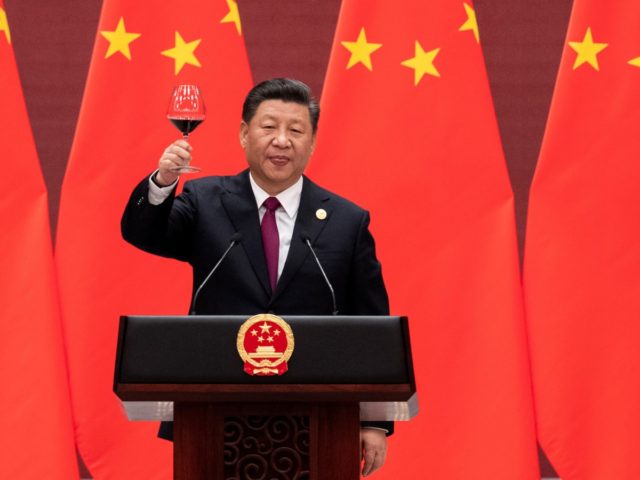
BEIJING, CHINA - APRIL 26: Chinese President Xi Jinping proposes a toast during the welcome banquet for leaders attending the Belt and Road Forum at the Great Hall of the People on April 26, 2019 in Beijing, China. (Photo by Nicolas Asfouri - Pool/Getty Images)
Nicolas Asfouri - Pool/Getty

China uses the BRI to establish economically predatory infrastructure projects across the globe, expanding its sphere of influence. Chinese loans fund infrastructure projects in over 100 developing nations across Asia, Africa, Europe, and Latin America through the BRI, an initiative estimated to be worth $8 trillion. 

According to the Center for Global Development (CGD), 15 out of 68 BRI partner countries face a significant risk of debt distress due to economic challenges caused by the Wuhan coronavirus pandemic.

Many countries around the world have practically shut down their economies in an effort to comply with mandatory government lockdowns meant to curb the spread of the Wuhan coronavirus, significantly disrupting global supply and demand chains. For heavily indebted countries like China’s BRI partners – already struggling before the Wuhan coronavirus pandemic – the looming economic recession may spell disaster.

In Africa, Niger and Angola will likely encounter difficulties. Ecuador, run by pro-China socialists for much of the decade, and Venezuela, rapidly approaching failed state status, are among the more at-risk Latin American countries. The study noted that smaller economies in Asia such as Laos, Cambodia, and the Kyrgyz Republic may also fall deeper into debt.

Experts estimate that developing countries’ “hidden debts” to China totaled $380 billion before the emergence of the Wuhan coronavirus pandemic.

BRI loans often require debtor nations to use specific Chinese contractors and materials for their infrastructure projects, in a practice known as circular lending. These Chinese contractors include Huawei, ZTE, China Harbor Engineering, and China Road and Bridge Corporation (CRBC). China demands massive amounts of collateral for loans, crafting a “debt trap” for impoverished nations.

In 2017, Sri Lanka handed over a port to China in an effort to pay off its BRI debts. Having defaulted on BRI loans to Chinese firms, the nation formally surrendered the strategic port of Hambantota to China on a 99-year lease, in a deal that threatens Sri Lanka’s sovereignty.

The warning for BRI-member economies comes as Chinese state media recently criticized the U.S. and Europe for wanting to restart their economies amid the ongoing coronavirus pandemic.

“An economic shutdown can be more detrimental to the ruling parties of the U.S. and European countries than the pandemic,” an editorial in the People’s Daily, an official Chinese Communist Party (CCP) newspaper, claimed on Tuesday.

“For the U.S., it is a capitalist country after all, where maintaining economic activities is given higher priority than humanitarianism and is the basic way to keep society running,” the author added.

https://www.breitbart.com/economy/2020/04/16/belt-and-road-debts-to-china-skyrocket-under-coronavirus-lockdown/

Study: China Littered Africa with Belt and Road Projects Ripe for Espionage

 Beijing uses its Belt and Road Initiative (BRI) infrastructure projects in Africa to embed Chinese surveillance technology into government buildings and telecommunication networks, according to a report published Wednesday by the Heritage Foundation.

The Chinese national flag is seen on a flagpole in Beijing on August 8, 2016. - Most of the five stars on the Chinese flags being used at medal ceremonies at the Rio Olympics are misaligned, officials said, prompting a diplomatic protest and online fury. (Photo by STR / AFP) …
STR/AFP via Getty Images

This enables the Chinese Communist Party (CCP) to spy on and better manipulate top government officials, furthering its influence across the continent and throughout the world.

In Africa, Chinese contractors have built at least 186 government buildings and at least 14 “sensitive intra-governmental telecommunication networks.” 

In addition, the Chinese government has donated computers to at least 35 African governments in recent years.

“[A]t least 40 of Africa’s 54 countries have a government building constructed by a Chinese company,” according to the report. 

The danger of China’s access to official African government buildings became clear in 2018 when reports surfaced that Beijing had been spying on the African Union (AU) headquarters building it constructed for at least the past five years.

[S]ervers installed by the Chinese telecommunications giant Huawei in the African Union headquarters were daily uploading their content to servers based in Shanghai, China. 

An inspection of the building—built by the state-owned China State Construction Engineering Corporation—also uncovered listening devices hidden throughout the building.

Although the CCP’s ruthless spying tactics are well established – especially with regard to its stealing technology and intellectual property from the West to build up its own formidable tech industry – the systematic espionage by China in Africa stands out. This is due to Beijing’s extensive and numerous BRI projects there, which allow China unprecedented access to sensitive government data.

By requiring African nations to use Chinese contractors to build the infrastructure – in this case, government buildings and telecommunication networks – Beijing provides itself with a unique opportunity to implant Chinese surveillance technology into the projects from the ground up. 

According to the report, China’s outsized presence on the African continent, of which it is the single largest creditor, provides Beijing with “better surveillance access to Africa than anywhere else.”

In recent years, Africa’s internet and cellular industries have been dominated by Huawei, China’s premier telecom giant. The company has been contracted to help construct a vast amount of Africa’s telecommunication backbone. 

At the behest of the CCP, Huawei has dutifully embedded its signature “safe city system,” a monitoring apparatus used by China to spy on its own citizens, into the cyber networks of certain African nations.

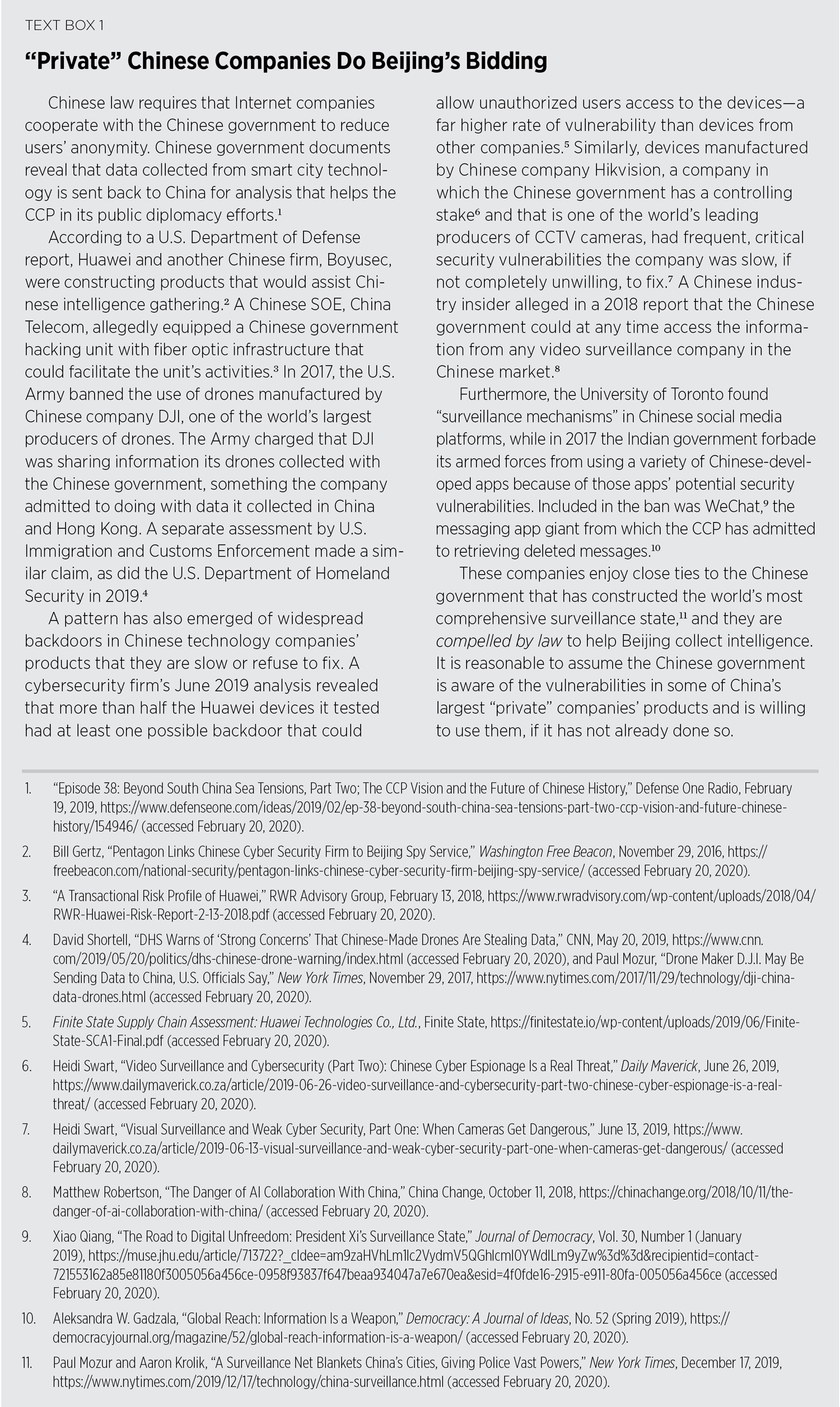
According to the report, “Chinese law requires that internet companies cooperate with the Chinese government to reduce users’ anonymity. Chinese government documents reveal that data collected from ‘smart city’ technology is sent back to China for analysis that helps the CCP in its public diplomacy efforts.” 

The report details Huawei’s prevalence in Africa, which continues to grow:

Huawei has built more than 70 percent of the 4G telecom networks in Africa and is proceeding with plans to deploy 5G networks on the continent. Huawei, ZTE (another Chinese telecommunications giant), and other Chinese telecoms have built and/or equipped at least 14 government networks, including dedicated military and police telecoms systems.

In Uganda, Huawei has secured several major contacts in recent years, building the majority of the country’s 3G and 4G cellular towers. 

In 2018, authoritarian ruler Yoweri Museveni’s government contracted Huawei technicians to hack into opposition leader Bobi Wine’s personal cell phone data. Government security forces used the data to carry out a surveillance operation on the politician that resulted in his capture and physical torture.

According to the report, “[t]he risk to U.S. companies [by the CCP] is perhaps higher than it has ever been.”

Over the past few years, China has increased its espionage of U.S. technology and intellectual data, stealing America’s commercial secrets as part of a greater objective known as “Made in China 2025.” 

The stratagem, proposed by Chinese dictator Xi Jinping, aims to “lessen Chinese dependence on Western technologies, and gain leverage against Washington in the ongoing trade war,” according to the report. 

Systematic espionage remains one of the CCP’s key weapons in its escalating war against the West, whose ultimate goal is to enact a global shift in power from the U.S. and Western nations to China and its Communist party system.

Sunday, 6 September 2020

Chinese Spying in African Govt Buildings

Government Buildings in Africa Are a Likely Vector for Chinese Spying - Chinese companies have constructed or renovated (or both) at least 186 sensitive African government buildings ...

May 20, 2020 27 min read

SUMMARY

Beijing may have better surveillance access to Africa than anywhere else in the world. 

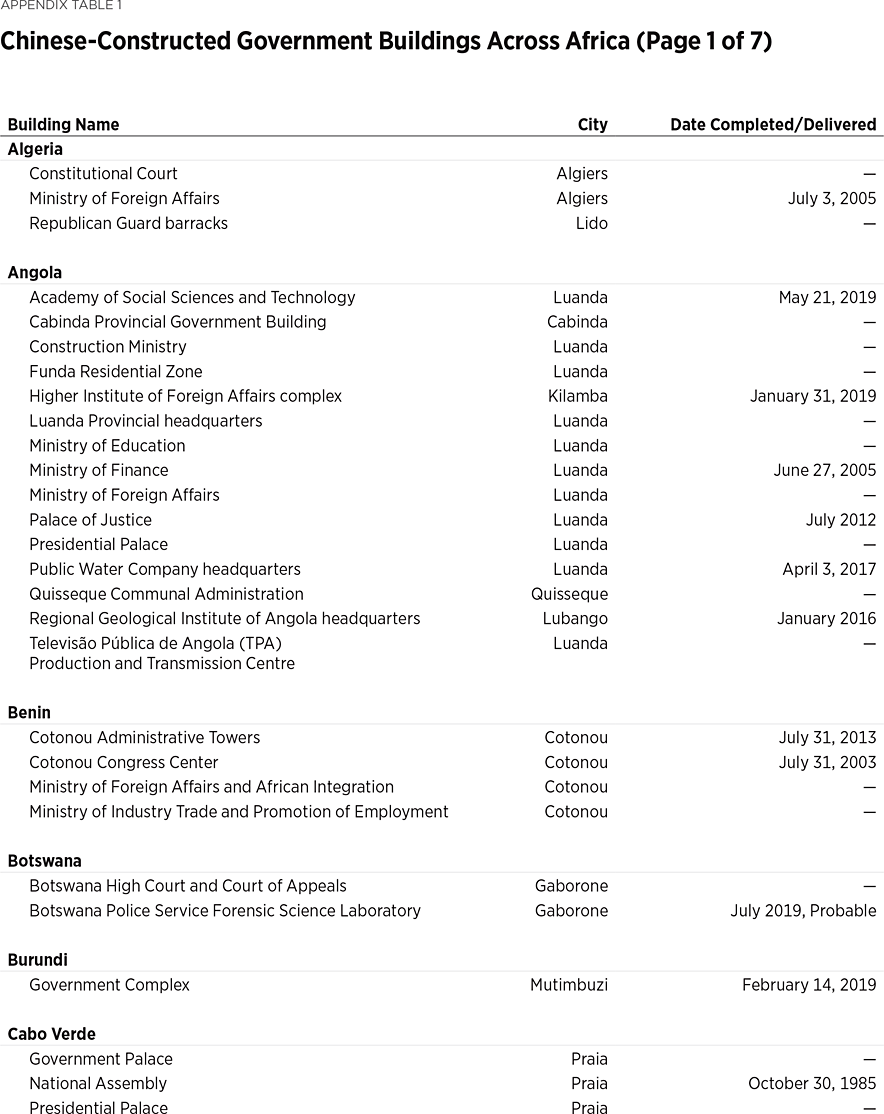
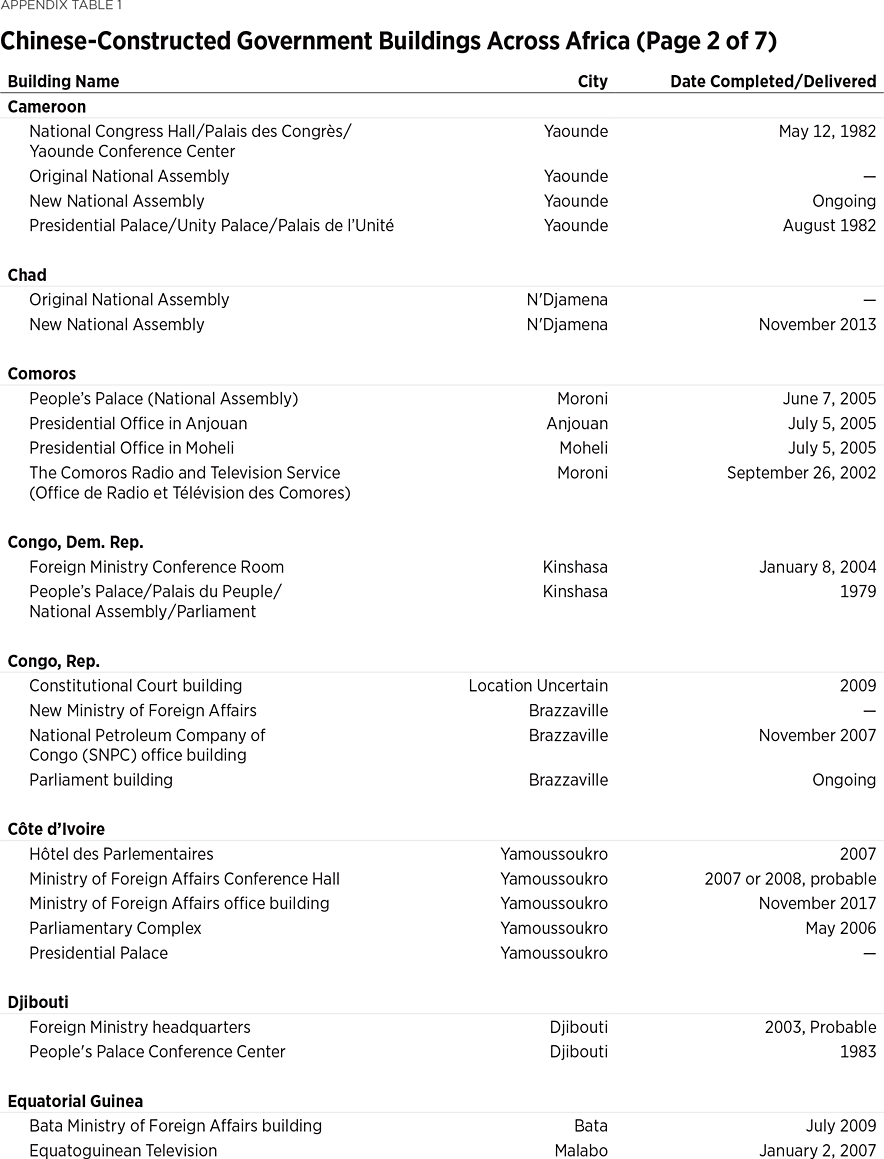
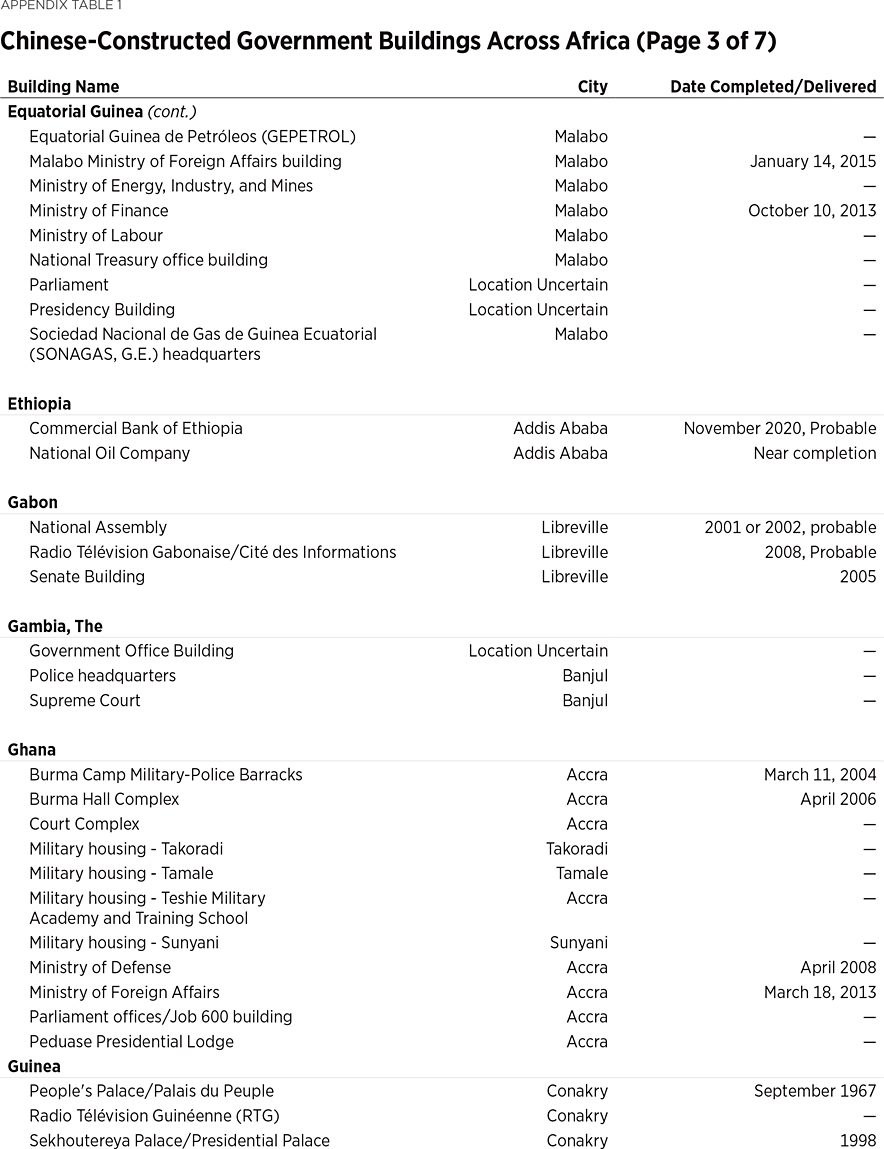
Chinese companies have constructed or renovated (or both) at least 186 sensitive African government buildings; Chinese telecommunications firms have built at least 14 intra-governmental, “secure” telecommunications networks; and the Chinese government has gifted computers to at least 35 African governments. 

As the world leader in economic espionage and foreign influence operations, Beijing almost certainly uses its engagements in Africa to surveil American and African officials and business leaders. 

The Chinese government could use the information it harvests to advantage its companies competing against American and other firms, glean insights into U.S. security assistance and counterterrorism programs, and recruit or influence senior African government officials.

The U.S. should, among other efforts, work to understand the nature of Chinese surveillance and how it contributes to Beijing’s influence operations, educate U.S. companies on the risks, and train its officials on techniques to complicate Beijing’s information gathering in Africa.

May 20, 2020 27 min read Download Report


Joshua Meservey
Senior Policy Analyst, Africa and the Middle East
Joshua Meservey is the Senior Policy Analyst for Africa 
and the Middle East at the Heritage Foundation.


KEY TAKEAWAYS
  • Beijing likely has better surveillance access to Africa than anywhere else by having built or renovated at least 186 African government buildings.
  • Beijing likely uses surveillance to, among other things, advantage its companies competing for contracts, spy on U.S. officials, and influence African officials.
  • The U.S. should try to complicate Beijing’s surveillance of an important continent as part of a strategic response to the CCP’s effort to reshape the global order.


The Chinese Communist Party’s (CCP’s) two-decade-long blitz of engagement in Africa has likely given it extensive surveillance access to the continent. Chinese companies, all of which are legally obliged to help the CCP gather intelligence, have built at least 186 government buildings in Africa and at least 14 sensitive intra-governmental telecommunication networks. Beijing has also donated computers to at least 35 African governments.
The wealth of information the CCP probably gathers in Africa presents four primary dangers for the U.S., as that information could be used to:
  1. Facilitate Beijing’s influence operations on the continent;
  2. Recruit intelligence assets at senior levels of African governments;
  3. Gain insight into U.S. diplomatic strategies, military counterterrorism operations, or joint military exercises; and
  4. Disadvantage U.S. companies competing against Chinese firms for Africa’s growing economic opportunities.
While the longer-term challenge of Beijing’s extensive influence in Africa can only be addressed by a comprehensive U.S. strategy, Washington can take a number of immediate steps to complicate Chinese surveillance access to Africa. Those steps should include working to understand the nature of Chinese surveillance and how it contributes to Beijing’s influence operations on the continent, educating U.S. companies on the risks, and training its officials on techniques to protect themselves from Beijing’s eavesdropping.

At Least 186 Buildings

In January 2018, the French newspaper Le Monde reported that servers installed by the Chinese telecommunications giant Huawei in the African Union (AU) headquarters were daily uploading their content to servers based in Shanghai, China. An inspection of the building—built by the state-owned China State Construction Engineering Corporation—also uncovered listening devices hidden throughout the building.1
Joan Tilouine and Ghalia Kadiri, “A Addis-Abeba, le Siège de l’Union Africaine Espionné par Pékin,” (In Addis Ababa, the Seat of the African Union Spied on by Beijing) Le Monde, January 26, 2018, https://www.lemonde.fr/afrique/article/2018/01/26/a-addis-abeba-le-siege-de-l-union-africaine-espionne-par-les-chinois_5247521_3212.html (accessed February 20, 2020).
 Three days later, the Financial Times newspaper confirmed Le Monde’s story.2
John Aglionby, Emily Feng, and Yuan Yang, “African Union Accuses China of Hacking Headquarters,” Financial Times, January 29, 2018, https://www.ft.com/content/c26a9214-04f2-11e8-9650-9c0ad2d7c5b5 (accessed February 20, 2020).

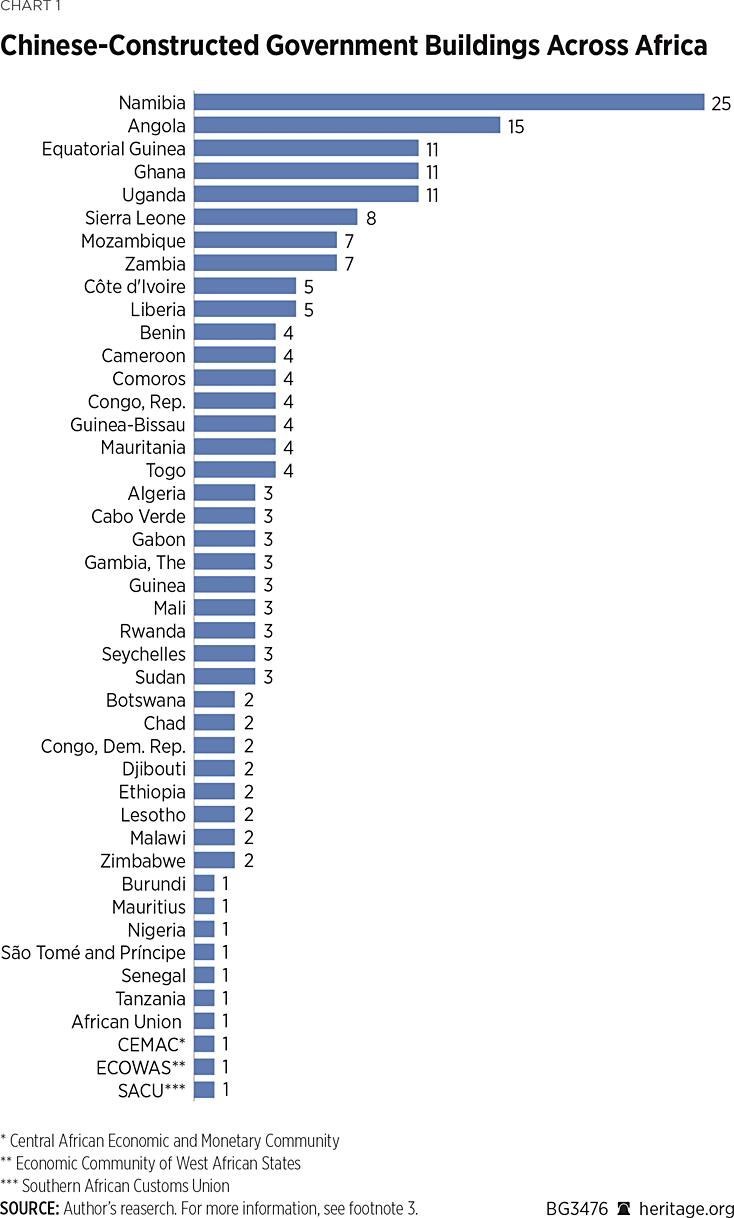
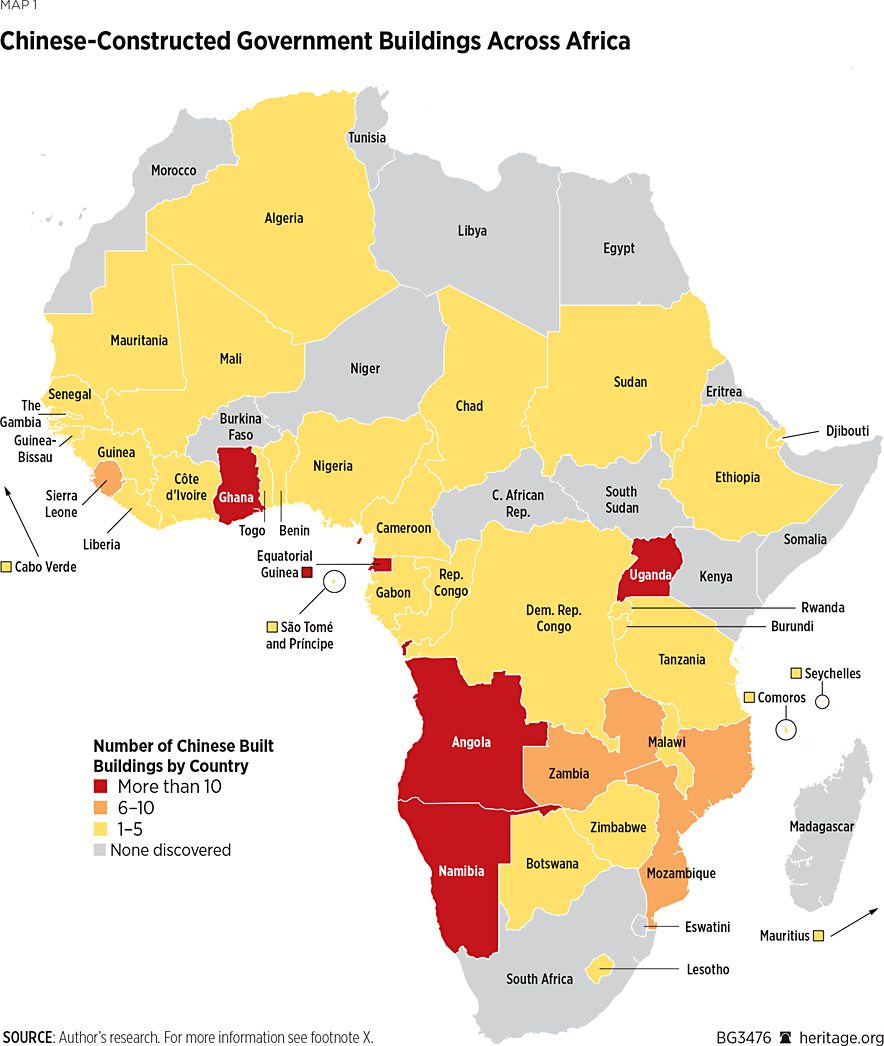
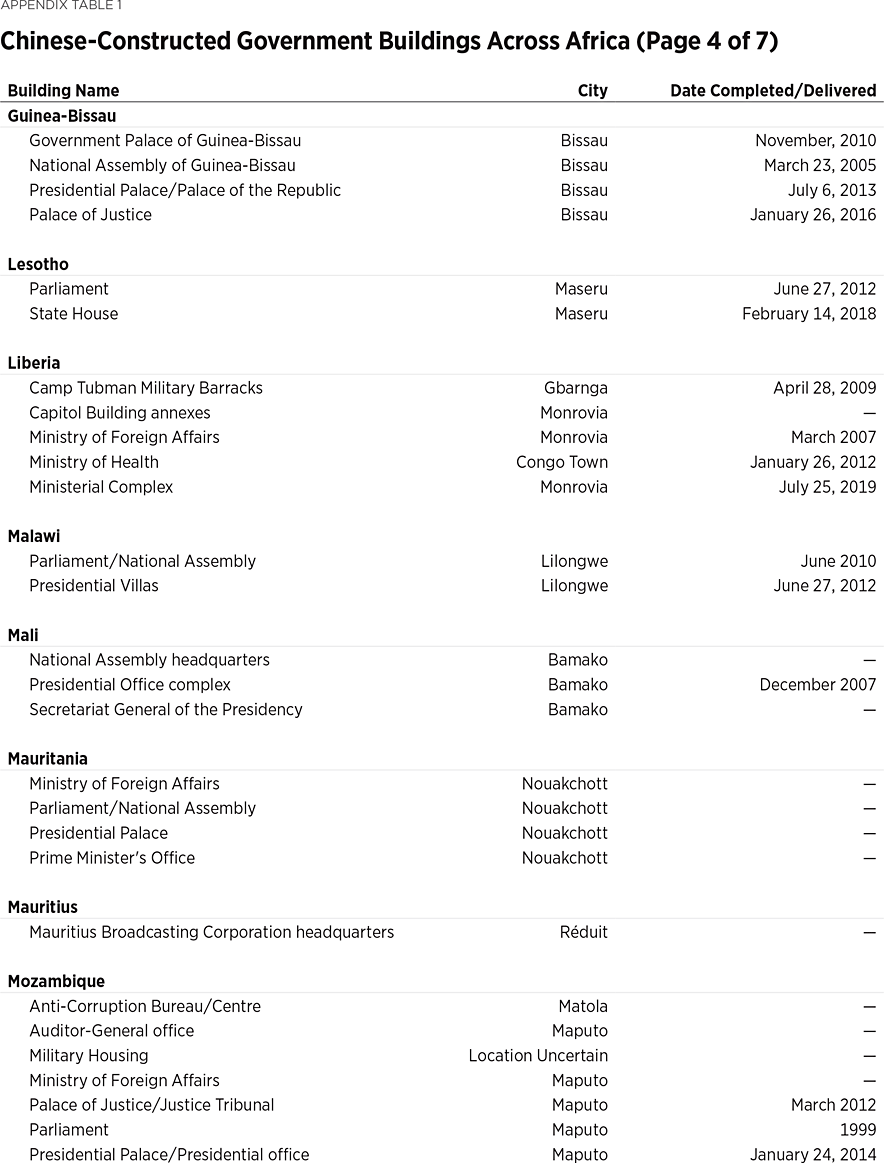
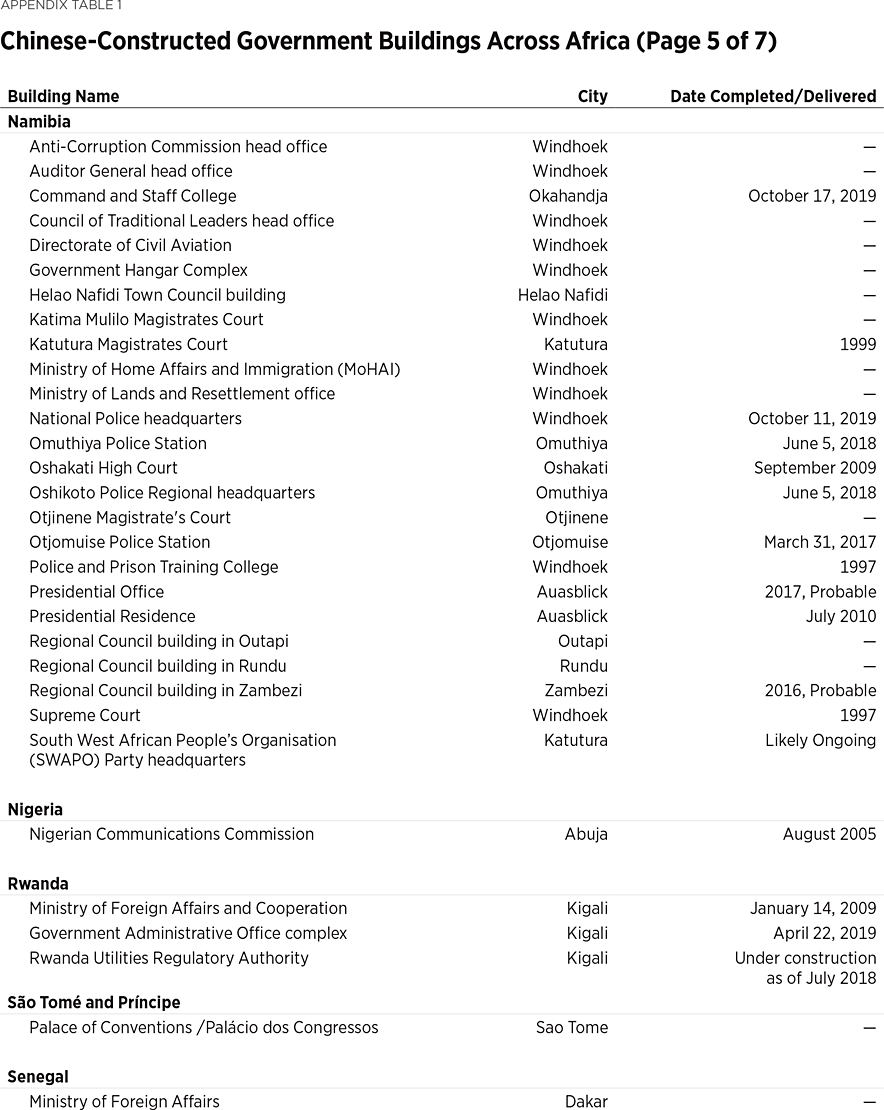
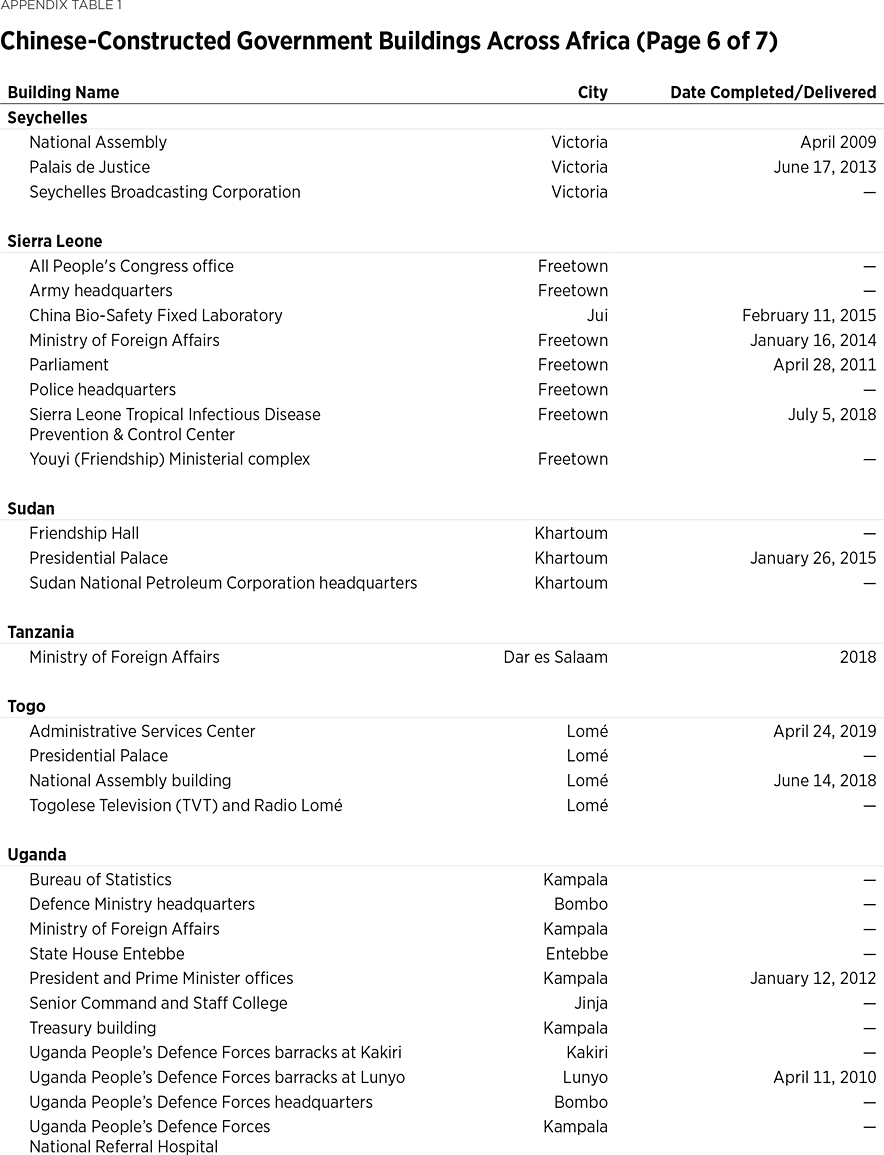
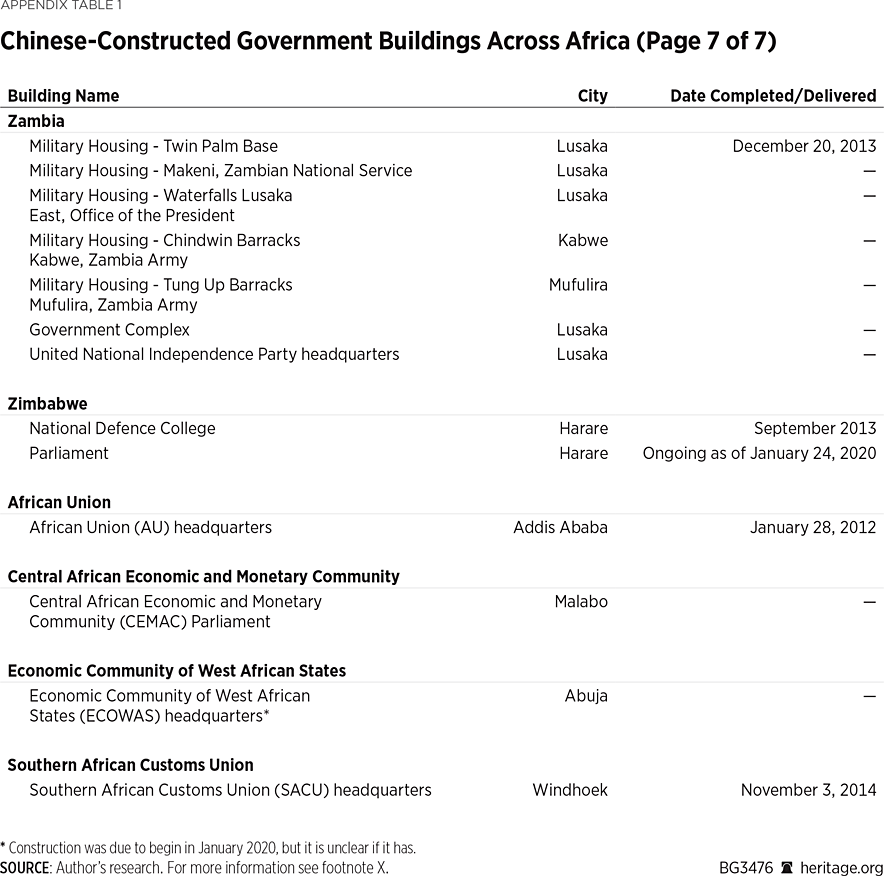
Beijing’s eavesdropping on African government buildings likely extends well beyond the AU headquarters. Since 1966, Chinese companies have constructed or renovated (or both) at least 186 such buildings.3
Wide variety of sources compiled by the author. Particularly helpful were AidData Research and Evaluation Unit, “Geocoding Methodology, Version 2.0.2,” June 1, 2017, https://www.aiddata.org/publications/geocoding-methodology-version-2-0 (accessed February 20, 2020), and David H. Shinn and Joshua Eisenman, China and Africa: A Century of Engagement (Philadelphia: University of Pennsylvania Press, 2012). The 186 number includes three regional and one pan-African building: the Central African Economic and Monetary Community (CEMAC) Parliament, the Economic Community of West African States (ECOWAS) headquarters, the Southern African Customs Union (SACU) headquarters, and the African Union (AU) headquarters, respectively. Construction of the ECOWAS headquarters was slated to begin in January 2020, but it is unclear if construction has started. Nine other buildings appear to still be under construction.
 In fact, at least 40 of Africa’s 54 countries have a government building constructed by a Chinese company. Given the difficulty of gathering comprehensive data on independent China’s nearly seven decades of engagement with Africa, these numbers are almost certainly an undercount.4
The author did not include in the final number 60 government buildings he found mention of Chinese companies constructing but for which he did not find the source sufficiently reliable and could not obtain other confirmation. The numbers also understate the true extent of Chinese access to African government buildings because some buildings documented here house multiple ministries or sensitive offices. Guinea-Bissau’s Palace of Justice, for instance, houses not only the Supreme Court, but also administrative courts and the Attorney General’s office. Liberia’s recently completed Ministerial Complex is expected to host five ministries and one agency once it is fully staffed. Also, the author only counted once an original Chinese-built structure that was later renovated by a Chinese company, under the reasoning that if the CCP was going to install surveillance access, it would have done so in the initial building. However, if the building was renovated and expanded, then the author included this data. The author also assumed that a Chinese company built any structure financed by China, as the great majority of Chinese financing is conditioned on a Chinese company executing the contract. The author used his best judgment in determining whether to include conference centers. If media reports recounted high-level government meetings at the conference centers, he included them in the count. If there was no indication that the center is used for such meetings, he did not include them. This likely leads to an undercount. Similarly, despite the attractive surveillance opportunities Chinese-built hotels offer, the author included only two of them, the Hôtel des Parlementaires in Cote d’Ivoire and the Presidential Villas within the President Walmont Hotel grounds in Malawi. The former was designed specifically to house members of Parliament, though it was later opened to the general public, and the latter for “discerning international government delegations, long-stay guests and royalty.” For instance, Niamey, Niger, has only one five-star hotel—the Soluxe—and at least some high-ranking delegations visiting Niger would likely stay at the Soluxe. Several author assumptions may have led to a few instances of over-counting the number of Chinese-built buildings, but the net effect of the author’s approach is almost certainly an undercount. See Irene Costa, “Peermon Welcomes Malawi to Its Group,” Business Events Africa, May 4, 2015, https://www.businesseventsafrica.com/2015/05/04/peermont-welcomes-malawi-to-its-group-2/ (accessed February 20, 2020). For a description of Niamey’s Soluxe, see Armin Rosen, “Inside the Amazing Chinese-built Luxury Hotel in the Capital of One of the World’s Poorest Countries,” Business Insider, October 12, 2015, https://www.businessinsider.com/chinese-built-luxury-hotel-in-niger-2015-10 (accessed February 20, 2020).


 BG3476 Chart 1


BG3476_Map01


A Tempting Opportunity for the CCP

There are compelling reasons to believe—beyond the fact that it has already done so with the AU headquarters—that the CCP is using the opportunity afforded it by Chinese companies constructing government buildings to gather intelligence.5
A year and a half before the Le Monde expose, a 2016 report mentioned rumors that the Chinese had bugged the AU headquarters. Mathieu Duchâtel, Richard Gowan, and Manuel Lafont Rapnouil, “Into Africa; China’s Global Security Shift,” European Council on Foreign Relations Policy Brief, June 2016, https://www.ecfr.eu/page/-/Into_Africa_China%e2%80%99s_global_security_shift_PDF_1135.pdf (accessed February 20, 2020).
 Doing so would be in keeping with Beijing’s extensive use of espionage and other malpractice to gain an economic advantage. A 2017 report branded China “the world’s principal IP infringer,”6


The Commission on the Theft of American Intellectual Property, “Update to the IP Commission Report,” The National Bureau of Asian Research, 2017, http://ipcommission.org/report/IP_Commission_Report_Update_2017.pdf (accessed February 26, 2019),
 while a recent U.S. Trade Representative investigation found that the U.S. loses at least $50 billion every year to unscrupulous Chinese activity.7


“Section 301 Investigation Factsheet,” Office of the United States Trade Representative, June 28, 2019, https://ustr.gov/about-us/policy-offices/press-office/fact-sheets/2018/june/section-301-investigation-fact-sheet (accessed February 26, 2019).
 The FBI found that China committed 95 percent of the cases of economic espionage reported by 165 American firms,8
Matt Dean, “FBI: China the Most Predominant Economic Espionage Threat to US,” Fox News, July 25, 2015, https://www.foxnews.com/politics/fbi-china-the-most-predominant-economic-espionage-threat-to-us (accessed February 20, 2020).
 while a German firm estimated that around 20 percent of Germany’s $61 billion in annual losses to espionage were due to Chinese attacks.9
Didi Kirsten Tatlow, “The Chinese Influence Effort Hiding in Plain Sight,” The Atlantic, July 12, 2019, https://www.theatlantic.com/international/archive/2019/07/chinas-influence-efforts-germany-students/593689/ (accessed February 20, 2020).

There is also the attractiveness of the opportunity: Chinese companies have built, expanded, or renovated at least 24 presidential or prime minister residences or offices; at least 26 parliaments or parliamentary offices; at least 32 military or police installations; and at least 19 ministries of foreign affairs buildings. Having surveillance access to these buildings is an extraordinary opportunity for the CCP to gather intelligence directly from the highest levels of African governments. The opportunity is so enticing, in fact, that Beijing may have financed and constructed some of the buildings to improve its surveillance of certain governments.
Furthermore, most of the Chinese companies that built these structures are probably state-owned enterprises (SOEs), given that SOEs undertake a large majority of China’s foreign construction projects.10
Derek Scissors, “Record Chinese Outward Investment in 2016: Don’t Overreact,” American Enterprise Institute, January 2017, https://www.aei.org/wp-content/uploads/2017/01/China-Tracker-January-2017.pdf (accessed February 20, 2020).
 SOEs, as implements of the CCP, must obey its orders,11
In 2005, the U.S. embassy in Djibouti reported an incident that may have been an attempt by the employee of a state-owned Chinese construction company to gather intelligence on the embassy and the U.S. military base in the area. See “Djibouti: Possible CI Incident,” Wikileaks, March 1, 2005, https://search.wikileaks.org/plusd/cables/05DJIBOUTI208_a.html (accessed February 20, 2020).


 though in practice it does not matter whether an SOE or private Chinese company was involved. Chinese law compels both to assist the Chinese government in collecting intelligence,12
Elsa Kania, “Much Ado About Huawei (Part 2),” Australian Strategic Policy Institute, March 28, 2018, https://www.aspistrategist.org.au/much-ado-huawei-part-2/ (accessed February 20, 2020).
 and there are many examples—in addition to Huawei’s role in the AU bugging—of ostensibly private Chinese companies engaging in surveillance and espionage on behalf of the Chinese government.


BG3476_TextBox

Finally, Beijing’s engagement blitz in Africa for the past two decades demonstrates how important the CCP considers Africa, which presumably makes the continent worth surveilling. Every year, the Chinese Foreign Minister includes Africa in his first overseas trip; from 2008 to 2018, in fact, senior Chinese leadership visited the continent 79 times.13
“Senior leadership” means the president, premier, and foreign minister. Kemi Lijadu, “Chinese Leaders Visit Africa More Often Than You Think and Not Always the Places You Expect,” Quartz Africa, July 26, 2018, https://qz.com/africa/1335418/chinese-leaders-visit-africa-more-often-than-you-think-and-not-always-the-places-you-expect/ (accessed February 20, 2020).
 In two decades, China–Africa trade increased fortyfold,14
Brook Larmer, “Is China the World’s New Colonial Power?” New York Times, May 2, 2017, https://www.nytimes.com/2017/05/02/magazine/is-china-the-worlds-new-colonial-power.html (accessed February 20, 2020).
 and China has dramatically increased its military cooperation, investment, and public diplomacy efforts on the continent as well.15
Joshua Meservey, “China in Africa: The New Colonialism?” testimony before the Subcommittee on Africa, Global Health, Global Human Rights, and International Organizations, Committee on Foreign Affairs, U.S. House of Representatives, March 7, 2018, https://docs.house.gov/meetings/FA/FA16/20180307/106963/HHRG-115-FA16-Wstate-MeserveyJ-20180307.pdf (accessed February 20, 2020).

The Chinese state also likely has the capacity to parse the high volume of data they would collect in such a surveillance operation. China is one of the world leaders in artificial intelligence technology that is well suited to sifting immense amounts of data. In places like Xinjiang, Beijing already uses artificial intelligence and other technologies to maintain virtually constant surveillance of the approximately 11 million Uighurs living there. There are reports of Chinese hacking groups utilizing tools that filter short message service (instant messaging) traffic—a staggering amount of data—to track individuals and keywords for later scrutiny.16
Raymond Leong, Dan Perez, and Tyler Dean, “MESSAGETAP: Who’s Reading Your Text Messages?” FireEye, October 31, 2019, https://www.fireeye.com/blog/threat-research/2019/10/messagetap-who-is-reading-your-text-messages.html (accessed February 20, 2020).

The Problem for the U.S.

CCP surveillance of Africa poses a number of problems for the U.S. First, if Beijing’s surveillance blankets the most sensitive offices of some African governments, the CCP can gain insights into leaders’ personalities, habits, and preferences that would help Beijing tailor its influence campaigns directed at senior leaders.
Building such influence is important to achieving the CCP’s goal of becoming an unassailable global power. If it succeeds, the U.S.’s own global power would diminish, given the incompatibility of the American and Chinese political systems. CCP leadership believes political warfare is—as Chairman Mao put it—a “magic weapon,”17
Aaron L. Friedberg, “Competing with China,” Survival: Global Politics and Strategy, Vol. 60, No. 3 (June–July 2018), pp. 7–64, https://www.iiss.org/publications/survival/2018/survival-global-politics-and-strategy-junejuly-2018/603-02-friedberg (accessed February 21, 2020).
 and the People’s Liberation Army may have the world’s only intelligence agency dedicated to running overseas influence operations.18
John Garnaut, “Australia’s China Reset,” The Monthly, August 2018, https://www.themonthly.com.au/issue/2018/august/1533045600/john-garnaut/australia-s-china-reset (accessed February 20, 2020).
 Chinese President Xi Jinping has intensified China’s use of the “magic weapon” to influence and intimidate countries around the world,19
Anne-Marie Brady, “Magic Weapons: China’s Political Influence Activities Under Xi Jinping,” paper presented at The Corrosion of Democracy Under China’s Global Influence conference, September 16–17, 2017, https://www.wilsoncenter.org/article/magic-weapons-chinas-political-influence-activities-under-xi-jinping (accessed February 20, 2020).
 including developed, democratic nations.20
As just one example, in November 2019, the former head of the Australian Security Intelligence Organisation accused the Chinese government of a sweeping interference campaign designed to “take over” Australian politics, a day before news broke that a Chinese spy in Australia defected and offered details of the Chinese government’s infiltration of universities, media houses, and politics in Australia, Taiwan, and Hong Kong. Peter Hartcher, “‘Insidious’: Former ASIO Boss Warns on Chinese Interference in Australia,” The Age, November 22, 2019, https://www.theage.com.au/politics/federal/insidious-former-asio-boss-warns-on-chinese-interference-in-australia-20191121-p53cv2.html (accessed February 20, 2020), and Nick McKenzie, Paul Sakkal, and Grace Tobin, “Defecting Chinese Spy Offers Information Trove to Australian Government,” The Age, November 23, 2019, https://www.theage.com.au/national/defecting-chinese-spy-offers-information-trove-to-australian-government-20191122-p53d1l.html (accessed February 20, 2020).

The effort is paying dividends in Africa. The governments there are usually reliable Chinese allies in international forums. In 1971, African states provided more than one-third of the votes that transferred the U.N. Security Council seat from Taiwan to China.21
Irene Yuan Sun, Kartik Jayaram, and Omid Kassiri, Dance of the Lions and Dragons: How Are Africa and China Engaging, and How Will the Partnership Evolve? McKinsey & Company, https://www.africa-newsroom.com/files/download/aa9f2979a3dc18e (accessed February 20, 2020).
 In 1989, Africa helped Beijing weather a period of international isolation after the Chinese military massacred unarmed protesters in Tiananmen Square.22
Centre for Chinese Studies, China’s Engagement of Africa: Preliminary Scoping of African Case Studies, University of Stellenbosch, November 2007, http://www0.sun.ac.za/ccs/wp-content/uploads/2009/04/rf_paper_final.pdf (accessed February 20, 2020).
 Today, African governments are helping whitewash Beijing’s large-scale human rights abuses in Xinjiang23
Eric Olander, “Most African States Quietly Take China’s Side in Xinjiang Battle at the United Nations,” China–Africa Project, October 31, 2019, https://chinaafricaproject.com/analysis/most-african-states-quietly-take-chinas-side-in-xinjiang-battle-at-the-united-nations/ (accessed February 20, 2020).
 and have helped Chinese nationals win leadership of influential international organizations.24
Ministry of Foreign Affairs of the People’s Republic of China, “Wang Yi: Thank African Countries for Supporting the Chinese Candidate’s Election as Director-General of the World Food and Agriculture Organization (FAO),” June 25, 2019, https://www.fmprc.gov.cn/mfa_eng/zxxx_662805/t1676251.shtml (accessed February 20, 2020).

A second, and related, problem for the U.S. is that Chinese surveillance could enable Beijing to recruit highly placed assets within African governments. If the CCP collected embarrassing or harmful information on an African official, it could blackmail cooperation from him or her. Or surveillance could gather other information, such as a recruitment target’s financial situation, which could facilitate recruitment. Having Chinese assets peppered throughout governments on an increasingly strategic continent is an obvious problem for the United States.25
For discussion of why Africa is increasingly important to the United States’ strategic interests, see Joshua Meservey, “Implications of China’s Presence and Investment in Africa,” testimony before the Subcommittee on Emerging Threats and Capabilities, Committee on Armed Services, U.S. Senate, December 12, 2018, https://www.armed-services.senate.gov/imo/media/doc/Meservey_12-12-181.pdf (accessed February 20, 2020).

Third, Beijing’s spying could pick up sensitive conversations between senior American officials and their African counterparts. That would include U.S. military officers who frequently meet with senior African officials to discuss joint military exercises, counterterrorism operations, and other activities it would be best not to divulge to a competitor like China. A September 2019 report detailed how the Chinese government conducted just that sort of surveillance operation against foreign officials by hacking telecommunications companies in Asia.26
Jack Stubbs, “China Hacked Asian Telcos to Spy on Uighur Travelers: Sources,” Reuters, https://www.reuters.com/article/us-china-cyber-uighurs/china-hacked-asian-telcos-to-spy-on-uighur-travelers-sources-idUSKCN1VQ1A5 (accessed February 20, 2020).

Fourth, American businesses competing for the continent’s lucrative opportunities may suffer harm. U.S. companies would be at a disadvantage if any negotiating strategies, bids, or business processes they might discuss with an African leader were known by a Chinese competitor. This includes U.S. tech companies—long a prized target of Chinese commercial espionage—that are increasingly active in Africa. The Chinese government’s practice of supporting its companies—particularly its “national champions” such as Huawei—through anticompetitive means, including economic espionage, suggests it would pass any commercially useful information it gleaned to a Chinese company.27
Matthew Brazil, co-author of the recent book Chinese Communist Espionage: An Intelligence Primer, makes the point explicitly: “Other countries focus on stealing classified information…. The CCP pursues this standard espionage but also focuses on tech theft to benefit not only its military but also its state-owned enterprises.” There are many examples. For instance, in 2014, a U.S. grand jury indicted members of the Chinese military for stealing information from a variety of U.S. companies. Also, British intelligence reportedly believed that a hack of the British mining giant Rio Tinto that cost the company more than $1 billion was also launched by the Chinese military. Robert Mclean, “U.S. Steel Accuses China of Stealing Trade Secrets,” CNN, April 27, 2016, http://money.cnn.com/2016/04/27/news/companies/us-steel-china-investigation-trade/ (accessed February 20, 2020), and Kit Chellel, Franz Wild, and David Stringer, “When Rio Tinto Met China’s Iron Hand,” Bloomberg, July 13, 2018, https://www.bloomberg.com/news/features/2018-07-13/did-china-hack-rio-tinto-to-gain-a-billion-dollar-advantage (accessed February 20, 2020). For Brazil’s quote, see Bethany Allen-Ebrahimian, “New Book Unveils China’s Formidable Spy Agencies,” Axios, February 5, 2020, https://www.axios.com/china-spy-agencies-66e43830-e60c-458d-b9dc-053a6152f9fd.html (accessed February 20, 2020).

The risk to U.S. companies is perhaps higher than it has ever been. A significant part of China’s technological progress is built from technology and intellectual property stolen or coerced from the West, especially the United States.28
The Federal Reserve Bank of Minneapolis in 2015 estimated that over 50 percent of all Chinese companies’ technology was taken from foreign companies. Thomas J. Holmes, Ellen R. McGrattan, and Edward C. Prescott, “The Costs of Quid Pro Quo,” Federal Reserve Bank of Minneapolis, January 29, 2015, https://www.minneapolisfed.org/research/economic-policy-papers/the-costs-of-quid-pro-quo (accessed February 20, 2020).
 In recent years, the CCP has escalated its theft of U.S. commercial secrets29
Del Quentin Wilber, “China ‘Has Taken the Gloves Off’ in Its Thefts of U.S. Technology Secrets,” Los Angeles Times, November 16, 2018, https://www.latimes.com/politics/la-na-pol-china-economic-espionage-20181116-story.html (accessed February 20, 2020), and Junhua Zhang, “The Trade War, Huawei, and Chinese Strategy,” Geopolitical Intelligence Services, June 12, 2019, https://www.gisreportsonline.com/the-trade-war-huawei-and-chinese-strategy,economy,2899.html (accessed February 20, 2020).
 as President Xi Jinping seeks to achieve the ambitious goals laid out in his Made in China 2025 strategy, lessen Chinese dependence on Western technologies, and gain leverage against Washington in the ongoing trade war. The existential nature of the task suggests Xi will use every means at his disposal, including whatever surveillance capabilities China has in Africa.

The Problem for Africa

African countries have yet to develop the sort of cutting-edge technologies the Chinese government and its companies target, and so cannot suffer the same losses that the U.S. and many other countries have from Chinese theft. Yet there is a dynamic, emerging technology industry in Africa. If it produces technology the Chinese government or one of its companies covet, that technology would be at great risk of being poached. Chinese companies have already done this in West Africa, enabling them to dominate the region’s wax-print fabric industry and force out indigenous competitors.30
Chinese companies used “design espionage, business espionage and stealing of techniques and machinery ideas and patterns” to dominate the industry. Chidinma Irene Nwoye, “Your Favorite Wax Print Wasn’t Really African and a Chinese Takeover Means it Never Will Be,” Quartz Africa, November 25, 2018, https://qz.com/africa/1474039/wax-print-african-fashion-and-chinese-importers/ (accessed February 20, 2020).

The bigger economic risk for African governments is that they frequently negotiate with the Chinese government, its banks, and its companies, as China is by far the largest bilateral lender to the continent,31
Wenjie Chen and Roger Nord, “China and Africa: Crouching Lion, Retreating Dragon?” in Brahima S. Coulibaly, ed., Foresight Africa: Top Priorities for the Continent in 2018, https://www.brookings.edu/wp-content/uploads/2018/01/foresight-2018_full_web_final2.pdf (accessed February 20, 2020).
 and Chinese companies dominate Africa’s lucrative infrastructure construction sector.32
Sun, Jayaram, and Kassiri, Dance of the Lions and Dragons.
 Chinese eavesdropping could gain valuable information on African governments’ negotiating strategies, competitors’ bids, and other relevant information: There are reports of Chinese hackers stealing just that sort of information in other parts of the world.33
It is possible this danger is not as pronounced as it might be. African rulers can personally benefit from Chinese engagement, whether it be through accepting bribes, using China’s “no-strings-attached” aid to fuel patronage, or receiving glitzy infrastructure projects to present as evidence to voting constituents of how effective they are. Some African rulers may not negotiate as good terms for their countries with Chinese banks and companies as they might absent such personal inducements. For the reports of the Chinese hackers, see “Report: Chinese Hackers Resume Attacks on U.S. Targets,” CBS News, August 7, 2013, https://www.cbsnews.com/news/report-chinese-hackers-resume-attacks-on-us-targets/ (accessed February 20, 2020); Chellel, Wild, and Stringer, “When Rio Tinto Met China’s Iron Hand”; and Laurie Chen, “‘Chinese’ Cyber Spy Ring Accused of Targeting Key Players in Belt and Road Initiative,” South China Morning Post, June 13, 2019, https://www.scmp.com/news/china/society/article/3014421/chinese-cyber-spy-ring-accused-targeting-key-players-belt-and (accessed February 20, 2020).

As noted earlier, it is also possible Chinese surveillance of such buildings could collect damaging or embarrassing information about a country’s senior leadership. That material could be used as leverage to ensure African leaders’ pliability, to the harm of the countries they represent.

It Is Not Just Buildings

There are other elements of the counterintelligence problem the U.S. faces in Africa. Huawei has built more than 70 percent of the 4G telecom networks in Africa34
“Huawei Looks to Africa to Cut Network Deals,” African Business Central, March 25, 2016, https://www.africanbusinesscentral.com/2016/03/25/huawei-looks-to-africa-to-cut-network-deals/ (accessed February 20, 2020).
 and is proceeding with plans to deploy 5G networks on the continent.35
Among many other warnings about the security risks posed by Chinese-built 5G networks, a group of former senior U.S. military officers penned an open letter cautioning that “Chinese-designed 5G networks will provide near-persistent data transfer back to China that the Chinese government could capture at will.” See “Former U.S. Military Leaders Warn of Risks to Future Combat Operations Posed by Chinese-Built 5G Networks,” The Washington Post, April 2, 2019, https://www.washingtonpost.com/context/former-u-s-military-leaders-warn-of-risks-to-future-combat-operations-posed-by-chinese-built-5g-networks/?noteId=75d276c8-8ac5-4dc7-98c7-981ec0a5da72&questionId=b41ae8c1-2697-4dd7-9a16-a56318713b37 (accessed February 20, 2020). For a report on Huawei’s 5G activities in Africa, see Chris Kelly, “Huawei and MTN Group Take First Steps towards 5G in Africa,” Total Telecom, November 13, 2019, https://www.totaltele.com/504243/Huawei-and-MTN-Group-take-first-steps-towards-5G-in-Africa (accessed February 20, 2020).
 Huawei, ZTE (another Chinese telecommunications giant), and other Chinese telecoms have built and/or equipped at least 14 government networks, including dedicated military and police telecoms systems.36
Tracking these networks was not the focus of the author’s research, so this number almost certainly understates Chinese companies’ involvement in creating or upgrading government communications systems that are supposed to be secure. The author’s count also only reflects the number of countries in which there are such Chinese-built systems, not the total number of Chinese-built systems. That is a significant distinction, as Chinese companies have built multiple telecommunications systems in many countries. Many are e-governance networks designed to expand, harmonize, and streamline government communications and online services. Other examples include Uganda’s Tetra Communications System, implemented by Huawei, used by the military, police, and intelligence agencies; or Kenya’s ZTE-built e-government system based in the National Intelligence Service’s headquarters. A U.S. government report said that the “project involved a secure network for Kenyan e-Government activities, including software and computer-based security, and a two-story complex that would house the entire Kenyan governments’ network files.” In Ghana, parliament recently approved a loan from Huawei and state-owned China Machinery Engineering Corporation to construct the country’s “National Security Communication Enhancement Network.” For mention of Uganda’s system, see AidData Research and Evaluation Unit, “Geocoding Methodology, Version 2.0.2.” For the U.S. report on Kenya, see “Chinese Engagement in Kenya,” WikiLeaks, February 17, 2010, https://search.wikileaks.org/plusd/cables/10NAIROBI181_a.html (accessed February 20, 2020). For the Ghana report, see Lawrence Markwei, “Ghana: Parliament Ratifies 2 Loan Agreements,” All Africa, November 29, 2019, https://allafrica.com/stories/201911290488.html (accessed February 20, 2020).

Furthermore, the Chinese government has donated office equipment, including computers, to at least 35 African governments over the years.37
Variety of sources compiled by author. Given the incomplete nature of the data on such donations, this is almost certainly an undercount of how frequently this occurs.
 It is difficult to believe the Chinese government did not take the opportunity to make those computers vulnerable to Chinese spying before gifting them.

African leaders are likely aware of at least some of the vulnerabilities such Chinese gifts bring—and are either too far under the influence of Beijing to resist, believe that Beijing’s surveillance does not matter,38
Some African leaders’ reactions to the AU bugging report demonstrates this mentality. The head of the AU, Moussa Faki, and Rwandan President Paul Kagame said in separate interviews that the AU headquarters does not have any secret defense dossiers, implying the Chinese have no reason to spy on the AU. Burundian President Pierre Nkurunziza told Chinese state media he did not believe the report of the AU bugging, and that it was a Western plot to sow division between China and Africa. Ben Blanchard, “African Union Says Has No Secret Dossiers After China Spying Report,” Reuters, February 8, 2018, https://www.reuters.com/article/us-china-africanunion/african-union-says-has-no-secret-dossiers-after-china-spying-report-idUSKBN1FS19W (accessed February 20, 2020); Aaron Masho, “China Denies Report it Hacked African Union Headquarters,” Reuters, January 29, 2018, https://www.reuters.com/article/us-africanunion-summit-china/china-denies-report-it-hacked-african-union-headquarters-idUSKBN1FI2I5 (accessed February 20, 2020); and “Burundian President Refutes Reports Accusing China of Spying on AU,” Xinhua, February 7, 2018, http://www.xinhuanet.com/english/2018-02/07/c_136955756.htm (accessed February 20, 2020).
 or that they can manage the challenge. A Zambian government official said that his government had “changed the locks” after Huawei finished constructing Zambia’s national data center that processes and stores all government data.39
Sheridan Prasso, “China’s Digital Silk Road Is Looking More Like an Iron Curtain,” Bloomberg, January 10, 2019, https://www.bloomberg.com/news/features/2019-01-10/china-s-digital-silk-road-is-looking-more-like-an-iron-curtain (accessed February 20, 2020).
 Yet intelligence officials from some of the world’s most sophisticated cyber powers such as the U.S., the U.K., Japan, and Germany do not believe their countries can adequately protect against the intelligence threat posed by Huawei-built systems.40
Andy Keiser and Bryan Smith, “Chinese Telecommunications Companies Huawei and ZTE: Countering a Hostile Foreign Threat,” The National Security Institute Policy Paper, January 24, 2019, https://nationalsecurity.gmu.edu/chinese-telecommunications/ (accessed February 20, 2020), and Noah Barkin, Tweet, October 29, 2019, 7:02 a.m., https://twitter.com/noahbarkin/status/1189135507906846723?s=11. (accessed February 20, 2020). Barkin is a journalist and visiting academic fellow at the Mercator Institute for China Studies. (“The head of Germany’s foreign intelligence agency has just made crystal clear at a public Bundestag hearing that he does not believe Chinese firms should be allowed to participate in #5G infrastructure. If they are allowed in, then Merkel is ignoring advice of her intel agencies.”)
 If those countries, with their extensive budgets and advanced capabilities cannot, it is unlikely African countries with far fewer resources can.

Steps for Addressing a Serious Problem

Protecting U.S. interests requires an American response as determined and holistic as the CCP’s efforts to reshape the global order and should include, whenever possible, pushing back against damaging Chinese activity everywhere it occurs.
In Africa, that means not simply acquiescing to broad Chinese surveillance access to the continent. For the foreseeable future, it will be impossible to fully protect against Chinese spying in Africa, as Beijing’s access there is enabled by its successful, long-running influence-building campaign on the continent. The problem that reality poses for American interests can only be addressed by a comprehensive U.S. strategy.41
For ideas for what the U.S. approach to China in Africa should be, see Joshua Meservey, “Looking Forward: U.S.–Africa Relations,” testimony before the Subcommittee on Africa, Global Health, Global Human Rights, and International Organizations, Committee on Foreign Affairs, U.S. House of Representatives, March 26, 2019, https://foreignaffairs.house.gov/2019/3/looking-forward-u-s-africa-relations (accessed February 20, 2020).

Yet Washington can take a number of immediate steps to complicate Chinese surveillance in Africa, including the following:
  • Assume that all communication with African government counterparts is vulnerable to Chinese exploitation. This should be the baseline assumption for all American officials operating in Africa.
  • Develop government-wide counterintelligence protocols and training for operating in Africa. Every U.S. official visiting or posted to Africa should receive a standardized training on techniques for combatting Chinese surveillance. Such training should be supplemented with country-specific information on the unique risks different countries pose. It will be impossible to always fully defeat Chinese surveillance in Africa, but the U.S. can and should make it harder.
  • Task all U.S. embassies in Africa with developing a digital hygiene outreach program as a key part of their host-country engagement. Embassies should offer assistance to host-country governments with protecting their vital digital networks and infrastructure. This could include best-practices training or technical support for sweeping networks or buildings. If a government is interested in assistance beyond the embassy’s capabilities, the embassy could solicit help from other U.S. agencies with the requisite expertise.
  • Map potential vectors of Chinese surveillance and influence. U.S. embassies and other U.S. agencies active on the continent should document potential entry points for Chinese surveillance, such as Chinese-built government buildings and telecommunications networks. That information should be compiled and made accessible to policymakers to better understand the contours of Chinese engagement in a particular country or region, the risks it poses, and possible countermeasures.
  • Educate U.S. companies on the surveillance risks in specific countries. A standard part of any briefing a U.S. embassy gives to American companies interested in or already operating in a particular African country should include best practices for protecting themselves as much as possible from Chinese surveillance. The embassy should share any unclassified, relevant data with American companies operating in the country.
  • Expect little help—and perhaps even resistance—from some African states. Given how adroitly the CCP has built influence in Africa and the many examples of African countries fearing to defy Beijing, the U.S. should not expect these governments to offer much assistance in ameliorating America’s counterintelligence problem in Africa. Some, if asked, or in an attempt to curry CCP favor, may even actively collaborate with Beijing to hinder American efforts to protect its interests on the continent.

A Broader Challenge

Africa may be the most permissive region on earth for Chinese spying and espionage. Beijing and its companies have enormous sway over many African governments, whether because of personal inducements to African leaders42
Joshua Meservey, “Chinese Corruption in Africa Undermines Beijing’s Rhetoric About Friendship With the Continent,” Heritage Foundation Issue Brief No. 4895, August 8, 2018, https://www.heritage.org/global-politics/report/chinese-corruption-africa-undermines-beijings-rhetoric-about-friendship-the (accessed February 20, 2020).
 or because of African countries’ economic enmeshment with China—something Beijing increasingly uses as a weapon.43
There are numerous incidents of China retaliating economically against countries that displease it. In 2006, Zambia’s ambassador to China publicly warned that Chinese investors had paused further investment in the country as they were concerned about the possible election to the presidency of a pro-Taiwan candidate. In 2017, the former President of Botswana, Ian Khama, revealed that China threatened to use its influence with African states to isolate Botswana if the Dalai Lama were allowed to visit the country. After Chinese dissident Liu Xiaobo won the Nobel Peace Prize in 2010, China partially closed itself to imports of Norwegian salmon. Beijing similarly restricted exports of rare earth minerals to Japan in 2010 during a maritime dispute, and in 2012 curtailed Filipino banana imports during a row with Manila. Australia, Canada, Mongolia, New Zealand, South Korea, and Taiwan have at various times suffered similar fates for opposing the CCP’s wishes. John Reed, “China Intervenes in Zambian Election,” Financial Times, September 5, 2006, https://www.ft.com/content/d6d5d176-3d0a-11db-8239-0000779e2340 (accessed February 20, 2020); Dikarabo Ramadubu, “‘We Are Not a Colony of China’—Khama,” Botswana Guardian, August 21, 2017, www.botswanaguardian.co.bw/news/item/2790-we-are-not-a-colony-of-china-khama.html (accessed February 20, 2020); Tone Sutterud and Elisabeth Ulven, “Norway Criticised Over Snub to Dalai Lama During Nobel Committee Visit,” The Guardian, May 6, 2014, https://www.theguardian.com/world/2014/may/06/norway-snub-dalai-lama-nobel-visit (accessed February 20, 2020); Peter Harrell, Elizabeth Rosenberg, and Edoardo Saravalle, China’s Use of Coercive Economic Measures, Center for a New American Security, June 2018, https://s3.amazonaws.com/files.cnas.org/documents/China_Use_FINAL-1.pdf?mtime=20180604161240 (accessed February 20, 2020); and Matt Schrader, “Huawei’s PR Campaign Comes Straight From the Party’s Playbook,” Foreign Policy, June 6, 2019, https://foreignpolicy.com/2019/06/06/huaweis-pr-campaign-comes-straight-from-the-partys-playbook/ (accessed February 20, 2020).
 This suggests some African governments might hesitate to be appropriately skeptical of Chinese intentions.

African countries also have limited cyber-defense capabilities. All of this is in addition to the extraordinary potential for surveillance access the CCP has from the computers it donates to African governments and the Chinese companies building government buildings and sensitive (including intra-governmental) communications networks.
The CCP’s surveillance of Africa is only one part of the much larger challenge an increasingly globally assertive China poses for the U.S. Yet it contributes to the problem, and Washington should respond. It can start by working to understand the nature of Chinese surveillance and how it contributes to Beijing’s influence operations on the continent, educating U.S. companies on the risks, and training its officials on techniques to complicate Beijing’s information gathering on the continent.
Joshua Meservey is Senior Policy Analyst for Africa and the Middle East in the Douglas and Sarah Allison Center for Foreign Policy, of the Kathryn and Shelby Cullom Davis Institute for National Security and Foreign Policy, at The Heritage Foundation.
BG3476 Appendix Table 1 p1


BG3476 Appendix Table 1 p2


BG3476 Appendix Table 1 p3


BG3476 Appendix Table 1 p4


BG3476 Appendix Table 1 p5


BG3476 Appendix Table 1 p6


BG3476 Appendix Table 1 p7


https://www.heritage.org/asia/report/government-buildings-africa-are-likely-vector-chinese-spying

 Download Report