Showing posts with label Property. Show all posts

Friday, 13 July 2018

Forget Mayfair, London’s hottest properties are urban warehouses

Never mind West End shopfronts and Mayfair offices. The big money in London real estate is chasing small warehouses.


LONDON: 
  • Friday, 13 Jul 2018

  • Rents for the dwindling amount of industrial space inside cities are soaring as online retailers like Amazon.com Inc. seek local hubs to cut delivery times. That, in turn, is luring some of the world’s largest investors, from Blackstone Group LP to Singapore’s GIC Pte.

    The Amazon effect first reached big-box warehouses, those located outside of town that can span the size of 15 soccer fields. 

    Now urban warehouse space is succumbing, upending the commercial property market’s long-standing hierarchy.

    “We bought an industrial estate recently,” said Andrew Jones, chief executive officer at LondonMetric Property Plc, a real estate investment trust that made an early bet on smaller warehouses. “I was thinking, wow that’s expensive. But then again, we think we can get the rent up 50 percent or maybe more.”

    In Burlington Arcade, the covered gallery of upscale stores that emerges from Mayfair onto London’s Piccadilly, a hand-carved Monopoly set is on sale for 3,500 pounds ($4,604) alongside gentleman’s brogues at 640 pounds a pair. 

    Five miles south, in the Balham district, builders driving white Ford vans idle outside the Plumb and Parts Centre on Zennor Road, a 40-minute drive and a world away from the luxury stores of the West End.

    Yet when the brick sheds with corrugated metal roofs at the Zennor Tradepark went up for sale, the buyer paid a higher multiple of the rents the property was generating than the investor who purchased the stores of Burlington Arcade.

    DTZ Investors, which bought the warehouses for the Strathclyde pension fund, is betting it can jack up rents as leases come due, portfolio manager Sarah Bell said in an interview. 

    Amazon leased two warehouses at Zennor Road at rents about 60 percent higher than those paid by tenants on existing contracts.

    The online retailing giant is testing the Amazon Flex service, where local people are paid to make deliveries as self-employed drivers. 

    Amazon alone accounted for a tenth of all of the space in U.K. warehouses leased last year, according to data compiled by Savills Plc.

    Blackstone, the world’s largest real estate investor, rode the big-box wave, taking just six years to build a business housing large European warehouses before selling it to China Investment Corp. for 12.25 billion euros ($14.3 billion).

     That success lured other investors, encouraging more development and raising the risk of oversupply given the relative ease with which such structures can be built in out-of-town locations.

    Fresh from that sale, Blackstone is betting on smaller warehouses in big European cities, a segment less at risk of over-development. 

    It’s already invested about 4 billion euros. Singapore's sovereign wealth fund is also muscling into the market. GIC’s European warehouse unit announced plans to start buying urban industrial properties late last year.

    “As consumers increasingly expect same-day delivery of goods, logistics and retail occupiers are shifting their distribution strategies to focus on urban, last mile-relevant locations,” said James Seppala, Blackstone’s head of European real estate.

    “Now that Blackstone has confirmed that light industrial really is the sexiest sector in the world, it may become self-fulfilling” 

    As in many of the world’s biggest cities, politicians in London are under pressure to build more homes to alleviate a shortage of affordable housing. 

    In recent years, that’s encouraged local governments to accelerate the sale of urban industrial land for housing development.

     A report published by property company Segro Plc last year found those policies risked a severe shortage of space for commercial use, particularly given the rise of online retail.

    Take the Nine Elms district on the south bank of the River Thames. More than a million square feet of warehouses are being replaced by dozens of luxury apartment towers, the new U.S. embassy, upscale restaurants and stores.

     London Mayor Sadiq Khan responded to concerns about a loss of commercial employment space with a new draft London Plan that seeks greater protection for industrial land, making it harder to covert to other uses.

    Shrinking land and increasing values are spawning new approaches to warehouse development. At Peruvian Wharf, about 2.5 miles east of London’s financial district, GLP Pte Ltd.’s Gazeley unit is planning London’s first three-story last-mile logistics center. 

    Each floor will have about 140,000 square feet of space, more than double the size of the average soccer field, and be accessible to trucks via a series of platforms.

    Gazeley bought the site from a residential developer that abandoned plans to build apartment towers after the city’s shift in planning policy.

     But there are signs that industrial values are rising so fast that in some parts of London land may be more valuable for warehouses than homes, even without government intervention, said Alex Verbeek, Gazeley’s U.K. managing director.

    “There is a re-weighting” by pension and sovereign wealth funds who have been cutting the number of stores and malls in their property portfolios and buying warehouses, Verbeek said.

    That’s partly a reflection of Blackstone’s record of profitable real estate bets and the fact that urban warehouses are typically small enough that even modestly sized pension funds can compete for them.

    “Now that Blackstone has confirmed that light industrial really is the sexiest sector in the world, it may become self-fulfilling,” said Richard Croft, chief executive officer of M7 Real Estate LLP, which is partnering with Blackstone in its last-mile logistics strategy. - Bloomberg

    https://www.thestar.com.my/business/business-news/2018/07/13/forget-mayfair-london-hottest-properties-are-urban-warehouses

    Monday, 18 June 2018

    Norway's wealth fund buys £28.8 million property stake in London

    OSLO (Reuters) - Norway’s $1 trillion (753.52 billion pounds) sovereign wealth fund, the world’s largest, has acquired a 25-percent stake in the leasehold of a property in central London in a joint venture with the Crown Estate, it said on Monday.
    JUNE 18, 2018 / 5:14 PM
    The fund paid 28.8 million pounds for the stake in 30 Warwick Street, valuing the long leasehold interest at 115 million pounds. The sellers of the property were Aviva (AV.L) Public Sector Pension Investment Board.

    Aviva PLC514.8
    AV.LLONDON STOCK EXCHANGE
    +11.80(+2.35%)
    AV.L
    • AV.L
    Reporting by Gwladys Fouche, editing by Terje Solsvik

    https://uk.reuters.com/article/uk-norway-swf-property/norways-wealth-fund-buys-28-8-million-property-stake-in-london-idUKKBN1JE0SF

    Norway underlines faith in London with unlisted property bets

    OSLO (Reuters) - London overtook New York as the top destination last year for unlisted real estate investments by Norway’s $1 trillion wealth fund, which is focusing on 10 global cities it expects to grow in terms of population, jobs and trade.

    MARCH 13, 2018


    Construction work is seen on high-rise office blocks in the City of London in London, Britain, January 25, 2018. Picture taken January 25, 2018. REUTERS/Toby Melville

    The Norwegian fund is one of the biggest foreign investors in Britain, including as a co-owner of London’s Regent Street, and has said it will keep on investing for the long-term regardless of the country’s vote to leave the European Union.
    “We don’t know on what terms the UK will leave the (European) Union. In many ways, for us, that is not something we need to have a view on,” Karsten Kallevig, CEO of Norges Bank Real Estate Management, the property wing of the Norwegian fund, told Reuters.
    “What I need to have a view on is whether London will continue to be one of most important cities in Europe. And I think it will,” he said on the sidelines of a news conference.
    The report by the fund, which has properties on the Champs-Elysees in Paris and Hudson Square in New York, showed London, New York and Paris accounted for 22.8 percent, 21.5 percent and 19.1 percent of its unlisted property investments in 2017.
    New York was top in 2016, followed by London and Paris, accounting for 19.2 percent, 17 percent and 13.1 percent respectively of the fund’s property investments.
    In 2017 the fund bought stakes in prime real estate in central London including a 25-percent stake in 10 Piccadilly, 263-269 Oxford Street and 1-4 Princes Street with the rest owned by the Crown Estate. The fund also increased its 25 percent stake in 20 Air Street to 50 percent.
    Since the fund began buying property in London in 2011, it has tended to invest in the West End and Mayfair areas rather than in the City, as there is less competition for tenants, with fewer high-rise developments replacing low-rise buildings, said Kallevig.
    “The supply constraint in our markets is an important factor,” he said.
    He said the fact that London had overtaken New York as the prime destination in the fund’s real estate portfolio did not reflect a particular view or strategy by the fund.
    “It goes very up and down ... London, New York and Paris, and perhaps Tokyo, will be the biggest cities in general in the portfolio,” he told reporters earlier.
    Norway’s fund funnels the revenues from its oil and gas production into stocks, bonds and real estate and its target is to invest up to 7 percent of its value in unlisted real estate. Its investments in such properties corresponded to 2.6 percent of overall assets at the end of 2017.
    The fund made its first unlisted real estate investment in Asia, in Tokyo in December, and has looked into doing so in Singapore.
    Kallevig said the right mix was still not quite there to make an investment in Singapore.
    “We haven’t yet found something that has been very appealing either as a combination of quality and location of the asset, the partner and the pricing,” he told Reuters.
    Overall the fund invested 15 billion crowns ($1.94 billion) in unlisted real estate in 2017, taking its total holdings to 219 billion crowns.
    https://uk.reuters.com/article/uk-norway-swf-realestate/norway-underlines-faith-in-london-with-unlisted-property-bets

    Tuesday, 1 May 2018

    London Retains Its Crown as World’s Top Financial Center

    London retained its crown as the world’s top financial center in a ranking that surveys industry professionals, extending its lead over New York and Hong Kong despite ongoing uncertainty about the implications of Brexit.
    • No. 2 New York loses ground on trade fear; Hong Kong is No. 3
    • Index by Z/Yen, China’s CDI considers wide range of criteria
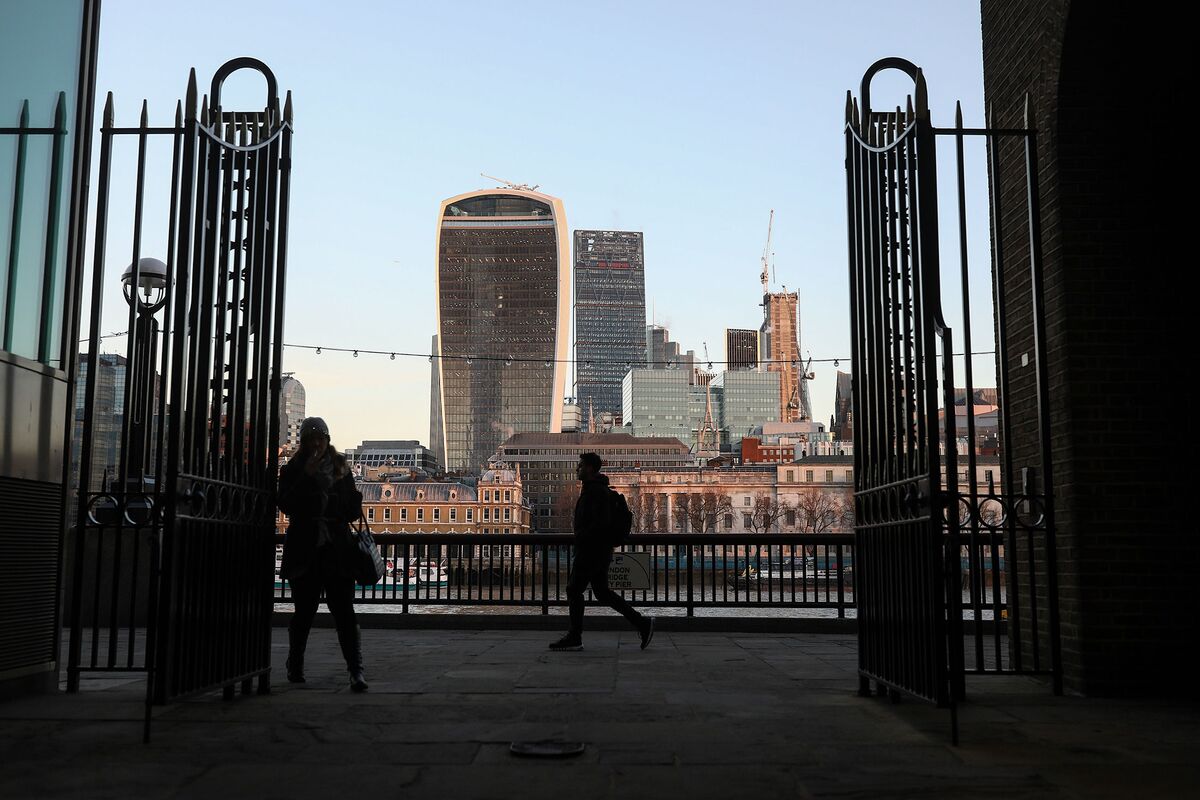
    Pedestrians walk past a view of 20 Fenchurch Street, also known as the 'Walkie-Talkie,' in London, U.K., on Thursday, Jan. 5, 2017.
    Photographer: Simon Dawson/Bloomberg
    The U.K. capital fell only two points in the latest Global Financial Centres Index published by Z/Yen and the China Development Institute, the smallest decline among the top 10 centers. New York held on to second place, but fell 24 index points overall, “presumably due to fears over U.S. trade,” the survey said.
    Frankfurt, Dublin, Paris and Amsterdam -- all set to gain banking jobs that will likely have to leave London -- all rose. In Asia, Hong Kong leapfrogged Singapore into third place, while other U.S. cities followed New York in losing points.
    "Overall assessments for the European centers continued to fluctuate as people speculate about which centers might benefit from London leaving the EU," Mark Yeandle, associate director of London-based think tank Z/Yen and author of the FCI, said in the study, released Monday. “Protectionism and barriers to international trade concern many -- especially in the USA.”
    London’s role as the world’s banking hub is under threat if Brexit costs firms based in the city their ability to easily serve clients across the European Union. Most international banks currently sell their goods and services throughout the bloc from bases in London, but those so-called passporting rights are unlikely to be extended after the U.K. quits the EU in 2019.
    The index has been released twice yearly since 2007, with the three major Asian centers gradually closing the gap with London and New York over the decade. It ranks 92 cities on a 1,000-point scale, combining data ranging from tax rates to crime from bodies including the World Bank and OECD with survey responses from more than 3,000 people, addressing broad areas including the business environment, infrastructure, human capital and reputation.
    https://www.bloomberg.com/news/articles/2017-09-11/london-still-tops-financial-centers-despite-brexit-survey-says


    Saturday, 24 March 2018

    London’s latest retail and leisure destination unveiled

    Battersea Power Station Development Co (BPSDC) has launched London's latest retail and leisure destination, promising that it will house a collection of British and international brands in one of the financial capital’s most iconic buildings.
    Saturday, 24 Mar 2018
    Eclectic mix: An artist impression of retail units in Turbine Hall B of the Power Station. The site will bring together contemporary brands providing an eclectic mix of younger and more diverse names.
    Eclectic mix: An artist impression of retail units in Turbine Hall B of the Power Station. The site will bring together contemporary brands providing an eclectic mix of younger and more diverse names.
    “Millions of people will visit the Power Station once it reopens in 2020,” the company said in a statement. It said it has opened retail space for lease.
    It will be “the third largest retail destination”, with just over 100 units, in Central London. When fully completed in 2021, about 40 million people are expected to thronged the site.
    Britain-based BPSDC is managing the development of the iconic piece of real estate south of the Thames within walking distance from up-market Chelsea.
    Battersea Power Station is owned by a consortium of Malaysian investors comprising Sime Darby Property Bhd, SP Setia Bhd and the Employees Provident Fund (EPF).


    BPSDC said Turbine Hall A, built in the 1930s, would be home to the Premium Collection brands that portray elegance, sophistication and timeless style.
    “(Turbine Hall A will) evoke the lavish Art Deco glamour of its era,” a BPSDC statement said.
    Turbine Hall B, completed in the 1950s, would bring together contemporary brands providing an eclectic mix of younger and more diverse names. It will have a 35,000 sq ft “Theatre of Food” offering a mix of the latest food trends as well as old favourites.
    BPSDC retail leasing director Sam Cotton said the company is scouring the globe, not only for the best retailers but also looking at how they can provide a platform for the wider evolution of retail.
    The retail scene there will offer something different to what is available elsewhere, as well as great start-ups from Britain and around the world.
    Apple, one of the most famous brands in the world, has already pre-let 500,000 sq ft of offices within the building.
    Deputy chief executive officer and chief financial officer Simon Murphy said the retail offering would form a key part of the new London destination.
    “On behalf of our Malaysian shareholders, we look forward to fully opening this iconic building to the public for the first time, and to be enjoyed for generations to come,” he added.
    The 42-acre mixed development has attracted considerable attention in more ways than one. In January, consortium members comprising Sime Darby Property Bhd, SP Setia Bhd and the EPF said the power station, the heart of the 42-acre project, will be sold for £1.6bil (RM8.8bil).
    According to The Guardian, this represents one of Britain’s largest ever property deals. Permodalan Nasional Bhd (PNB) and EPF entered into an agreement to purchase phase 2, the actual power station itself. PNB and the EPF hold a considerable amount of real estate in Britain, particularly office blocks in London although their portfolio includes other sites in Europe.
    PNB and the EPF will “manage” the actual power station when it is completed, as this does not come under the purview of both SP Setia and Sime Darby, both being developers, a source from SP Setia said earlier this year.

    Read more at https://www.thestar.com.my/business/business-news/2018/03/24/londons-latest-retail-and-leisure-destination-unveiled/

    Wednesday, 14 March 2018

    Demand for office space in London is up 76 per cent on last year

    Demand for office space in London is up by 76 per cent year-on-year, new data has shown.
    Wednesday 14 March 2018 6:24pm
    The Square Mile - London's Financial District
    The City saw particularly strong demand for office space (Source: Getty)

    According to data from real estate firm CBRE, office space under offer in Central London rose by three percent last month to 3.7m square feet (sq ft).
    This stood ahead of the 10 year average of 2.8m sq ft and equated to a year-on-year increase of 76 per cent.
    Take up, the amount of space absorbed by the market, increased by 20 per cent in February to hit 0.6m sq ft.
    Head of City leasing at CBRE Chris Vydra said that the real estate market in the City remains especially strong.
    “Demand for office space in the City remains robust. The level of under offers in the City reached 1.4m sq ft in February, accounting for 38 per cent of the Central London total," he said.
    The largest transaction last month was Sumitomo Mitsui Banking Corporation’s acquisition of 161,200 sq ft at 100 Liverpool Street in EC2.
    The banking sector saw the largest proportion of take-up in February at 40 per cent, followed by the creative industries at 23 per cent and the consumer and leisure sector at 14 per cent.
    Eversheds Sutherland City real estate partner Nick Bartlett said that demand, particularly for high-quality office space, remained high.
    “The market feels quite buoyant, there is a lot of demand from both occupiers and would be purchasers. The buildings we have been involved in have been recently constructed by investors, leased up very quickly by occupiers and sold on to long-term investors. It feels like there is quite a lot of movement in the market and deals are being done.”
    CBRE previously predicted that 2018 would be a bumper year for City office take-up with businesses expected to lease more than 5m sq ft over the course of the year.
    It said that Brexit has had a minimal impact on financial and insurance firms’ appetite for office space in the City. It also predicted that demand for co-working space would continue to boost-office take-up in the Square Mile this year.
    http://www.cityam.com/282282/demand-office-space-london-up-76-per-cent-last-year

    Tuesday, 13 March 2018

    London beats New York as top real estate investment destination for Norway's massive sovereign wealth fund

    London has overtaken New York as the top real estate investment spot for Norway's massive $1 trillion (£715bn) sovereign wealth fund.
    Tuesday 13 March 2018 6:23pm
    BRITAIN-CHRISTMAS
    Norway's sovereign wealth fund, the world's largest, co-owns Regent Street (Source: Getty)

    The fund, which is one of the biggest investors in the UK and co-owns Regent Street, bought almost £200m worth of London property last year in partnership with the Queen's Crown Estate.
    These included a 25 per cent stake 10 Piccadilly worth £32.3m, a 25 per cent stake in 263-269 Oxford Street and 1-4 Princes Street for £30m, and 25 per cent of 20 Air Street for £112.5m.
    At the end of 2017, London accounted for 22.8 per cent of Norway's Global Government Pension Fund's private real estate investment followed by New York at 21.5 per cent and Paris at 19.1 per cent.
    “A total of 81 per cent of all office investment transactions in central London were purchased by overseas investors in 2017," said Chris Brett of real estate investment giant CBRE.
    "London will continue to attract capital from a diverse range of global investors. We expect 2018 to once again be driven by Asian and European investment. We also anticipate strong inflows from Israeli institutions and private Middle Eastern investors.”
    Although the Norwegian fund, managed by Norges Bank, witnessed "some weakness" in UK occupier activity, it promised to remain committed to the UK.
    It added that office occupancy levels in London remained relatively stable – vacancy rates in the City and Docklands rose to six and eight percent respectively, but the West End and Southbank each saw slight declines in vacancies.
    The fund owned 179 office and retail properties in Europe at the end of 2017, 148 of which were part of the Regent Street and Mayfair Pollen Estate portfolios.
    Yesterday, real estate services business Colliers International ranked London as Europe’s most attractive city for businesses and employees for second year running.
    "London has proved its resilience and magnetism as a global hub in the wake of the EU referendum, with a diverse spectrum of investors and occupiers identifying the city as the best place in which to conduct their business," said Colliers' David Hanrahan.
    http://www.cityam.com/282209/london-beats-new-york-top-real-estate-investment

    Thursday, 22 February 2018

    Investment in City of London offices up 50 per cent in January

    The City of London got off to a strong start to the year last month, with an increase in office space takeup across the square mile.
    Thursday 22 February 2018 11:23am
    London Creating 80% Of The Private Sector Jobs In The UK
    Source: Getty

    Transactions reached a value of £443.4m, up almost 50 per cent on the £296.2m recorded last year according to Savills.
    Six deals were struck in January, with UK investors accounting for three of these, matched by Asian investors.
    The real estate adviser said that there had been an uptick in new sales instructions since the start of the year, with £1.7bn worth of assets coming to the market since the start of January.
    In the City, there are about £2.7bn worth of opportunities currently under offer. About £500m of these have gone under offer since the year began.
    Richard Bullock, director in Savills central London investment team, comments: “2018 has started positively in the City and we expect the pace to increase in the coming months given the number of active requirements in the market. The potential handbrake at this juncture is the lack of available product.”
    http://www.cityam.com/281080/investment-city-london-offices-up-50-per-cent-january

    Wednesday, 21 February 2018

    City of London gives the green light to Deutsche Bank's London HQ

    Land Securities today received the all-clear from the City of London Corporation for its development at 21 Moorfields, which will become the UK headquarters of Deutsche Bank.
    Wednesday 21 February 2018 5:48pm
    Deutsche Bank To Announce Financial Results For 2017
    This lady is clearly thrilled (Source: Getty)

    Deutsche Bank and Land Securities exchanged on a pre-let agreement for the 469,000 square foot office in July last year, a deal that was widely-regarded as a vote of confidence in London's future as a global financial centre.
    Deutsche Bank will become one of the largest employers in the City when it moves into the new office; the building is expected to complete in November 2021.
    Chris Hayward, chair of the planning and transport committee, said: "Deutsche Bank's move demonstrates a high level of confidence in the City of London as a leader in financial and professional services."
    The decision comes after reports suggested Deutsche Bank was planning to cut 500 jobs globally. The bank reported its third annual loss in a row earlier this month.
    Colette O'Shea, managing director of Land Securities' London portfolio, said: "We welcome the resolution to grant planning permission and look forward to continuing to work in partnership with Deutsche Bank and the City of London Corporation to deliver this strategically important site."
    http://www.cityam.com/281043/city-london-gives-green-light-deutsche-banks-london-hq

    Monday, 5 February 2018

    Demand for City offices to remain strong after record-breaking 2017

    This year is set to be another stellar period for investment in the City of London, after 2017 set a new record.
    Monday 5 February 2018 6:19pm
    Brexit Fears Continue To Hit Financial Markets
    Commercial investment in the City hit a new high in 2017 (Source: Getty)

    Total annual commercial property investment volumes in the City reached £12.6bn, beating the 10-year average by 57 per cent according to real estate adviser Savills.
    Volumes during the first three quarters of 2017 alone reached £8.5bn, with the rise in turnover driven by an increased demand for "trophy assets".
    Overseas buyers accounted for much of the activity, with investors of more than 28 nationalities acquiring real estate in London.
    More than half of total City turnover is now accounted for by Asian buyers, compared to the 14 per cent attributable to European buyers and 12 per cent to UK.
    Richard Bullock, director of the central London investment team at Savills, said that demand for the "safe haven" of Lonon property was likely to continue this year.
    “2018 has continued to see significant interest from international investors, many of whom are looking to diversify capital and preserve wealth outside their domestic markets," he said.
    "As such they’re targeting the relative safe haven of the UK, especially London; the most liquid real estate market in the world. Looking ahead, we anticipate similar levels of demand this year as London remains good value compared to other major cities in Europe and Asia-Pac which should lead to strong pricing being achieved for the very best buildings”.
    http://www.cityam.com/280064/demand-city-offices-remain-strong-after-record-breaking