Showing posts with label DW. Show all posts

Saturday, 3 September 2022

Russia warns Moldova over Transnistria troops

 Russian Foreign Minister Sergey Lavrov has warned Moldova not to endanger its troops in Transnistria, or risk an attack. Russian forces have been stationed in the breakaway region in the country's east since the 1990s.

  • Date 03.09.2022
  • Author Vitalie Calugareanu

https://www.dw.com/en/russia-warns-moldova-over-transnistria-troops/a-63013005
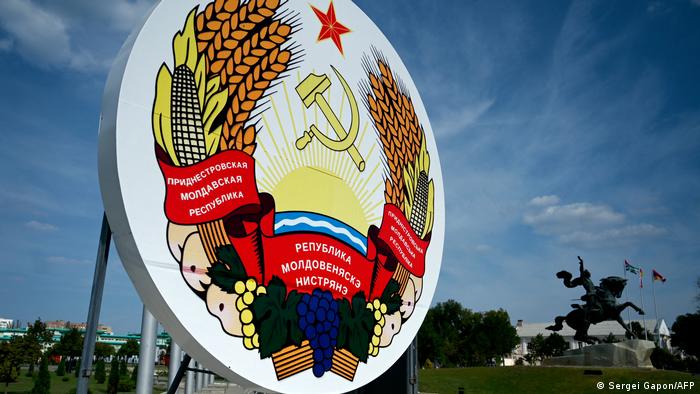
Transnistria's coat of arms

Transnistria's coat of arms

Russian Foreign Minister Sergey Lavrov this week warned Moldova not toendanger Russian troops stationed in Transnistria, a pro-Russian breakaway region in the country's east, saying doing so could spark military confrontation.

In a television interview with a Russia station this Thursday, Lavrov said "any action that would threaten the security of our troops would be considered under international law as an attack on Russia."

Several hours earlier, Lavrov had accused Moldova's pro-European President Maia Sandu of blocking talks to resolve the Transnistria conflict. "Transnistria and Russia support direct dialogue, but judging by statements made by President Maia Sandu and her team, they do not want such dialogue, as they are being directed by the US and EU to reject talks," Lavrov said. "Apparently, they are seeking a non-diplomatic solution to the Transnistria problem."
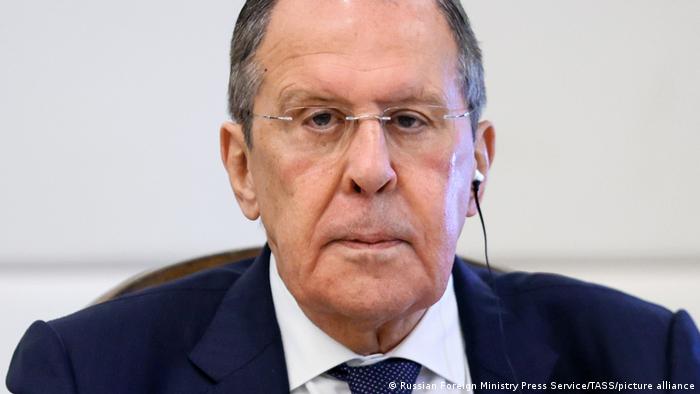
Sergey Lavrov looks into the camera

Sergey Lavrov warned Moldova a military confrontation could be on the cards

Disingenious reasoning

Several days earlier, Transnistria's separatist leader Vadim Krasnoselsky had sent a letter to President Sandu requesting talks over a peaceful political solution to the Transnistria conflict. Moldova, however, only communicates with Transnistria's pro-Russian breakaway government through its bureau of reintegration, a governmental body headed by Moldovan Deputy Prime Minister Oleg Serebrian.

In the television interview, Lavrov also said Russia would defend Russian speakers in Moldova, reminding viewers that apart from Transnistria, the region of Gagauzia was also seeking special recognition in the country. He said he hoped "Molvoda's leadership would end the Western-dictated geopolitical games and instead think about the interests of the people, living side by side." In July this year, Lavrov already accused Moldova of working to "annul everything Russian, just like in Ukraine."

That same month, Moldova and Ukraine were granted EU candidate status.

Moldova's firm stance

Moldova's bureau of reintegration was quick to respond to Lavrov's comments. In a public statement, it said the country was committed to a peaceful resolution of the Transnistria conflict.

This, it added, entails "identifying a sustainable and comprehensive solution that respects the unified, sovereign and indivisible character of Moldova." It further said that such a solution would aim to consolidate Moldovan statehood, restore its territorial integrity and complete reforms throughout the country.

The governmental body also vehemently rejects claims that the rights of Russian speakers are being infringed. Instead, it claims that the rights of Romanian speakers with Moldovan passports are having their rights curtailed in Transnistria, where they are allegedly treated as foreigners.
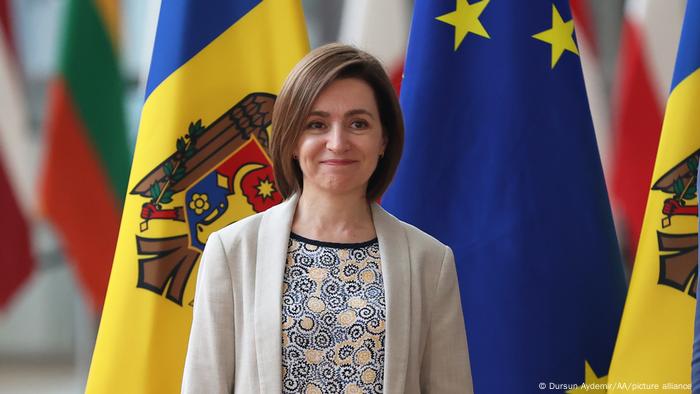
Moldovan President Maia Sandu standing in front of a flag

Moldovan President Maia Sandu has urged Moldovans not to fall for Russian propaganda

Manipulation

Speaking via video link at the Bled Strategic Forum in late August, President Sandu said she was aware of numerous inappropriate Russian comments towards her country, as well as statements disrespecting Moldovan sovereignty. She also said her country was in a delicate place, with war raging nearby.

In an interview with Moldovan television, Sandu warned her citizens not to let themselves be manipulated by statements originating "from Transnistria, Moscow or pro-Russian politicians in [the Moldovan capital] Chisinau." She said she had received letters from Transnistria's separatist administration, yet stressed all communication must go through Moldova's bureau of reintegration. She said everything would be done to keep the peace.

Sandu said both sides had begun communicating more frequently since Russia's invasion of Ukraine, which had stemmed from a desire to avoid any kind of destabilization.

Russian speakers are not being discriminated against

This is not the first time Russia is using the Russian language as a pretext to foment instability in Moldova. In March this year, Russia's Moldava embassy contacted Russians in the country, asking them to report any instances of "national, linguistic, cultural or religious" discrimination. Scores of Russian speakers in Moldova responded by launching an online petition, urging Moscow to leave the country alone, saying they had experienced no discrimination whatsoever.
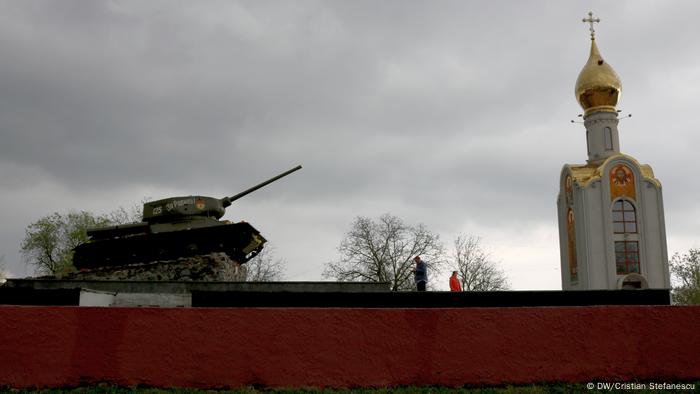
Tiraspol, the capital of Moldova's breakaway region Transnistria

Tiraspol, the capital of Moldova's breakaway region Transnistria

Moldova's foreign ministry warned the Russian embassy not to stir unrest in the country, with President Sandu stating all citizens of the country can live in peace, regardless of their spoken language.

Following Lavrov's statements, Moldovan Foreign Minister Nicu Popescuon Thursday summoned Moldova's Russian ambassador. His ministry also issued a statement underscoring Moldova's commitment to respect the rights of Russian, Ukrainian, Gagauzian, Bulgarian and other ethnic minorities.

Russia has kept what it calls peacekeeping troops stationed in Transnistria since the early 1990s, after pro-Russian separatists took control of the region following a violent struggle. Moldova has demanded the withdrawal of Russian troops, which Moscow has previously committed to, as well as a UN monitoring mission dispatched to Transnistria.

This article was translated from German.


Czech Republic: Thousands take part in Prague anti-government demonstration

https://www.dw.com/en/czech-republic-thousands-take-part-in-prague-anti-government-demonstration/a-63012178

Wednesday, 31 August 2022

Opinion: Mikhail Gorbachev failed, and made the world a better place

 Many countries and people around the world owe their freedom to Mikhail Gorbachev, the last Soviet leader. His present-day successor, Vladimir Putin, could not be more different, says DW's Miodrag Soric.

  • Date 31.08.2022
  • Author Miodrag Soric

https://www.dw.com/en/opinion-mikhail-gorbachev-failed-and-made-the-world-a-better-place/a-62985901

A cartoon of Gorbachev walking through a hole in the Berlin Wall, with a pickax over his shoulder

Gorbachev helped end Cold War divisions in Europe

The Communist utopia never became reality — neither through kind words and promises, nor through mass executions and gulags.

In 1985, the Communist Party of the Soviet Union undertook one last effort to preserve its empire. The Soviet Union's relatively young leader at the time, Mikhail Gorbachev, was meant to bridge a growing gap and catch up with the West. But, just like all his predecessors, he floundered.

His failure didn't just end the Cold War. By loosening the shackles of repression that held the Communist empire together, he gave millions of people their freedom back and with it their dignity — among them Russians, Ukrainians and other people in the Soviet Union. 

They regained their national identities as Russians, Georgians, Armenians, Latvians and so on, becoming citizens with civil rights. They were no longer expected to think of themselves as the proletariat standing in front of empty supermarket shelves and at the same time, pretending to live in some kind of paradise.

'A common European home'

It's tragic that Gorbachev has passed away now, of all times. After the collapse of the Soviet Union in 1991, the people of the Baltic states — Poles, Czechs, Slovaks, East Germans, Romanians and others — joined what Gorbachev once called the "common European home."

A middle-aged man wearing a dark suit and tie, and glasses with half a rim

Miodrag Soric is chief correspondent for DW

But his own Russian compatriots still cannot decide to do the same. Russia is a belated nation. Even worse, the current Kremlin leader, Vladimir Putin, also wants to prevent Ukrainians and Belarusians from taking the path to freedom and democracy. 

Putin wants a return to pathos, utopia and slavery. He wants people to serve the state, not vice versa, like in Communist times. As in the Communist dictatorship, any public dissent is dangerous in today's Russia, where citizens are lied to via the state-controlled media. Just like the members of the erstwhile Politburo, Putin suffers from the delusion that Moscow is surrounded by enemies.  As in the time of Soviet leader Leonid Brezhnev, today's Nomenklatura is lining its pockets at the public's expense, with corruption and mismanagement rife.

Gorbachev promoted transparency by opening the Soviet archives so that Russians could see for themselves how many millions of their own people Stalin and Lenin had killed for no reason. Putin did the opposite: Closing the archives, censoring history books, reintroducing the state's dogma of the infallibility, and resorting to lies to promote the patriotic education of the masses.  

Putin, a political dinosaur

During his time, Gorbachev withdrew troops from the unwinnable Afghanistan war. Putin, on the other hand, has dispatched forces in a "special military operation" to fight non-existent fascism in Ukraine. Putin is a political dinosaur, inspired by 19th century ideas. He is a leader who fights to set up global "spheres of interest" because he is unable to modernize Russia's economy and infrastructure.

He does not understand that young Russians today will choose material prosperity — like the latest iPhone — over national greatness (whatever that is). This is evident from the hundreds of thousands of highly educated Russians who have left the country since the invasion of Ukraine began in February.

Granted, Gorbachev was a party functionary with little economic expertise. East Germany's command economy, supposedly one of the most advanced systems around, was impossible to reform, as became clear after 1990. Most likely any Kremlin leader would have failed trying to quickly reform Moscow's planned economy.

Putin's alleged economic achievements 20 years ago were due entirely to high commodity prices. Or are there any products that Russia has developed and produces that are in demand anywhere in the world — apart from weapons? 

Language of the pariah

Gorbachev secured a place in the history books. No other politician changed the world for the better in the second half of the 20th century as he did. Millions of people across the world started learning the Russian language because of Gorbachev, this new, humane politician.

Putin, in contrast, has turned Russian into the language of the pariah. Even many Ukrainians now avoid speaking it. And in the West, cultural managers feel they need to justify themselves for putting on a Tchaikovsky ballet, or a Dostoevsky reading, and so stage something else instead.

Yes, Gorbachev's life was sometimes tragic, he failed all too often. But his intention was to change the world for the better. At least he tried.

This article was originally published in German

  • Date 31.08.2022
  • Author Miodrag Soric


https://www.dw.com/en/opinion-mikhail-gorbachev-failed-and-made-the-world-a-better-place/a-62985901


Mikhail Gorbachev's pop culture legacy

 Beyond his political career, Mikhail Gorbachev became an unlikely cultural icon, appearing in ads for Pizza Hut and Louis Vuitton. He was immortalized in film by Werner Herzog, and even won a Grammy Award.

  • Date 31.08.2022
  • Author Elizabeth Grenier

https://www.dw.com/en/mikhail-gorbachevs-pop-culture-legacy/a-62982574

Close-up of Mikhail Gorbachev wearing glasses, announcing his resignation on on December 25, 1991

Gorbachev announced his resignation on TV on December 25, 1991; over the decades, he made major media appearances

Hours after the news of Mikhail Gorbachev's death was made public, "Pizza Hut" started trending on Twitter. Amid the tributes to the last leader of the Soviet Union who initiated the fall of the Iron Curtain and the Berlin Wall through his perestroika and glasnost policies, a 25-year-old ad for the pizza chain went viral.

The clip opens with a series of shots of Moscow landmarks, such as the Cathedral of Christ the Savior and St. Basil's Cathedral, and then shows Mikhail Gorbachev and and a young girl, presumably his granddaughter, walking through a snowy Red Square before they enter a Pizza Hut restaurant.

The other clients in the restaurant recognize their former leader and all start discussing his legacy.

While a middle-aged man complains that because of Gorbachev, they face "economic confusion and political instability," and are even plunged into "complete chaos," a younger guy points out that he is the reason that they've gained access to "opportunity and freedom."

An older lady at the table ends the dispute with one killer argument: "Because of him, we have many things… like Pizza Hut," she points out, and everyone agrees, leading them to cheer, "Hail to Gorbachev!"

Commercials to finance his foundations

Along with charging fees for the lectures he gave around the world, appearing in ads was one of the ways Gorbachev used to finance his foundations.

The think-tank International Foundation for Socio-Economic and Political Studies, also known as the Gorbachev Foundation, was created in 1991 to monitor developments in post-Soviet Russia and promote democratic values.

In 1993, Gorbachev also used the money from his Nobel Peace Prize to help establish the "Novaya Gazeta" newspaper, known for its critical and investigative coverage of Russian politics. Gorbachev's Geneva-based non-profit environmental organization, Green Cross International, was also set up that same year.

Among the products Gorbachev agreed to promote were Apple Computers. In the 1994 ad created for German publications, Gorbachev is shown standing next to a Macintosh computer. "A man can either be part of the solution or part of the problem," the caption says, quoting the politician, "I have chosen the former." The computer screen happens to be flashing the name and symbol of Green Cross International.

A Louis Vuitton ad that reflected a Russian murder case

But it was the details of another commercial that triggered questions.

In 2007, Gorbachev appeared in an advertisement for French luxury label Louis Vuitton.

In a portrait by star photographer Annie Leibovitz, the former Soviet leader is shown in the back of a car, driving past the remains of the Berlin Wall — a reference to his political legacy. He has a classic brown Louis Vuitton bag sitting next to him.

There's a magazine poking out of that bag. Those who were curious enough to zoom into the picture to analyze its contents still were required to understand the Russian language to read the front cover headline: "Litvinenko's murder: They wanted to give up the suspect for $7,000."

Mikhail Gorbachev in a car, with a Louis Vuitton bag beside him and the Berlin Wall in the background

Mikhail Gorbachev with a Louis Vuitton bag and the Berlin Wall in the background

That was the cover of the May 28, 2007 edition of the New Times magazine, a liberal Russian weekly that has often published pieces critical of President Vladimir Putin.

The magazine's cover refers to the case of Alexander Litvinenko, a former Russian spy and prominent critic of Putin who was poisoned. On his deathbed, Litvinenko accused the Russian president of having orchestrated his murder. The suspect above-mentioned in the headline refers to Andrei Lugovoi, who is wanted by British authorities; the Kremlin has, however, refused to extradite him from Russia.

Responding to internet speculation at the time, Louis Vuitton spokespeople said that the magazine shown in the image was not chosen with any deliberate intention beyond adding authenticity to the look of the picture.

Nina Hagen's rap for Mikhail

Singer Nina Hagen, aka the German "Godmother of Punk," paid an early tribute to Gorbachev in a humorous rap song titled "Michail, Michail (Gorbachev rap)," released on her eponymous album from 1989.

The song's lyrics were actually written by her stepfather, poet and singer-songwriter Wolf Biermann, who is one of former East Germany's most famous dissidents. Biermann also released his own version of the song that same year, on his album "Gut Kirschenessen. DDR – ça ira!"

An astute observer of the changes emerging from Gorbachev's glasnost and perestroika reforms, Biermann advised his "dear Gorbi" through the lyrics of the song to "stay smart" to avoid "cannons instead of butter," all while reminding him that, alongside freedom, the population will need food, too ("Nix is mit Freiheit ohne Futter"). 

From a Grammy Award to a Werner Herzog documentary

Gorbachev also contributed to a number of noteworthy media productions.

His recording of Sergei Prokofiev's "Peter and the Wolf", created with Bill Clinton and Sophia Loren, won the 2004 Grammy Award for best spoken-word album for children.


Different documentaries also feature interviews with the pivotal political figure. Most prominently, Werner Herzog directed "Meeting Gorbachev," which features three conversations filmed over the course of six months.

Werner Herzog and Mikhail Gorbachev

Werner Herzog filming the documentary 'Meeting Gorbachev' with the former Soviet leader

In the 2018 film, Gorbachev discusses different aspects of his personal life, his legacy, as well as his disappointments.

At the time of the shoot, Gorbachev was already in poor health, but he was still clear-headed about what was happening in his country. The democratic reforms he had tried to set up were being swept aside, with Russian President Vladimir Putin using authoritarian measures to reinstate the Soviet empire that collapsed under Gorbachev's watch.

One quote from the "Meeting Gorbachev" film summarizes the melancholy mood triggered by the overturn of Gorbachev's attempted democratic reforms. Herzog asks the veteran politician: "I would like to hear, what should be on your gravestone?"

With a sparkle in his eye, Gorbachev simply answers: "We tried."

Edited by: Louisa Schaefer

https://www.dw.com/en/mikhail-gorbachevs-pop-culture-legacy/a-62982574

World pays tribute to Mikhail Gorbachev

 Germany, the United States and other countries have praised the former Soviet leader for bringing the Cold War to a peaceful end.

  • Date 31.08.2022

https://www.dw.com/en/world-pays-tribute-to-mikhail-gorbachev/a-62979226

Mikhail Gorbachev

Gorbachev is remembered by Western leaders as helping to put an end to the Cold War, allowing for German reunification

Germany, the US and other countries on Wednesday reacted to the death of former Soviet leader Mikhail Gorbachev.

Scholz labels Gorbachev a 'courageous reformer'

German Chancellor Olaf Scholz praised Gorbachev as a "courageous reformer."

Scholz said that the former Soviet leader's policies made it possible for Germany to be reunited in 1990 and for the Iron Curtain to disappear.

Germany's chancellor added that Gorbachev died at a time when democracy had "failed" in Russia and Russian President Vladimir Putin was sowing new divisions in Europe. "That's why we think of Mikhail Gorbachev and know how important he was for the development of Europe and our country in recent years," he concluded.

German Foreign Minister Annalena Baerbock said that Gorbachev was "guided by peace and understanding between people in fateful moments of our history."

"The end of the Cold War and German unity are his legacy," she said.

"We mourn the loss of a statesman to whom we are eternally grateful," Baerbock added.

"I bow to the great statesman," German President Frank-Walter Steinmeier said in a letter to Gorbachev's daughter, Irina Virganskaya.

"Germany remains connected to him, in gratitude for his decisive contribution to German unity, in respect for his courage in democratic opening and building bridges between East and West, and in memory of his great vision of a peaceful Common European Home," Germany's president said.

Steinmeier said that Gorbachev had in recent years "suffered from the fact that his dream was ever more distant." This dream was "destroyed by Russia's brutal attack on Ukraine," he said.

Former German Chancellor Angela Merkel called Gorbachev a "unique global politician."

"Gorbachev wrote world history — he exemplified how a single statesman can change the world for the better," Merkel said on her website.  

4:40 min

Kohl's advisor doubts German unification 'would have been possible' without Gorbachev

US: Gorbachev a 'man of remarkable vision' 

US President Joe Biden said that "Mikhail Gorbachev was a man of remarkable vision."

"As leader of the USSR, he worked with President Reagan to reduce our two countries' nuclear arsenals ... After decades of brutal political repression, he embraced democratic reforms."

"The result was a safer world and greater freedom for millions of people."

James Baker III, who was US Secretary of State during the dissolution of the Soviet Union, called Gorbachev a "giant who steered his great nation towards democracy."

"He played the critical role in a peaceful conclusion of the Cold War by his decision against using force to hold the empire together ... The free world misses him greatly," Baker said.

The Reagan Foundation and Institute said that it "mourns the loss of former Soviet leader Mikhail Gorbachev, a man who once was a political adversary of Ronald Reagan's who ended up becoming a friend," referring to tensions between the Soviet Union and the Untied States at the end of the Cold War.

"Our thoughts and prayers go out to the Gorbachev family and the people of Russia."

1:05 min

World leaders react to the death of Mikhail Gorbachev

France, EU, UN remember Gorbachev's legacy 

French President Emmanuel Macron expressed his condolences and called Gorbachev "a man of peace." He went on to say that the late statesman "opened up a path of liberty for Russians."

"[Gorbachev's] commitment to peace in Europe changed our shared history," France's president said.

"Mikhail Gorbachev was a trusted and respected leader. He played a crucial role to end the Cold War and bring down the Iron Curtain. It opened the way for a free Europe ... This legacy is one we will not forget," European Commission President Ursula von der Leyen said.


"I always admired the courage and integrity he showed in bringing the Cold War to a peaceful conclusion ... In a time of Putin's aggression in Ukraine, his tireless commitment to opening up Soviet society remains an example to us all," British Prime Minister Boris Johnson said. 

UN Secretary-General Antonio Guterres said "I was deeply saddened to learn of the passing of Mikhail Gorbachev, a one-of-a kind statesman who changed the course of history."

"He did more than any other individual to bring about the peaceful end of the Cold War. The world has lost a towering global leader, committed multilateralist, and tireless advocate for peace," the UN chief said.

Russia's Putin expresses 'deepest condolences'

Kremlin spokesman Dmitry Peskov told the Interfax news agency that Russian President Vladimir Putin expresses his "deepest condolences," and would "send a telegram of condolences to Gorbachev's family and friends."

"Mikhail Gorbachev was a politician and statesman who had a huge impact on the course of world history," Putin said. "He led our country during a period of complex, dramatic changes, and large-scale foreign policy, economic and societal challenges. He deeply understood that reforms were necessary, and sought to offer his own solutions to pressing issues."

Peskov said that "many argue about [Gorbachev's] role, but the fact that he was an extraordinary, unique person is undeniable," adding that he gave an "impetus" for the end of the Cold War.

Putin's spokesperson said that he believed Gorbachev wanted to bring about an "eternal romantic period" between a reformed Soviet Union and the West. "This romanticism did not materialize ... the bloodthirstiness of our opponents manifested itself. It's good that we understood this in time."

China said Gorbachev "made positive contributions to the normalization of Sino-Soviet relations."

sdi/wd (AP, AFP, dpa, Reuters, IFAX)

  • Date 31.08.2022


https://www.dw.com/en/world-pays-tribute-to-mikhail-gorbachev/a-62979226

Russia and German reunification: Opposing views on Mikhail Gorbachev's legacy

In Germany, Mikhail Gorbachev was celebrated above all for paving the way for reunification. But at home, critics say he could have handled the process better. Is that criticism justified?

  • Date 31.08.2022
  • Author Roman Goncharenko

https://www.dw.com/en/mikhail-gorbachev-germany-reunification/a-55082979

Helmut Kohl (left) and Mikhail Gorbachev holding a bunch of flowers together

Hailed in Germany for paving the way for German reunification, Gorbachev (right) was given a hard time at home for it

The political legacy of Mikhail Gorbachev, the last Soviet head of state, who died on Tuesday, is still fiercely discussed in present-day Russia. While he was appreciated in the West, he remains unpopular at home. There is a debate especially about his role in the process that led to German reunification.

The central charges lodged against Gorbachev are that he got too little money from Germany in return for his acceptance of the agreement, and that he failed to block NATO's eastward expansion.

Vertragsunterzeichnung zur Deutschen Einheit in Moskau 1990

Mikhail Gorbachev and Helmut Kohl were among the signatories of the Two Plus Four Agreement in Moscow

While politicians and experts close to the Kremlin are not critical of German reunification per se, they fault his handling of the process, maintaining that Gorbachev could have set tougher conditions for a unified Germany's NATO membership.

Gorbachev gives Kohl the go-ahead

The Two Plus Four Treaty was signed in Moscow on September 12, 1990 by the foreign ministers of West and East Germany, as well as the four victorious powers in World War Two — the Soviet Union, the United States, Great Britain, and France.

The seven-page document on "the Final Settlement with Respect to Germany" brought an end to the division of the two German states that had lasted four decades.

Borders were agreed on, full sovereignty was returned to the German state, and security issues were clarified, including Germany's NATO membership, the reduction of Germany's armed forces from around half a million in West Germany (FRG) alone to 370,000 in united Germany, and the withdrawal of the Soviet army from then East Germany (GDR). Negotiations took place between May and September 1990, although there had been preliminary talks shortly after the fall of the Wall in November 1989.

It is not known whether there was ever what might be called a "checklist" for Gorbachev's negotiations over Germany's future. As a result, it is not easy to gauge whether or not he met his own goals.  

However, sources show that Gorbachev did not initially believe that there would be rapid progress toward reunification. He criticized the then West German Chancellor Helmut Kohl's 10-point plan, which Kohl had already come up with at the end of November 1989 to point the way forward.

Read more: "We need better cooperation with Russia"

But by the end of January, there was a shift in Moscow's approach. A meeting of the inner circle concluded that a united Germany was "unavoidable," as Gorbachev wrote in his memoirs. The decision was made to push for talks between the four victorious powers and the two Germanies and to probe the possibility of a Soviet troop withdrawal.  

The breakthrough moment came in talks with Kohl in Moscow on February 10, 1990: "We had Gorbachev's go-ahead for the Two Plus Four process and, above all, his green light for resolving the domestic German aspects of reunification," Kohl put it in his diary.  

The German leaders managed to convince Gorbachev that the two German states themselves, and not the victorious powers, should decide on their own future, which led to the Two Plus Four formula.

42:33 min

A short history of German reunification

Troop withdrawal only for the Soviets

One of the most divisive issues on the agenda was the future united Germany's proposed NATO membership. Here, Gorbachev ought to have "at least set terms" for Germany's NATO membership, wrote Aleksey Pushkov, leading Russian foreign policy expert and senator, in the messaging service Telegram in July 2020.

For many in Moscow, reunification was not the problem, so much as the way Gorbachev had handled it. In 2017, Russian President Vladimir Putin referred in an interview to what he termed Gorbachev's "mistake" — namely failing to use the talks with Germany to lever binding guarantees from NATO. For his part, Gorbachev rejected the criticism.  

Moscow had initially called for a united but neutral Germany — a proposal that was rejected by West Germany, by the US, and by Eastern European countries like Poland and Czechoslovakia.

It was Gorbachev who had blinked. In the Two Plus Four Agreement it was accepted that no NATO troops and no nuclear weapons should be stationed on the territory of former East Germany. NATO enlargement in Eastern Europe was touched on in the discussions, with Western diplomats appearing to signal that it would not happen. But: no binding agreement.

Mikhail Gorbachev and Helmut Kohl with champagne glasses

Mikhail Gorbachev and Helmut Kohl toasted their common declarations at the German chancellory

Gorbachev's critics in Russia believe he should also have demanded the withdrawal of British and American troops from united Germany.

"Of course the Soviet Union could have asked big questions about foreign forces stationed in Germany," Vladislav Belov, head of the Center for Germany Studies at the Russian Academy of Sciences, told DW. "But the opportunity was wasted."  

Moscow could also have called for the withdrawal of American nuclear weapons, said Belov, adding that German Social Democrats on the center-left had also been pushing Gorbachev to concede to this demand.

But historian Martin Aust, a specialist in Eastern Europe at Bonn University, is skeptical: "My guess is that this wouldn't have been accepted," he said. "It would have been the old model, as proposed by Stalin, who wanted to establish a united Germany as a neutral state, which Adenauer [the first West German chancellor — the ed.] rejected. The Kohl government would probably also have rejected it."  

Did Gorbachev demand too little money?

The second fundamental allegation raised against Gorbachev concerns money. His critics say that Moscow quite simply got too little in turn for playing along with reunification.

In 1990, the Soviet economy was in serious trouble. West Germany offered to help, initially by stepping up food shipments. In the summer of the same year, Moscow got a loan worth 5 billion West German Marks (equivalent of €2.5 billion; $2.5 billion today).

Shortly before the signing of the Two Plus Four Agreement, Kohl and Gorbachev wrestled over further payments. The chancellor proposed 10 billion German Marks. Gorbachev went higher, demanding 15 billion, or more. On September 12, 1990, the two sides agreed on 12 billion to pay for the withdrawal of Soviet troops plus an additional loan of 3 billion.

Voices close to the negotiations have confirmed that the German government would have been willing at this stage to put a larger sum on the table.

"If Gorbachev had at that time said: 'Herr chancellor, I will go along with it, but it will cost Germany 50 or 80 billion' — would we have been able to say no?" said Horst Teltschik, a former foreign policy advisor to Chancellor Kohl, in a DW interview in July 2010. Germany expert and Gorbachev advisor Valentin Falin believed Moscow could have asked for anything up to 100 billion. 

Mikhail Gorvachev, Helmut Kohl and George Bush

A happy reunion — 19 years after reunification Mikhail Gorvachev met up with former German Chancellor Helmut Kohl and former US President George Bush

In the eyes of critics like Belov, Gorbachev was a weak negotiator. And worse still: Belov says that in 1990, the former Russian leader gave less thought to the future of his country and more to his own place in the history books.  

"Germany owes huge thanks to Gorbachev and the Soviet Union," Aust said. "Gorbachev was driven by the belief that he could create a new Soviet Union that would be bound into a new world order free of the  US-Soviet antagonism of the Cold War period."

Germany: Advocate of Russian interests?

While critics in Russia complain that Gorbachev ought to have insisted on a longer transition period prior to German unification, historian Aust says that Kohl had every reason to be in a hurry.

Indeed, German reunification was quickly followed by the attempted coup against Gorbachev, the wars in the Soviet republics, and the final collapse of the Soviet Union in 1991.

Certainly, from today's German perspective, it is not difficult to be grateful to Mikhail Gorbachev that unity was achieved so speedily.

This gratitude is reflected in a strand of Germany politics that is still remarkably strong: a yearning on Berlin's part to be an advocate for Moscow in the West. It was, in this vein, that Germany pushed for rapprochement between the Soviet Union, and later Russia, with the G7. It also helped Russia to become a member of the European Bank for Reconstruction and Development (EBRD) and join the International Monetary Fund (IMF). Such positive aspects of relations between Germany and Russia are often forgotten in the emotive debates over Gorbachev's legacy.

This piece, originally published in German on Oct 2, 2020, was updated on Aug 31, 2022 to reflect the news of Gorbachev's death and criticism of his handling of the German reunification process.

DW RECOMMENDS

AUDIOS AND VIDEOS ON THE TOPIC

  • Date 31.08.2022
  • Author Roman Goncharenko


https://www.dw.com/en/mikhail-gorbachev-germany-reunification/a-55082979