The UK would have paid more than £22billion into the European Union's budget this year had Brexit never happened, an analysis shows.
Britons would have paid £22bn into the EU budget, analysis shows (Image: Getty)
Think tank, Facts4EU, estimates the UK used to account for 13.5% of the bloc's budget, which today means Britons would have been on the hook to hand over £22.3bn in 2025 alone.
It argues figures cited by the Treasury used to put Britain's contribution at 12.5%, but in practice the amount "was always more".
Facts4EUsays this is because "off budget" funds Britain used to pay into, while most EU countries didn't, were not factored into the calculations of the UK's contribution.
The EU's general budget for 2025 amounts to £165.5bn (€199.4bn), with billions to be spent on defence, the single market, red tape, the bloc's borders and the environment.
It is almost five years since the UK exited the EU (Image: Getty)
Britain no longer makes regular payments towards the EU budget, although there are ongoing commitments the UK has to make due to the terms of the Brexit deal.
The UK can still pay towards involvement in EU schemes, such as Horizon Europe, but these don't form part of the bloc's standard budget.
In a statement posted on its website, Facts4EU said: "As we enter another new year, it is once again a year in which the UK taxpayer will not be subsidising the rest of the EU - thanks to Brexit."
It added that 68% of the EU budget will go towards "perpetuating the myth of the EU as a success" as well as the bloc's "ideologically-driven Net Zero and Green agenda".
The budget comes as Europe's economy faces multiple challenges in 2025, with tepid growth and lagging economic competitiveness compared to the US and China.
A French and German axis pushing Europe forward has also been weakened by the collapse of both countries' governments in recent weeks.
European Commission President Ursula von der Leyen is equipped with serious powers. Still, there is only so much she can do without political backing from the two biggest member countries, whose national budgets are bigger than the EU's.
Arguably, the most urgent matter is how Brussels responds to US President-elect Donald Trump, who takes office on January 20.
European officials are trying to defuse a potential trade conflict over new US tariffs or import taxes on European goods, which would seriously affect the continent’s export-oriented economy.
Meanwhile, the EU Commission estimates as much as £414.7bn (€500bn) will be needed over the next decade to help meet the bloc’s security needs.
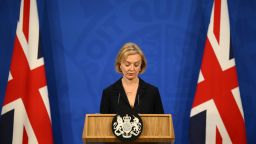
Holding office for only 45 days, Liz Truss has become the shortest-lived prime minister in British history after announcing her departure from Number 10.
Rosa Prince
And what a six weeks it was, marked by the death of a monarch and installation of a new king, a fiscal plan that crashed the markets and caused a run on the pound, the abandonment of her entire policy program, sacking of a chancellor and home secretary, loss of confidence of virtually all her MPs, reports of violent bullying in Parliament and opinion polls suggesting an existential wipe-out for her party at the next election.
Truss never had an easy task to unite her troubled party after winning the contest to replace Boris Johnson as prime minister. For the first time in Conservative history, she had not won the support of her own parliamentary party, but was voted leader, thanks to the Tories’ complicated voting system, largely due to the backing of rank-and-file party members.
Rather than build bridges by seeking to unite the party and bring rival factions into her government, she created further resentments, triggering immediate plotting. Installing allies into key Cabinet posts left her open to the charge that her team was both inexperienced and maverick.
This proved explosive when she and her close friend Kwasi Kwarteng, who she appointed Chancellor, drew up plans to put their academic economic theories into practice; the resulting “Trussonomics” plan in mid-September, which proposed tax cuts for the most wealthy to be paid for with borrowing, spooked the financial markets, leading the Bank of England to take emergency measures to shore up the pensions sector.
Truss’s response was ruthless; she dispensed with her comrade-in-arms Kwarteng and, in a desperate bid to soothe the markets, appointed the moderate Jeremy Hunt to lead the Treasury.
It wasn’t enough. As her detractors continued to seek ways to bring her down, events began to spiral out of Truss’s control.
Getting rid of a prime minister is not a simple task; under Conservative rules, she should have been protected from a leadership challenge for a year.
A dramatic 24 hours in Westminster
But on Wednesday, the Home Secretary, former rival Suella Braverman, quit, ostensibly over a minor breach of the ministerial rules, but with a barbed resignation letter which suggested she had ambitions to replace her.
That evening, Downing Street unwisely turned a vote on the controversial issue of fracking into a show of confidence in the prime minister; amid chaos in the Commons’ voting lobbies, and allegations of manhandling of reluctant MPs, the Chief Whip Wendy Morton was said to have resigned in exasperation, only for No 10 to message journalists in the early hours of the morning to announce she had stayed after all.
By now, the game was up. MP after MP called for Truss to quit both in public and private.
British Prime Minister Liz Truss announces her resignation, outside Number 10 Downing Street, on October 20.
On Thursday morning, Sir Graham Brady, who as chairman of the 1922 Committee of backbench MPs acts as high executioner for moribund Conservative leaders, came to pay a house call on Truss at Number 10.
An hour later, she was gone, saying she could not “deliver the mandate on which I was elected by the Conservative Party.”
She went on: “I have therefore spoken to His Majesty the King to notify him that I am resigning as leader of the Conservative Party.
What happens next
There remains the complication that, unless the rules are changed, the contest to select a new Tory leader and prime minister will again involve those party members who elected the unpopular Truss in the first place.
To avoid that, the parliamentary party needed to agree on a unity candidate – most likely the man who had been the MPs’ first choice to replace Johnson, former chancellor Rishi Sunak.
It seems that proved impossible; Sir Graham has instead won the agreement of party chiefs to truncate the timetable for the leadership contest and so avoid a repeat of last summer’s nine-week affair. He has insisted that a new prime minister will be in Downing Street by Friday October 28.
In addition to Sunak and Braverman, the Leader of the House Penny Mordaunt and Trade Secretary Kemi Badenoch are likely candidates for the top job. There are even whispers that Boris Johnson could return from the cold – what an extraordinary, but by no means impossible, turn of events that would be.
In the meantime, Truss remains inside Number 10 for another week; the premiership she had longed for in tatters, outlasted – as one British tabloid quipped – by a head of lettuce.
Inflation is back in double digits as uncertainty surrounds the future of the pensions triple lock.
Vicky Shaw, PA Personal Finance Correspondent
·2-min read
Here is a look at how the triple lock normally works and what difference it could make to pensioners.
– What does the triple lock do?
The triple lock guarantees that the state pension rises every year in line with inflation, earnings or 2.5% – whichever is highest. September’s inflation figure, at 10.1%, would normally be part of the calculation.
The policy helps to ensure pensioners’ living standards keep up with those of the wider population. More than 12 million people receive the state pension.
(PA Graphics)
– What has happened to the triple lock?
The triple lock was previously paused for a year, as the coronavirus pandemic had distorted the wages element of the triple lock. Pensions rose by 3.1% this year.
– So what is happening now?
Prime Minister Liz Truss had previously stated she was committed to the triple lock.
However, there have been indications that ministers could ditch the commitment, with new Chancellor Jeremy Hunt searching for ways to plug a multi-billion pound black hole in the wake of the turmoil following the mini-budget.
Liz Truss previously stated she was committed to the triple lock (Daniel Leal/PA)
– Why would axing the triple lock be controversial?
Politically, it could inflict further damage, following a string of recent policy u-turns. It was a Conservative manifesto pledge and its previous suspension had been viewed as a one-off due to the distorting impacts of the pandemic.
Ditching the promise would affect some of the most vulnerable people in society, many of whom live on fixed incomes, as high inflation wreaks havoc with household budgets.
However, some may make arguments around “intergenerational fairness”, with many working age people receiving pay rises well below the current rate of inflation.
– What impact would there be in cash terms if pensions rose in line with earnings next April instead of inflation?
If pensions rose by 5.5%, in line with earnings, the weekly new state pension would be £195.35. But if it rose in line with Consumer Prices Index (CPI) inflation, at 10.1% it would be £8.50 per week higher, at £203.85.
This would add up to a difference of £442 over the course of a year in pensioners’ pockets.
More U-turns have seen Liz Truss’s economic blueprint torn up as new Chancellor Jeremy Hunt announced emergency measures intended to reassure the financial markets.
David Hughes and Sophie Wingate, PA Political Staff
But will Ms Truss be able to survive now Trussonomics has effectively been consigned to the scrapheap?
– What has been announced so far?
The plan to scrap the 45p top rate of income tax was the first of the measures announced in Kwasi Kwarteng’s mini-budget on September 23 to bite the dust, the humiliating about-face overshadowing Ms Truss’s first Tory conference as party leader. The measure would have cost just over £2 billion a year in 2026-27.
On Friday last week the Prime Minister reversed a decision to scrap a planned rise in corporation tax, reinstating the measure which will see it increase from 19% to 25%, a tax increase set to raise almost £19 billion in 2026-27.
In his emergency statement on Monday, Mr Hunt confirmed he is ditching “almost all the tax measures” in the mini-budget, including the planned cut to the basic rate of income tax from 20% to 19% in April next year.
Keeping the income tax rate at 20p in the pound is worth around £6 billion a year.
Mr Hunt said: “It is a deeply held Conservative value – a value that I share – that people should keep more of the money that they earn.
“But at a time when markets are rightly demanding commitments to sustainable public finances, it is not right to borrow to fund this tax cut.”
Mr Hunt said he is dropping the planned changes to IR35 rules for freelance workers, generating around £2 billion a year, and retaining a 1.25 percentage points increase to dividends tax which Ms Truss wanted to cut, worth £1 billion.
The Chancellor also scrapped the plans for new VAT-free shopping for international tourists, adding an extra £2 billion a year to Treasury coffers.
He abandoned plans to freeze alcohol duty rates from next February, saving around £600 million a year.
Mr Hunt said the tax cut reversals will raise some £32 billion a year, still leaving a significant hole to plug after the overall package of unfunded tax cuts announced in Mr Kwarteng’s ill-fated statement amounted to almost £45 billion.
By announcing the reversals now, Mr Hunt will be hoping that markets reduce the interest rate on government debt so that the Office of Budget Responsibility (OBR) scales back estimates of the fiscal hole to be filled before his medium-term fiscal plan on October 31, according to Torsten Bell, chief executive of the Resolution Foundation think tank.
– What about the energy price guarantee?
Mr Hunt also dramatically scaled back support for household energy bills.
The Chancellor said the energy price guarantee – which had been due to cap prices for two years – will end in April, after which time the Government will look to target help for those most in need.
“The objective is to design a new approach that will cost the taxpayer significantly less than planned whilst ensuring enough support for those in need,” he said.
– What is being kept?
Mr Hunt said he will continue with the decision to reverse the increase in national insurance contributions and a reduction in stamp duty.
Scrapping Rishi Sunak’s 1.25 percentage point increase in national insurance contributions represents a tax cut of more than £18 billion in 2026-27.
It was a totemic pledge in Ms Truss’s leadership campaign and legislation to repeal the increase has almost completed its passage through Parliament, factors which would have made it difficult for Mr Hunt to change course.
Reversing the cuts to stamp duty announced by Mr Kwarteng could have resulted in an extra £1.66 billion in 2026-27.
– What about public spending?
The last time Ms Truss appeared in the Commons, at Prime Minister’s Questions on October 12, she said she was “absolutely” not planning spending cuts.
But Mr Hunt warned there would be more pain to come with a new squeeze on public spending when he delivers his full medium-term fiscal plan along with updated economic forecasts by the OBR on October 31.
“All departments will need to redouble their efforts to find savings and some areas of spending will need to be cut,” he said.
“Growth requires confidence and stability and the United Kingdom will always pay its way. This Government will therefore take whatever tough decisions are necessary to do so.”
– What’s the scale of the problem?
One of the reasons the financial markets were so spooked by the Government’s initial plans was because the gamble to boost growth relied on adding billions more borrowing to a national credit card already maxed out by the emergency responses to Covid-19 and the energy crisis.
The Institute for Fiscal Studies had estimated that tax rises or spending cuts amounting to £62 billion would be needed in 2026–27 to stabilise debt as a share of national income – a sign that the Government is getting the public finances under control.
– Can Ms Truss survive?
For a Tory leader elected on promises to cut taxes in order to boost growth, the abandonment of Trussonomics means her position is now in severe jeopardy.
She has effectively handed control of economic policy to Mr Hunt and her political credibility has been shredded.
But the lack of Tory appetite for a fresh leadership contest, and the difficulties in finding a unifying figure to replace her without a vote, may mean she limps on despite any real support – for now, at least.
STORY: Britain’s new finance minister has taken urgent steps to calm markets. On Monday (October 17) morning Jeremy Hunt put a halt to almost all the tax measures announced at a mini-budget three weeks ago:“We will no longer be proceeding with the cuts to dividend tax rates, the reversal of off-payroll working reforms introduced in 2017 and 2021, the new VAT-free shopping scheme for non-UK visitors or the freeze on alcohol duty rates.”Hunt says the changes will raise £32 billion per year, or about $36 billion. As part of the moves he also reined in a vast energy subsidy plan, which will now be capped from April. Last week had already seen a u-turn on plans to scrap the top rate of income tax. Hunt says the UK has to win back investor confidence. “No government can control markets, but every government can give certainty about the sustainability of public finances and that is one of the many factors that influence how markets behave.”Hunt took over as finance minister on Friday (October 14). Predecessor Kwasi Kwarteng was sacked after his mini-budget sparked a rout on UK markets. Investors feared plans to slash taxes and increase borrowing would leave a huge hole in public finances. The turmoil has left Prime Minister Liz Truss clinging to office, barely more than a month after she took the top job. Critics say the near-total reversal of her plans leaves her credibility in tatters. Michael Hewson is chief market analyst at CMC Markets: "I mean, it completely undermines her entire leadership platform. Jeremy Hunt is essentially taking up the mini budget and basically ripped it to shreds apart from two measures which were already in place."However, Hunt may be encouraged by the early market reaction to his announcement. Sterling gained more than 1% against the dollar following the news, while UK government bond prices also edged higher. Hunt’s full plans are now due to be published at the end of the month.
The defeat of free market ideology will be worthless if it results in a fear of public spending, says Josh Ryan-Collins of the UCL Institute for Innovation and Public Purpose
Millions of middle class households will see their energy bills reach as high as £5,000 a year next spring after Chancellor Jeremy Hunt dramatically cut back plans for support.
Britons are shifting away from fresh food to cheaper frozen items and buying less fruit and vegetables and fresh meat, fish and poultry as they seek to manage rising inflation, market researcher NielsenIQ said on Tuesday. With wages failing to keep up with inflation, which was 9.9% in August, UK consumers are battling a worsening cost-of-living crunch. NielsenIQ said total grocery sales rose 4.7% on a value basis in the four weeks to Oct. 8 year-on-year.
Cash-strapped energy companies that take out Covid-style support loans this winter will be forced to draw up net zero plans and will be banned from paying dividends and bonuses.
There have been some worrying things said in recent days about people’s pensions, so it’s worth getting to grips with what’s going on and how it affects you.
Liz Truss’s government has abandoned its opposition to economic orthodoxy after her new Chancellor Jeremy Hunt enlisted George Osborne’s former right-hand man for advice.
The screeching about-turn on tax cuts by finance minister Jeremy Hunt on Monday will not spare Britain from painful spending cuts and new tax hikes to fix the country's public finances. Hunt stripped Prime Minister Liz Truss's economic plans of all but a few of her tax-cutting promises as he rushed to stem the crisis in confidence that they set off in Britain's bond market. But the challenge for Hunt to repair the public finances - and Britain's economic credibility - is far from done, with no pain-free options available.