Showing posts with label Australia. Show all posts

Saturday, 13 August 2022

Latvia, Estonia leave China-backed East Europe forum

 ... a new setback for China's increasingly assertive diplomacy

Latvia and Estonia say they have left a Chinese-backed forum aimed at boosting relations ...


China Latvia Estonia Diplomacy (Sputnik)

Latvia and Estonia say they have left a Chinese-backed forum aimed at boosting relations with Eastern European countries, in what appears to be a new setback for China's increasingly assertive diplomacy.

The move follows China’s boosting of its relations with Russia, whose invasion of Ukraine is seen as a possible first step in a series of moves against countries that were once part of the Soviet Union. China has refused to criticize Russia and has condemned punishing economic sanctions imposed on Moscow by the West.

Weeks before the invasion, Chinese President and Communist Party leader Xi Jinping hosted Russian President Vladimir Putin in Beijing and declared their bilateral relations had “no limits" in a joint statement.

The move also comes after Beijing launched economic and diplomatic retaliation against another Baltic state, Lithuania, in retaliation for its expanded ties with the self-governing island democracy of Taiwan, which China claims as its own territory and threatens to annex by force. China’s increasing assertiveness and recent threatening military exercises near Taiwan have brought a sharp backlash from the U.S., the EU, Japan, Australia and others.

“In view of the current priorities of Latvian foreign and trade policy, Latvia has decided to cease its participation in the cooperation framework of Central and Eastern European Countries and China," Latvia's Foreign Ministry said in a statement Thursday.

The country “will continue to strive for constructive and pragmatic relations with China both bilaterally, as well as through EU-China cooperation based on mutual benefit, respect for international law, human rights and the international rules-based order," the statement said.

Estonia issued a similar statement, saying it would “continue to work towards constructive and pragmatic relations with China, which includes advancing EU-China relations in line with the rules-based international order and values such as human rights."

“Estonia participated in the cooperation format of Central and Eastern Europe and China from 2012. Estonia has not attended any of the meetings of the format after the summit last February," the statement said.

China set up the forum to strengthen relations with members of the EU as well as Serbia and others, partly to further Xi's signature Belt and Road campaign to build bridges, railways, power plants and other infrastructure across the Eurasian continent.

China originally styled the forum as a “17 plus one" arrangement, but the number of European partners has now fallen to 14. Critics say the forum was an attempt to exploit differences among those states as part of a larger campaign to join with Russia in undermining the current rules-based international order dominated by the U.S. and its allies.

Along with its stance on Ukraine, China has come under strong criticism for firing missiles and sending ships and warplanes off the coast of Taiwan in response to a visit there by U.S. House Speaker Nancy Pelosi. China strongly opposes all government-to-government contacts between Taiwan and countries which, like the U.S., maintain only informal ties with the island in deference to Beijing.

China issued no immediate comment on the move by Latvia and Estonia, but Foreign Ministry spokesperson Wang Wenbin on Friday again defended the threatening military exercises.

“To defend our sovereignty and territorial integrity ... China has every right to take resolute countermeasures in response to the U.S. provocations, and such measures are absolutely necessary under those circumstances," Wang said at a daily briefing.

Britain summoned China's ambassador to register its over the “increasingly aggressive behavior and rhetoric from Beijing in recent months, which threaten peace and stability in the region,” Foreign Secretary Liz Truss was quoted as saying. “The United Kingdom urges China to resolve any differences by peaceful means, without the threat or use of force or coercion.”

Beijing's threats against Taiwan are a major contributing factor in the deterioration of U.S.-China relations to their lowest level in decades. China has also engaged in a lengthy feud with Australia and its firing of missiles last week drew condemnation from Japan, whose exclusive economic zone includes waters where the projectiles landed.

In another rejection, South Korea on Wednesday said it will make its own decisions about strengthening its defenses against North Korean threats amid Chinese calls that it continue the polices of Seoul’s previous government that refrained from adding more U.S. anti-missile batteries, which are strongly opposed by Beijing.

Asked about the developments, U.S. State Department spokesperson Vedant Patel said “we respect and support Estonia and Latvia’s sovereign decision to no longer participate."

“Estonia and Latvia are important and valued NATO allies and key U.S. partners across a number of issues, including through our strong defense ties, our strong economic ties, as well as the promotion of democracy and human rights," Patel told reporters.

“Over the past year, we’ve seen countries around the world express deep concern about the PRC’s strategic alignment with Russia as well as Beijing’s support for Moscow’s war against Ukraine," Patel said. “There is a growing convergence about the need to approach relations with Beijing with more realism," he said, citing previous comments from Secretary of State Antony Blinken.

Concluding a five-day visit to Taipei on Thursday, Lithuanian Deputy Minister of Transport and Communications Agne Vaiciukeviciute emphasized the importance of economic ties with Taiwan and endorsed a statement issued by the Group of Seven industrialized nations criticizing the Chinese military exercises surrounding Taiwan. The European Union issued a similar statement, prompting China to summon the group's ambassadors to register a protest.

“Lithuania is a democracy. Taiwan is our very close friend, and Taiwan is a booming economy," Vaiciukeviciute said.

“Lithuania chooses to cooperate with countries that are willing to cooperate with us. So, Taiwan is one of those countries and they are reliable partners," she said.

In response to her visit, China’s Foreign Ministry on Friday announced it was suspending “all forms of interaction” with her ministry as well as “exchanges and cooperation with Lithuania in the area of international roadway transport.”

China has already banned trade with Lithuania, with little apparent effect on the country that is a member of both the EU and NATO. The EU has raised a complaint over the Chinese action with the World Trade Organization.

https://uk.yahoo.com/news/latvia-estonia-leave-china-backed-161510100.html


Taiwan

15 August 2022

Taiwan denounces China for sanctioning Lithuanian minister, calls it 'bullying actio

China

14 August 2022


China suspends transport cooperation with Lithuania, sanctions Minister over Taiwan visit


Lithuania

13 August 2022


After Lithuania, Latvia & Estonia withdraw from China Cooperation Group over Taiwan issue


China

13 August 2022

China condemns Lithuanian delegation's visit to Taiwan; threatens 'stern retaliation'

Wednesday, 1 December 2021

China's 'economic warfare' against Australia

 Aukus deal: US accuses China of 'economic warfare' against Australia

US President Joe Biden's top Pacific envoy on Tuesday accused China of trying to "drive Australia to its knees" through a barrage of sanctions that amounted to "economic warfare".

France 24   Issued on: 

Kurt Campbell at the China Development Forum in Beijing, China, on March 23, 2019. Campbell, US President Joe Biden's top Pacific envoy, accused China on Tuesday of using strong-arm tactics to "drive Australia to its knees". © Thomas Peter, Reuters (file photo)

In remarks to the Sydney-based Lowy Institute, veteran diplomat Kurt Campbell lampooned Beijing for strong-arm tactics.

Painting China as increasingly bellicose and determined to impose its will overseas, Campbell said Beijing had engaged in "really dramatic economic warfare -- directed against Australia".

Over the last two years, China has introduced a raft of punitive sanctions on Australian goods in a fierce political dispute that has frozen ministerial contacts and plunged relations into the most serious crisis since Tiananmen.

"China's preference would have been to break Australia. To drive Australia to its knees," said Campbell, who currently serves as the White House Indo-Pacific coordinator.

China has been angered at Australia's willingness to legislate against overseas influence operations, to bar Huawei from 5G contracts and to call for an independent investigation into the origins of the coronavirus pandemic.

Australian barley, coal, copper ores, cotton, hay, logs, rock lobsters, sugar, wine, beef, citrus fruit, grains, table grapes, dairy products and infant formula have all been subject to Chinese sanctions.

The US envoy said that under President Xi Jinping, China has become "more risk acceptant, more assertive, more determined to basically take steps that other countries would view as coercive".

The Biden administration has embraced a policy of "strategic competition" with China -- acknowledging rivalry between the two powers but maintaining ties so conflicts do not spiral out of hand.

Nuclear-powered submarines 

Biden recently shocked many in the region by agreeing to share sensitive nuclear-powered submarine technology with Canberra, allowing Australia to dramatically increase its military deterrence.

Campbell indicated the move -- part of a broader three-way AUKUS agreement that includes the United Kingdom -- would bind the three allies for generations.

"When we look back on the Biden administration - I believe it will be among the most significant things that we accomplish. And I think in 20 years it will be taken as a given that our sailors sail together, our submarines port in Australia."

Canberra and London's economic ties with a rapidly growing China had put the alliance in doubt, Campbell admitted.

"Seven or eight years ago, if you asked the countries that were most likely to realign strategically and kind of rethink its options... near the top of that list would probably be both Great Britain and Australia," he said.

Campbell also revealed that other Pacific allies would likely take part in cyber or other non-submarine aspects of the AUKUS agreement.

"Many close allies have come to us, in the immediate aftermath and said, can we participate? Can we engage?

"It is to the credit of Australia and Great Britain, that they insisted, yes, this is not a closed architecture."

Source

Friday, 1 October 2021

Russell: China’s coal crunch is self-inflicted, costly and temporary

China is paying a high price for policies that curbed domestic coal output and imports.

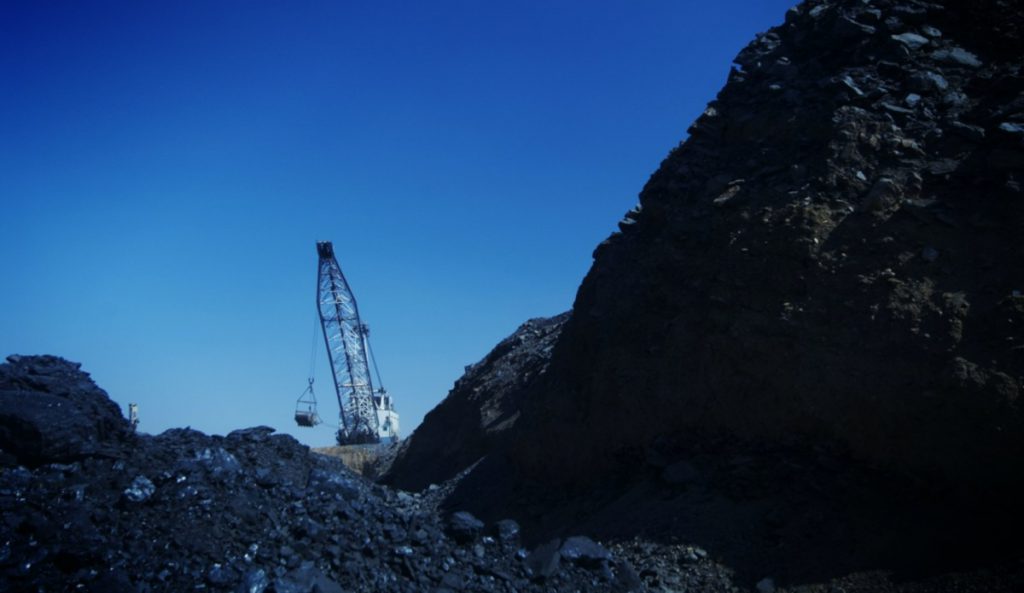
Impunzi coal mines South Africa. Image: Glencore

China is paying a high price for policies that curbed domestic coal output and imports, and led to a shortage of the fuel that still largely powers the world’s second-largest economy.

The good news for Beijing is that while the scarcity of coal will cause problems for energy-intensive industries, such as steel and aluminum, the situation is likely to be resolved relatively quickly.

China has already signalled it will seek to boost imports, and domestic output is likely to recover strongly in coming months as more mines re-open after being idled for safety checks.

The problem is that increasing imports will not fully fix the problem and will be costly, especially if Beijing keeps its informal ban on shipments from Australia, put in place last year as part of an ongoing political dispute with Canberra.

THERE ARE SIGNS THAT SEABORNE COAL IS RESPONDING TO THE PRICE RALLIES

Looking at the domestic coal situation first, its clear that supply has become an issue in 2021.

While the big-picture gain of 4.4% over the first eight months of the year to 2.6 billion tonnes doesn’t seem too bad, the detail shows that production has been in a downward trend for most of the year, reversing only in August.

China produced a record high 351.89 million tonnes in December last year, as mines ramped up output to meet demand in a colder-than-expected winter.

Since then, domestic production slumped to 314.17 million tonnes in July, the lowest since May 2019, according to official data.

Production did recover to 335.24 million tonnes in August, but the total so far this year is still well below China’s potential output.

If production had been maintained at December’s record levels, it would have resulted in about 2.82 billion tonnes being mined in the first eight months, or some 220 million tonnes more than what was actually achieved.

It’s not entirely realistic to assume that record production could have been kept up, of course, but what is clear is that China has significantly underperformed its potential when it comes to domestic coal output.

Turning to imports, these are down 10.3% in the first eight months of the year to 197.7 million tonnes, according to customs data.

August’s imports of all grades of coal were 28.05 million tonnes, down from July’s 30.18 million in July, but in general terms the trend has been rising since May, when imports were 21.04 million.

Australia impact

Australia used to be China’s second-biggest supplier of coal, with roughly 60% of its shipments being thermal coal, used for power generation and by industries such as cement, and about 40% coking coal, used to make steel.

China imported 9.79 million tonnes from Australia in June last year, according to data from commodity consultants Kpler, but this had dwindled to virtually zero by January this year.

China has turned to Indonesian coal as a replacement, even though its energy value tends to be less than the Australian equivalent, and it is buying more from Russia and smaller suppliers such as South Africa and the United States.

But in doing so, China sparked huge increases in prices. Russian coal with a similar energy rating to the 5,500 kilocalories per kg (kcal/kg) Australian grade that was popular in China is reported by traders to be commanding premiums of up to 100% more than the Australian fuel.

Indonesian coal is also rallying to records, as Chinese buyers compete with more traditional customers such as India.

The weekly index for Indonesian coal with an energy value of 4,200 kcal/kg, as assessed by commodity price reporting agency Argus, rose to a record high of $91.28 a tonne in the week to Sept. 24 and has quadrupled from its 2020 low.

Benchmark high-grade Australian thermal coal with an energy value of 6,000 kcal/kg, also rose last week, reaching $180.70 a tonne, closing in on an all-time high of $195.25 hit in July 2008.

It’s likely to surpass that record in this week’s assessment, given that Newcastle coal futures closed at an all-time high of $210.50 a tonne on Wednesday.

These high prices are likely to persist, especially if China tries to ramp up imports in coming months.

There are signs that seaborne coal is responding to the price rallies, with Kpler estimating September global exports will rise to 121.2 million tonnes, up from 111.8 million in August, and the strongest monthly outcome since December 2019.

But the point is that it will take several months for higher exports to work their way through the system, just as it will take several months for China to ramp up domestic output by enough to ease the current supply crunch.

In the meantime, the costs will continue to mount, in the form of high coal prices, both imported and domestic, and in the constrained output of energy-intensive industries, which in turn will have a negative impact on supply chains.

https://www.mining.com/web/russell-chinas-coal-crunch-is-self-inflicted-costly-and-temporary


More News


What is behind China’s power crunch? : Explainer

China is in the grip of a power crunch as a shortage of coal supplies, toughening emissions standards and strong demand from manufacturers and industry have pushed coal prices to record highs.

Reuters | September 27, 2021 | 7:37 am Intelligence Markets China Aluminum Coal Iron Ore 

Dust-up in the coal trade. Stock Image.

China is in the grip of a power crunch as a shortage of coal supplies, toughening emissions standards and strong demand from manufacturers and industry have pushed coal prices to record highs and triggered widespread curbs on usage.

How long has there been a power supply problem in China?

Restrictions on power use in homes have only just taken effect. However, China’s massive industrial base has been wrestling with sporadic jumps in power prices and usage curbs since at least March, when provincial authorities in Inner Mongolia ordered some heavy industry including an aluminum smelter to curb use so that the province could meet its energy use target for the first quarter.

China thermal coal price

In May, manufacturers in the southern province of Guangdong, a major exporting powerhouse, encountered similar requests to curb consumption as a combination of hot weather and lower than usual hydropower generation strained the grid.

Other major industrial zones along China’s east coast have also encountered recent consumption caps and power cuts.

What are China’s energy use targets and why do they exist?

China’s President Xi Jinping announced in late 2020 at a United Nations summit on climate change that the country would cut its carbon dioxide emissions per unit of gross domestic product, or carbon intensity, by more than 65% from 2005 levels by 2030.

As the world’s top producer of carbon dioxide and other polluting gases, China’s ability to cut emissions is seen as critical in the global fight against climate change.

Xi also pledged sharp increases in renewable energy capacity at the summit, but his carbon intensity targets have been the most closely followed guidelines for emissions reduction since, especially at the provincial level where local authorities have the responsibility of making sure the targets are reached.

Has energy use declined since Xi announced those goals?

According to the country’s main planning agency, the National Development and Reform Commission (NDRC), only 10 out of 30 mainland Chinese regions achieved their energy reduction targets in the first six months of 2021.

In response to that collective overshoot, the NDRC announced in mid-September tougher punishments for regions that fail to meet their targets, and said it would hold local officials to account for limiting absolute energy demand in their regions.

Has China produced less power in 2021 due to targets?

China’s total power generation through August of 2021 was actually 10.1% greater than in the same period in 2020, and nearly 15% more than in the same slot in 2019 as utilities across the country cranked up power to meet surging industrial demand.

China power generation

However, along with the higher power generation came higher toxic emissions, which surpassed pre-pandemic levels in the first quarter of the year.

How are regions limiting power for certain users?

Local governments in Zhejiang, Jiangsu, Yunnan and Guangdong provinces have asked factories to limit power usage or curb output.

Some power providers have sent notices to heavy users to either halt production during peak power periods that can run from 7 a.m. and 11 p.m., or shut operations entirely for two to three days a week.

China seasonal industrial product output

Others have been told to shut until further notice or a particular date, including soybean processing plants in Tianjin in eastern China which have been shut since Sept. 22.

Which industries have been impacted by the power shortages?

The impact on industries is broad and includes power-intensive sectors like aluminum smelting, steel-making, cement manufacturing and fertiliser production.

At least 15 listed Chinese firms that produce a range of materials and goods – from aluminum and chemicals to dyes and furniture – have reported that their production has been disrupted by power curbs.

Residential users have also been hit, with households in parts of northeast China told to limit use of water heaters and microwaves to conserve power.

What has been Beijing’s response to the power crunch?

The NDRC said on Friday it will work to resolve the power shortages, but did not provide any specific details on what steps it would take.

One major near-term challenge for Beijing is its ongoing trade dispute with Australia, the world’s second-largest coal exporter, which has greatly curbed coal shipments to China just as local authorities stepped up safety standards that have slowed production at Chinese coal mines following a series of accidents.

Another factor is a global shortage of natural gas, as a number of major economies look to stock up on the fuel simultaneously following the easing of covid-19 restrictions.

Even so, the State Grid Corporation of China said on Monday it would “go all out to fight the battle of guaranteeing power supply” to customers and would dispatch more power across its network.

(By Shivani Singh, Min Zhang and Tom Daly; Editing by Gavin Maguire and Susan Fenton)


https://www.mining.com/web/explainer-what-is-behind-chinas-power-crunch/

Monday, 20 September 2021

Op-ed: Will China's President Xi’s big bet pay off?

 Chinese President Xi Jinping is making the most audacious geopolitical bet of the 21st century.

  • For China, that bet has many faces: a rapid rollback of economic liberalization, a crackdown on individual freedoms, an escalation of global influence efforts and military buildup.
  • At the same time, President Xi has launched a push to share the virtues and successes of the Chinese authoritarian model with the rest of the world.

20 Sep 2021  Frederick Kempe  15 hrs ago   CNBC

© Provided by CNBC China's President Xi Jinping speaks during a bilateral meeting with U.S. President Donald Trump at Trump's Mar-a-Lago estate in Palm Beach, Florida, April 7, 2017.


Chinese President Xi Jinping is making the most audacious geopolitical bet of the 21st century.

A head-spinning series of seemingly disparate moves over recent months add up to nothing less than a generational wager that Xi can produce the world's dominant power for the foreseeable future by doubling down on his state-controlled economy, party-disciplined society, nationalistic propaganda, and far-reaching global influence campaigns.

With each week, Xi raises the stakes further, from narrowing seemingly mundane personal freedoms like karaoke bars or a teenager's permitted time for online gaming to three hours weekly to the multimillion U.S. dollar investor hit from his increased controls on China's biggest technology companies and their foreign listings.  

It is only in the context of Xi's increased repressions at home and expanded ambitions abroad that one can fully understand Australian Prime Minister Scott Morrison's decision this week to enter a new defense pact, which he called "a forever agreement," with the United States and the United Kingdom.

Much of the news focus was either on the eight nuclear-powered submarines that Australia would deploy or the spiraling French outrage that their own deal to sell diesel submarines to Australia was undermined by what French officials called a "betrayal" and a "stab in the back" from close allies. France went so far as to recall its ambassador to the United States for the first time in the history of the NATO alliance.

All that noise should not distract from the more significant message of the ground-breaking agreement. Prime Minister Morrison saw more strategic advantage and military capability from the U.S.-U.K. alignment in a rapidly shifting Indo-Pacific atmosphere, replacing his previous stance of trying to balance U.S. and Chinese interests.

"The relatively benign environment we've enjoyed for many decades in our region is behind us," Morrison said on Thursday. "We have entered a new era with challenges for Australia and our partners."

For China, that new era has many faces: a rapid rollback of economic liberalization, a crackdown on individual freedoms, an escalation of global influence efforts and military buildup, all in advance of the 20th national party congress in October 2022, where Xi hopes to seal his place in history and his continued rule.

Former Australian Prime Minister Kevin Rudd, one of the world's leading China experts, points to Xi's "bewildering array" of economic policy decisions in a recent speech as president of the Asia Society.

They started last October with the shocking suspension of Alibaba financial affiliate Ant Group's planned initial public offering in Hong Kong and Shanghai, clearly aimed at Alibaba co-founder Jack Ma. Then in April, Chinese regulators imposed a $3 billion fine on Alibaba for "monopolistic behavior."

In July, China's cyber regulator removed ride-hailing giant Didi from app stores, while an investigative unit launched an examination of the company's compliance with Chinese data-security laws.

Then this month, China's Transport Ministry regulators summoned senior executives from Didi, Meituan and nine other ride-hailing companies, ordering them to "rectify" their digital misconduct. The Chinese state then took an equity stake in ByteDance, the owner of TikTok, and in Weibo, the micro-blogging platform.

Xi was ready to accept the estimated $1.1 trillion cost in shareholder value wiped from China's top six technology stocks alone between February and August. That doesn't factor in further losses among the education, transportation, food delivery, entertainment and video gaming industries.

Less noticed have been a dizzying array of regulatory actions and policy moves whose sum purpose appears to be strengthening state control over, well, just about everything. 

"The best way to summarize it," says Rudd, "is that Xi Jinping has decided that, in the overall balance between the roles of the state and the market in China, it is in the interests of the Party to pivot toward the state." Xi is determined to transform modern China into a global great power, "but a great power in which the Chinese Communist Party nonetheless retains complete control."

That means growing controls as well over the freedoms of its 1.4 billion citizens.

Xi has acted, for example, to restrict the video gaming of school-aged children to three hours a week, and he has banned private tutoring. Chinese regulators have ordered broadcasters to encourage masculinity and remove "sissy men," or niang pao, from the airwaves. Regulators banned "American Idol"-style competitions and removed from the internet any mention of one of China's wealthiest actresses, Zhao Wei.

"The orders have been sudden, dramatic and often baffling," wrote Lily Kuo in the Washington Post. Jude Blanchette of the Center for Strategic and International Studies says, "This is not a sector-by-sector rectification; this is an entire economic, industry and structural rectification."

At the same time, President Xi has launched a push to share the virtues and successes of the Chinese authoritarian model with the rest of the world. 

"Beijing seeks less to impose a Marxist-Leninist ideology on foreign societies than to legitimate and promote its own authoritarian system," Charles Edel and David Shullman, the recently appointed director of the Atlantic Council's new China Global Hub, wrote in "Foreign Affairs." "The CCP doesn't seek ideological conformity but rather power, security, and global influence for China and for itself."

The authors detail China's global efforts to not remake the world in its image, but rather "to make the world friendlier to its interests — and more welcoming to the rise of authoritarianism in general."

Those measures include "spreading propaganda, expanding information operations, consolidating economic influence, and meddling in foreign political systems" with the ultimate goal of "hollowing out democratic institutions and norms within and between countries," Edel and Shullman write.

Within President Xi's bold bet lie two opportunities for the U.S. and its allies.

The first is that Xi, by overreaching in his controls at home, will undo just the sorts of economic and societal liberalization China needs to succeed. At the same time, the world's democracies, like Australia, are growing more willing to seek a common cause to address Beijing.

In the end, however, Xi's concerted moves require an equally concerted response from the world's democracies. The French-U.S. crisis following the Australian defense deal this week provides just one example of how difficult that will be to achieve and sustain.

82 Comments

b Sirius37m
If you’re more concerned about China’s domestic affairs than your own country’s aggressive foreign policy toward China it’s because you’ve been propagandized. Change your media consumption habits accordingly.

Glen Gard4h
Sorry to say they can't be trusted at all.  My opinion they are biting the hands that feed them. Back in the 70's they were a third country. Our Western/Capitalism Ideals saved this country from ruin. What they have done i.e. stolen technology while our Govt's / Wall Street Execs have ignored because of GREED will be the downfall of the free world. 


harry forrester6h
Welcome to the Communist way of life

eon flores9h
Remember how Japan and Germany started world wars ½ for economic power building up strong military.


https://www.msn.com/en-us/money/markets/op-ed-will-china-s-president-xi-s-big-bet-pay-off/ar-AAOBybw