Showing posts with label Lithuania. Show all posts

Saturday, 13 August 2022

Latvia, Estonia leave China-backed East Europe forum

 ... a new setback for China's increasingly assertive diplomacy

Latvia and Estonia say they have left a Chinese-backed forum aimed at boosting relations ...


China Latvia Estonia Diplomacy (Sputnik)

Latvia and Estonia say they have left a Chinese-backed forum aimed at boosting relations with Eastern European countries, in what appears to be a new setback for China's increasingly assertive diplomacy.

The move follows China’s boosting of its relations with Russia, whose invasion of Ukraine is seen as a possible first step in a series of moves against countries that were once part of the Soviet Union. China has refused to criticize Russia and has condemned punishing economic sanctions imposed on Moscow by the West.

Weeks before the invasion, Chinese President and Communist Party leader Xi Jinping hosted Russian President Vladimir Putin in Beijing and declared their bilateral relations had “no limits" in a joint statement.

The move also comes after Beijing launched economic and diplomatic retaliation against another Baltic state, Lithuania, in retaliation for its expanded ties with the self-governing island democracy of Taiwan, which China claims as its own territory and threatens to annex by force. China’s increasing assertiveness and recent threatening military exercises near Taiwan have brought a sharp backlash from the U.S., the EU, Japan, Australia and others.

“In view of the current priorities of Latvian foreign and trade policy, Latvia has decided to cease its participation in the cooperation framework of Central and Eastern European Countries and China," Latvia's Foreign Ministry said in a statement Thursday.

The country “will continue to strive for constructive and pragmatic relations with China both bilaterally, as well as through EU-China cooperation based on mutual benefit, respect for international law, human rights and the international rules-based order," the statement said.

Estonia issued a similar statement, saying it would “continue to work towards constructive and pragmatic relations with China, which includes advancing EU-China relations in line with the rules-based international order and values such as human rights."

“Estonia participated in the cooperation format of Central and Eastern Europe and China from 2012. Estonia has not attended any of the meetings of the format after the summit last February," the statement said.

China set up the forum to strengthen relations with members of the EU as well as Serbia and others, partly to further Xi's signature Belt and Road campaign to build bridges, railways, power plants and other infrastructure across the Eurasian continent.

China originally styled the forum as a “17 plus one" arrangement, but the number of European partners has now fallen to 14. Critics say the forum was an attempt to exploit differences among those states as part of a larger campaign to join with Russia in undermining the current rules-based international order dominated by the U.S. and its allies.

Along with its stance on Ukraine, China has come under strong criticism for firing missiles and sending ships and warplanes off the coast of Taiwan in response to a visit there by U.S. House Speaker Nancy Pelosi. China strongly opposes all government-to-government contacts between Taiwan and countries which, like the U.S., maintain only informal ties with the island in deference to Beijing.

China issued no immediate comment on the move by Latvia and Estonia, but Foreign Ministry spokesperson Wang Wenbin on Friday again defended the threatening military exercises.

“To defend our sovereignty and territorial integrity ... China has every right to take resolute countermeasures in response to the U.S. provocations, and such measures are absolutely necessary under those circumstances," Wang said at a daily briefing.

Britain summoned China's ambassador to register its over the “increasingly aggressive behavior and rhetoric from Beijing in recent months, which threaten peace and stability in the region,” Foreign Secretary Liz Truss was quoted as saying. “The United Kingdom urges China to resolve any differences by peaceful means, without the threat or use of force or coercion.”

Beijing's threats against Taiwan are a major contributing factor in the deterioration of U.S.-China relations to their lowest level in decades. China has also engaged in a lengthy feud with Australia and its firing of missiles last week drew condemnation from Japan, whose exclusive economic zone includes waters where the projectiles landed.

In another rejection, South Korea on Wednesday said it will make its own decisions about strengthening its defenses against North Korean threats amid Chinese calls that it continue the polices of Seoul’s previous government that refrained from adding more U.S. anti-missile batteries, which are strongly opposed by Beijing.

Asked about the developments, U.S. State Department spokesperson Vedant Patel said “we respect and support Estonia and Latvia’s sovereign decision to no longer participate."

“Estonia and Latvia are important and valued NATO allies and key U.S. partners across a number of issues, including through our strong defense ties, our strong economic ties, as well as the promotion of democracy and human rights," Patel told reporters.

“Over the past year, we’ve seen countries around the world express deep concern about the PRC’s strategic alignment with Russia as well as Beijing’s support for Moscow’s war against Ukraine," Patel said. “There is a growing convergence about the need to approach relations with Beijing with more realism," he said, citing previous comments from Secretary of State Antony Blinken.

Concluding a five-day visit to Taipei on Thursday, Lithuanian Deputy Minister of Transport and Communications Agne Vaiciukeviciute emphasized the importance of economic ties with Taiwan and endorsed a statement issued by the Group of Seven industrialized nations criticizing the Chinese military exercises surrounding Taiwan. The European Union issued a similar statement, prompting China to summon the group's ambassadors to register a protest.

“Lithuania is a democracy. Taiwan is our very close friend, and Taiwan is a booming economy," Vaiciukeviciute said.

“Lithuania chooses to cooperate with countries that are willing to cooperate with us. So, Taiwan is one of those countries and they are reliable partners," she said.

In response to her visit, China’s Foreign Ministry on Friday announced it was suspending “all forms of interaction” with her ministry as well as “exchanges and cooperation with Lithuania in the area of international roadway transport.”

China has already banned trade with Lithuania, with little apparent effect on the country that is a member of both the EU and NATO. The EU has raised a complaint over the Chinese action with the World Trade Organization.

https://uk.yahoo.com/news/latvia-estonia-leave-china-backed-161510100.html


Taiwan

15 August 2022

Taiwan denounces China for sanctioning Lithuanian minister, calls it 'bullying actio

China

14 August 2022


China suspends transport cooperation with Lithuania, sanctions Minister over Taiwan visit


Lithuania

13 August 2022


After Lithuania, Latvia & Estonia withdraw from China Cooperation Group over Taiwan issue


China

13 August 2022

China condemns Lithuanian delegation's visit to Taiwan; threatens 'stern retaliation'

Sunday, 26 June 2022

‘The Russians could come any time’: fear at Suwałki Gap on EU border

 Sixty-mile strip on edge of Poland and Lithuania is seen as vulnerable due to its position between Russian exclave of Kaliningrad and Belarus

Russia-Ukraine war: latest updates

by  in Suwałki   The Guardian
Sat 25 Jun 2022 06.00 BST

Stefan Bilas, 68, says he hears the Russians sometimes. It can be the growl of tanks that drowns out the gentle clucking of the chickens in his front yard, or more often the whirr of attack helicopters or the deafening roar of fighter jets, destination unknown.

Artillery fire was heard the other night and there is a shooting range somewhere over there, he points. The lights of a Russian watchtower can be seen at the dead of night. “Peace,” toasts the retired farmer, knocking back a vodka.

Bilas, the son of a Ukrainian forcibly resettled to the area by the Soviets in 1947 under Operation Vistula, Joseph Stalin’s attempt to de-Germanise territory under his control, was born and bred in this Polish village, Rudziszki, where the one road of 63 houses ends at a closed gate to a forest. Entrance is forbidden. Strangers to the village are not even allowed to walk as far as Bilas’s home.

That is because the trees mark where Poland stops and the 5,800 sq mile (15,000 sq km) exclave of Kaliningrad on the Baltic Sea begins. Bilas’s small white-washed house is the last on the road, about 50 metres from the gate.

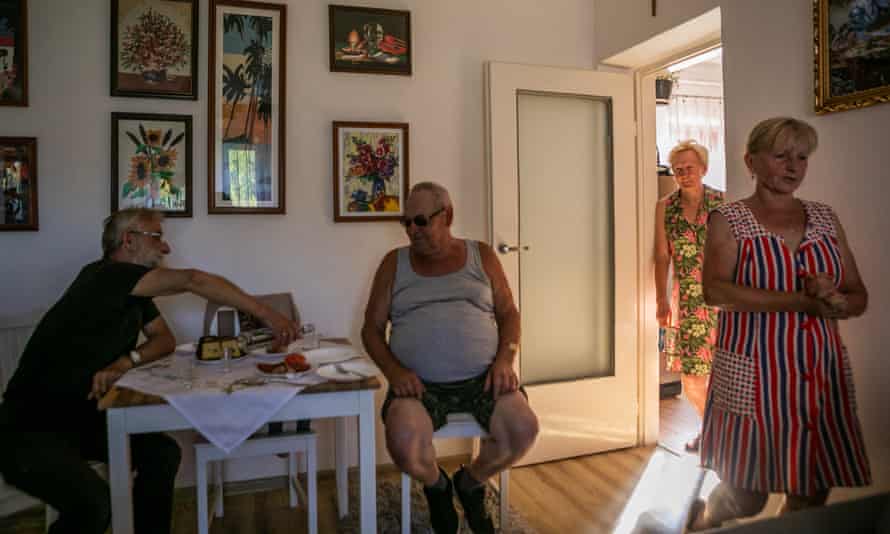
The forest – just 100 metres deep but thick and tall – covers almost all sins. For while Bilas and his wife, Halina, 65, and their neighbours Henryka Wolodzko, 63, and Jan Wolodzko, 67, can hear the Russians, they cannot see them, they say, as Halina places a plate of garlic sausage and salted tomato slices on the kitchen table. Nor do they want to.

Stefan Bilas (left) visits his neighbours Jan Wolodzko and Henryka Wolodzko. Bilas’s wife, Halina, is on the right
Stefan Bilas (left) visits his neighbours Jan Wolodzko and Henryka Wolodzko. Bilas’s wife, Halina, is on the right. Photograph: Anna Liminowicz/The Guardian

“I think about it every day,” says Bilas, knocking back another shot. “They could come any time. Kill us in our beds.” “What do I think of them?” he says, picking up a copy of a Polish-language biography of Ukraine’s president, Volodoymr Zelenskiy. “I’d better not say.”

This is “Suwałki Gap” territory, the 60-mile or so long strip of land around the border of Poland and Lithuania that is straddled to the west by the Russians and to the east by Kremlin-friendly Belarus.

It is, military analysts say, where Vladimir Putin would probably strike first should he decide that western involvement in his war in Ukraine has left him with nothing to lose.

The Kremlin strategy, war planners think, would be to storm Lithuania, Latvia and Estonia from mainland Russia. The Baltic capitals might be taken in less than three days, analysts suggest.

Simultaneously, Putin would try to cut off Nato’s attempts to reinforce by turning this swathe of border area, the one land corridor that would be available to the western military alliance, into an impenetrable hellscape.

There are just two roads and one railway line going from Poland to Lithuania through the gap, which is otherwise marshy and difficult terrain for a mechanised army.

Belarus’s dictatorial leader, Alexander Lukashenko, has shown in the war in Ukraine that he is willing to let Putin use his country as a launchpad for an invasion.

Kaliningrad is bristling with weapons, including hypersonic missiles. In recent days, Russian news wires have reported that service personnal from the Baltic Sea fleet of the Russian Federation, based in Kaliningrad, have been conducting a training exercise for missile and artillery units.

The provocative timing of the Russian exercises is no doubt deliberate. The Suwałki Gap has been the subject of intense interest at home and abroad in light of the row between Lithuania and the Kremlin.

Lithuania has been accused of “blockading” Kaliningrad after its state railways refused to allow the rail transit of steel and iron ore, now prohibited from being imported into the EU, from mainland Russia to Kaliningrad.

The Russian foreign ministry has warned the government in Vilnius of retaliation that will “have a serious negative impact on the population of Lithuania”.

Kaliningrad, once comfortably nestled within the Soviet Union, is in the post-communist world stranded among EU and Nato allies and reliant on much of its goods – including metal, coal, gas and oil – arriving on the 100 trains from mainland Russia that are permitted to cross Lithuania under deals struck in 2004.

The Kremlin says blocking the transit of any goods destined purely for Kaliningrad is an “illegal and unprecedented” act that flies in the face of those agreements. Lithuania has said it is merely enforcing EU laws.

The European Commission, on whose guidance Lithuania has acted, has been visibly alarmed. The EU’s high representative for foreign affairs, Josep Borrell, said on Monday he would “double check” whether the Lithuanians were acting to the letter of the law.

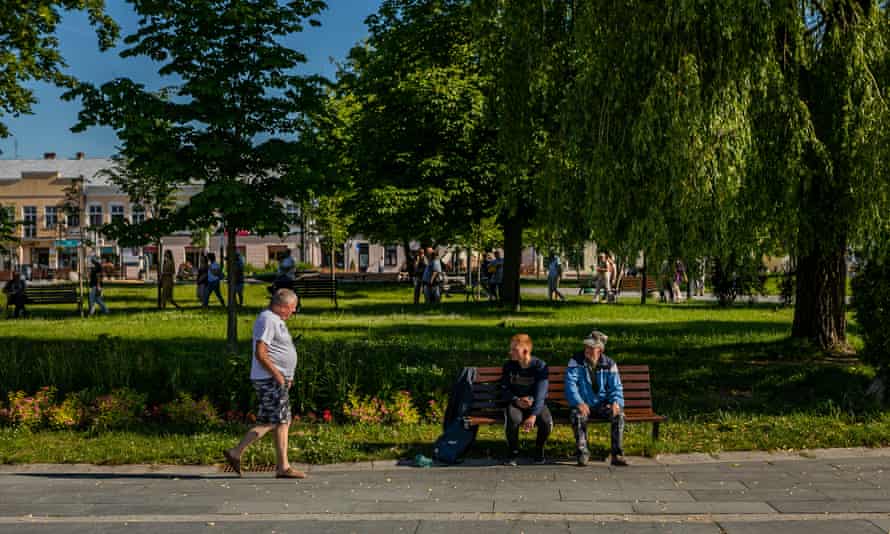
A peaceful street scene in Suwałki, Poland. However, the city’s mayor has drawn up a list of buildings that can be adapted into bomb shelters
A peaceful street scene in Suwałki, Poland. However, the city’s mayor has drawn up a list of buildings that can be adapted into bomb shelters. Photograph: Anna Liminowicz/The Guardian

The commission subsequently said it would issue additional guidance that would “avoid sanctions evasion while allowing free transit”, in what appeared to be something of a retreat. But perhaps not one the Lithuanians are willing to make.

Lithuania’s prime minister, Ingrida Šimonytė, said at a leaders summit in Brussels that the transit ban on steel and ferrous metal through the EU was part of the bloc’s sanctions, and agreed by all 27 members.

Petras Auštrevičius, a Lithuanian MEP, said he was unimpressed by the commission’s attempt to involve itself in an issue that was for leaders and not officials in Brussels.

Lithuania is among the post-Soviet states that have been rallying the EU and Nato to be tougher on the Kremlin. Should those on the trains transporting permitted goods on the railway into Kaliningrad peek through their curtained windows, they would be greeted at a stop in Vilnius and the customs post on the Kaliningrad border with the sight of large posters showing images of the war in Ukraine.

It is unclear whether Vilnius will take a step back.

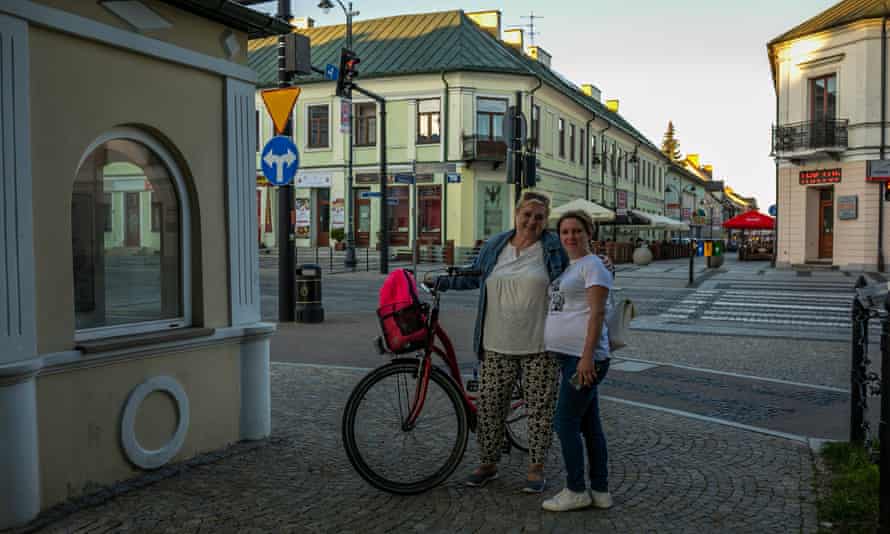
There is much talk of the dispute in Suwałki, 100 miles east of Bilas’s village, and which the gap is named after. The mayor has drawn up a list of buildings that can be adapted into bomb shelters, while Malgorzata Olszewska, 52, and Diana Hiczel, 37, returning via the city’s constitution park from a shift in the kitchen of a local restaurant, say talk radio is filled with chatter about it. “Yes we are worried,” says Olszewska, before explaining the military concept. Hiczel nods. “Everyone is worried,” she says.

Margorzata Olszewska (left) and Diana Hiczel in Suwałki.
Malgorzata Olszewska (left) and Diana Hiczel. ‘Yes we are worried. Everyone is worried.’ Photograph: Anna Liminowicz/The Guardian

Apart from Polish forces, the closest Nato troops to Suwałki are in a vast military camp at Bemowo Piskie, a village 60 miles south. It is filled with 800 soldiers from the 1st battalion, 185th Infantry Regiment from the California National Guard, along with another 400 from the British Royal Dragoons and other Romanian and Croatian units. There is a village v Nato volleyball competition arranged for Sunday, says the local mayor, Boguslaw Bednarski, 56. It is a close-knit military community. His daughter is married to a soldier from Tennessee whom she met during the American’s tour here. “They will never attack Poland and Lithuania – we have Nato,” Bednarski says.

Sir Richard Shirreff, who served as Nato’s deputy supreme allied commander Europe between 2011 and 2014, and wrote a thriller in 2017 in which Putin’s Russia invades Ukraine before attacking Lithuania and the other Baltic states, is not so convinced.

“What does Putin want?” he asks. “He wants to re-establish a Russian empire, he wants to reunite Russian speakers under the banner of Mother Russia, to neutralise or destroy Nato, to decouple America from European security. He has said as much.

“Meanwhile, he has looked at the west and seen consistent western weakness: the disarmament of European countries; he has looked at the Barack Obama chemical weapons red line in 2013 and watched as Obama stepped back; absolutely watched how Trump treated the Nato alliance, and the collapse of the Nato mission in Afghanistan. What he has seen is consistent western weakness and he has decided to take the opportunity to achieve his strategic aims.”


Sign up to First Edition, our free daily newsletter – every weekday morning at 7am BST


Shirreff says the sabre-rattling in recent days should not be dismissed but instead lead to a much a greater reinforcement of Nato forces in the region.

He says: “The threat to Lithuania particularly given the Lithuanians have imposed sanctions on Russian goods to Kaliningrad is certainly a real concern. The reality is that number one Russia is completely fixed on Ukraine at the moment but that does not mean there is not a threat. The only response is reinforcement.”

As for the consequences of Russia succeeding in blocking the Suwałki Gap, Shirreff sees nothing good for Bilas and his neighbours. “There is no way Nato would be able to recapture the Baltic states without mounting an operation of the scale of D-day plus, frankly,” he says.

Source:   
https://www.theguardian.com/world/2022/jun/25/russians-could-come-any-time-fear-suwalki-gap-eu-border

Saturday, 28 May 2022

Lithuanians club together to buy drone for Ukraine

 VILNIUS (REUTERS) - Hundreds of Lithuanians are clubbing together to buy an advanced military drone for Ukraine in its war against Russia, in a show of solidarity with a fellow country formerly under Moscow's rule.

PUBLISHED  

A Bayraktar TB2 in Azerbaijan on May 27. Ukraine has bought more than 20 Bayraktar TB2 armed drones in recent years. PHOTO: REUTERS

Some €3 million (S$4.4 million) have been raised in just three days - out of the €5 million needed - largely in small amounts, according to Laisves TV, a Lithuanian internet broadcaster that launched the drive.

"Before this war started, none of us thought that we would be buying guns. But it's a normal thing now. Something must be done for the world to get better," said Ms Agne Belickaite, 32, who sent €100 as soon as the fundraising launched on Wednesday.

"I've been donating to buy guns for Ukraine for a while now. And will do so until the victory," she told Reuters, adding she was motivated in part by fears Russia could attack Lithuania.

The drone has proven effective in recent years against Russian forces and their allies in conflicts in Syria and Libya, and its purchase is being orchestrated by Lithuania's Ministry of Defence, which told Reuters it planned to sign a letter of intent to buy the craft from Turkey next week.

Ukraine has bought more than 20 Bayraktar TB2 armed drones from Turkish company Baykar in recent years and ordered a further 16 on Jan. 27. That batch was delivered in early March.

"This is the first case in history when ordinary people raise money to buy something like a Bayraktar. It is unprecedented, it is unbelievable," Mr Beshta Petro, Ukraine's ambassador to Lithuania, told Laisves TV.

Most of the heavy weapons that Nato countries have sent to Ukraine so far are Soviet-built arms still in the inventories of eastern European Nato member states, but some have recently started to supply Western howitzers.

"While governments of the world's largest countries are endlessly deliberating... Lithuanian society simply comes together and, you know, is about to fundraise €5 million and buy the drone - which is an impressive message to the world," said Ms Belickaite.

Separately, The US Army said on Friday (May 27) it has awarded a contract worth US$625 million (S$860 million) to Raytheon Technologies Corp for anti-aircraft Stinger missiles in order to replenish stocks sent to Ukraine.

The shoulder-fired anti-aircraft Stinger missiles made by Raytheon were in hot demand in Ukraine, where they have successfully stopped Russian assaults from the air, and in neighbouring European countries which fear they may also need to beat back Russian forces.

US troops have limited use for the current supply of Stingers - a lightweight, self-contained weapon that can be deployed quickly to defend against helicopters, airplanes, drones and even cruise missiles - but the United States needs to maintain its supply on hand while it develops the next generation of a "man-portable air defence system."

Since February, the United States has shipped about 1,400 Stingers to Ukraine. US allies also want to restock the weapons they shipped to Ukraine in recent months.

The contract for up to 1,468 Stingers was awarded on Wednesday, according to a document reviewed by Reuters, and was worth up to US$687 million with options added in. There was no timeline for completion of the work, but it was estimated delivery could take up to 30 months.


MORE ON THIS TOPIC


https://www.straitstimes.com/world/message-to-the-world-lithuanians-club-together-to-buy-drone-for-ukraine

Thursday, 24 March 2022

Lithuania calls on NATO to prep Suwalki Gap defences

 Lithuania is seeking to secure NATO’s defence of the so-called Suwalki corridor connecting the Baltic states with Poland, Lithuanian President Gitanas Nausėda said before the extraordinary NATO summit in Brussels on Thursday.

NATO has previously trained to secure the Suwalki Gap / AP

Andrius Balčiūnas, LRT.lt   2022.03.24 11:13

“We want the Suwalki Gap to be defended from both sides so that we are properly prepared for a possible cut-off of the Suwalki corridor,” the president said.

“That is why we are talking about additional training grounds, additional money to be spent on infrastructure so that we can efficiently host much more troops and, most importantly, military equipment,” he added.

Suwalki Gap is a 100-kilometre-wide strip connecting Lithuania with Poland and separating Belarus and Russia’s Kaliningrad, where Russia has deployed Iskander missiles that can carry nuclear warheads.

In the event of a military conflict, Russia could occupy the Suwalki corridor and cut off Lithuania, along with Latvia and Estonia, from the rest of NATO.

According to Nausėda, what Lithuania needs most is air defence equipment, which would allow the formation of an “air defence umbrella”.

The Lithuanian president also praised the efforts of NATO countries in providing assistance to Ukraine, saying that it would be difficult to do so in bilateral formats without NATO’s global support.

Gitanas Nausėda / E. Blaževič/LRT

NATO must send a clear signal to Russia that the war in Ukraine will “cost it a lot” and will be “a painful operation, as it calls it”, Nausėda said.

“We need to send a signal to Ukraine because Ukraine cannot wait for our discussions, it needs help today with tanks, air defence systems,” he added.

https://www.lrt.lt/en/news-in-english/19/1653074/lithuania-calls-on-nato-to-prep-suwalki-gap-defences


FURTHER READING