Showing posts with label Mark Carney. Show all posts

Wednesday, 8 January 2020

Mark Carney warns against accepting EU financial rules after Brexit

Britain must NOT 'tie its hands' by accepting EU rules on the City of London after Brexit, warns outgoing Bank of England governor Mark Carney
  • Mark Carney to step down as Bank of England governor on March 16 this year 
  • Uses valedictory interview to warn against alignment of financial rules with EU
  • He said it is 'not desirable' for the City of London to be a rule-taker post-Brexit 

Mark Carney has warned the City of London must not be forced to accept financial rules from the European Union after Brexit.
The outgoing governor of the Bank of England said Britain must not 'outsource regulation' of its financial sector once it splits from Brussels. 
He argued it would not be 'desirable' to give the EU a say in how the City operates and that alignment with the bloc's financial regulations would 'tie our hands'. 
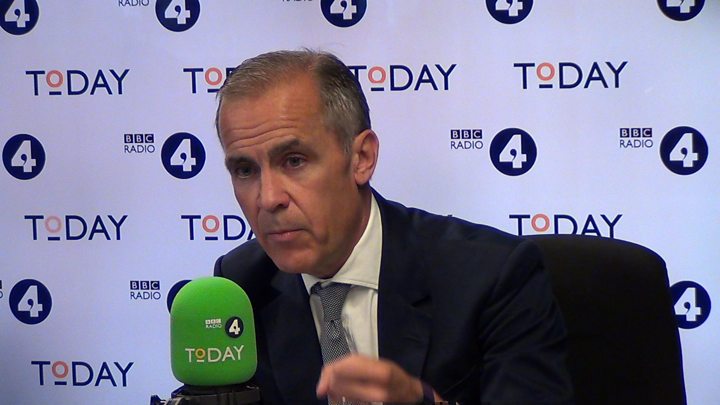
Mark Carney, pictured in June last year, is due to step down as the governor of the Bank of England on March 16
Mr Carney is due to step down as governor on March 16 when his replacement, Andrew Bailey, will take over. Mr Carney has been in the role since July 2013.
The current bank chief has faced fierce criticism from Brexiteers in the past over comments which were viewed as being pessimistic about what leaving the EU could mean for UK prosperity. 
But he struck a more optimistic tone in a valedictory interview with the Financial Times as he warned Brussels must not be able to dictate to the City after Brexit. 
He said: 'It is not desirable at all to align our approaches, to tie our hands and to outsource regulation and effectively supervision of the world's leading complex financial system to another jurisdiction.'  
Brussels is likely to put pressure on the UK during trade talks this year on the issue of financial regulation and alignment of rules. 
The City is easily the biggest financial centre in Europe and the bloc will be fearful of being unable to control what happens there. 
Mr Carney's warning came as Boris Johnson prepared to meet Ursula von der Leyen, the new president of the European Commission, in Downing Street today. 
The first face-to-face meeting between the pair will set the stage for trade talks which are due to kick off shortly after Britain leaves the EU on January 31. 
Meanwhile, Mr Carney also used the interview to warn that central banks might not be able to fight off a sharp economic downturn because their monetary policy arsenals are still depleted from the global financial crisis a decade ago. 
'It's generally true that there's much less ammunition for all the major central banks than they previously had and I'm of the opinion that this situation will persist for some time,' he said.  
'If there were to be a deeper downturn, (that requires) more stimulus than a conventional recession, then it's not clear that monetary policy would have sufficient space.'


https://www.dailymail.co.uk/news/article-7864149/Mark-Carney-warns-against-accepting-EU-financial-rules-Brexit.html


Thursday, 7 November 2019

Bank of England Predicts Lower Growth Due to Global Economy – Not Brexit

LONDON (AP) – The growth outlook for the British economy has deteriorated largely as a result of a gloomier global backdrop, the Bank of England said Thursday as it refrained from cutting rates in the run-up to a general election that could have huge repercussions on Brexit.


7 Nov 2019, 9:31 AM PST

Bank

Though waning fears of a no-deal Brexit should help cushion growth in the near-term, the bank said the British economy will grow by around 1 per cent less over the coming three years than it forecast just three months ago.
That’s primarily due to a weaker global economy in the wake of the ongoing U.S.-China trade spat.
For two of the Bank’s nine rate-setters on the Monetary Policy Committee, the deteriorating outlook was enough for them to back an immediate rate cut. The majority, though, opted to keep the Bank’s main interest rate on hold at 0.75 per cent. That’s the first time there’s been a split on the committee since June 2018.
Bank of England Governor Mark Carney, who is due to step down at the end of January, conceded that a rate cut soon was possible.
“If global growth fails to stabilise or if Brexit uncertainties remain entrenched, monetary policy may need to reinforce the expected recovery in UK GDP growth and inflation,” he said.

Saturday, 19 October 2019

Carney: Brexit deal 'positive' for UK economy

The governor of the Bank of England has told the BBC that the new Brexit deal struck by the government is "welcome" and a "net economic positive".
  • 19 October 2019
Mark Carney said the deal "takes away the tail risk of a disorderly Brexit".
However the governor warned that the deal might not boost the economy to the same extent as the deal put forward by Boris Johnson's predecessor, Theresa May.
Mr Johnson's deal is due to be voted on by MPs on Saturday.
Mr Carney said that the "different" future relationship negotiated this week meant it "remains to be seen" if overall the deal would be as positive for the economy as the deal put forward by Mr Johnson's predecessor, Theresa May.
When pressed about the impact of extra customs checks likely from the more distant relationship with the EU envisaged by the new deal, Mr Carney said its economic outcome would not "overlap" the closest version of the previous Theresa May deal, "and that last bit is diplomacy".
"The new economic partnership remains to be negotiated so there's still a wide range of potential relationships that can be struck on the basis of this deal, but short term, it takes away these risks," said Mr Carney.
"Last night in the G20 room it was universally welcomed that this progress had been made because, if I put this into context - the world's global economic outlook - the world is in a precarious position - I'm quoting the IMF - and directionally we'd agree with that characterisation.

'Attempt to avoid scrutiny'

Chancellor Sajid Javid has been less diplomatic, refusing to recalculate Treasury impact assessments, despite requests from some MPs who want an economic forecast in time for the crucial Commons vote on the deal.
His decision not to release a new analysis has drawn criticism from those who think MPs should have an updated version of the impact the deal.
Catherine McKinnell MP, interim chair of the Treasury Committee, has written to the chancellor asking him to publish an updated economic analysis ahead of the vote on Saturday.
"The Treasury Committee asked HM Treasury whether the government has updated its economic analysis of Brexit three months ago, yet we are still awaiting a response," she wrote.
"It appears to be an attempt to avoid scrutiny. If the chancellor does not provide the committee with an update, we can only assume that the existing analysis stands."
Previous Treasury forecasts showed a smaller economy from a basic free trade agreement.

https://www.bbc.com/news/business-50101866

Friday, 2 August 2019

Carney criticised for 'scary soundbites'

Back to those comments from Mark Carney, governor of the Bank of England, who has told the BBC that a no-deal Brexit would result in an instant shock to the UK economy (see article below)
Posted at22:492 Aug 2019

Carney criticised for 'scary soundbites'


Paul Dales, UK chief economist at Capital Economics, told the BBC: "I think it’s very important to note there are many different types of no-deals and Mark Carney seems to be talking about the worst possible type, which I don’t think is actually going to happen because at least some businesses have done some preparations.
"It would actually be really useful if, rather than just throw us a few scary soundbites every now and then, Mark Carney and his team at the Bank can actually provide a full set of forecasts on what they actually think is going to happen".
And might the Treasury be able to mitigate any impact? "A no-deal would certainly be a hit to the economy, but that hit can be cushioned somewhat by the behaviour of the Chancellor who might be able to lower taxes and boost government spending, and the Bank of England itself, who would probably lower interest rates so as well as thinking about the worse things that can happen, you probably also need to think about the potential offsets too".


Mark Carney warns of instant shock from no-deal Brexit

  • 2 August 2019
  •  
  • 23:08comments


Media captionShock of no deal would be instant, says Mark Carney

A no-deal Brexit would result in an instant shock to the UK economy, the governor of the Bank of England, Mark Carney, has warned.
Items such as petrol and food would become more expensive if the UK leaves the EU without an agreement, he said.
He predicted the value of the pound would fall in response to what he described as a "real economic shock".
"The change in trading relationship means that real incomes will be lower," he told the BBC's Today programme.
But he rejected claims that the Bank's decision to cut growth forecasts was gloomy, after former Tory leader Iain Duncan Smith accused him of reviving "project fear".
Mr Carney said "you're hard pressed" to describe the Bank's forecasts in that way.

Fundamental change

On Thursday, the Bank said the economy was expected to grow by 1.3% this year, lower than its earlier projection of 1.5%, if the UK leaves the EU with a deal.
It did not say what it expected to happen in the case of a no-deal Brexit.
But Mr Carney told the BBC there was a "significant possibility" that a deal would not be struck.
"The economics of no deal are that the rules of the game for exporting to Europe or importing from Europe fundamentally change," he said.
As a result, he said, "very big" and "highly profitable" industries in the UK would become "uneconomic".

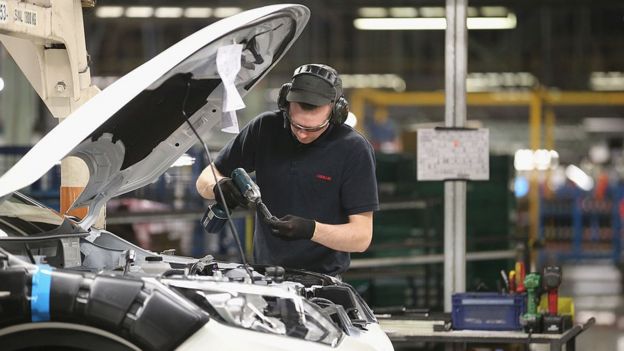
Car manufacturingImage copyrightGETTY IMAGES
Image captionCarmakers are among the firms that could be hardest hit, Mr Carney says.

"Very difficult decisions will need to be taken," he said, explaining that those would have a "knock-on" effect on the economy.
He pointed to carmakers, food manufacturers and chemical firms as some of those that would be hardest hit.
"These are the sectors that have not been investing," he said.
"One of the reasons why the economy has slowed is that business investment has been very, very weak."

Providing support

But Mr Carney said the Bank's response to a no-deal Brexit would not be automatic.
He explained the Bank would look at the effect on the economy of things such as car plant closures as well as a weakening pound before it decided how to respond.
"We will do everything we can in order to provide support to the economy," he said.
But he warned that a no-deal Brexit would be inflationary.
"Instantly, you have supply disruptions but you actually have businesses that are no longer economic."
Last month, the Office for Budget Responsibility warned that a no-deal Brexit would deal a £29.3bn blow to the UK economy.

'Project fear'

In comments on the front page of Friday's Daily Telegraph, Brexit-backing Mr Duncan Smith renewed his criticism of Mr Carney.
Ahead of the referendum in 2016, Mr Carney warned that the UK could fall into a recession if it voted to leave the EU - something that did not happen.
At the time, Mr Duncan Smith said the Bank of England governor needed to be "very careful" about making such comments.
On Friday, Mr Duncan Smith called Mr Carney "one of the architects and promoters of 'project fear'".
But speaking on the Today programme, Mr Carney said it was "not helpful" to deny that leaving "the most integrated economic relationship in the world" would have an impact on the economy.

Thursday, 1 August 2019

Mark Carney accused of reviving Project Fear with no-deal Brexit 'shock' warning

Mark Carney has been accused of undermining Brexit negotiations and failing to move on from Project Fear after issuing a stark warning about a no-deal Brexit.


Mark Carney
Mark Carney's warnings of economic shock and a sterling slide should be taken with a 'massive pinch of salt', Brexiteers said CREDIT: CHRIS J RATCLIFFE/POOL VIA REUTERS


The Governor of the Bank of England said leaving without a deal would bring an “instantaneous shock” to the British economy and could sink the pound to a 34-year low. As the Government “turbocharged” its no-deal preparations, the Bank warned the UK had a one in three chance of the economy shrinking – even if the UK leaves with a deal.

Iain Duncan Smith, the former Tory leader, said the comments should be taken with a “massive pinch of salt”.

Mark Francois, the vice chairman of the Brexiteer European Research Group, said: “The situation...


https://www.telegraph.co.uk/politics/2019/08/01/mark-carney-accused-reviving-project-fear-no-deal-brexit-shock/

Europe has more to fear from a no-deal Brexit than Britain

The term “Project Fear” first came into usage during the Scottish independence referendum of 2014, when it was coined by “Better Together” as an ironic description of the campaign’s own blitz of economic scaremongering. In the event, the scare tactics seemed to work; the case for independence was roundly rejected.

1 AUGUST 2019 • 9:30PM
JEREMY WARNER

Contrary to the accepted narrative, the immediate damage to the European economy from a no-deal Brexit may be rather greater than for Britain
Contrary to the accepted narrative, the immediate damage to the European
economy from a no-deal Brexit may be rather greater than for Britain

It hardly needs saying that similar doom-laden predictions were not nearly as effective in the referendum on EU membership. Project Fear became common currency among Leave campaigners to mock the Government’s blood-curdling warnings of catastrophe to come. Voters chose to disbelieve those warnings and in important respects, they were proved correct.

Even now, as we approach the seeming...


https://www.telegraph.co.uk/business/2019/08/01/europe-has-fear-no-deal-brexit-britain/

Thursday, 6 September 2018

GOVERNOR OF THE BANK OF ANTI-BREXIT

f you want to see the embodiment of the anti-democratic, unaccountable elitism against which Brexit voters revolted, there is no need to go to Brussels. Look no further than Threadneedle Street in the City of London, where Mark Carney, governor of the Bank of England, acts as if he is the royal governor of some colonial outpost.
MICK HUME
EDITOR-AT-LARGE
6 SEPTEMBER 2018
Governor of the Bank of Anti-Brexit
Mark Carney’s self-reappointment sums up what Leave voters revolted against.
Canadian-born Carney might be the first non-British governor of the Bank, but he is at the heart of the UK’s Remainer establishment. Brought in by former Tory chancellor and Remainiac George Osborne in 2013, Carney has been dubbed ‘the high priest of Project Fear’ for his constant pre- and post-referendum warnings of the allegedly dire economic consequences of leaving the European Union.
Now, like all high priests, Carney seems to believe that he can only be removed from his post by God. Having originally signed on until this year, Carney later informed Osborne he would extend his stay as governor until June 2019. This week, however, the governor graciously advised a committee of MPs that he was willing to remain in post longer still, in order ‘to promote a smooth Brexit’. Translation: he wants to remain in office to promote a Remain-by-another-name deal that changes as little as possible for the economic and political elites.
Carney’s announcement that he would appoint himself governor for a longer term was preceded by a supportive story in the Evening Standard, now edited by ex-chancellor Osborne. It was then effectively endorsed by his supposed boss, current Remainer chancellor Philip Hammond. The Treasury merely stated that ‘Carney’s comments speak for themselves’ – a strange concession, some might think, when the same Treasury is supposed to be urgently appointing his successor.
Observing this ‘absurd carry-on… all played out to the backdrop of Brexit’, Times commentator Alistair Osborne concluded that ‘the overriding impression is of a stitch-up between pro-Remain chancellors (past and present) and a pro-Remain governor. They may even have bounced [prime minister] Theresa May into it. You don’t have to be a loon Brexiteer to say that.’
Thanks for that, Alistair. For some of us non-loon Brexiteers, the Remainer stitch-up to keep Carney at the helm sums up what we voted against: not just the Brussels bureaucracy, but the equally high-handed, imperious and unaccountable Remainer elite in the UK.
As governor, Carney epitomises the shift of power in society towards unelected institutions and authorities. He is the sort of technocrat who believes, like every anti-democrat since Plato, that important decisions which affect the lives of millions are best left to the experts. Never mind the consequences of their consistently atrocious forecasts and policies, the technocrats know what’s best for the rest of us.
This was spelt out in a revealing exchange between the prime minister and the governor shortly after May took office following the 2016 EU referendum. In her speech to the Conservative Party conference that autumn, May dared to criticise the consequences of the Bank of England and other central banks cutting interest rates and pumping money into the economy.
Governor Carney was furious at her uninvited intrusion into his fiefdom. In response, he declared that ‘the policies are done by technocrats. We are not going to take instruction on our policies from the political side.’ The self-styled technocrat is not to be held accountable for whatever he does to the national economy by any mere democratically elected politicians. When technocrats like Carney talk about ‘independent’ central banks, what they mean most is that they should be independent of any democratic interference by the millions who ultimately pay the price for their policies. He seriously believes that he is the guv’nor of our economic lives.
In response to the latest carry-on over Carney’s self-reappointment, Tory Brexiteer Jacob Rees Mogg MP – author of the ‘high priest’ tag – has called for the ‘politicised’ governor to be replaced. That would be a start. But we need to go further and re-politicise economic policy – not just by appointing different technocrats, but by bringing the Bank back under democratic control.
It was our political class, let us recall, who put the governor of the Bank of England and his command of monetary policy beyond the reach of democratic politics. Politicians across the West have freely outsourced financial authority to central bankers in a bid to avoid being held accountable for whatever happens. In the UK, it was Tony Blair’s New Labour government which gave the Bank ‘independent’ powers to set interest rates while floating above democratic politics. This was the first action of supposedly left-wing chancellor Gordon Brown after New Labour’s election in 1997 – a sign of how the left has gone along with the fashion for offloading democratic accountability for major decisions.
Of course, the governor of the Bank of England is not really independent of politics, as the behind-the-scenes conniving to keep Remainer Carney in office confirms. But he is independent of any public accountability and meaningful democratic debate about his decisions. We should give power back to parliament and the elected government, so that they can be held to account for their economic decisions where it matters – not in the Bank’s internal committees, but at the ballot box.
Meanwhile, governor Carney continues to lecture the demos about how sorry we’ll be for daring to defy him and backing Brexit. That’s what self-appointed tinpot autocrats have always told their colonial subjects, right up to the moment when they are thrown out of their palace.
Mick Hume is spiked’s editor-at-large. His latest book, Revolting! How the Establishment is Undermining Democracy – and what they’re afraid of, published by William Collins, is out now.
Picture by: Getty
http://www.spiked-online.com/newsite/article/governor-of-the-bank-of-anti-brexit/

Monday, 6 August 2018

Europe Should Help the U.K. to Cancel Brexit

The European Union could clear the way for a second Brexit vote.

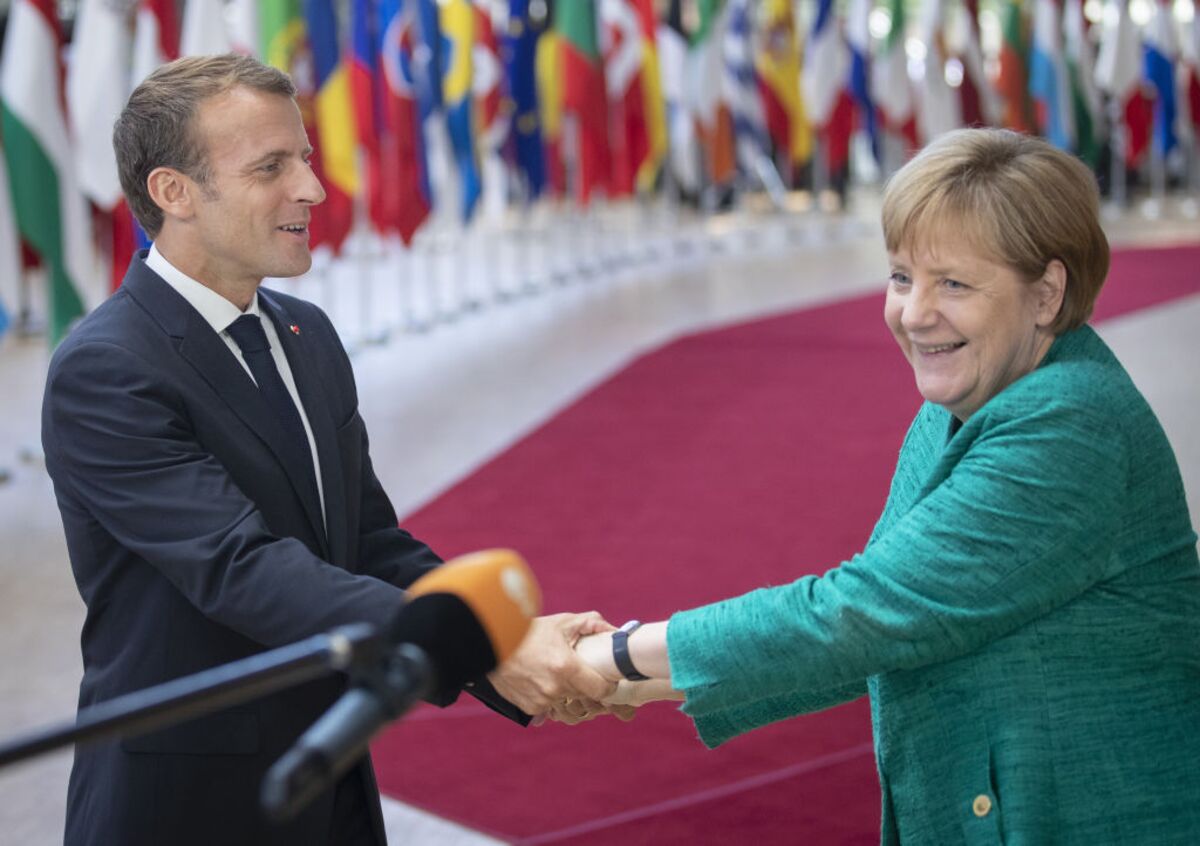
U.K. Prime Minister Theresa May’s meeting on Friday with President Emmanuel Macron of France is part of a wider effort to sell her Chequers plan for Brexit to European Union heads of government – and to loosen the grip of Michel Barnier, the unyielding civil servant who’s conducting the negotiations on their behalf. Her campaign is failing.

What kind of Brexit do they want? Photographer: Jasper Juinen/Bloomberg


Europe doesn’t like May's attempt at compromise and most of Britain’s voters – Leavers and Remainers alike – don’t either. Time is running out for finding any other middle ground. Bank of England chief Mark Carney warns that the risk of a disruptive no-deal Brexit is “uncomfortably high.” 
It isn’t too late for the U.K. to change its mind about this whole misbegotten venture – and Europe’s leaders, if they choose, could help.
A second referendum will be needed to reverse the Brexit decision. The costs and complexities of quitting the EU have become much clearer since the vote in 2016, and this justifies a second ballot. But the mechanics aren’t straightforward. If Europe’s leaders want the U.K. to stay in – as they should and as they say they do – they should act.
The main thing is to promise to remove any obstacles on their side to reversing Brexit. Under the process the U.K. has triggered, Britain is to leave the EU next March, and it’s unclear that it could now unilaterally change its mind. EU governments should say they’ll let the U.K. withdraw its notice to quit, and if necessary move the exit date back to make time for another vote. Alternatively, they could promise to let the U.K. rejoin the union on its current terms during the short post-Brexit transition period that’s currently envisaged.
Perhaps EU governments have come to think Britain is more trouble than it’s worth, and would now prefer it to go. In that case, they ought to say so – and push for an orderly Brexit, which would serve their interests as well as Britain’s. They could do this by offering non-voting membership of the single market, with all its rights and obligations, for as long as it takes to arrange a limited free-trade agreement of the sort that Europe has reached with other non-EU countries. 
It isn’t in Barnier's power to make this strategic choice. Either course would require clear direction and unanimous backing from the EU’s top political leadership. As appealing as it might be to let the U.K. twist in the wind, Europe should decide what it wants and press for it.