Showing posts with label Moldova. Show all posts

Saturday, 3 September 2022

Russia warns Moldova over Transnistria troops

 Russian Foreign Minister Sergey Lavrov has warned Moldova not to endanger its troops in Transnistria, or risk an attack. Russian forces have been stationed in the breakaway region in the country's east since the 1990s.

  • Date 03.09.2022
  • Author Vitalie Calugareanu

https://www.dw.com/en/russia-warns-moldova-over-transnistria-troops/a-63013005
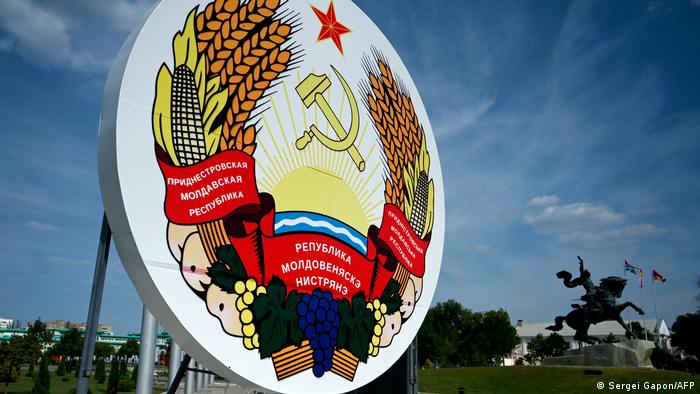
Transnistria's coat of arms

Transnistria's coat of arms

Russian Foreign Minister Sergey Lavrov this week warned Moldova not toendanger Russian troops stationed in Transnistria, a pro-Russian breakaway region in the country's east, saying doing so could spark military confrontation.

In a television interview with a Russia station this Thursday, Lavrov said "any action that would threaten the security of our troops would be considered under international law as an attack on Russia."

Several hours earlier, Lavrov had accused Moldova's pro-European President Maia Sandu of blocking talks to resolve the Transnistria conflict. "Transnistria and Russia support direct dialogue, but judging by statements made by President Maia Sandu and her team, they do not want such dialogue, as they are being directed by the US and EU to reject talks," Lavrov said. "Apparently, they are seeking a non-diplomatic solution to the Transnistria problem."
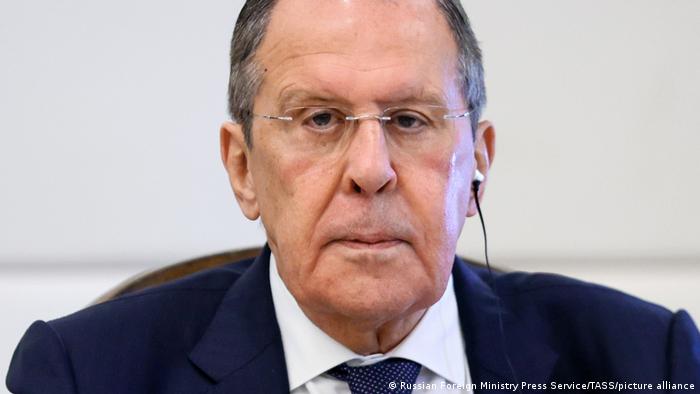
Sergey Lavrov looks into the camera

Sergey Lavrov warned Moldova a military confrontation could be on the cards

Disingenious reasoning

Several days earlier, Transnistria's separatist leader Vadim Krasnoselsky had sent a letter to President Sandu requesting talks over a peaceful political solution to the Transnistria conflict. Moldova, however, only communicates with Transnistria's pro-Russian breakaway government through its bureau of reintegration, a governmental body headed by Moldovan Deputy Prime Minister Oleg Serebrian.

In the television interview, Lavrov also said Russia would defend Russian speakers in Moldova, reminding viewers that apart from Transnistria, the region of Gagauzia was also seeking special recognition in the country. He said he hoped "Molvoda's leadership would end the Western-dictated geopolitical games and instead think about the interests of the people, living side by side." In July this year, Lavrov already accused Moldova of working to "annul everything Russian, just like in Ukraine."

That same month, Moldova and Ukraine were granted EU candidate status.

Moldova's firm stance

Moldova's bureau of reintegration was quick to respond to Lavrov's comments. In a public statement, it said the country was committed to a peaceful resolution of the Transnistria conflict.

This, it added, entails "identifying a sustainable and comprehensive solution that respects the unified, sovereign and indivisible character of Moldova." It further said that such a solution would aim to consolidate Moldovan statehood, restore its territorial integrity and complete reforms throughout the country.

The governmental body also vehemently rejects claims that the rights of Russian speakers are being infringed. Instead, it claims that the rights of Romanian speakers with Moldovan passports are having their rights curtailed in Transnistria, where they are allegedly treated as foreigners.
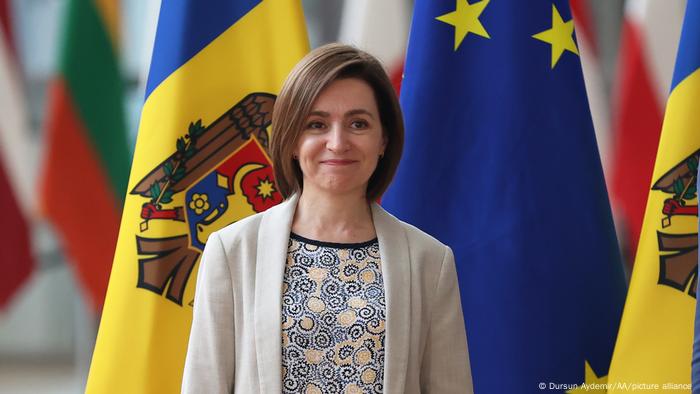
Moldovan President Maia Sandu standing in front of a flag

Moldovan President Maia Sandu has urged Moldovans not to fall for Russian propaganda

Manipulation

Speaking via video link at the Bled Strategic Forum in late August, President Sandu said she was aware of numerous inappropriate Russian comments towards her country, as well as statements disrespecting Moldovan sovereignty. She also said her country was in a delicate place, with war raging nearby.

In an interview with Moldovan television, Sandu warned her citizens not to let themselves be manipulated by statements originating "from Transnistria, Moscow or pro-Russian politicians in [the Moldovan capital] Chisinau." She said she had received letters from Transnistria's separatist administration, yet stressed all communication must go through Moldova's bureau of reintegration. She said everything would be done to keep the peace.

Sandu said both sides had begun communicating more frequently since Russia's invasion of Ukraine, which had stemmed from a desire to avoid any kind of destabilization.

Russian speakers are not being discriminated against

This is not the first time Russia is using the Russian language as a pretext to foment instability in Moldova. In March this year, Russia's Moldava embassy contacted Russians in the country, asking them to report any instances of "national, linguistic, cultural or religious" discrimination. Scores of Russian speakers in Moldova responded by launching an online petition, urging Moscow to leave the country alone, saying they had experienced no discrimination whatsoever.
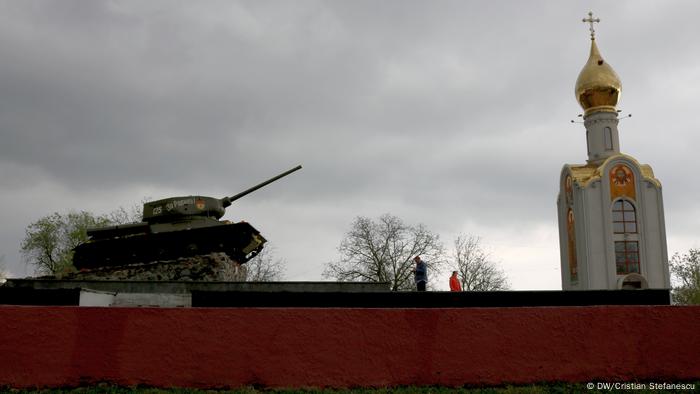
Tiraspol, the capital of Moldova's breakaway region Transnistria

Tiraspol, the capital of Moldova's breakaway region Transnistria

Moldova's foreign ministry warned the Russian embassy not to stir unrest in the country, with President Sandu stating all citizens of the country can live in peace, regardless of their spoken language.

Following Lavrov's statements, Moldovan Foreign Minister Nicu Popescuon Thursday summoned Moldova's Russian ambassador. His ministry also issued a statement underscoring Moldova's commitment to respect the rights of Russian, Ukrainian, Gagauzian, Bulgarian and other ethnic minorities.

Russia has kept what it calls peacekeeping troops stationed in Transnistria since the early 1990s, after pro-Russian separatists took control of the region following a violent struggle. Moldova has demanded the withdrawal of Russian troops, which Moscow has previously committed to, as well as a UN monitoring mission dispatched to Transnistria.

This article was translated from German.


Czech Republic: Thousands take part in Prague anti-government demonstration

https://www.dw.com/en/czech-republic-thousands-take-part-in-prague-anti-government-demonstration/a-63012178

Wednesday, 22 June 2022

The EU will regret denying Georgia immediate candidate status


June 17, 2022, will likely be remembered as a turning point in Georgia’s modern history. On that day, the European Commission finally gave qualified recommendations for European Union candidature to Moldova and Ukraine.

Maximilian Hess   Al Jazeera  - 21 June 2022  6:06 pm

 However, despite the country charting a Euro-Atlantic course for more than 20 years, it opted not to recommend Georgia for the same. The decision caused much disappointment in Tbilisi and led many Western-oriented Georgians to start questioning the trust they place in Brussels.

People rally in support of the Georgia's membership to the European Union, days after the European Commission recommended deferring the country's candidacy, in Tbilisi on June 20, 2022. [Vano Shlamov/AFP]
© Provided by Al JazeeraPeople rally in support of the Georgia's membership to the European Union, days after the European Commission recommended deferring the country's candidacy, in Tbilisi on June 20, 2022. [Vano Shlamov/AFP]

The Commission’s long-awaited opinion on granting candidate status to the three former Soviet nations was written in its (in)famous bureaucratese, full of double- and triple-speak.

Indeed, at first glance, the text gives the impression that the Commission’s view on Georgia’s candidature is favourable. But upon close inspection, it becomes clear that, unlike Moldova and Ukraine, it will need to meet a long list of conditions before officially being declared a candidate for EU membership.

The Commission’s many concerns about the state of Georgia’s democracy and the criteria it wants the country to meet before achieving candidate status seem to relate to the conduct of the current Georgian Dream Party government, effectively controlled by billionaire former Prime Minister Bidzina Ivanishvili.

In its opinion, the Commission states its misgivings about state capture in Georgia, citing concerns over political polarisation, “oligarchisation”, threats to the independence of the judiciary and state institutions, organised crime, corruption, and lack of press freedom among others.

These concerns are not unwarranted. Ivanishvili still dominates Georgian politics and effectively runs the ruling party despite not holding a formal office since 2013. His co-investment fund gives him ample control over the economy.

He is also increasing his control over Georgia’s cultural scene – the internationally acclaimed film Taming the Garden, criticising Ivanishvili’s Black Sea pleasure park, for example, has recently been blacklisted in Georgia for being too “political”. Just last month, a court in Georgia sentenced anchor and owner of pro-opposition Mtavari TV, Nika Gvaramia, to three and a half years in prison, raising serious questions about both the independence of the judiciary and the state of press freedom in the country.

The Georgian government’s response to Russia’s invasion of Ukraine, and reluctance to join in the West’s economic war against Moscow, also added to concerns Brussels already had about the state of affairs in Tbilisi. Despite overwhelming public pressure to do so, the Georgian Dream government has refused to implement meaningful sanctions on the Kremlin, professing concerns about a Russian backlash. The recently leaked recording of an April phone conversation purportedly between Ivanishvili and sanctioned Russian billionaire Vladimir Yevtushenkov further raised eyebrows in Brussels.

In its opinion, the Commission also correctly noted that Georgia suffers from political polarisation. Indeed, in recent years, nearly all the elections in the country have been an effective runoff between Ivanishvili and his bête-noir, former President Mikheil Saakashvili.

Widely known even in the West as Misha, Saakashvili is a flamboyant political player. After emerging as the key leader of Georgia’s 2004 Rose Revolution – the moment that put it on its firm pro-Western path after 13 years of stagnation, corruption and civil war that followed the Soviet collapse – Saakashvili became something of a poster boy for the democratic agenda and cultivated a solid partnership with the EU and the US.

During his tenure, he overhauled the police, improved the electoral system and went after organised crime. But he also concentrated power in his own hands, brutally cracked down on protests, jailed political opponents, and targeted opposition-affiliated media.

After he lost the 2013 presidential election, he left the country. But he did not disappear from the political scene. On the basis of his reputation as an anti-Russian reformer, Ukraine’s then-president, Petoro Poroshenko, granted him Ukrainian citizenship and appointed him as governor of Ukraine’s Odesa Oblast in 2015. He was sacked the following year.

In 2017, he was arrested while attempting to flee police across Kyiv’s rooftops. Saakashvili would blame oligarchic influence in Ukraine for his falling-out with Poroshenko, and he may well have had a point. But Saakashvili is no saint, and has been unwilling to give up his personal vendettas, partnering with whoever he thinks can amplify them loudest.

Saakashvili is understandably favoured by the West, but both he and Ivanishvili deserve equal blame for limiting Georgia’s political progress – and the Commission seems to have acknowledged this in its opinion.

All in all, the points made by the Commission against Georgia immediately being granted candidate status appear to be valid. But this does not mean the decision is not partisan or harmful.

Despite Georgia’s stunted political and democratic progress, anyone who has paid some attention to the state of affairs in Georgia, Ukraine and Moldova in recent years can tell you that Tbilisi has made more progress in approaching European democratic and political standards than Moldova and Ukraine.

This is not to say Chișinău and Kyiv do not deserve EU candidate status – they do. But Moldova and Ukraine also suffer from oligarchisation, partisan media organisations, and serious challenges to the rule of law. Russia has, after all, spent the last 20 years doing its best to ensure that is the case.

Despite their undeniable struggles with democratic progress, the European Commission recommended Moldova and Ukraine for candidate status as a symbolic gesture. It should have done the same for Georgia, despite its current government’s many missteps and relatively close relationship with Russia.

It is an unstated reality that the decision is not motivated by a desire to see Moldova and Ukraine, or Georgia for that matter, enter the bloc anytime soon. Candidate status requires unanimous approval from the existing 27 members and backing from the European Parliament. Once approved, it only begins the accession process, though this is no guarantee of progress. Turkey has had candidate status since 1999, North Macedonia since 2005, Montenegro since 2010, Serbia since 2012, and Albania since 2014. None is expected to become a full member in the foreseeable future.

The decision to grant candidate status is a signalling effort. Brussels has sent the wrong signal to Georgia, one that could cause the government to move further away from its Euro-Atlantic aspirations – and that emboldens Moscow.

Brussels’ misstep risks a frightening déjà vu. In April 2008, NATO endorsed the idea of Ukraine and Georgia eventually joining the alliance, but refused to grant a formal membership action plan. Four months later, Russia invaded Georgia, nominally in support of the breakaway region of South Ossetia.

Georgians resisted valiantly, but their army was no match for Moscow’s. They were routed in days. Moscow effectively seized the territory as well as the region of Abkhazia. As a result, there has been no progress on Georgia’s NATO membership since. Russia’s playbook for Ukraine was written in Georgia.

Brussels’ decision not to recommend Georgia for EU candidate status will likely only deepen political polarisation in the country. And the Kremlin will see this as an opportunity to increase its influence over Tbilisi.

Since the beginning of Russia’s all-out invasion of Ukraine, Georgians have made it clear that they stand with Ukrainians, and the EU, in this fight. Hundreds of Georgians have volunteered to defend Ukraine, Tbilisi is awash with Ukrainian flags, and Georgian business are taking their own steps to refuse dealings with Russia. Thousands of Ukrainian refugees found a home away from home in the country.

The Georgian government has failed the Georgian people by refusing to take a strong stance against Moscow and its brutal invasion. Now, Brussels has also failed them by punishing them for the actions of their government.

The European Commission’s decision to not recommend Georgia for candidate status was a short-sighted mistake that not only Brussels but the entire region will regret.

The views expressed in this article are the author’s own and do not necessarily reflect Al Jazeera’s editorial stance.


The EU will regret denying Georgia immediate candidate status (msn.com)

Monday, 9 May 2022

Why has Russia invaded Ukraine and what does Putin want?


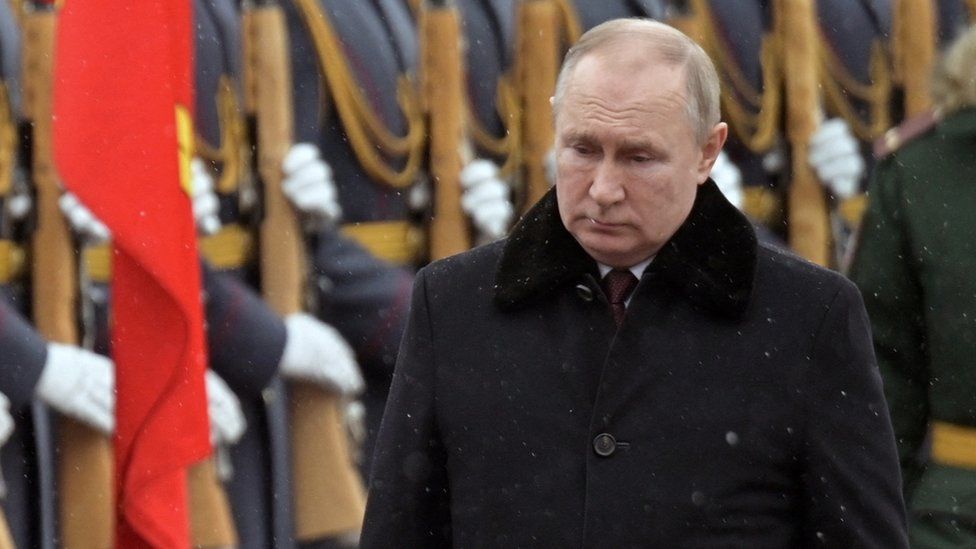
Vladimir Putin unleashed the biggest war in Europe since World War Two with the justification that modern, Western-leaning Ukraine was a constant threat and Russia could not feel "safe, develop and exist".


By Paul Kirby
BBC News

Published


President Putin has spoken of Russia's invasion as a "noble" cause

Thousands of people have since died, towns and cities such as Mariupol lie in ruins and 13 million people have been displaced. But the questions remain: what was it all for and how will it end?

What was Putin's original goal?

The Russian leader's initial aim was to overrun Ukraine and depose its government, ending for good its desire to join the Western defensive alliance Nato. After a month of failures, he abandoned his bid to capture the capital Kyiv and turned his ambitions to Ukraine's east and south.

Launching the invasion on 24 February he told the Russian people his goal was to "demilitarise and de-Nazify Ukraine". His declared aim was to protect people subjected to what he called eight years of bullying and genocide by Ukraine's government. Another objective was soon added: ensuring Ukraine's neutral status .

Foreign Minister Sergei Lavrov spoke of freeing Ukraine from oppression while foreign intelligence chief Sergei Naryshkin argued "Russia's future and its future place in the world are at stake".

Ukraine's democratically elected president, Volodymyr Zelensky, said "the enemy has designated me as target number one; my family is target number two". His adviser said Russian troops made two attempts to storm the presidential compound.

Russia's leader refused to call it an invasion or a war. Moscow continues to coin Europe's biggest war since 1945 a "special military operation".

The claims of Nazis and genocide in Ukraine are completely unfounded but part of a narrative repeated by Russia for years. "It's crazy, sometimes not even they can explain what they are referring to," complained Ukraine's foreign minister Dmytro Kuleba.

However, an opinion piece by state-run news agency Ria Novosti made clear that "denazification is inevitably also de-Ukrainisation" - in effect erasing the modern state.

And it is Russia that is now accused by the international community of carrying out war crimes. Several countries including the US and Canada go further and call it genocide.

After so much destruction, the Russian leader's words ring very hollow now: "It is not our plan to occupy the Ukrainian territory; we do not intend to impose anything on anyone by force."


How have Putin's aims changed?

A month into the invasion, Russia pulled back from Kyiv and declared its main goal was the "liberation of Donbas" - broadly referring to Ukraine's eastern regions of Luhansk and Donetsk. More than a third of this area was already seized by Russian proxy forces in a war that began in 2014, now Russia wanted to conquer all of it.

The Kremlin claimed it had "generally accomplished" the aims of the invasion's first phase, which it defined as considerably reducing Ukraine's combat potential. But it became clear from Russia's withdrawal that it had scaled back its ambitions.

"Putin needs a victory," said Andrei Kortunov, head of the Russian International Affairs Council. "At least he needs something he can present to his constituency at home as a victory."

Russian officials are now focused on seizing the two big eastern regions and creating a land corridor along the south coast, east from Crimea to the Russian border. They have claimed control of the southern region of Kherson and a leading Russian general has said they have hopes of seizing territory further west along the Black Sea coast towards Odesa and beyond.

"Control over the south of Ukraine is another way out to Transnistria," said Maj Gen Rustam Minnekayev, referring to a breakaway area of Moldova, where Russia has some 1,500 troops.


If Russia does capture both eastern regions, it will most likely try to annexe them after a sham vote, as it did with Crimea in 2014. Ukraine also accuses occupying forces in Kherson of planning a referendum on creating separatist entity: they are already introducing Russia's currency, the rouble, from 1 May.

Capturing Donbas and the land corridor is a mandatory minimum for the Kremlin, warns Tatiana Stanovaya, of analysis firm RPolitik and the Carnegie Moscow Center: "They will keep going. I always hear the same phrase - 'we have no choice but to escalate'."

The powerful head of Russia's security council, Nikolai Patrushev, has spoken of Ukraine disintegrating into "several states", blaming Ukrainian and Western hatred of Russia.

The question is whether Russian forces have the numbers to press forward. By not declaring this a war, the Kremlin cannot mobilise nationally and military analyst Michael Kofman believes unless that happens Russia's Donbas offensive is the last it can attempt.

Is there a way out?

There is little sign of any negotiated end to this war in the immediate future.

A few weeks into the war, Russia said it was considering a Ukrainian proposal of neutrality, but there have been no negotiations since the end of March.

President Putin told the UN Secretary General at the end of April "we are negotiating, we do not reject [talks]", but he earlier declared negotiations at a dead end. After a meeting with the Russian leader, Austrian Chancellor Karl Nehammer gave a very downbeat assessment of a man who had entered into a "logic of war".

Ukraine's Volodymyr Zelensky had already accepted that Ukraine would not join Nato: "It's a truth and it must be recognised." But after apparent Russian atrocities came to light in Bucha, Mariupol and elsewhere, he made it clear there would be no more talks until Russia withdrew from all territories seized since 24 February.

In its offer of neutrality proposed at the end of March, Kyiv said:

  • Ukraine would become a non-aligned and "non-nuclear" state, with no foreign military bases or contingents on its territory
  • Strict, legally binding guarantees would require other countries to protect a neutral Ukraine in the event of attack
  • Within three days guarantor states would have to hold consultations and come to Ukraine's defence
  • Ukraine would be allowed to join the European Union, but would not enter military-political alliances and any international exercises would require consent of guarantor states
  • The future status of Russian-annexed Crimea would be negotiated over the next 15 years

But neutrality for Vladimir Putin was never likely to be enough.

"Ultimately [Putin] wanted to divide the country and I think it's becoming more evident that's what he wants," says Barbara Zanchetta of King's College London's Department of War Studies.

While the Kremlin wants to annex some areas of Ukraine, Tatiana Stanovaya believes "much more important is the fate of Ukraine: Putin wants to end Ukraine as a current state".

How Putin sees Ukraine

Since Ukraine achieved independence in 1991, as the Soviet Union collapsed, it has gradually looked to the West - both the EU and Nato.

Russia's leader has sought to reverse that, seeing the fall of the Soviet Union as the "disintegration of historical Russia". He has claimed Russians and Ukrainians are one people, denying Ukraine its long history and seeing today's independent state merely as an "anti-Russia project". "Ukraine never had stable traditions of genuine statehood," he asserted.

It was his pressure on Ukraine's pro-Russian leader, Viktor Yanukovych, not to sign a deal with the European Union in 2013 that led to protests that ultimately ousted the Ukrainian president in February 2014.

Russia then seized Ukraine's southern region of Crimea and triggered a separatist rebellion in the east and a war that claimed 14,000 lives.

As he prepared to invade in February, he tore up an unfulfilled 2015 Minsk peace deal and accused Nato of threatening "our historic future as a nation", claiming without foundation that Nato countries wanted to bring war to Crimea. He has lately accused Nato of using Ukraine to wage a proxy war against Russia.

What's Putin's problem with Nato?

For Russia's leader the West's 30-member defensive military alliance has one aim - to split society in Russia and ultimately destroy it. In a Victory Day speech on 9 May he accused Nato of launching an active military build-up on territories adjacent to Russia.

Ahead of the war, he demanded that Nato turn the clock back to 1997 and reverse its eastward expansion, removing its forces and military infrastructure from member states that joined the alliance from 1997 and not deploying "strike weapons near Russia's borders". That means Central Europe, Eastern Europe and the Baltics.


In President Putin's eyes, the West promised back in 1990 that Nato would expand "not an inch to the east", but did so anyway.

That was before the collapse of the Soviet Union, however, so the promise made to then Soviet President Mikhail Gorbachev only referred to East Germany in the context of a reunified Germany. Mr Gorbachev said later that "the topic of Nato expansion was never discussed" at the time.

And the context in the 1990s was very different, says Barbara Zanchetta: "It was not done as a provocation, there was a partnership for peace."

Nato maintains it never intended to deploy combat troops on its eastern flank, until Russia annexed Crimea illegally in 2014.

Does Putin have designs beyond Ukraine?

If he has, his military setbacks in Ukraine may have put paid to any wider ambitions beyond its borders. The most immediate threat is to Moldova, which is not part of Nato and has already come under Russian threat.

But President Putin's ambition to roll Nato back to the late 1990s has taken a hit, with Finland and Sweden looking closely at joining an alliance that now seems as unified as ever. "He has triggered the opposite effect of what he wanted. He wanted to weaken Nato but Nato is now much stronger," says Barbara Zanchetta.

Nato has warned of a war that could last weeks, months or even years, and said its members need to be prepared for a long haul.

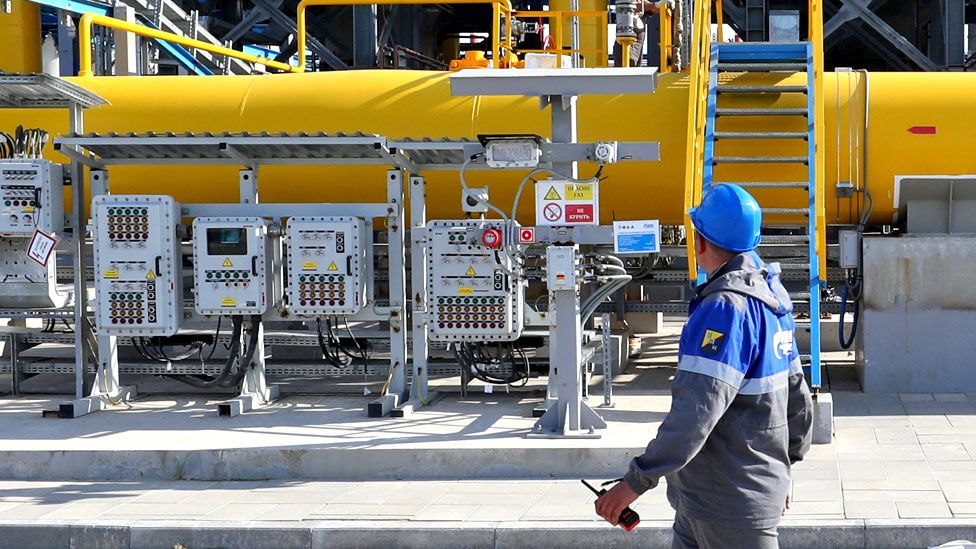
Russia has already punished two Nato members, Poland and Bulgaria, for the West's support for Ukraine, by cutting off their gas supplies.

Having witnessed Mr Putin's willingness to lay waste to European cities to achieve his aims, Western leaders are now under no illusion. US President Joe Biden has labelled him a war criminal and German Chancellor Olaf Scholz believes "Putin wants to build a Russian empire... he wants to fundamentally redefine the status quo within Europe in line with his own vision."

Before the war Ukrainian President Volodymyr Zelensky paid regular visits to the front line in eastern Ukraine

War in Ukraine: More coverage

line

What next for Russia itself?

Russia has tried to silence dissent. Protest of any kind is banned and more than 15,000 people have been detained. "The Russian people will always be able to distinguish true patriots from scum and traitors," said President Putin.

There has been a big exodus of IT workers and other professionals and the political opposition has either fled or been jailed, as in the case of opposition leader Alexei Navalny.

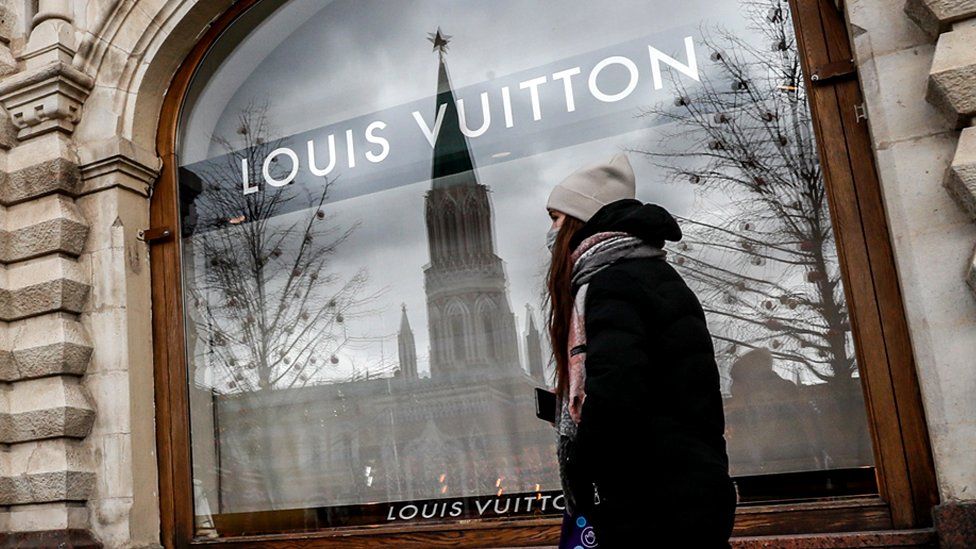
A wide array of Western sanctions threaten to contract Russia's economy by up to 10% this year and hike inflation by more than 20%:

  • Russia's central bank has had its assets frozen and major banks are shut out of the international SWIFT payment transfer network.
  • The US has banned imports of Russian oil and gas; the EU aims to cut gas imports by two-thirds within a year and is working on a phased oil embargo; the UK aims to phase out Russian oil by the end of 2022
  • Russian airlines have been barred from airspace over the EU, UK, US and Canada
  • Personal sanctions have been imposed on President Putin and his entourage.

https://www.bbc.com/news/world-europe-56720589