Showing posts with label Joseph Stiglitz. Show all posts

Thursday, 6 October 2016

Nobel laureate Stiglitz sees Italy, others leaving euro zone in coming years

Nobel Prize-winning economist Joseph Stiglitz predicted in a interview out on Wednesday that Italy and other countries would leave the euro zone in coming years, and he blamed ...

Thu Oct 6, 2016 | 3:11am BST

Nobel Prize-winning economist Joseph Stiglitz attends a keynote presentation during CLSA investors conference in Hong Kong, China September 19, 2016.      REUTERS/Bobby Yip
Nobel Prize-winning economist Joseph Stiglitz attends a keynote presentation during CLSA investors conference in Hong Kong, China September 19, 2016. REUTERS/Bobby Yip

Nobel Prize-winning economist Joseph Stiglitz predicted in a interview out on Wednesday that Italy and other countries would leave the euro zone in coming years, and he blamed the euro and German austerity policies for Europe's economic problems.
Europe lacks the decisiveness to undertake needed reforms such as the creation of a banking union involving joint bank deposit guarantees, and also lacks solidarity across national boundaries, Stiglitz was quoted as saying by Die Welt newspaper.
"There will still be a euro zone in 10 years, but the question is, what will it look like? It's very unlikely that it will still have 19 members. It's difficult to say who will still belong," the paper quoted Stiglitz as saying.
"The people in Italy are increasingly disappointed in the euro," Stiglitz was quoted as saying. "Italians are starting to realise that Italy doesn't work in the euro," he added.
He said Germany had already accepted that Greece would leave the euro zone, noting that he had advised both Greece and Portugal in the past to exit the single currency.
Concerns about the euro zone have escalated in Germany in recent months amid growing concern about a shift away from austerity in southern Europe, the loose money policies of the European Central Bank and the rise of the right-wing Alternative for Germany party.
Stiglitz told the paper the euro and austerity policies in Germany were at fault for Europe's economic malaise. The break-up of the single currency or the division into a north euro and a south euro were the only realistic options for reviving Europe's stalled economy, the paper quoted him as saying.
The former chief economist of the World Bank said Europe and the United States had similar economies, resources and labour pools, but the U.S. economy had recovered from the global financial crisis while the European economy had not.

"The big difference is the euro," he said, noting that the single currency was weighing on the overall European economy.
The euro reached a three-week high against the yen on Wednesday, a day after a Bloomberg article cited sources as saying the European Central Bank would probably wind down its bond buying gradually before ending quantitative easing.
http://uk.reuters.com/article/uk-eu-euro-economist-idUKKCN12602C?

Wednesday, 7 September 2016

The Brexit Question That Nobody Asked

Mervyn King, former governor of the Bank of England, has written the best article I've read on Britain's exit from the European Union. In an essay for ...


BUT WAS THE WIND BLOWING IN THE RIGHT DIRECTION?
PHOTOGRAPHER: JASPER JUINEN

Mervyn King, former governor of the Bank of England, has written the best article I've read on Britain's exit from the European Union. In an essay for the New York Review of Books he makes many excellent points, but one is of surpassing importance. It's an obvious point, or ought to be, that nonetheless has been almost entirely ignored by other respectable commentators: Whether Britain should stay in the EU depends on where the EU is heading.
The EU is plainly in deep trouble with or without the U.K., and its condition as a political project is anything but stable. Judging whether Britain is better off as a member therefore requires a judgment not only about what Britain has gained or lost from membership up to now but also an assessment of the future character of the whole EU enterprise. Britain's Remain campaign, expressing the collective opinion of every expert on the subject, has had almost nothing to say about this.
As King points out, the EU is structurally unsound. (Joseph Stiglitz in the Financial Times makes the same point.) It has pressed political union both too far and not far enough. That is, it has created half a political union -- with a single currency but without a collective fiscal policy or the political apparatus that would be necessary to legitimize it. King:
Putting the cart before the horse -- setting up a monetary union before a political union -- has led the European Central Bank to become more and more vocal about the need to “complete the architecture” of monetary union by proceeding quickly to create a Treasury and finance minister for the entire eurozone. The ability of such a new ministry to make transfers between member countries of the monetary union would reduce pressure on the European Central Bank to find new ways of holding the monetary union together. But there is no democratic mandate for a new ministry to create such transfers or to have political union -- voters do not want either. 
And voters aren't the only ones who don't want it. German officialdom (backed by popular opinion) is viscerally opposed to a "transfer union," which is Germany's name for fiscal policy as it operates in any normal country. Germany's position is understandable, since Germans would give much more than they received in any such arrangement. But that doesn't alter the conclusion: Not only is the EU structurally unsound, but there's also little prospect that the structure either can be or will be repaired.
The most dangerous scenario of all in fact would be a political union that happened despite all this, forced by pressure of events onto electorates -- Germany's in particular -- that didn't want it. The hazards posed by discontented voters rebelling against deaf elites are already vividly apparent in Britain (the success of the Brexit campaign), in the rest of the EU (where far-right populist parties are gaining ground) and in the U.S. (Donald Trump). A European political union without strong popular backing might test Europe's democracies to destruction.
The closest Remain campaigners came to acknowledging this grim prospect was to say that Britain could help guide the EU in its efforts to address the union's problems, such as they may be. Given the scale of the task, that would be far from reassuring even if it were true. King explains why it's false.
Britain can't guide the EU in solving this existential problem because it has already detached itself from the EU core. It chose not to join the single currency and didn't participate in the Schengen plan for borderless travel. Britain isn't, and isn't seen as, a full member of the club. How then can it provide leadership? "For all our shared history, culture, and values," as King says, "it would be impertinent for a country that has chosen to join neither the euro nor the Schengen areas to tell our European partners what they should do."
The Remainers' take on Britain's semi-detachment was to say that Britain has the best of both worlds. It gets the benefits of membership, without the worry of living entirely inside a house whose roof might fall in -- or, as Remainers might prefer to think, whose paintwork needs touching up. I applaud the sentiment: It's good, whenever possible, to have the best of all worlds. But the question is whether Britain's less-than-full-hearted commitment to the European adventure is best pursued as an increasingly anomalous member of a broken EU or as a concerned and friendly neighbor.
Granted, the answer to that question isn't obvious. But what certainly ought to be obvious is that the question deserved to be asked -- and that's something the Remain campaign refused to acknowledge.
This column does not necessarily reflect the opinion of the editorial board or Bloomberg LP and its owners.
https://www.bloomberg.com/view/articles/2016-08-21/the-brexit-question-that-nobody-asked

Other articles:
Which Europe Now?
Money: The Brave New Uncertainty of Mervyn King
The Brexit Question That Nobody Asked

Sunday, 4 September 2016

Britain can leave EU and still thrive, says Stiglitz

Britain is easily capable of thriving outside the European Union, one of the world’s leading economists has insisted in an interview ...

Jeremy Warner
4 SEPTEMBER 2016 • 9:03PM

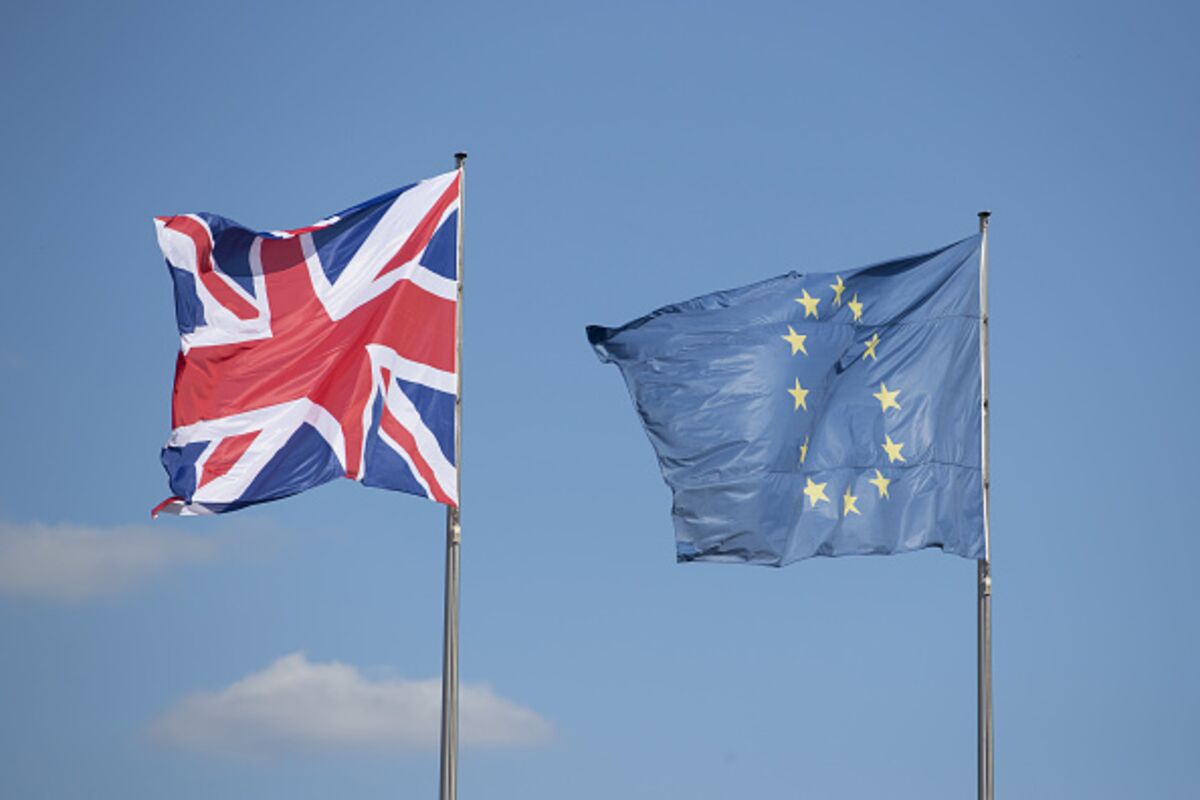
EU and union jack flags

Britain is easily capable of thriving outside the European Union, one of the world’s leading economists has insisted in an interview with The Daily Telegraph.

“There’s no reason why not”, says Joseph Stiglitz, a Nobel prize winning economist and something of an economic guru to the political left. “But it depends on how Europe responds, and how the negotiations go.

“There are two scenarios. If Europe adopts the Juncker approach, which is to say we’ll cut off our nose to spite our face and punish Britain for leaving, then that’s not so good.

“But it really wouldn’t be in Europe’s interests to do this. The US is actively engaged in Europe, in manufacturing, services and finance, and our trading relationship with Canada, where we have a free trade agreement, but no single market and no free movement, works well, actually really well, for Canada.

“So you should be no worse off than Canada is with the United States. I find it quite hard to believe that you [Britain] would be treated worse by Europe than the US or Canada, or Canada is by the US. This would be hard to justify”.

Jean-Claude Juncker, president of the European Commission, has signaled a hard line approach to Brexit negotiations, insisting that “there will be no access to the internal market for those who do not accept the rules – without exception or nuance – that make up the very nature of the internal market system.”

However, Angela Merkel, the Germany Chancellor, and a number of other European leaders have indicated a more conciliatory approach, conscious that their own countries have much to lose from a breakdown in trading relations with Britain.

Stiglitz, a one time adviser to the Scottish government on independence and briefly a member of Jeremy Corbyn’s now disbanded economic advisory panel, has been in the UK to promote his new book, The Euro, and its Threat to the Future of Europe.

Joseph Stiglitz, American economist and a professor at Columbia University
 Joseph Stiglitz, American economist and a professor at Columbia University CREDIT: JASON ALDEN

In it he argues that the root cause of Europe’s political and social ills lies in the creation of the euro, which rather than driving convergence among nations as intended has resulted in politically and economically destabilising divergence.

“The Brexit referendum was a shock”, he concludes.

“My hope is that the shock will set off waves on both sides of the Channel that will lead to a new, reformed European Union.”

Europeans were finally waking up to the idea that there is not going to be a euro without a crisis on the doorstep”, he told the Telegraph, “and that’s a gloomy prospect” likely to drive “a political backlash against the establishment standing behind the euro.”

However, the euro is not the only thing that has gone wrong in the European Union, Stiglitz argues.

“There were other mistakes. It is fairly clear that the EU has imposed more regulatory harmonisation than is necessary, and that this excessive enthusiasm for regulatory harmonisation is one of the things that has gotten the EU into trouble with the British”.

“The US and Canada have a joint sphere of prosperity with extensive trade across the border without such tight common regulations at every turn”, he points out.

http://www.telegraph.co.uk/business/2016/09/04/britain-can-leave-eu-and-still-thrive-says-stiglitz/

Sunday, 21 August 2016

Nobel prize winning US economist says Euro "utter economic failure"

Amid growing indications of shifting American opinion about the European Union following the Brexit vote, Nobel Prize winning economist Joseph Stiglitz says the Euro has been a disaster and collapse could now be inevitable

by the commentator on 21 August 2016 07:36

Stiglitz

In an interview to mark the launch of his new book, The Euro: How a Common Currency Threatens the Future of Europe, Nobel Prize winning, and Left-leaning, US economist Joseph Stiglitz has issued a stark warning that the euro has been a failure and that its collapse is a very real possibility.
Echoing sentiments that British eurosceptics have voiced for two decades, Stiglitz told the New Republic:
"[The Euro] impeded or made impossible the ability to adjust when there was a shock. It was a big shock, 2008, and the basic idea was that exchange rate systems are part of the adjustment mechanism. And when they created the euro, they took away that adjustment to a shock, and they didn’t put anything in its place".
"European officials thought that austerity was part of what they called their “convergence policies,” of trying to bring countries together. Instead, it actually made things worse. There’s more inequality within countries and more disparity across countries."
Setting the situation in a broader frame, Stiglitz's core observation is damning:
"The euro really didn’t start until 1999, so it didn’t even have a decade of success before the crisis. The crisis period has now been almost as long as the period before the crisis, and you have to say it’s been an utter economic failure.
"Because of the structure of the Eurozone, there’s nothing the individual country can do to get out of the mess except to accept depression and this horrific kind of adjustment process, which really clearly undermines society. You see it happening over and over again."
Though Stiglitz argues in his book that it could be theoretically possible to save the single currency -- via measures such as a banking union -- he does not appear to think this likely. An amicable break up, he says, would be far preferable to the status quo.
This is an important intervention, and there is already talk in influential quarters that it could affect sentiment towards the euro in the context of market readjustments to the Brexit vote on June 23.
In a recent article for Marketwatch entitled: Stiglitz's attack could tilt debate on the euro, the author, Darrell Delamaide, said,
"...the timing of his new book in the fragile post-Brexit environment and the compelling nature of his arguments presented in a detailed and systematic fashion may represent a tipping point in debating the future of the EU."
http://www.thecommentator.com/article/6396/nobel_prize_winning_us_economist_says_euro_utter_economic_failure


Friday, 12 August 2016

Europe Needs a Two-Tier Solution to Move Past Brexit

The European project is in a funk. Talk of ever-closer union has been silenced by the U.K. decision to quit the European Union. The long-term solution lies in acknowledging that while some European countries want nothing more ambitious than a free-trade area, others should get on with building a full-fledged United States of Europe.


UNITED, THEY'RE DIVIDED.
PHOTOGRAPHER: MICHAEL DEBETS/PACIFIC PRESS/LIGHTROCKET VIA GETTY IMAGES

A coalition of the able and willing -- the former qualification being much more important than the latter -- should retain the euro but cut loose the currency's weaker members. All of the architecture needed to make a success of the common currency can then be built, including a full banking union, common bond issuance, a centralized Treasury function with an empowered finance minister, and properly coordinated fiscal policies.
Creating a two-tier Europe would offer a potential way out from the threat posed by the U.K.'s Brexit vote because, as damaging as the referendum result may be for Britain, it also poses political risks for the remaining members of the bloc.
In an interview with Bloomberg News, Finnish Finance Minister Petteri Orpo says the biggest danger after Brexit is that Britain and the EU-27 can't agree and the uncertainty damages the euro area and growth. The divorce negotiations will likely expose deep divisions in how different EU countries (and their voters) view the union. Creating a second tier of membership that Britain and others could sign up for, distinct from the original unification dream, would be a recognition that one size doesn’t fit all in Europe, either politically or economically.
The outer group could maintain single-market access but would no longer impose a burden on the economically stronger core. The core could no longer rely on a de facto currency devaluation to export cheaply to the periphery.
Deciding who stays and who goes would be far from easy. The Maastricht criteria, designed to ensure that only countries whose debts and deficits were under control could adopt the euro, was always a political construct doomed to failure by fudging. But better to risk a political fight now —using Brexit as a convenient excuse for a reckoning — than allow internal pressures to blow the euro part.
Nobel prize-winning economist Joseph Stiglitz also thinks the current situation is unviable, but his solution is to allow individual countries to have their own version of the euro. The idea seems seems at best cosmetic and at worst unworkable.
In an extract of his new book published by Vanity Fair this week Stiglitz reviews the arguments of having a currency area shared by countries that pursue individual fiscal strategies and whose economies diverge in many ways. The existing system, Stiglitz argues, is "creating within Europe the same kind of rigidity that the gold standard had inflicted on the world."
He's correct; allowing Greece to continue wearing the straitjacket of euro membership, for example, seems downright cruel when it removes the currency flexibility that would help it tackle an unemployment rate that's been north of 20 percent for half a decade. The euro zone lacks, for example, an institution that can provide large-scale funding for infrastructure projects specifically for an economically ailing member. What efforts do exist are too small-scale: While the European Central Bank sets monetary policy for all of the members, the EU's budget is only 1 percent of the region's gross domestic product, compared with federal spending in the U.S. of 20 percent of GDP.
But it's hard to see how that would be solved by allowing Greece to have its own "flexible euro" which can "fluctuate, but within bounds that the policies of the euro zone itself would affect." Any hedge fund worthy of the name would immediately line up to attack the new currency, picking off the weaker countries one by one.
Stiglitz's proposed system looks remarkably like the European Exchange Rate Mechanism which tied currency values together in a grid in the years prior to the euro's introduction. In truth, the ERM never worked very well; the temptation to devalue on a regular basis proved too tempting to the likes of Italy, and the resulting waves of speculative attacks in the foreign exchange market were both politically and economically damaging.
Stiglitz presents his solution as the magic middle ground between two disastrous alternative scenarios: a return to the status quo and a politically nonviable "all in" approach that created a fiscal union to support the single currency.
Neither breaking up the euro bloc nor trying to impose deeper integration on all of the nations involved is an acceptable way forward. But a smaller common-currency club combined with a wider trading arrangement for those who want or need the flexibility and sovereignty of their own currency and their own central bank would have a better chance of success than the halfway house proposed by Stiglitz.