Saturday, 9 September 2017

UK doesn't need Brexit to curb EU immigration, says former PM Blair

LONDON: Britain could bring in tough new controls on immigration from the European Union without actually having to leave the bloc, former prime minister Tony Blair said on Sunday.

Sunday, 10 September 2017 

Britain could bring in tough new controls on immigration from the European Union without actually having to leave the bloc, former prime minister Tony Blair said on Sunday.

Concerns over the impact of high levels of immigration on public services and housing were cited as a factor by many who voted to leave the EU in last year's referendum.

Prime Minister Theresa May's Conservative government has said free movement of EU citizens coming to Britain must end.

Many Brexit supporters blame Blair's government, which allowed citizens of former communist states to settle immediately in Britain despite a long transition period implemented by other EU countries, for a big influx of EU migrants from 2004.

"There is no diversion possible from Brexit without addressing the grievances that gave rise to it. Paradoxically, we have to respect the referendum vote to change it," Blair, who has said Brexit can and should be stopped, wrote in the Sunday Times newspaper.

"We can curtail the things that people feel are damaging about European immigration, both by domestic policy change and by agreeing change within Europe to the freedom of movement principle," added Blair, who led a Labour government for a decade from 1997.

Asked about Blair's proposals, defence minister Michael Fallon said the government had to get on with delivering Brexit.

"The country has taken its decision, we are leaving the European Union now and that means freedom of movement has to end ... there have got to be restrictions on those coming here," he told BBC Television.

A leaked government document last week said Britain was considering measures to restrict immigration for all but the highest-skilled EU workers, plans some companies called alarming.

A paper published on Sunday by Blair's Institute for Global Change said the government could take steps including registering EU migrants when they arrive to keep track of whether they meet EU rules about finding work.

EU migrants could also be forced to show evidence of a job offer before being allowed to enter Britain, and those without permission to reside could be banned from renting, opening a bank account or accessing welfare benefits, it said.

The paper also proposes seeking an 'emergency brake' to implement temporary controls on migration when services are stretched -- a strengthened version of a deal offered to former Prime Minister David Cameron ahead of the referendum. - Reuters


http://www.thestar.com.my/business/business-news/2017/09/10/uk-doesnt-need-brexit-to-curb-eu-immigration-says-former-pm-blair/

Wednesday, 6 September 2017

German tantrums over Britain and Brexit

The German media and probably some in the German and EU governments misjudge the UK position on Brexit. Once again they think pressure, personal ridicule, scorn will force the UK to see it their way. It did not achieve their end when they tried to pressurise us into joining the Euro, and it won't work now


Flag_latest
Brexit is on its way mein host...
6f37592038ebe4c2dc83c06bb82884256d790fa4
John Redwood MP
On 6 September 2017 09:12
You know people are losing when they resort to personal abuse and bluster. Clearly the German government was unhappy about being told the truth about their 100bn Euro bill for the UK to leave -- it is a work of fiction.
I had many dealings with the German government and with their business representatives when I was single market Minister, many when I was making the case for the UK not to belong to the Euro, and a few in the run up to the referendum.
The Germans always began in a friendly and diplomatic way, seeking to explain to me why it was in the UK’s interests to accept a new law, join the Euro and remain in the EU. They thought I would be sufficiently amenable to see it from their point of view. They kept telling me that if I did not see it their way the UK would lack influence in the EU. That was such a silly irony -- you will only have influence if you agree with us on all the big issues.
I used to explain to them that I am a UK MP, not a German one. I have no special insight into what laws, taxes and budgets Germany needs, and am not accountable to German electors for such decisions.
I do not seek or expect any influence over the big issues affecting the German economy. In return I do not think Germany can help me and my colleagues in deciding what currency the UK should use, how high our taxes should be, what taxes we should imnpose, what laws we should have and how we run our borders.
They might then shift their ground and pretend that the EU does not have that much influence after all, and that the UK inside the EU could nonetheless influence its laws. I would explain that the true project, the one they often used to want me to adopt, includes the Euro, Schengen, common defence and much else that does mean major powers at EU level.
This is clearly something the UK does not want. I accept and always have accepted that out of the EU they will decide what regulations to impose on companies selling to them, just as the USA decides the terms on which we export to them.
The difference is once we are out we do not have to impose those same requirements on everything we make and sell elsewhere if it does not suit us and our customers.
Today we see yet again the German media and probably some in the German and EU governments misjudge the UK position. Once again they think pressure, personal ridicule, scorn will force the Uk to see it their way. It did not achieve their end when they tried to pressurise us into joining the Euro. It did not work when they offered Mr Cameron very little, thinking it would be sufficient to secure a stay in vote. It looks like they misread it again.
The truth is the UK can and will leave in March 2019, with or without a deal on the future relationship. I forecast that on that date, even after many more rows and disagreements, planes will still be able to fly from Frankfurt to London, German cars will still be admitted into UK car showrooms, and tourists will still make the pilgrimages between our two countries.
The only question is will the EU make this easier, or does it have workable plans to make it a bit more difficult. We await their answer when they have cooled down.
The present intemperate language belittles them. It does not damage us.

Monday, 4 September 2017

The Door Slams Shut on Turkey's Cherished Dream

RTX3AD2I
Leaving Erdogan in her wake: Chancellor Angela Merkel. Picture Source: Reuters
For nearly a century, Turkey has been knocking at Europe’s door hoping to gain admittance to what it considered the club of modern, western nations. “Europe has been an object of desire as well as a source of frustration for Turkish national identity in a long and strained history,” Meltem Ahiska, a sociologist at Bogazici University in Istanbul, once wrote in a paper entitled “Orientalism.”
After World War II, Turkey was one of the first nations to join the Council of Europe in 1949. It sided with the West in the Cold War against the Soviets, and was an early member of the North Atlantic Treaty Organization. Turkey joined a customs union with European countries and began difficult negotiations to become a full member of the European Union in 1999.
After 18 years of fitful starts and painful stops, that door appeared to have slammed shut with finality on Sunday.
“The fact that Turkey should not become a member of the EU is also clear.”
Angela Merkel, German Chancellor
German Chancellor Angela Merkel, in a television debate with her Social Democratic opponent Martin Schulz, said flatly “the fact that Turkey should not become a member of the EU is also clear.” She said she would speak to other EU heads of government next month “to see if we can reach a joint position on this so we can end these accession talks.” Her pledge came after much prodding from Mr. Schulz, who said he would immediately make ending the membership talks official policy if he became chancellor.
There was an anguished cry in response from Ankara. Ibrahim Kalin, a spokesman for President Recep Tayyip Erdogan, accused Ms. Merkel of indulging in populism. “Germany and Europe’s attacks on Turkey/Erdogan, by ignoring essential and urgent problems, are reflections of the narrowing of their horizons,” Mr. Kalin said.
Germany’s government dialed back again those comments on Monday – but only slightly. There would be no official change in German policy before the September 24 elections, Ms. Merkel’s spokesperson Steffen Seibert said. However, the discussion with EU leaders that Ms. Merkel suggested could come as early as October, he conceded.
In truth, the negotiations never advanced very far, with the Europeans reluctant to grant citizenship to 80 million Turks, most of them Muslim, who would be able to move freely throughout the 28-nation union.
“What is going on now in Turkey is a kind of wave of cleansing.”
Martin Schulz, SPD Party Leader
But the opposition to Mr. Erdogan has been steadily growing since a failed coup in July 2016 provoked a violent backlash in which thousands of civil servants were dismissed from their jobs and many others were imprisoned. Germany has been particularly incensed at the detention of 19 German citizens, including workers for the human rights group Amnesty International and several reporters of ethnic Turkish origin but who are now German citizens.
Mr. Erdogan was deeply angered last April when Germany refused to allow Turkish politicians to campaign in Germany for passage of a constitutional amendment granting his expanded powers. Germany is home to three million Turkish immigrants, many of whom have dual nationality and could have voted in the Turkish referendum.
The situation has become so tense that Sigmar Gabriel, the German foreign minister, who like Mr. Schulz is from the SDP, has warned Germans against travelling to Turkey, a major summer holiday destination. German companies have also been warned about potential dangers to businessmen in Turkey in an apparent effort to ratchet up pressure on Mr. Erdogan using all-important trade with Europe as a lever.
“What is going on now in Turkey is a kind of wave of cleansing,” Mr. Schulz declared on Monday.
Europeans are waiting for Turkey’s more formal response a bit nervously, in part because it was an aid agreement with Ankara that ended the mass movement of refugees into southern European, ending a months-long international crisis. For all their bluster about the EU membership negotiations, that was one agreement that both Ms. Merkel and Mr. Schulz said they were not prepared to end.
If Mr. Erdogan decided to open the floodgates again of his own accord, it could prove damaging to European solidarity behind Ms. Merkel.
https://global.handelsblatt.com/politics/the-door-slams-on-turkeys-cherished-dream-821504?

Saturday, 2 September 2017

Chinese Billionaire Is Poised to Rescue a Great British Icon

The specialty carmaker that helped build the first Tesla Roadsters ponders an electric future and more.


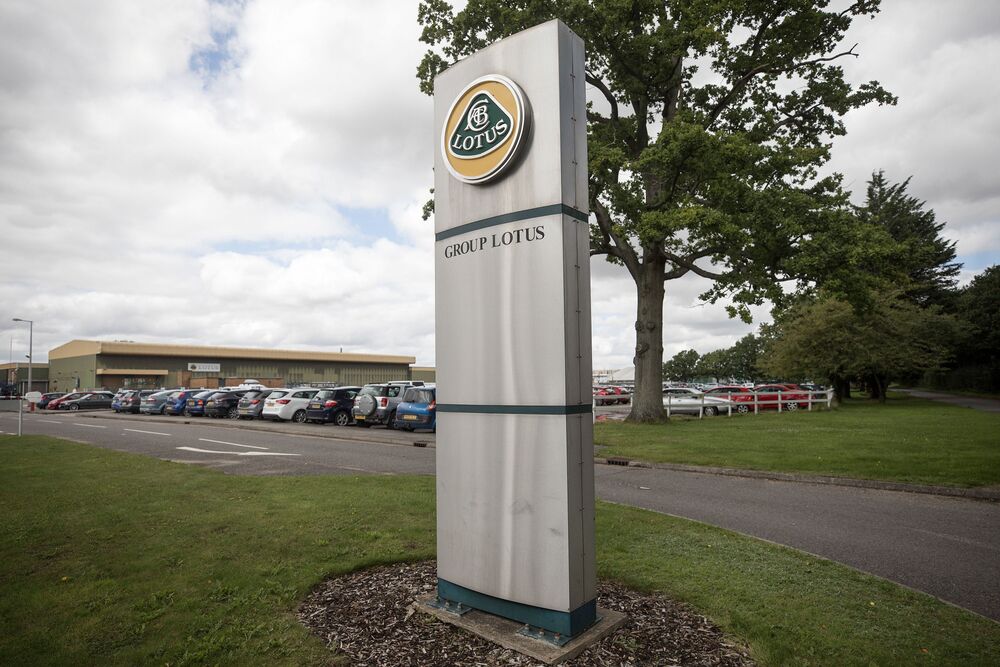
Outside the Lotus factory in Hethel, near Norwich, U.K.


Chinese Billionaire Is Poised to Rescue a Great British Icon


Friday, 1 September 2017

Brexit offers boon in UK real estate

Bankers may be leaving London, but Britain’s exit from the European Union could still offer opportunities to buy UK commercial real estate with the market in flux, according to Australia’s largest pension fund.

Friday, 1 September 2017

Australia’s largest pension fund eyes London commercial properties

SYDNEY:  AustralianSuper Pty, which has A$120bil in assets, is looking to invest more overseas, with real estate and infrastructure in the UK, Europe and the US of particular interest, Melbourne-based chief investment officer Mark Delaney said.

“Brexit may present an opportunity for us, but we will need to be patient,” Delaney said in an interview Aug. 24. “There are likely to be some good quality assets that become available that will be worth looking at.”

Uncertainty surrounding the terms of Britain’s exit and future access to the single market has seen international banks look to Dublin, Frankfurt and other European capitals for office space - raising doubts about London’s economic prospects and causing the value of older buildings to decline.

With some investors losing their appetite for riskier assets, opportunities remain for long-term buyers, Delaney said.

A global retreat of Chinese dealmakers as more stringent capital controls start to bite could also prove a boon for other money managers, he said.

Dalian Wanda Group Co last week scrapped plans to buy a land plot in London for £470mil amid the Chinese government’s intensifying scrutiny of overseas investments.

The government in Beijing this month formally laid down new rules on overseas investments, making explicit its campaign against what it calls “irrational” acquisitions of assets in industries ranging from real estate to hotels and entertainment.

Chinese firms have been “the price setter” in many asset classes such as real estate and infrastructure, said Delaney. If the flow of funds from China continues to diminish that will create more opportunities for other investors, he said.

AustralianSuper, which paid A$900 mil in 2016 to take a majority stake in the 67-acre King’s Cross redevelopment in central London, isn’t alone in seeing value in the UK, where the pound has declined about 17% against the Australian dollar since the Brexit vote in June 2016.

Australian developer LendLease Group, which is working on Google Inc’s new London headquarters, also says it remains optimistic overall about the city.

“There’s no doubt some decisions will be deferred because it’s tough in a time of uncertainty for businesses to commit capital,’’ chief executive officer Stephen McCann said in an interview Aug. 28. “It remains a very good place for us to invest in the medium to longer term.’’

Delaney said he wants to accelerate a shift to managing money in-house, from almost 28 % of assets currently to 30% by the end of the year and ultimately 50%.

AustralianSuper says the program is delivering A$100mil in additional value to members a year.

AustralianSuper’s flagship fund returned 12.4% after taxes and fees in the year to June 30. — Bloomberg

http://www.thestar.com.my/business/business-news/2017/09/01/brexit-offers-boon-in-uk-real-estate