Monday, 26 November 2018

Draft Withdrawal Agreement in detail: What You Need to Know

Theresa May has gained the backing of EU leaders for her Brexit withdrawal, despite opposition in the UK and across the continent.
17:01, UK, Monday 26 November 2018
By Alix Culbertson, news reporter
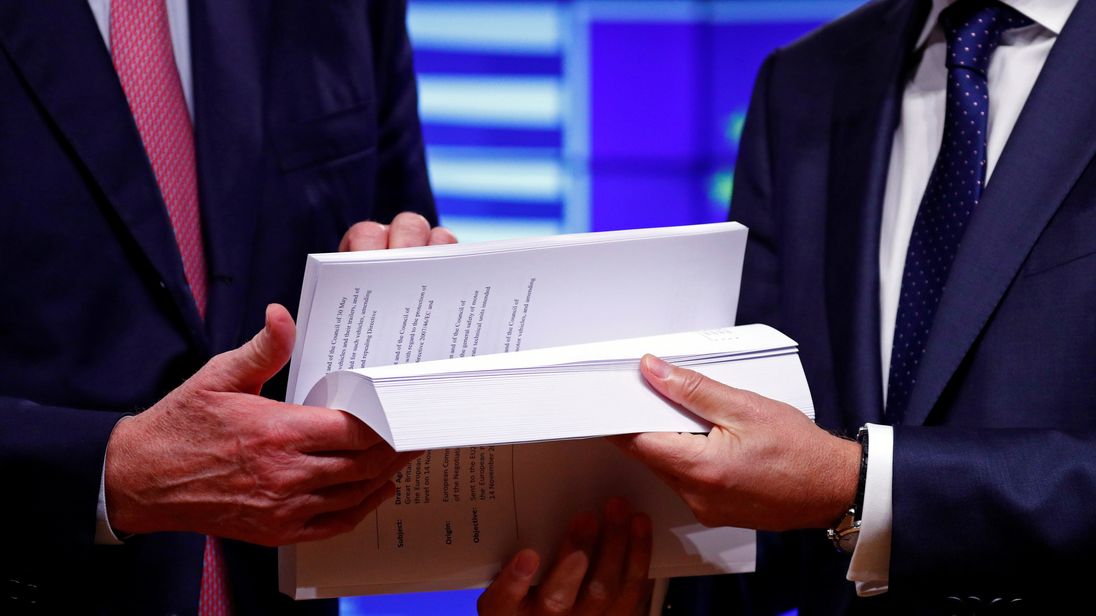
Brexit draft agreement
The Brexit draft agreement has been two years in the making
The 585-page document published on 14 November provides details of what leaving the European Union could look like.
Along with a political declaration of how the UK will work together with the EU, it forms the text a full Brexit agreement.
Most of the items look at what will happen during the agreed transition period which will start on 30 March 2019 and end on 31 December 2020 - unless this is extended.
  • Immigration
    :: Under the EU Settlement Scheme, developed as part of the negotiations, all EU citizens lawfully living in the UK continuously for five years before 2021 will be able to stay.
    :: Close family members will be able to join them in the UK and children born to immigrants living in the UK will be protected.
    :: Those who have not been living in the UK continuously for five years before 2021 will be granted pre-settled status and can apply for settled status when they have reached five years.
    :: EU citizens and their families can apply for UK residency through the EU Settlement Scheme by proving their identity, going through a check to ensure they are not a serious criminal and providing evidence of residence in the UK.
    :: Applications will be online and will cost £65 for adults and £32.50 for children under the age of 16.
    :: Close family members joining an EU citizen in the UK after 31 December 2020 will have three months to make an application, but where there is a good reason the deadline will be extended.
    :: Those with settled or pre-settled status will have the same access to healthcare, pensions and other benefits in the UK as British citizens.
    :: The UK wants to secure a similar deal for citizens living in the UK from the non-EU European Economic Area states of Iceland, Liechtenstein and Norway, and Switzerland.
    :: Irish citizens will not be required to apply for residency status, but can if they wish, and eligible non-British or Irish family members can obtain status under the scheme.
    :: People who live in one country and work in another will have their rights protected, as will any other workers.
  • :: UK nationals living in the EU continuously for five years by the end of the transition period will be able to stay.
    :: UK citizens living in an EU country by the end of 2020 who have not been there for five years in a row will be able to stay until they have been there for five years - then they will have the right to permanent residency.
    :: EU countries can choose whether UK citizens will have to apply for residency or not - but this must be a short, simple and user-friendly service which is free of charge or not more than the £65 an EU citizen would be charged in the UK.
    :: People who live in one country and work in another - frontier workers such as in Gibraltar/Spain - will have their rights protected, as will any other workers.
    :: Qualifications of EU and UK professionals, such as lawyers and auditors, obtained before 2021 will be mutually recognised across the UK and the EU.
    :: People who have moved between the UK and the EU before 2021 will still have access to benefits, pensions and healthcare cover - including reciprocal healthcare rights.
    :: The UK will make a final judgement on EU-approved case law with regards to citizens' rights.
  • trade
    :: Products already in the UK/EU marketplace on 1 January 2021 will continue to be recognised under EU rules, with VAT remaining the same.
    :: Live animals and animal products will have to comply with EU third country rules - including a vet check - before being exported from the UK.
    :: Goods under current intellectual property rights and customs union rules, or being stored for up to 12 months after the end of the period, will be treated the same as if they were in circulation before 21 January 2021.
    :: EU trade marks will be protected within the UK.
    :: Existing EU geographical indications - where products have to be made in a certain region to have the name, such as Champagne and Genuine Cornish Pasties - will remain protected in the UK and the EU.
    :: Tax and customs cooperations will remain after the end of the implementation period but customs information between the UK and the EU will only continue for three years after the period.
    :: VAT transactions and excise movement information sharing which happens before the end of the period will remain for four years after.
    :: Any remaining activity by the European Central Bank and European Investment Bank in the UK will continue until they are completed.
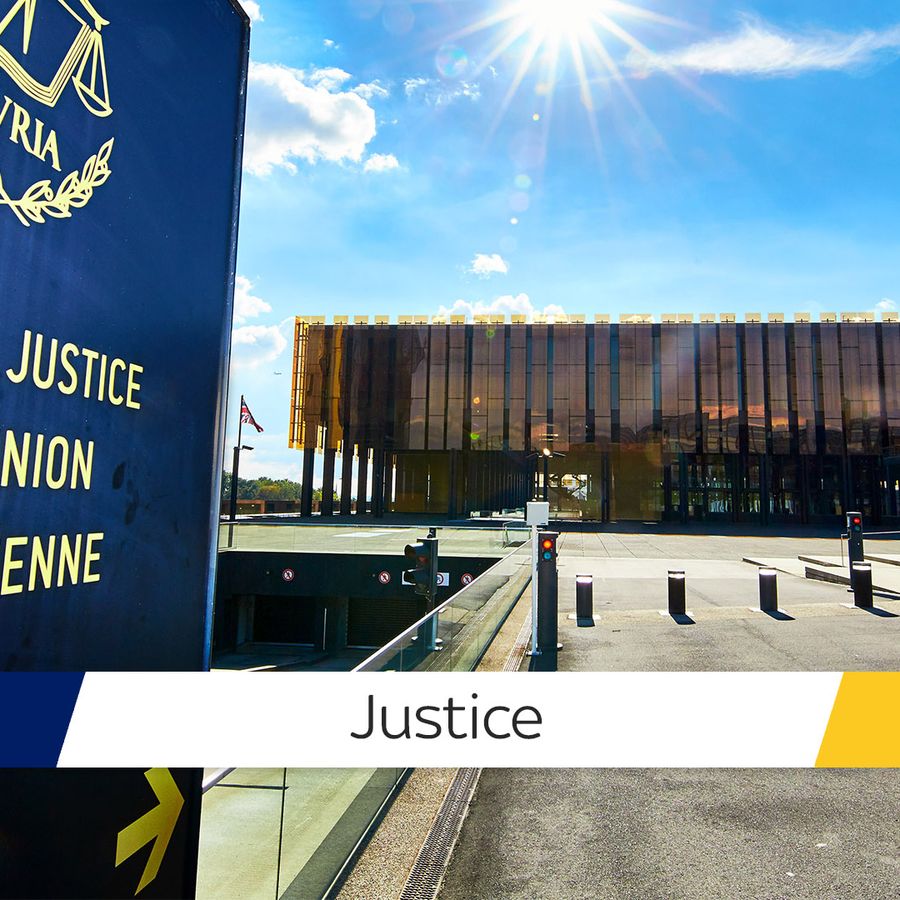
  • Justice
    :: Those wanted under a European Arrest Warrant will have their cases completed under the same rules if they are arrested before January 2021.
    :: British police and the UK's criminal judicial system will have time-limited access to certain EU communications networks, information systems and databases after the end of the period.
    :: Civil and commercial judicial proceedings and contractual obligations between the EU and the UK will continue through the period.
    :: EU rules on insolvency proceedings and information requests in cross-border parental responsibility and maintenance cases started before 2021 will continue.
    :: Legal aid, EU small claims procedure, civil disputes mediation and criminal victims' compensation will be protected.
    :: The UK's involvement in the CJEU will be wound down during the transition period.
    :: Pending CJEU cases at the end of the period will continue until a final resolution, with UK qualified lawyers allowed to represent clients until then.
    :: The European Commission can bring infraction cases against the UK for up to four years after the end of the implementation period for failure to comply with EU law before that.
    :: The EU can bring illegal state aid, anti-fraud and customs debt cases against the UK for four years after the end of the implementation period.

What I've learned from the 585-page document

What I've learned from the 585-page document

Sky's Jason Farrell says the proposal is both intriguing and impenetrable
  • Security
    :: The UK will be able to choose not to apply any EU foreign policy decisions during the period.
    :: If an agreement is made on the future relationship of common foreign and security policy during the implementation period any existing EU laws on these issues will cease to exist.
    :: The UK will not command or lead EU operations and missions, or provide them with a headquarters.
    :: The UK can be excluded from security-related sensitive information during the implementation period but the EU is required to notify the UK if this happens.
  • UK-EU relations
    :: Participation will be on a case-by-case basis.
    :: UK representatives and experts will be able to continue to attend certain EU meetings where UK presence is necessary and in the interests of the EU.
    :: The UK will continue to participate in existing justice and home affairs measures and will be able to opt in to measures which amend existing ones.
    :: The UK will be treated as an EU member for the purposes of international agreements with non-member states.
    :: The UK will be able to negotiate and ratify new international trade agreements to come into effect after the period ends.
    :: Fisheries regulations will remain the same during the transition period.
    :: The UK can start to negotiate its fishing opportunities in 2020 with the aim of concluding that by 2021. During that period the EU can invite the UK to be part of its international fishing negotiations.
  • Transition period
    :: The UK can request an extension to the transition period anytime before 1 July 2020.
    :: If the future agreement cannot be implemented by December 2020 the UK can implement the Northern Ireland backstop or seek an extension.
    :: If an extension was granted, the UK would no longer have to participate in the EU budget as a member state.
    :: The UK can introduce a new agricultural policy - as long as the payments remain within certain agreed limits.

  • Financial settlement
    :: The UK and the EU have agreed on a methodology for calculating a divorce bill and a payment schedule.
    :: The estimate is £35bn-£39bn.
    :: The UK's European Investment Bank paid-in capital of nearly £3.1bn and payments to the European Central Bank will be returned over 12 years, starting in 2019.
    :: The UK will honour the financial commitments it made to the EU Trust Funds and the EU-Turkey refugee agreement.
  • Disputes
    :: If no mutually-agreed solution has been made within three months from 29 March 2019, an independent arbitration panel will be formed, made up of two members each from the UK and EU and one jointly-agreed chairperson.
    :: Their decision will be binding and if either party does not comply within a reasonable stated period the panel may impose a lump sum or penalty to incentivise compliance.
    :: The CJEU can be requested to rule when there is disagreement over the interpretation of EU law.
  • Northern Ireland

    :: The backstop option is only a safeguard to ensure the UK will not be split and it is not the preferred or expected outcome.
    :: The transition period could be extended to avoid a backstop.
    :: The continued operation of the Common Travel Area and protection of rights and privileges enjoyed by British and Irish citizens in each other's states is "fundamental".
    :: The Belfast (Good Friday) Agreement should not be diminished.
    :: A single customs territory will be set out between the UK and the EU to ensure free flow of goods - but not for fisheries - between Northern Ireland and the Republic to prevent a hard border in the Irish Sea.
    :: By having a UK-wide customs territory, instead of just in Northern Ireland, this ties the UK to the EU - perhaps indefinitely if a deal is not agreed on.
    :: Live animals moving between the two Irelands will not have to undergo checks and controls.
    :: Northern Irish products sold in the EU will be labelled as coming from Northern Ireland or the EU, but in the UK will be from Northern Ireland or the UK.
    :: Certain EU VAT and excise rules will apply in Northern Ireland but the country will remain part of the UK's VAT area.
    :: Electricity will remain shared with Ireland, as it has since 2007.
    :: The UK will remain committed to protecting and supporting continued cooperation between Northern Ireland and Ireland, and their regions.
    :: Where EU law applies in Northern Ireland in offices, institutions and agencies, this will remain until a future agreement.
  • Military bases
    :: Akrotiri and Dhekelia bases in Cyprus, which are used for both military and humanitarian operations, are UK Overseas Territories which will continue to be the case after the transition period, including law and taxation of goods.
  • Gibraltar
    :: The UK Overseas Territory will remain under the current agreed protocol between the UK and the EU, as well as separate agreements between the UK, Spanish and Gibraltarian government, for the transition period.
    :: A coordinating committee will be created to monitor and discuss citizens' rights which is especially important as many workers cross the Gibraltar-Spain border daily.
  • Data
    :: Data exchanged between the UK and the EU before 2021 will remain protected to the same high standards.
    :: The UK government is seeking, after the end of the transition period, to maintain these standards and the current rules which mean that a third country must provide an adequate level of protection for personal data.
    :: UK data sent to the EU will continue to be protected after exiting.
  • Nuclear
    :: The UK will withdraw from the Treaty of the European Atomic Energy Community (Euratom).
    :: The UK will have sole responsibility for ensuring all nuclear materials will be treated with the same responsibilities.
    :: Euratom equipment and property in the UK will become the UK's property.

Europe finally pulls the trigger on a military force

U.S. President Donald Trump is making an intolerable show of himself in Europe. Not only has he cast doubt on America’s commitment to mutual defense under NATO; he has also unilaterally withdrawn from the 2015 nuclear agreement between Iran and the five permanent members of the United Nations Security Council, plus Germany and the European Union.
NOV 26, 2018
BY HANS-WERNER SINN

French troops take part in 2008 Bastille Day celebrations in Paris. France and Germany have finally committed to the creation of an EU-wide army under a central command. | BLOOMBERG

Since then, the Trump administration has unilaterally imposed an embargo on goods deliveries to Iran from any third country, including the other signatories of the agreement. Foreign firms that continue to conduct business in Iran now face the threat of sanctions, and banks that process transactions risk losing access to the U.S. financial system.
Meanwhile, the U.S. has been threatening similar action with respect to the new Nord Stream 2 gas pipeline that will run from Russia to Germany. The U.S. Congress is considering legislation that allows the Trump administration to impose sanctions on European firms taking part in the project, even though these companies are contractually obliged to see the work through. And, according to Gerhard Schroeder, a former German chancellor who now chairs the pipeline project, the U.S. ambassador to Germany has been acting more like an “occupation officer” than like a diplomat.
All told, the Trump administration’s disruptive behavior has left the French and German governments furious. But, beyond fueling anger, Trump’s attacks on other countries’ sovereignty are adding momentum to a new push for European political unification.
It is no secret that Europe is in the midst of an internal economic crisis — a result of the euro saddling southern eurozone countries with high inflation prior to the 2008 financial crash, which severely reduced their competitiveness within the euro system. These economic problems have led to the emergence of euroskeptic nationalist parties and movements across the continent. More recently, the European project has been weakened further by the United Kingdom’s decision to withdraw from the EU.
Against this backdrop, Trump’s actions are actually something of a godsend, because they have forced Europeans to accept that they must stand together in defense of their sovereignty and prosperity. A union of almost 450 million people (after Brexit) cannot allow a country two-thirds its size to treat it like a group of vassal states.
Accordingly, both French President Emmanuel Macron and German Chancellor Angela Merkel declared this month that they support the need to create a joint European army. The best way to understand this effort, said German Minister of Defense Ursula von der Leyen, is as an answer to Trump’s demand that Europeans spend more on defense.
Of course, von der Leyen knows that the formation of an independent European force isn’t really what the U.S. president had in mind. But the German establishment credibly maintains that a European army is meant to supplement and strengthen NATO. The trans-Atlantic alliance will be no less necessary than it was before, nor will European citizens regard their American counterparts with any less sympathy and fellow feeling. The deep historical ties between the U.S. and Europe remain unchanged; everybody knows there will be an America after Trump.
Better yet, Europe is once again pursuing political unification with vigor and a sense of collective purpose, and that is how it should be. The European project has long suffered from giving economic integration pride of place while pushing political unification to the back burner.
Indeed, France, Italy, the Benelux countries (Belgium, the Netherlands and Luxembourg) and Germany had agreed to form a European army as early as 1952 under the Framework of the European Defense Community. But the French National Assembly never ratified that treaty, so it never entered into force.
Then came the Maastricht Treaty, which offered a second chance for a political union. Yet France stood in the way once again. The French supported euro membership, because they wanted the Mediterranean countries, including themselves, to be able to borrow at the same low rates as Germany on the capital markets. But they successfully resisted the creation of a political union, which is predicated on a central state with a joint army and monopoly on the use of military force.
If France is now serious about merging national armies into a joint defense force under a central EU command — rather than just an intervention force for its former African colonies — Macron could well secure his place in the history books. There is much work to be done. But if it happens, he will have Trump to thank.
Hans-Werner Sinn, a professor of economics at the University of Munich, was president of the Ifo Institute for Economic Research and serves on the German economy ministry’s Advisory Council. © Project Syndicate, 2018
https://www.japantimes.co.jp/opinion/2018/11/26/commentary/world-commentary/europe-finally-pulls-trigger-military-force/

Friday, 23 November 2018

The DUP has clear red lines, but what does the party want from Brexit?

In this morning’s Belfast News Letter, Sir Jeffrey Donaldson set out the DUP’s terms for supporting Theresa May’s Brexit withdrawal deal. “We need to see an end to the backstop,” the Lagan Valley MP demanded, ahead of his party’s annual conference this weekend, “it is now clear the EU are beginning to accept that there are alternative arrangements that can be put in place.”
23 November 2018 By  
The DUP has clear red lines, but what does the party want from Brexit?

Donaldson was alluding to possible hi-tech solutions to the Irish border issue, references to which were included in yesterday’s political declaration on the UK’s future relationship with Brussels. The 26-page document conceded that, “facilitative arrangements and technologies will be considered in developing any alternative arrangements for ensuring the absence of a hard border on the island of Ireland on a permanent footing.”
The problem is that the ‘political declaration’ is a deliberately vague and aspirational statement of the two sides’ ultimate goals, while the draft withdrawal agreement, that includes the so-called backstop, is intended to be legally binding. The DUP’s difficulty is that while it has been effective, for the most part, in explaining what it opposes, it is less convincing when it comes to articulating what it wants from the Brexit process.
At a superficial level, the party’s aims are simple enough.
The DUP wants Northern Ireland to leave the European Union on exactly the same terms as the rest of the UK. While its good faith on the issue has sometimes been called into question, it has also consistently advocated an unobtrusive land border between Northern Ireland and the Republic. If the DUP’s ideas about the ideal Brexit are a little confused and contradictory, the same could be said of any of the parties at Westminster.
The party’s most bullish Brexiteer MPs, Sammy Wilson and Ian Paisley junior, seem convinced fully by the notion of a freewheeling, low regulation Global Britain, striking trade deals across the world. Wilson has fretted publicly about the consequences of the UK tying itself too closely to the EU customs union. Arlene Foster, the party’s overall leader, and Nigel Dodds, its leader at Westminster, take the more measured position that their only ‘red-line’ is an internal border in the Irish Sea.
The DUP’s insistence that it opposes any differentiation from the rest of the UK is easy to mock, due to its support for separate legislation on social issues in Northern Ireland. The party has stubbornly vetoed attempts to reform laws on same-sex marriage, abortion and even defamation, so that they are more in line with Great Britain. It argues that the whole point of devolution is to allow differences across the UK, while more fundamental matters of policy are decided at national level, by Westminster.
Constitutionally, it is a sound point, but its critics allege that the DUP is instinctively hostile toward many of the values that modern Britain takes for granted and that its outlook is deeply parochial and self-interested. This view of the party has been bolstered by an inquiry into the RHI scandal at Stormont, when its ministers and advisers were implicated in wasting half a billion pounds on a green energy scheme, and its emphasis on securing public money for Northern Ireland during negotiations to strike a ‘confidence and supply’ deal with the Conservatives.
Traditionally, the DUP certainly represented a more insular strand of Ulster unionism and its origins were in the rabble-rousing, intolerant politics of former leader, Ian Paisley. Yet, because of its success, the party now represents a much broader coalition of interests; including unionists who are more focused on Northern Ireland’s participation in the economy, society and politics of the UK.
This year, the DUP’s conference could have been a celebration of the party’s new national prominence. Reports suggest that both Philip Hammond and Boris Johnson are likely to address delegates in Belfast this weekend; though the chancellor must be wary of receiving an embarrassingly chilly reception.
When the Ulster Unionists formed a pact with David Cameron’s Conservatives for the 2010 General Election, the DUP attacked them viciously, erecting a campaign billboard reading, “I want an MP who answers to us — not to the Tories.” Just seven years later, the party seemed to have usurped its rival’s pan-UK vision, by providing Northern Irish voters with real influence at government level. Now, it’s at loggerheads with the prime minister, who has brokered a Brexit deal that will potentially create a permanent and ever-deepening divide between Northern Ireland and the rest of Britain.
If the DUP ever had a coherent vision for leaving the EU and how, ideally, Northern Ireland’s links with the rest of the country, the rest of Ireland and the rest of Europe would work after Brexit, surely, by now, it has been jettisoned for an exercise in damage limitation. The party has tended to ally itself with harder-edged Tory Brexiteers and now it is dependent on that compact holding, if it is to avoid the Irish Sea border that it always opposed so vehemently.
When Arlene Foster spoke at a Policy Exchange seminar on the future of the Union back in May, she said that the form of unionism she wanted to see was, “confident, outward looking and welcoming.” Months later, her party looks anything but confident, as it struggles to prevent a withdrawal agreement that puts Northern Ireland under the control of Brussels.
If the DUP has any chance of achieving its aims, and if it is to make a relevant contribution to the Brexit debate, it must stress that Northern Irish voters are entitled to participate fully in the political, social and economic life of the United Kingdom — even if that message is to the detriment of some of the party’s more parochial concerns.
Owen Polley is a writer, commentator, consultant, and the co-author 'An Agenda for Northern Ireland After Brexit'.