You visited this page on 9/22/21.


S. Tsang · 2004 · Political Science
China is paying a high price for policies that curbed domestic coal output and imports.
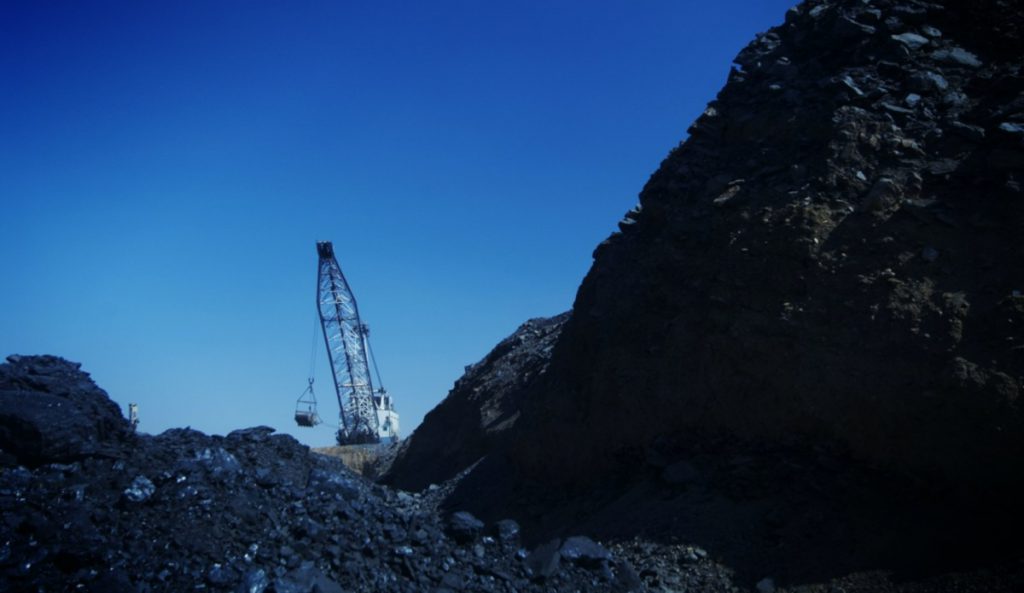
China is paying a high price for policies that curbed domestic coal output and imports, and led to a shortage of the fuel that still largely powers the world’s second-largest economy.

The good news for Beijing is that while the scarcity of coal will cause problems for energy-intensive industries, such as steel and aluminum, the situation is likely to be resolved relatively quickly.
China has already signalled it will seek to boost imports, and domestic output is likely to recover strongly in coming months as more mines re-open after being idled for safety checks.
The problem is that increasing imports will not fully fix the problem and will be costly, especially if Beijing keeps its informal ban on shipments from Australia, put in place last year as part of an ongoing political dispute with Canberra.
THERE ARE SIGNS THAT SEABORNE COAL IS RESPONDING TO THE PRICE RALLIES
Looking at the domestic coal situation first, its clear that supply has become an issue in 2021.
While the big-picture gain of 4.4% over the first eight months of the year to 2.6 billion tonnes doesn’t seem too bad, the detail shows that production has been in a downward trend for most of the year, reversing only in August.
China produced a record high 351.89 million tonnes in December last year, as mines ramped up output to meet demand in a colder-than-expected winter.
Since then, domestic production slumped to 314.17 million tonnes in July, the lowest since May 2019, according to official data.
Production did recover to 335.24 million tonnes in August, but the total so far this year is still well below China’s potential output.
If production had been maintained at December’s record levels, it would have resulted in about 2.82 billion tonnes being mined in the first eight months, or some 220 million tonnes more than what was actually achieved.
It’s not entirely realistic to assume that record production could have been kept up, of course, but what is clear is that China has significantly underperformed its potential when it comes to domestic coal output.
Turning to imports, these are down 10.3% in the first eight months of the year to 197.7 million tonnes, according to customs data.
August’s imports of all grades of coal were 28.05 million tonnes, down from July’s 30.18 million in July, but in general terms the trend has been rising since May, when imports were 21.04 million.
Australia used to be China’s second-biggest supplier of coal, with roughly 60% of its shipments being thermal coal, used for power generation and by industries such as cement, and about 40% coking coal, used to make steel.
China imported 9.79 million tonnes from Australia in June last year, according to data from commodity consultants Kpler, but this had dwindled to virtually zero by January this year.
China has turned to Indonesian coal as a replacement, even though its energy value tends to be less than the Australian equivalent, and it is buying more from Russia and smaller suppliers such as South Africa and the United States.
But in doing so, China sparked huge increases in prices. Russian coal with a similar energy rating to the 5,500 kilocalories per kg (kcal/kg) Australian grade that was popular in China is reported by traders to be commanding premiums of up to 100% more than the Australian fuel.
Indonesian coal is also rallying to records, as Chinese buyers compete with more traditional customers such as India.
The weekly index for Indonesian coal with an energy value of 4,200 kcal/kg, as assessed by commodity price reporting agency Argus, rose to a record high of $91.28 a tonne in the week to Sept. 24 and has quadrupled from its 2020 low.
Benchmark high-grade Australian thermal coal with an energy value of 6,000 kcal/kg, also rose last week, reaching $180.70 a tonne, closing in on an all-time high of $195.25 hit in July 2008.
It’s likely to surpass that record in this week’s assessment, given that Newcastle coal futures closed at an all-time high of $210.50 a tonne on Wednesday.
These high prices are likely to persist, especially if China tries to ramp up imports in coming months.
There are signs that seaborne coal is responding to the price rallies, with Kpler estimating September global exports will rise to 121.2 million tonnes, up from 111.8 million in August, and the strongest monthly outcome since December 2019.
But the point is that it will take several months for higher exports to work their way through the system, just as it will take several months for China to ramp up domestic output by enough to ease the current supply crunch.
In the meantime, the costs will continue to mount, in the form of high coal prices, both imported and domestic, and in the constrained output of energy-intensive industries, which in turn will have a negative impact on supply chains.
https://www.mining.com/web/russell-chinas-coal-crunch-is-self-inflicted-costly-and-temporary


China is in the grip of a power crunch as a shortage of coal supplies, toughening emissions standards and strong demand from manufacturers and industry have pushed coal prices to record highs.
Reuters | September 27, 2021 | 7:37 am
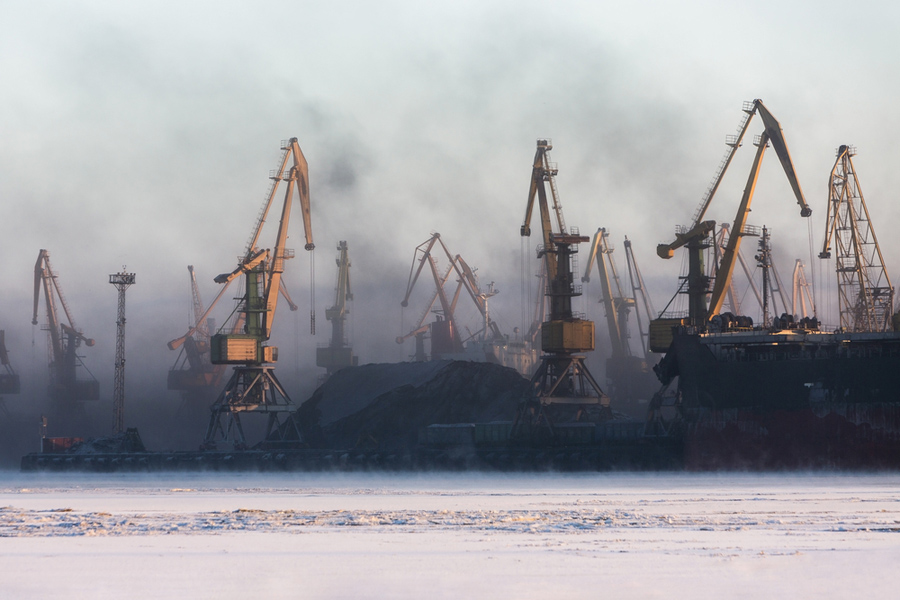
China is in the grip of a power crunch as a shortage of coal supplies, toughening emissions standards and strong demand from manufacturers and industry have pushed coal prices to record highs and triggered widespread curbs on usage.
Restrictions on power use in homes have only just taken effect. However, China’s massive industrial base has been wrestling with sporadic jumps in power prices and usage curbs since at least March, when provincial authorities in Inner Mongolia ordered some heavy industry including an aluminum smelter to curb use so that the province could meet its energy use target for the first quarter.

In May, manufacturers in the southern province of Guangdong, a major exporting powerhouse, encountered similar requests to curb consumption as a combination of hot weather and lower than usual hydropower generation strained the grid.
Other major industrial zones along China’s east coast have also encountered recent consumption caps and power cuts.
China’s President Xi Jinping announced in late 2020 at a United Nations summit on climate change that the country would cut its carbon dioxide emissions per unit of gross domestic product, or carbon intensity, by more than 65% from 2005 levels by 2030.
As the world’s top producer of carbon dioxide and other polluting gases, China’s ability to cut emissions is seen as critical in the global fight against climate change.
Xi also pledged sharp increases in renewable energy capacity at the summit, but his carbon intensity targets have been the most closely followed guidelines for emissions reduction since, especially at the provincial level where local authorities have the responsibility of making sure the targets are reached.
According to the country’s main planning agency, the National Development and Reform Commission (NDRC), only 10 out of 30 mainland Chinese regions achieved their energy reduction targets in the first six months of 2021.
In response to that collective overshoot, the NDRC announced in mid-September tougher punishments for regions that fail to meet their targets, and said it would hold local officials to account for limiting absolute energy demand in their regions.
China’s total power generation through August of 2021 was actually 10.1% greater than in the same period in 2020, and nearly 15% more than in the same slot in 2019 as utilities across the country cranked up power to meet surging industrial demand.

However, along with the higher power generation came higher toxic emissions, which surpassed pre-pandemic levels in the first quarter of the year.
Local governments in Zhejiang, Jiangsu, Yunnan and Guangdong provinces have asked factories to limit power usage or curb output.
Some power providers have sent notices to heavy users to either halt production during peak power periods that can run from 7 a.m. and 11 p.m., or shut operations entirely for two to three days a week.

Others have been told to shut until further notice or a particular date, including soybean processing plants in Tianjin in eastern China which have been shut since Sept. 22.
The impact on industries is broad and includes power-intensive sectors like aluminum smelting, steel-making, cement manufacturing and fertiliser production.
At least 15 listed Chinese firms that produce a range of materials and goods – from aluminum and chemicals to dyes and furniture – have reported that their production has been disrupted by power curbs.
Residential users have also been hit, with households in parts of northeast China told to limit use of water heaters and microwaves to conserve power.
The NDRC said on Friday it will work to resolve the power shortages, but did not provide any specific details on what steps it would take.
One major near-term challenge for Beijing is its ongoing trade dispute with Australia, the world’s second-largest coal exporter, which has greatly curbed coal shipments to China just as local authorities stepped up safety standards that have slowed production at Chinese coal mines following a series of accidents.
Another factor is a global shortage of natural gas, as a number of major economies look to stock up on the fuel simultaneously following the easing of covid-19 restrictions.
Even so, the State Grid Corporation of China said on Monday it would “go all out to fight the battle of guaranteeing power supply” to customers and would dispatch more power across its network.
(By Shivani Singh, Min Zhang and Tom Daly; Editing by Gavin Maguire and Susan Fenton)
https://www.mining.com/web/explainer-what-is-behind-chinas-power-crunch/