Friday, 16 February 2018

MUST READ: Bullying Brussels won't defeat Brexit Britain

While the UK has been conciliatory and has stressed a commitment to long term cooperation with the EU, the European Commission has undertaken a ‘black ops’ media strategy through leaks and briefings by backroom staff. Cowardice and bullying usually go hand in hand. Brussels will soon see that it just won't work with Britain


Barnier
Bully Barnier won't get his way
Img-20171201-wa0000
Peter Lyon
On 16 February 2018 13:18
Since Britain voted to Leave in the EU Referendum on 23rd June 2016, British politicians have repeatedly stressed our unending commitment to European cooperation, trade, and security.
As Prime Minister Theresa May said, “we may be leaving the EU, but we are not leaving Europe.” The British Government has proposed a deep and special partnership with the EU after Brexit, including a comprehensive free trade agreement. However, EU leaders have continually responded to this message of cooperation with threats of sanctions and bullying rhetoric towards Britain.
While Theresa May has set out her vision in public set-piece speeches at Lancaster House and in Florence, the European Commission has undertaken a ‘black ops’ media strategy through leaks and briefings by backroom staff.
On two occasions last year, details of dinners attended by Theresa May and the European Commission President Jean-Claude Juncker were inappropriately leaked to the German press. Juncker’s Chief of Staff, Martin Selmayr, is thought to be responsible for the leaks.
At a dinner in Downing Street last May, Juncker was reported to have left the event “ten times more sceptical” on Brexit than when he arrived. He allegedly thought the Prime Minister was “deluded” and “in a galaxy very far away”! In October, a meal in Brussels was the scene of a similar leak from the EU side. The source in the German press claimed Theresa May “begged” Juncker and appeared anxious, tired and despondent.
This style of negative briefing -- via advisers and press contacts -- is a dirty tactic in any political negotiation. Selmayr, or whoever was responsible, clearly wanted to undermine the authority of the British Prime Minister, in the hope she would be forced into accepting the EU’s onerous demands over Brexit. This interference is particularly outrageous considering one of the dinners was during the General Election campaign.
The EU’s bullying tactics have recently been escalated by the EU’s Chief Brexit Negotiator, Michel Barnier, regarding the Implementation Period. The EU has demanded Britain follows all EU laws during this 21-month phase, even though we will not have a say in any new EU legislation which will be imposed on us. EU guidelines also state the UK would not regain control of its borders or its fishing quotas during this period.
The Brexit Secretary, David Davis has rightly raised objections to these ridiculous demands. He has proposed a British right to object to new EU laws and sought assurances from the EU they will not use this Implementation Period to impose laws which Britain had previously vetoed, such as a financial transaction tax.
Yet, as has now become a hallmark of the Brexit talks, EU chiefs responded to this spirit of cooperation and mutual respect with punitive statements. Barnier pronounced that the Implementation Period “is not a given” if the UK does not surrender to the EU’s terms.
It seems Barnier’s bullying rhetoric may be going too far for many Member States, reliant on the UK for trade. These countries are concerned about the threat of a No Deal Brexit, which will cause a huge black hole in the EU budget and disrupt their trade.
French and Polish politicians were reportedly incensed by the “punishment clause” in a draft document leaked to the Financial Times last week. Get Britain Out immediately expressed our displeasure, and alerted the press with our comments.
The EU’s document provided unlimited power for the Commission to cut off British access to the Single Market during the Implementation Period ‘if’ EU officials determined Britain has the temerity to break their rules. This aggressive stance would be completely unacceptable to Britain and would render the Implementation Period pointless. Fortunately, Barnier was yesterday forced to back down and take this clause out of the draft text!
It is clear the EU’s bullying tactics are detrimental to the chances of the deep and special partnership the UK wants after Brexit. Certainly, there are positive signs national Governments are pressuring the EU to agree a mutually beneficial Brexit deal, as they clearly realise the risks.
Yet, if the Commission’s unacceptable demands and disrespectful pronouncements continue, the time will come for the UK to walk away from these negotiations and we will Get Britain Out on WTO terms without a doubt.

http://www.thecommentator.com/article/6745/bullying_brussels_won_t_defeat_brexit_britain

Monday, 12 February 2018

NHS urges easing UK visa rules for non-EU medical recruits

Employers join campaign after applications from Europe dry up following Brexit vote


National Health Service employers are pressing the Home Office to exempt skilled employees from Tier 2 visa requirements as immigration quotas restrict their ability to hire medical staff.

 Their call, backed by other employers, comes after a decline in the number of European Economic Area migrants applying for work in the UK since the Brexit referendum has forced organisations to recruit outside the region.

 Danny Mortimer, chief executive of NHS Employers, said NHS organisations were becoming “increasingly concerned at their inability to obtain permits for essential medical colleagues”.

 The Home Office each year grants 20,700 Tier 2 visas for skilled migrants from outside the EEA, with a monthly limit of about 1,700. About a third go to NHS employees.

 For the first time, the number of Tier 2 applicants breached the monthly limit for two consecutive months in December and January. Immigration lawyers and other experts say that many of the hundreds of rejected applicants are expected to reapply for the roughly 2,600 spaces available in February and March, pushing the excess numbers into the new financial year in April.

The visa cap has hit the NHS particularly hard because the points-based system sorts applicants partly according to their expected salary, with the minimum fluctuating according the number of excess applicants and their points ratings. The lowest eligible salary in January was £46,000, according to the Home Office.

 Many would-be immigrant doctors would earn too little to qualify. The University Hospitals Birmingham NHS Foundation Trust has said it has had 18 applicants rejected because of the issue.

 “We are in touch with both government officials and business membership bodies to find a way forward that works for both employers and the government,” Mr Mortimer said.

 People briefed on Home Office thinking believe the department is looking at whether to exempt NHS employers from the visa requirement for skilled non-EEA applicants, which would substantially ease the pressure on the system.

 Julia Onslow-Cole, head of immigration for PwC, the consultancy, said an exemption would be an “imaginative solution” that would alleviate an “increasingly difficult situation for business”.

 Since Amber Rudd took over as home secretary in July 2016, the Home Office has pressed for changes to the immigration regime, including the exclusion of overseas students from immigration figures. However, Theresa May, who tightened the rules during her time as home secretary, has been resistant to any relaxation of the rules.

 Caron Pope, managing partner at Fragomen, a law firm specialising in immigration law, said there was urgent need for government action. Employers were “shaking their heads in frustration”, worried that they would not be able to get the workers they needed after Brexit, she said.

Ms Pope pointed out that employers wanting to hire a non-EEA employee had to prove there was no suitable applicant in the UK, and permission to hire expired after six months. The several months’ delay facing some employers under the current rules meant some would be forced to restart the process.

 “Frankly, it just isn’t good enough and the government needs to act now,” Ms Pope said.

 Other business bodies including the EEF manufacturing employers’ group, Creative Industries Federation, Campaign for Science and Engineering, Coalition for a Digital Economy, Recruitment and Employment Confederation, Campaign for Science and Engineering and techUK have also called for relaxation of the rules.

 The Home Office made no comment on the possibility of changing visa requirements but said it was important the immigration system worked in the national interest, ensuring employers looked to the UK-resident labour market before recruiting from overseas.

 It added that the points system gave priority to some jobs requiring a PhD and “shortage” occupations, including a number of medical roles.

https://www.ft.com/content/5f80cdf0-0dba-11e8-8eb7-42f857ea9f09

ALSO:
UK hits cap on letting in skilled non-EU migrants
https://www.ft.com/content/f9cea29e-05e8-11e8-9650-9c0ad2d7c5b5

Thursday, 8 February 2018

Corbyn's Labour Party is a threat to Brexit

The Labour Party is caught between snobbish anti-democratic Remainers and opportunistic Marxists who don't like the EU but are playing a shabby political game at the expense of British voters. The net result is that Labour can't be trusted on Brexit. Their cynical exploits must be exposed


Jeremy_corbyn
Corbyn is a threat to a lot of things, including Brexit
Rob_bates_picture
Robert Bates
On 8 February 2018 12:30
The 2017 General Election saw the Labour Party pledge to “accept the Referendum result” and leave both the Single Market and Customs Union. In short, they promised to deliver Brexit.
Of course, running on a platform which proposed any other course of action -- such as staying within the confines of European institutions -- would have been an act of incredible self-harm, resulting in an electoral bloodbath. 7 out of 10 Labour MPs represent Leave-backing constituencies, and many of them would have been out of a job on June 9 if their Party had not been deemed to respect the will of the people.
The present-day to-ing and fro-ing on the issue is a complete disgrace and at odds with the Party’s Manifesto commitment, which ensured millions of votes for Labour at the General Election.
The murky water shrouding its Brexit position has been deliberately, and duplicitously, conjured up to conceal from Labour Leave voters that the Party is intent on moving towards support for a ‘soft’ departure from the EU, attempting to keep us in both the Single Market and the Customs Union.
However, rather than publicly coming out to announce this policy change -- and face the consequences in the polls -- Corbyn, McDonnell and co. continue to repeat the same half-hearted platitudes about Leaving the EU, before discreetly nodding to the baying pack of rabid Remoaners in the Party membership, and in Momentum.
So far this tactic has helped to bridge the irreconcilable gap between Labour voters in the working class heartlands, and the metropolitan liberals of large cities, but it will not last. Eventually the Labour Party’s fevered desire to stay within the European Union will come to the fore.
Not a single member of the Shadow Cabinet campaigned for Leave in the EU Referendum campaign, and the Labour backbenches are flooded with high profile MPs still campaigning to overturn the outcome -- Chuka Umunna, David Lammy and Wes Streeting to name but a few.
Whilst the Conservative Party is heavily populated with life-long Eurosceptics, and has an ideological rear-guard of dedicated backbenchers to hold the Government’s feet to the fire, this is absent in the Opposition.
Indeed, although Jeremy Corbyn throughout his political career has been consistently critical of the European Union, these beliefs put him at odds with the rest of his Party. So, they have been conveniently abandoned. The Party as a whole does not want Brexit and support for it in Labour ranks is purely a product of electoral necessity.
The Party’s radical surge to the Left has resulted in a temporary surge in popularity as it hoovers up voters on the far-flung fringe of the political spectrum, whilst also managing to maintain a foothold in patriotic working class areas.
However, this approach will ultimately catch up with the Party. Traditional Labour voters will drift away from the Party as they realise Corbyn is more intent on pandering to the wishes of middle-class, Marx-loving, university students and speaking at rock concerts, than addressing issues of real concern to them, such as immigration and leaving the EU.
It should therefore have come as no surprise that the Conservative Party achieved wins in former Labour strongholds such as Copeland and Stoke-on-Trent South in the 2017 General Election. Last month revealed the gaping chasm currently in place between the national Labour Party and the Party at a local level.
Despite having strong control over the Parliamentary party, Momentum were unable to dictate to constituency parties in areas such as Morecombe, Southend or Carlisle, who they should select as their candidate.
They then suffered a string of stinging defeats. Leave voting towns such as these are being profoundly let down by the liberal, Remoaner snobbery which infests the management echelons of their party. Voters will not stand for it.
As soon as it sees a chance, the Parliamentary Labour Party will adopt a position which opts to keep Britain in the smothering grip of the EU’s economic and regulatory structures, prioritising economic continuity over political freedom and opportunity.
Its support will be for a ‘bare-minimum Brexit’, one that just about appeases the electorate’s desire for Brexit, but is, in reality, EU membership in all but name. This, they hope, will ease the internal battle within the Party by keeping both sides of the Brexit schism moderately content.
We can already witness such positioning take place.
Rather than herald the opportunities presented by Brexit, the likes of Sir Keir Starmer -- the Shadow Brexit Secretary -- continue to present it as a danger which needs to be circumvented.
Previously he has declared that staying in the Customs Union was “a viable end option”, and more recently he admitted Labour want to stay “very, very close” to the Single Market.
Whilst it would be easy to view such Europhilic language as Starmer positioning himself for a leadership bid in the distant future, such sentiments are also echoed by many of his senior Party colleagues. The Shadow Chancellor, John McDonnell, has declared his desire to remain within “a reformed Single Market” and the Shadow Foreign Secretary, Emily Thornberry, believes it “makes no sense” to leave the Single Market.
Corbyn is, perhaps, a little more subtle in his attempts to subvert the will of the people. Interviewed on the BBC’s Andrew Marr programme in January, he explained that he wants to maintain the “closest possible” relationship with the EU and maintain regulatory alignment. This course of action is, of course, unacceptable and would relegate Britain to a country of mere rule-takers.
Mercifully, the Labour Party has not been tasked with delivering Brexit as it did not win a majority in the General Election. However, this is not preventing Labour from doing its utmost to sabotage the process.
For instance, the passage of the European Union (Withdrawal) Bill -- a law vital to securing an orderly Brexit through the House of Commons -- was put at risk when the Labour Party voted against it earlier this month.
The Bill, which had also been subjected to countless amendments from Labour MPs, only just cleared the Third Reading Stage by 324 votes to 295.
Additionally, refusal by the Party to support a ‘No Deal’ scenario under any circumstances, actively undermines the British Brexit negotiating position. It could very well force Prime Minister, Theresa May, with her weak minority Government, to accept whatever pitiful trade deal the European Commission sees fit to offer her even if it involves continued Freedom of Movement or political entanglement!
As if obstructing our departure from the EU isn’t enough, Labour seems hell-bent on damaging our future outside the EU.
For the UK, a trade deal with the US after Brexit is of paramount importance. As the US is our largest export market, with whom we ran a trade surplus of £34 billion in 2016, an arrangement which facilitates further trade between our two nations is an immensely exciting prospect. Therefore, President Donald Trump’s claim he wants a “big, beautiful trade deal” with the Britain is fantastic news, and was further reinforced after a positive meeting with Theresa May at January’s World Economic Forum in Davos.
However, Labour Leader Jeremy Corbyn and London Mayor Sadiq Khan’s never-ending campaign to condemn the President’s every action, is doing nothing to help Britain’s post-Brexit future. Instead, it clearly demonstrates that the Labour Party is perfectly happy to undermine British economic prospects wherever there are political points to be scored.
While the Great British Public voted to Get Britain Out of the European Union it is evident that the Labour Party is neither willing, nor able, to deliver.  
http://www.thecommentator.com/article/6740/corbyn_s_labour_party_is_a_threat_to_brexit

Wednesday, 7 February 2018

We are leaving the EU to get away from these rules - EXPRESS COMMENT

ANOTHER day, yet another raft of rules from the EU clearly designed to intimidate us as we prepare to leave. This time round it's an attempt to force us to accept 37 new directives during the "implementation" phase after we quit the bloc: we should tell the Brussels officials, in the politest possible way, that we have no intention of following those proposals or indeed anything else.

GETTY
Jean-Claude Juncker, President of the European Commission and PM Theresa May
One of the numerous reasons this country decided to leave the EU in the first place is exactly this: endless amounts of needless bureaucracy and red tape cluttering up businesses and hampering our lives.
In order to justify their existence, to say nothing of exorbitant salaries and pension pots, the unelected bureaucrats of Brussels have to endlessly find new proposals, new restrictions, new anything to prove why they should be there.
Well we in Britain have had enough of it: we do not want yet more EUinitiated red tape. Nor is it remotely just in any way that we should be forced to accept directives over which we would have no right of veto. We have been far too ready to act in accordance with EU objectives in the past while other countries have simply ignored them.
Now we are taking our future back into our own hands and that means no more EU nonsense. The word is "non". Or perhaps "nein".
https://www.express.co.uk/comment/expresscomment/915567/We-are-leaving-the-EU-to-get-away-from-these-rules-EXPRESS-COMMENT

Tuesday, 6 February 2018

Britain must leave the customs union when it quits the European Union demands ROSS CLARK


DOWNING STREET yesterday moved swiftly to reaffirm that Britain will be leaving the EU customs union. Why anyone should be surprised by this is puzzling. Leaving the customs union has been policy ever since the Prime Minister made her Lancaster House speech in January last year.


hard Brexit borderPAUL FAITH/AFP/Getty
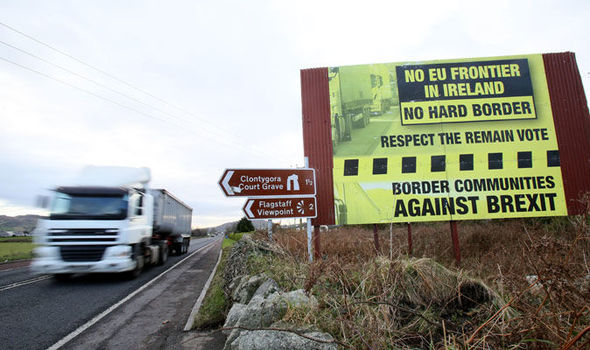
There are fears a hard Brexit could lead to a physical border between Ulster and the Republic
Since then, the Government has fought an election on that policy and has embarked on negotiations for a free trade deal which take our departure from the customs union as a starting point.
Yet in recent days Remainers seemed to have convinced themselves that Theresa May was somehow swinging round to their opinion.
We have heard dark mutterings about a plot by the Foreign Secretary and Environment Secretary to remove the Prime Minister and install themselves in power – as if it were possible in a British democracy simply to install yourself in power.
Leaving the EU customs union is not a loopy Right-wing policy. It is the logical conclusion once you accept that Britain is going to be leaving the European Union. That is why the Labour leadership, too, has committed itself to it.


If we were to leave the EU but remain in its customs union we would find ourselves in a no man’s land in which we deprived ourselves of one of the chief advantages of Brexit: the freedom to do our own trade deals with countries outside the EU.
It is a firm rule of the customs union that members cannot do such deals – they must instead be bound by deals centrally negotiated by the European Union.
The European Union likes to pose as an organisation dedicated to free trade yet it has a long record of underachievement on this score. You might expect, for example, the EU to have made a priority of trade deals with the world’s three largest economies – the US, China and Japan. But it has yet to complete a deal with any of these.
Switzerland, meanwhile, has cut its own deals with China and Japan – proof of what can be achieved when not weighed down by the plodding EU. The European Union fails on free trade for several reasons.
Getty
Some Remainers still do not get the idea we are leaving
Its attempted deals tend to be over-ambitious, extending into areas such as government procurement rather than concentrating simply on goods and services.
Every deal the European Union does has to please all 28 EU countries.
Some EU member states have federal structures which means that any trade deal has to satisfy regional assemblies.
Two years ago, the EU’s trade deal with Canada was blocked by the Belgian regional parliament of Wallonia.
The deal was made eventually but not before making the EU look ridiculous.
The European Union has failed on trade deals, too, because of its protectionist agricultural lobby.
There are many countries around the world which would love to open their markets further to European goods and services – in return, that is, for Europe opening its market for agricultural goods.


Yet this the EU refuses to do.
Instead, it imposes punitive tariffs on food imports in the hope of preserving markets for high-cost European farmers. But how can we expect, say, beef-producing countries such as Australia and Brazil to open their markets to us when we are obliged to charge a tariff of 87 per cent on frozen beef imports? Were Britain to remain in the customs union the situation would be even worse.
We would continue to be bound by EU tariffs but have no say in setting them. It isn't hard to imagine what would happen: the European Union would have little incentive in opening up trade in markets, such as financial services, in which the UK economy is strong. Every deal would be in the interest of EU member states rather than our own.
This is why it makes far more sense to leave the customs union and negotiate a free trade deal with the European Union.
Then we will be doing business on equal terms. Could it lead to British importers and exporters having to pay some duties which they don't pay at present and having to fill in some paperwork which they don't currently have to do?
Yes, if the negotiations for free trade fail to maintain cross-Channel trade on the basis it’s conducted at present.
EU leadersThierry Monasse/Getty
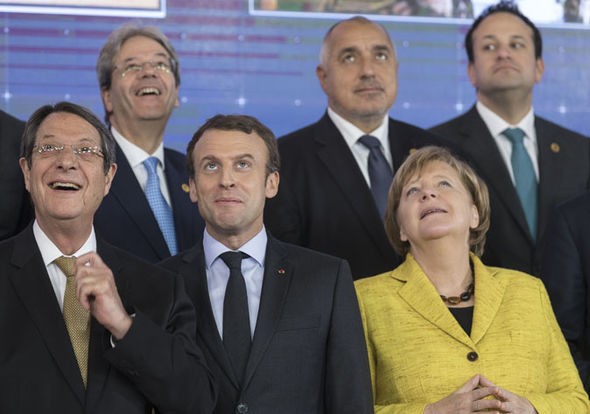
Seen with other EU leaders Leo Varadkar's border idea is daft
But talk of clogged ports and endless formalities at Dover are scaremongering. Customs and excise officers are not going to count every bottle of wine and every rasher of bacon entering Britain any more than they hover around shop checkouts making sure that every penny of VAT is paid.
If import duties have to be paid they can be collected through the normal tax system, enforced through audits.
As for smuggling, the Border Agency has to maintain checks anyway because even under the rules of the customs union Britain has different excise rates on goods such as petrol, alcohol and tobacco.
The idea, promoted by Irish PM Leo Varadkar that we need to remain in the customs union in order to preserve peace in Northern Ireland, is daft. At the very worst Brexit would mean a few customs posts going up along the border.
But even customs posts will almost certainly be unnecessary. Police in Northern Ireland and the Irish Republic already have to contend with cross-border smuggling but stopping every single vehicle is not necessarily the best way to deal with the problem.
However none of this will wash with hardcore Remainers. Their purpose is really to try to frustrate Brexit altogether and they will jump on any bandwagon that appears to be heading in that direction.
https://www.express.co.uk/comment/expresscomment/915086/EU-customs-union-uk-britain-leaving-ross-clark