Sunday, 6 September 2020

UK is not scared of no-deal exit

UK’s Brexit negotiator says government is not 
scared of no-deal exit

The UK’s chief negotiator has said the government is not scared of walking away from talks with the European Union without a deal and vowed not to blink in the final phase.

The Guardian


David Frost wearing a suit and tie: David Frost, the chief Brexit negotiator, is beginning another round of talks with the EU on Monday.


The UK’s chief negotiator has said the government is not scared of 
walking away from talks with the European Union without a deal
and vowed not to blink in the final phase.
David Frost is due to hold another round of key negotiations in 
London with his counterpart, Michel Barnier, the EU’s chief
negotiator, next week as they look to agree a trade deal before
autumn sets in.

In a bullish interview with the Mail on Sunday (MoS), the prime 
minister’s Europe sherpa said the UK was preparing to leave the
transition period “come what may” – even if that meant exiting
with no deal, which officials have dubbed an “Australian-style”
arrangement.

Informal talks this week between Barnier and Lord Frost failed to
find a breakthrough before the eighth round of formal negotiations,
which begin on Monday.
EU's Brexit negotiator Michel Barnier attends at the meeting of French employers' association Medef themed 'The Renaissance of French Companies'  on August 26, 2020, in Paris, France. (Photo by Daniel Pier/NurPhoto via Getty Images)


© Daniel Pier/NurPhoto EU's Brexit negotiator Michel Barnier attends at the meeting 
of French employers' association Medef themed 'The Renaissance of French 
Companies' on August 26, 2020, in Paris, France. (Photo by Daniel Pier/NurPhoto via 
Getty Images)
Both sides want a deal agreed next month in order to have it signed off 
by politicians on both sides of the Channel by the end of the transition 
period on 31 December.
Differences remain between the pair on issues such as fishing and the
level of taxpayer support the UK will be able to provide for businesses
once it is an independent nation.
Frost told the newspaper the UK would not agree to being a “client
state” to the EU and said Theresa May’s administration had allowed
Brussels to believe there could be an 11th-hour concession on a trade
deal.
He said: “We came in after a government and negotiating team that
had blinked and had its bluff called at critical moments and the EU had 
learned not to take our word seriously.
Gallery: Brexit timeline (Photo Services) 
(Note: To view this, click on the link at the end of this article)
Slide 1 of 48


“So a lot of what we are trying to do this year is to get them to realise that we mean what we say and they should take our position seriously.”
The former diplomat, who is soon to add national security adviser to his portfolio, continued: “We are not going to be a client state. We are not going to compromise on the fundamentals of having control over our own laws.”

He ruled out accepting level playing field terms that “lock us into the 
way the EU do things” and argued that wanting control over the 
country’s money and affairs “should not be controversial”.

“That’s what being an independent country is about, that’s what the British people voted for and that’s what will happen at the end of the year, come what may,” Frost added.

Chancellor of the Duchy of Lancaster Michael Gove leaves Downing Street in central London after attending Cabinet meeting at the Foreign Office on 01 September 2020 in London, England. Parliament returns after summer recess amid the ongoing Coronavirus pandemic. (Photo by WIktor Szymanowicz/NurPhoto via Getty Images)
© WIktor Szymanowicz/NurPhoto Chancellor of the Duchy of Lancaster Michael Gove leaves Downing 
Street in central London after attending Cabinet meeting at the Foreign Office on 01 September 2020 in 
London, England. Parliament returns after summer recess amid the ongoing Coronavirus pandemic. 
(Photo by WIktor Szymanowicz/NurPhoto via Getty Images)
The MoS reported that Downing Street has created a transition hub, with handpicked officials across government departments working to ensure the UK is ready to trade without a deal when the transition
period ceases on 1 January 2021.
The unit will work with the Cabinet Office minister, Michael Gove, who
has led the government’s work on no-deal preparations since last year.
“Obviously, lots of preparation was done last year, we are ramping up again and have been for some time under Michael Gove’s authority,” Frost said.
“I don’t think that we are scared of this at all. We want to get back the powers to control our borders and that is the most important thing.
Britain's chief negotiator David Frost (L) and EU's Brexit negotiator Michel Barnier arrive for a working breakfast after a seventh round of talks, in Brussels on August 21, 2020. (Photo by YVES HERMAN / POOL / AFP) (Photo by YVES HERMAN/POOL/AFP via Getty Images)
Britain's chief negotiator David Frost (L) and EU's Brexit negotiator Michel Barnier arrive for a working 
breakfast after a seventh round of talks, in Brussels on August 21, 2020. (Photo by YVES HERMAN / 
POOL / AFP) (Photo by YVES HERMAN/POOL/AFP via Getty Images)
“If we can reach an agreement that regulates trade like Canada’s,
great. If we can’t, it will be an Australian-like trading agreement
and we are fully ready for that.”
His comments came as the EU sought to dismiss a report in the
Telegraph that Barnier would be “sidelined” before the talks were
over so European leaders could thrash out a deal before the deadline.
But bloc spokesman Sebastian Fischer tweeted on Saturday: “Whoever wants to engage with the EU on Brexit needs to engage with Michel Barnier.
“He is the EU’s Brexit chief negotiator and enjoys the full trust, support and confidence of the EU 27. He has a proven track record of leading successful Brexit negotiations on behalf of the EU.”

Friday, 4 September 2020

Fishing: Why is fishing important in Brexit trade talks?

Fishing has always been an emotional issue in the UK's relationship with the European Union.
  • 4 September 2020
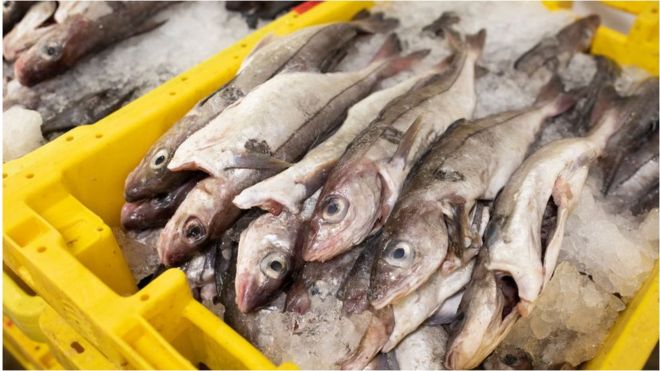
Pallet of fish at Grimsby Fish Market
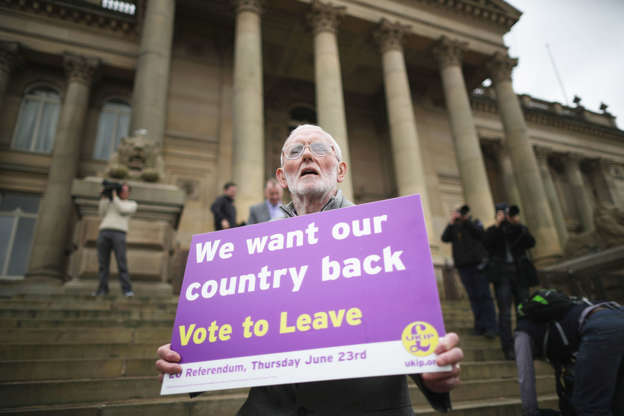
Supporters of Brexit see it as a symbol of sovereignty that will now be regained. The UK says any new agreement on fisheries must be based on the understanding that "British fishing grounds are first and foremost for British boats".
But the EU wants access for its boats and says reaching a "fair deal" on fisheries is a pre-condition for a free trade agreement (a deal with no tariffs or taxes on goods between the two).
So, it's hardly surprising that UK and EU trade negotiators are struggling to make headway.

How do fishing controls work?

The UK formally left the EU on 31 January, but is still bound by the EU's rules, including its Common Fisheries Policy (CFP), until the end of this year.
That means the fishing fleets of every country involved have full access to each other's waters, apart from the first 12 nautical miles out from the coast.
But they can't catch whatever they like. EU ministers gather for marathon talks every December to haggle over the volume of fish that can be caught from each species.
National quotas are then divided up using historical data going back to the 1970s, when the UK fishing industry says it got a bad deal.
That's why the government wants to increase the British quota share significantly.
It's an argument complicated by the fact that parts of the British quota have been sold off by British skippers to boats based elsewhere in the EU.
In England, for example, more than half the quota is in foreign hands.
Overall, more than 60% of the tonnage landed from British waters is caught by foreign boats.

How could Brexit change this?

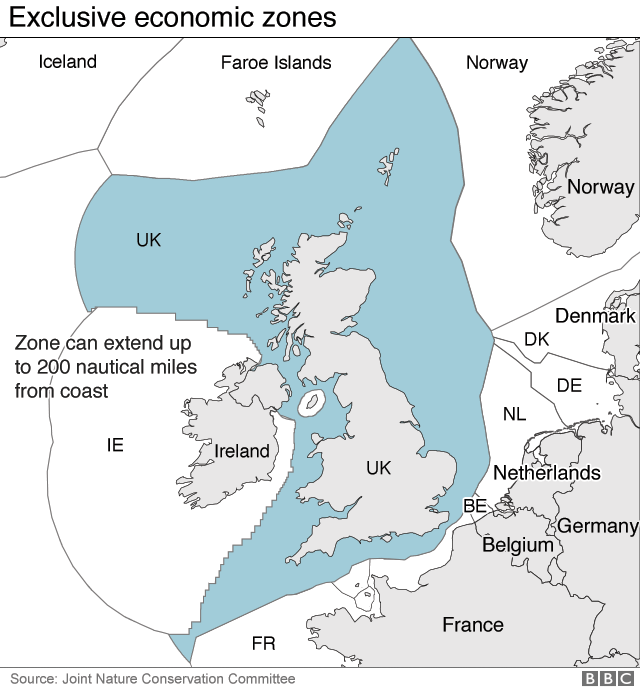
Outside the EU, as an "independent coastal state", the UK will control what's known as an exclusive economic zone (EEZ), stretching up to 200 nautical miles into the North Atlantic.
Inside the EU, the EEZs of all member countries are managed jointly as a common resource.

Map showing UK's exclusive economic zones

The government wants to hold annual talks on access to UK and EU waters, and on quotas - using a system which works out shares based on the percentage of each species of fish in each EEZ (this is known as "zonal attachment").
That's what other independent coastal states like Norway do. And fishing communities in the UK, which were strong supporters of the campaign to leave the EU, are insisting on this basic change.
But because UK waters are so important, and so bountiful, the EU is under huge pressure from its fishing communities to maintain the status quo.
It wants the UK to grant the same level of access there is now, with only gradual change envisaged, in order to "avoid economic dislocation for EU fishermen that have traditionally fished in UK waters".
The EU also wants to divide up the amounts that each country's boats are allowed to catch in a way that will not be renegotiated every year, and which cannot be changed unless both the UK and the EU agree.
The EU's chief negotiator Michel Barnier has said annual negotiations with the UK would be technically impossible because so many different types of fish would be involved.
But he has also acknowledged that the EU's current position on fishing will have to change.
"The EU wants the status quo, the UK wants to change everything," he said on 5 June. "If we want an agreement we have to discuss somewhere in between these positions."
But Mr Barnier needs to get permission from EU countries with big fishing fleets (such as France and Spain) before he seeks to compromise.

Access to markets

Either way, the UK will soon have control over who can fish in its waters.
But it's not just about where fish can be caught - it's also about where fish can be sold.
This is particularly important, because most of the fish landed by UK fishermen is exported (while most of the fish eaten in the UK is imported).
And of all those exported fish, roughly three quarters are sold within the EU. Some parts of the industry - such as shellfish - are totally dependent on such exports and would collapse if they were suddenly faced with tariffs or taxes on their products.

Proportion of UK fish exports going to the EU in 2018


Source: Marine Management Organisation
That's one reason why the UK argues access to markets should be nothing to do with access to fishing waters.
But the EU is making the link explicit. Without a deal on fish, it insists, there will be no special access to the EU single market.


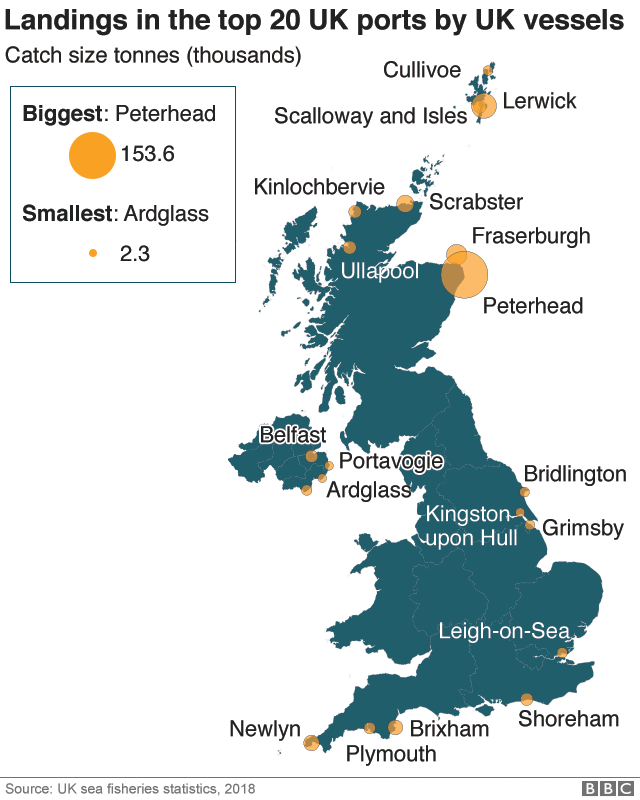
Map showing the UK's most important ports for UK vessels


Map showing the UK's most important ports for UK vessels

Complex negotiation

Plenty of other issues need to be taken into consideration, including:
  • Protecting fish stocks and preventing over-fishing
  • Taking account of the different priorities of big industrial trawlers and smaller boats
  • Working out how fishing ranks alongside other issues in trade talks
  • Nations such as Scotland wanting to go their own way
It is a complex picture.
But it's worth remembering that fishing is only a tiny fraction of the overall economy both in the UK (less than 0.1%) and in the EU (some landlocked countries have no fishing fleets at all).
According to the Office for National Statistics, fishing was worth £784m to the UK economy in 2018. By comparison, the financial services industry was worth £132bn.
Trawlers in Peterhead
PA
Value of fishing in 2018
  • £784mcontribution of fishing to UK GDP
  • £132,000mfrom financial services
Source: ONS

Room for compromise?

In many coastal communities though, fishing is a major source of employment - responsible for thousands of jobs. The industry still has political power, and both the UK and the EU are under pressure not to give ground.
Any compromise will probably involve the UK guaranteeing a certain level of access to EU boats, which is lower (but not that much lower) than they have now.
For its part, the EU will have to agree a larger quota share for the UK and give up its demand that - in effect - nothing will change.
The two sides had initially agreed that they would try to reach a deal on fisheries by 1 July this year - a deadline that passed with almost no progress at all.
Time is now running out, soon national leaders will have to get involved, and fishing will remain one of the most difficult issues for negotiators to resolve.

Thursday, 3 September 2020

Here is the magic key to unlock the path to a win-win post-Brexit deal

There is a “magic key” that would ensure the UK leaves the transition at the end of the year with full sovereignty and a highly attractive win-win trade deal.


Understanding how this key works requires an understanding of the implications of the half-built legal structure of the Eurozone and the processes that support it. The Eurozone’s structure, which artificially suppresses the euro currency value, leads to dumping of underpriced Eurozone goods on the UK market. Eurozone exporters are also subsidised through unique mechanisms, including the highly technical TARGET2 system. These represent systematic breaches of WTO law.
Additionally, the Eurozone structure and associated financial regulations provide artificially cheap banking that runs itself at the expense and risk of the rest of the world, in breach of international capital standards.
Dealing with these characteristics means the magic key needs to be turned three times – benefitting the UK, but also the EU.
The first turn of the key leads to replacing the Withdrawal Agreement and Northern Ireland Protocol at year end. The Protocol, if maintained, would deny Northern Ireland business operations the WTO’s protective shield of anti-dumping and anti-subsidisation measures that would safeguard them from unfairly priced Irish and other Eurozone imports.
If the EU fails to agree a satisfactory future relationship that properly respects UK sovereignty and its internal market - as the EU has committed to do - the UK can and should tear up the Withdrawal Agreement, including the Protocol, on the basis that the EU is in breach.
Once the Protocol is seen to be capable of falling away, the invisible north-south border is properly up for renegotiation and the dynamics will change instantly. The only solution that would avoid arguments over equal treatment with others and would satisfy Ireland is a truly invisible border. This would require the EU to strike an all-in deal with the whole of the UK that includes an FTA, since only then would it fall outside the WTO’s MFN equal treatment rules. And the more generous the FTA arrangements in removing tariffs and recognising UK standards, the less the EU would need to agree to place its reluctant reliance on the UK for the more complex joint arrangements for an invisible border.
True, the EU could refuse to agree a favourable FTA and wider arrangements to manage the border with the UK at year end. But the EU would then need to ignore the north-south border; or to adopt unilateral arrangements for an invisible border; or erect border posts.
Ignoring the border would likely lead to other Member States having to introduce checks for Irish goods going to and from the rest of the EU – effectively taking Ireland out of the Single Market. And, either ignoring the border or adopting unilateral arrangements would cause problems for the EU on its other 44 borders, since those countries would rightly ask for the same.
WTO non-discrimination rules require the EU to apply equal treatment to those borders absent a very good reason. Although the EU could cite security reasons for denying this to them, doing so would involve difficult discussions that it hitherto has managed to avoid. Finally, erecting border posts on the island of Ireland is something the EU and Ireland have repeatedly ruled out.
The second turn of the key justifies the imposition of WTO anti-dumping tariffs and countervailing duties on incoming EU goods. This would bolster the UK’s negotiating leverage. In negotiating an FTA, the UK would not give up those protections but could agree arrangements for enhanced transparency, notification and regular consultations prior to determining tariffs and duties – a considerable benefit to the EU.
The magic key should be turned a third time to ensure any FTA addresses services properly. The Eurozone is not just dumping products on the UK’s valuable markets; it is dumping financial risk on the UK and the rest of the world. At present, the UK mitigates that risk for itself and the world by ensuring that UK-based global financial institutions offering services across the EU do so under the UK’s regulatory regime, which imposes top-up requirements to mitigate Eurozone risk.
If the EU were to agree to an Enhanced Equivalence chapter in the FTA that recognises UK financial regulation, UK-based firms could carry on servicing EU customers from the UK cross-border and the UK could carry on performing its mitigating role. Other matters, such as the provision of data on Eurozone exposures and the recognition of legal services and of data protection standards, would need to be included to make this work.
If the EU were to refuse, the UK and the US (as the other host of global financial markets) would be obliged to impose punitive capital, collateral and liquidity requirements on all global exposures to EU financial institutions on worst-case assumptions as to Eurozone risk. This would include intra-group exposures to Eurozone-based subsidiaries of UK/US-headquartered institutions. It is demonstrable that EU law and supervision fails to address such risks.
These requirements would leave EU corporate and government customers with two options. Either reach out from under the blanket of EU law and purchase their financial services directly from London, as now (which is something they are entitled to do but which the EU is currently discouraging). Or face being significantly constrained in their access to the world’s capital markets.
Being subjected to international regulatory standards in this way would be very damaging to the Eurozone financial system and make it a pariah for not only failing to apply those standards to itself but also failing to cooperate with the UK in continuing to mitigate the risk for the world’s investors and savers.
Every indication is that the EU is keen to have a deal. They would prefer one that damages the UK (were the UK to agree to that), but when it becomes clear this option is not available, discussions will normalise rapidly. The only remaining point is to ensure clever transactional negotiation and sophisticated drafting of legal text, but that is for the finishing touches, once the magic key has been fully turned.
Barnabas Reynolds is a partner at Shearman & Sterling, co-author of Replacing the Withdrawal Agreement, published by the Centre for Brexit Policy; and author of A Template for Enhanced Equivalence, and co-author of Managing Euro Risk, both published by Politeia.