Monday, 15 March 2021

Brexit Wars Recommence as EU Launches Legal Action Against UK over Northern Ireland

 The European Union is launching legal action against the United Kingdom over its efforts to protect trade ...
Brexit
OLIVIER HOSLET/POOL/AFP via Getty Images
4:02

The European Union is launching legal action against the United Kingdom over its efforts to protect trade between the British mainland and Northern Ireland, vindicating critics of Boris Johnson’s deals with the bloc who said they ensured Brexit was by no means “done”.

The terms Prime Minister Johnson agreed with the bloc on Northern Ireland were particularly onerous, with Northern Ireland, or Ulster, being left within the regulatory domain of the EU, and a partial customs border between the British province and England, Scotland, and Wales being imposed.

A so-called “grace period” before these conditions were imposed on Northern Ireland fully was permitted until the end of March, but the British government is now extending this until October unilaterally as Northern Irish people and businesses face shortages and other difficulties, compounded by the coronavirus pandemic.

“The [Northern Ireland protocol] is there to uphold and to guarantee, to buttress the Good Friday Agreement, the peace process,” explained Johnson.

“That always had the symmetry in it: it was very very important that the wishes, the consent of both the communities in Northern Ireland, should be properly reflected in the outcome, and that it should guarantee, not just trade and movement, north, south; but east, west as well,” he said.

The Prime Minister was likely referring to the unhappiness of the Democratic Unionist Party (DUP), which is the main representative of the majority in Northern Ireland who wish to remain in the United Kingdom rather than join the Irish republic, with the way Johnson’s deals have created barriers between Ulster and the rest of the British Union.

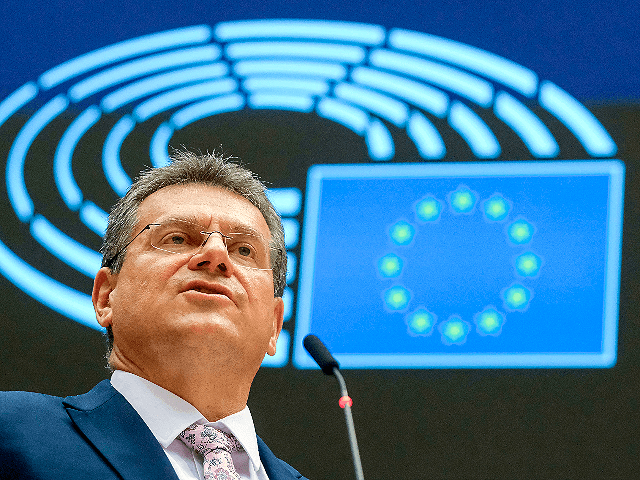
“The Protocol on Ireland and Northern Ireland is the only way to protect the Good Friday (Belfast) Agreement and to preserve peace and stability, while avoiding a hard border on the island of Ireland and maintaining the integrity of the EU Single Market,” insisted Maros Sefcovic for the European Commission.

“Unilateral decisions and international law violations by the UK defeat its very purpose and undermine trust between us,” he lectured — somewhat ironically, considering the European Commission announced it would be imposing a hard border between Ireland and Northern Ireland for vaccines just weeks ago without even bothering to consult the Irish government in Dublin, before being forced into a humiliating climbdown.

“The UK must properly implement it if we are to achieve our objectives. That is why we are launching legal action today,” Sefcovic added — although he did leave the door open to a resolution of the dispute through talks, “without recourse to further legal means.”


The British government, for its part, is insisting that its moves in Northern Ireland are “lawful and part of a progressive and good faith implementation of the Northern Ireland Protocol.”

“Low-key operational measures like these are well precedented and common in the early days of major international treaties. In some areas, the EU also seems to need time to implement the detail of our agreements. This is a normal process when implementing new treaties and not something that should warrant legal action,” a spokesman insisted.

Whether or not the EU is implementing its deals with Brexit Britain on Northern Ireland and trade remains an open question, with EU officials having on one occasion seized a lorry driver’s ham sandwiches at the border on the pretext of them being a prohibited food import and saying “Welcome to Brexit, sir”.

The EU legal action could end up in the European Court of Justice (ECJ), according to The Times — a highly embarrassing possibility for Prime Minister Johnson and the Conservative party, who have always tried to give the impression that their deals had secured full independence from the EU court, in which Britain now has no judicial representation.


https://www.breitbart.com/europe/2021/03/15/brexit-wars-recommence-eu-launches-legal-action-against-uk/


Biden Sides with EU Against Britain on Northern Ireland, Backs Internal UK Borders

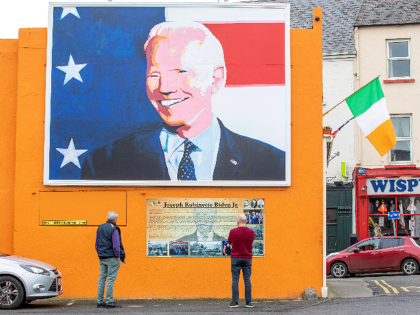
U.S. President Joe Biden has appeared to side with the EU as it launches legal action against Brexit Britain, backing its imposition of internal borders between Northern Ireland and the rest of the United Kingdom.
Biden

Thursday, 11 March 2021

Blair Blames Brexit… for EU Vaccine Fiasco

 Vaccine passport proponent and ardent Remainer Tony Blair has blamed Brexit for the EU’s vaccine woes ...

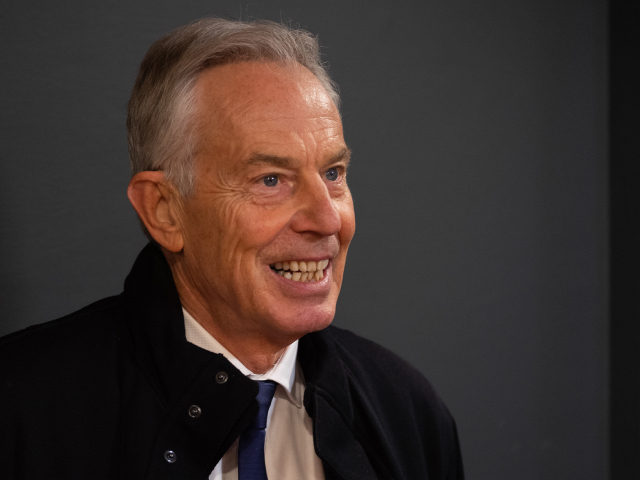
DAVOS, SWITZERLAND - JANUARY 21: Tony Blair, Former Prime Ministe attends the Global Citizen Forum - Beyond Boundaries Event at the annual 2020 World Economic Forum (WEF) on January 21, 2020 in Davos, Switzerland. (Photo by Remy Steiner/Getty Images for Global Citizen Forum)
Remy Steiner/Getty Images for Global Citizen Forum
3:23

Vaccine passport proponent and ardent Remainer Tony Blair has blamed Brexit for the EU’s vaccine woes, claiming that had not Britain left, the bloc would not be “ten weeks behind” in inoculating hundreds of millions of people.

The UK was able to take advantage of its independence from Brussels bureaucracy by launching its own vaccine procurement programmes, while the European Commission insisted on controlling contracts with drugs companies itself, on behalf of the whole bloc. In the case of AstraZeneca, the drugs firm said it signed a contract with Britain some three months before the EU, which had a knock-on effect on vaccine production at European plants.

According to Our World in Data, as of March 8th, 35.02 people per 100 have received at least their first dose of a coronavirus vaccine in the UK, compared to just 9.64 per 100 on average across the whole EU.

Speaking to Austrian weekly news magazine Profil, former Prime Minister Blair was forced to acknowledge that “Britain did an extremely good job on this one. First, a small vaccination task force was entrusted with the procurement of the vaccines. Then we were able to start vaccinating quickly and widely thanks to the centrally controlled public health service NHS.”

The prodigiously pro-Brussels, anti-Brexit Mr Blair went on to say that “the EU was less successful in comparison.”

The former prime minister was, however, reticent to credit Brexit for the UK’s inoculation progress, saying only that “the Brexit fans are now showing off the vaccination success.”

“You know that I am an avowed opponent of Brexit. It is and will remain a terrible strategic mistake for my country,” Blair said.

He then made the claim that “we could have done all of this within the EU. Conversely, I find it rather interesting what the EU is missing out on because Great Britain is no longer a member of the EU.”

Asked to clarify what he meant by that assertion, Blair implied that only Britain could have saved the EU from itself, acting to block the powerful executive arm, led by Commission President Ursula von der Leyen, from taking over vaccine procurement.

“If we British were still in the EU, the procurement of the vaccine would not have been taken out of the hands of the nation-states. Any British government would have insisted on that.

“That is the only reason why Europe is now ten weeks behind,” he said, in what appears to be an admission he believed the remaining 27 European nations could not adequately defend themselves against Brussels and demand their own vaccine autonomy.

Blair, who urged Prime Minister Boris Johnson to lead the world in the push for a global vaccine passport system, predicted that “there will be some kind of certificate for sure” adding that he thought it would be “best if the whole world could agree on such a vaccination certificate”.

He dismissed concerns over discrimination against those who are not vaccinated and therefore not certified immune, claiming it would be “impossible to hold large events, concerts or football matches” without them.

Despite Britain’s success, Blair claimed that “you shouldn’t manage pandemics nationally”, saying instead nations should coordinate with “the whole world”, notably on “how we distribute the vaccine to everyone”.

 https://www.breitbart.com/europe/2021/03/11/blair-blames-brexit-for-eu-vaccine-fiasco/

Monday, 1 March 2021

Leaving the EU without a trade deal is better than staying within the bloc

 Oh woe, woe and thrice woe! Like the soothsayer in Up Pompeii!,prophets of doom in their grim platoons are busily forecasting the worst of all possible worlds as we stumble towards an inglorious end to the European dream.

 The Independent


Without a Brexit deal and the benevolent umbrella of Brussels we’d be left entirely unprotected in the coming storm, they tell us. Our already shambolic ports will collapse further into chaos. 

Kent will become the world’s busiest lorry park as mile upon mile of freight vehicles grind into gridlock. The pound will plummet. Food prices will rise. Unemployment will soar. Outside the EU we’ll be poorer and more miserable. Can a plague of frogs be long delayed?

Bear with me a moment. I don’t mean to make light of the difficulties that will inevitably confront us in the event of no deal.  I would have been the first to cheer if any kind of rational, sensible arrangement could have been reached with our European neighbours.  

However, as we’ve seen again and again, rationality and common sense are of little account in an  EU that seems more interested in  punishing Britain than in reaching a decent accommodation.

Take the quite bizarre decision – taken at the beginning of negotiations – to cut Britain out of elements in the Galileo project, which aims to launch a network of European satellites. Despite the fact that this country developed and paid for much of the technology,  our “partners” suddenly decided that we shouldn’t have access to some “need to know” information.

Current Time 0:28
Duration 1:09
Loaded100.00%
0
EU president says 'mistakes were made' over Article 16 decision

So what, you might think. Sounds a bit technical, no? But consider this. Britain is one of the most capable military powers in Europe. Our ability to respond to any external threat is of huge importance, not only to us but to our neighbours. It helps to preserve the peace. So does our access to satellite encryption. Yet power brokers in Brussels are quite prepared to undermine the security of the people they supposedly represent, in order to give Britain a black eye.

And of course it doesn’t stop there. EU negotiators pretend to believe that, once outside the EU, Britain will slash environmental standards, subsidise industry to the hilt and do our best to undermine the responsible. eco-friendly Europeans.

The hypocrisy over the so-called level playing field is quite breathtaking. Britain is arguably – but certainly I believe – miles ahead of Europe in protecting the environment and maintaining decent social standards. We have a higher minimum wage than most of our EU partners. Maternity leave is better here. We have cut our carbon emissions by far more that the EU average. We don’t spend anything like as much as France in subsidising industries.

And animal welfare? For years this country has led the way in trying to ban the cruel export of live animals. When the port of Ramsgate and Thanet Council tried to stop this appalling trade in 2014, the High Court ruled that a ban was illegal under European law. MEPs finally set up an inquiry commission earlier this year to look at allegations of systematic undermining of EU live animal trade rules.

While the EU lectures us on the evils of subsidies, it blithely proposes to spend €750bn (£690bn) to stimulate the economy after the coronavirus pandemic. Apparently this won’t be covered by the subsidy rules that apply to Britain. Not only that, but spending by the European Investment Bank won’t count as subsidies either. So it's seemingly one rule for Brussels, quite another  for us.

But then, has this ever been a genuine negotiation? Today the EU seriously proposes that Britain should not only adhere to every dot and comma of European law, but be bound by any new laws it cares to pass in future.

What we are witnessing is nothing less than an attempt to reduce Britain to the status of a mere province in a wider European empire. It is a status that no self-respecting country could possibly accept.

So yes, there may be trouble ahead. But we have survived far worse. And after all, we were a free, sovereign and independent nation for a thousand years before we joined the EU. We didn’t do too badly then, did we?

Michael Toner is a journalist and former national newspaper political editor

https://www.msn.com/en-gb/travel/news/leaving-the-eu-without-a-trade-deal-is-better-than-staying-within-the-bloc/

Where are ‘desperate’ EU countries turning in search of extra Covid vaccines?


Where are ‘desperate’ EU countries turning in search of extra Covid vaccines?

Joe Evans
2 hrs ago

European countries left with a shortage of vaccine doses by the EU’s stuttering procurement process are turning to the “gray market” in their search for more jabs.

“Desperate” EU nations are beginning to take “pitches from around the world at often exorbitant prices”, The New York Times (NYT) reports, with Russia and China offering vaccines alongside a “murky open market” where EU leaders are “unsure of the sellers and the products”.

As the bloc’s powerhouses increasingly fall behind in their efforts to vaccinate their populations, the race to secure enough doses is ramping up, with countries “under growing pressure to expand their efforts”, the Financial Times adds.

Uneasy trading


The EU has said that “countries should not be cutting separate deals with the same pharmaceutical companies that it has negotiated contracts with for the whole bloc”, the NYT says. But that has not stopped individual nations from agreeing deals with Russia and China to make up a shortfall in the number of doses required.

The Netherlands has agreed to buy 600,000 doses of the Pfizer jab, with officials refusing to say which country was providing the vaccines, while Hungary has “unilaterally approved and bought Russian and Chinese vaccines”, the paper continues.

While Hungary is the first country in the bloc to agree to buy Russian and Chinese jabs, “others, such as Croatia and the Czech Republic, are weighing similar moves”, the NYT adds. German Chancellor Angela Merkel has also spoken with Vladimir Putin about manufacturing the Sputnik V vaccine on the continent in an effort to bolster supplies.

Viktor Orban’s eagerness to do a deal with his allies to the East is an extension of the Hungarian prime minister’s “eurosceptic communication”, Andras Biro-Nagy, from the Budapest-based Policy Solutions, told EUobserver. Orban has previously moved to “strengthen ties” with the two countries, meaning he was well placed to quickly negotiate a deal for vaccines, the site adds.

Hungary has also signed a deal for five million vaccine doses from Sinopharm, the Chinese state-owned pharmaceutical company, after giving it emergency-use approval on 29 January. The vaccine is “already in use in Hungary’s non-EU neighbour Serbia”, EuroNews reports, where 1.44 million people have so far been vaccinated, according to Oxford University data.

‘Ghost’ jabs


As “stumbles by the world’s richest bloc of nations turn vaccine politics toxic”, many of Europe’s “senior government officials and even heads of government have received dozens of unsolicited offers for vaccines”, the NYT says.

“Few of the sellers appear to be legitimate operators,” the paper says, with Ville Itala, director-general of the European Anti-Fraud (OLAF) office, saying: “They are offering vaccines, quite huge amounts, so far it’s 460 million doses, which is around €3bn [£2.5bn].”

Two officials from the European Commission told Sky News that there is growing concern over “ghost” vaccines being offered to EU nations. “There is a really large quantity,” said one, adding: “Nobody has any idea what is actually in these vials… The best case is it's just not working, in the worst case it's a very serious issue.” Another anonymous official told Reuters that “it is unclear whether these are genuine vaccine doses or if we are just talking about salt water in small vials”. 

OLAF has launched an investigation into the efforts to “cash in” on the bloc’s stumbling jab campaign, Sky News says. However, “with offers piling in, officials say they are prepared to examine each one carefully before rejecting it”, the NYT adds.

“Most of the middlemen claim to be selling the AstraZeneca shot,” the paper says, with “brokers in Dubai and elsewhere” so far approaching the Czech Republic, Germany, Greece, Finland and Italy.

Changing strategy


“Germany, France and other European countries are struggling to accelerate their Covid-19 vaccination programmes,” the FT reports, with Germany facing “pressure to change its Covid vaccination strategy” to more closely resemble the UK’s approach of delaying the second dose, The Telegraph adds.

On Sunday, “the country's top vaccine regulator acknowledged that advice against giving the AstraZeneca jab to over-65s had been flawed”, the paper continues, prompting Germany’s Standing Committee on Vaccination to call for the government to change tack after a study found it could save 15,000 lives.

The FT says that Germany and France are struggling in part because of “delays in using available vaccine doses” also seen in Italy and the Netherlands. 

European Commission leaders, who will discuss the bloc’s progress during a video conference on Thursday, have urged member states “to deliver on the actual vaccination as quickly as possible and ensure that it follows the pace of deliveries”.

https://www.msn.com/en-gb/news/world/where-are-desperate-eu-countries-turning-in-search-of-extra-covid-vaccines/ar-BB1e7q2K?ocid=msedgntp