Thursday, 4 February 2021

Ofcom revokes Chinese broadcaster CGTN's UK licence

 China's state-owned broadcaster has had its licence to broadcast in the UK revoked by media watchdog Ofcom.

4 February 2021

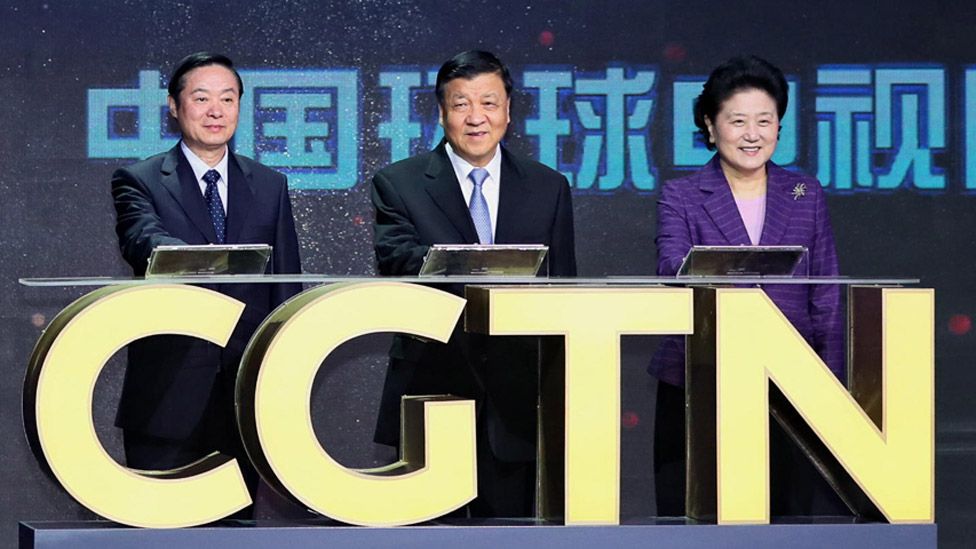
Chinese officials launched the international channel in 2016IMAGE COPYRIGHTXINHUA / ALAMY STOCK PHOTO
image captionChinese officials launched the international channel at the end of 2016

China's state-owned broadcaster has had its licence to broadcast in the UK revoked by media watchdog Ofcom.

Ofcom said the company that owns the UK licence for China Global Television Network (CGTN) doesn't have day-to-day control over the channel, which is against its rules.

Star China Media Limited (SCML), which owns the licence, "did not have editorial responsibility" over the English-language satellite news channel, Ofcom said.

"As such, SCML does not meet the legal requirement of having control over the licensed service, and so is not a lawful broadcast licensee."

In the UK, broadcasting laws say licensees must have control over their service and its editorial policies.

Ofcom said an entity called China Global Television Network Corporation is "the ultimate decision maker" over programmes.

But the regulator said it was unable to transfer the licence to that company because it is "ultimately controlled by the Chinese Communist Party, which is not permitted under UK broadcasting law".

'Efforts have been exhausted'

Such a transfer was also not possible because "crucial information was missing from the application", while CGTN had "repeatedly failed to respond to important questions" and had not carried out a restructure, according to Ofcom.

The regulator said it had given the satellite news channel "significant time to come into compliance with the statutory rules". It added: "Those efforts have now been exhausted."

The action to revoke the licence comes seven months after Ofcom found CGTN in breach of broadcasting regulations for airing a UK citizen's allegedly forced confession.

In July, Ofcom ruled that CGTN had been "unjust" to show footage of investigator Peter Humphrey "appearing to confess to a criminal offence". The channel was named CCTV News at the time of the broadcasts in 2013 and 2014.

And last May, CGTN was found to have breached the UK's broadcasting code by failing to preserve due impartiality in its coverage of the Hong Kong protests.

Analysis box by Amol Rajan, media editor

Barely half an hour after the Ofcom announcement, China's foreign ministry repeated its demand for a public apology from the BBC over its coverage of the pandemic in China. Some well-informed souls say that the timing may well have been genuinely coincidental - rather than a retaliatory gesture.

China has separately complained about the BBC's coverage of the mass detention of Uighur Muslims - which has prompted an international outcry - and the BBC's coverage of Covid-19. I'm told the BBC is standing by its reporting.

The context to all this is that in recent years, state broadcasters have become central to the international media ecosystem, seen as tools of soft power and propaganda.

And there is a broader tech Cold War between China and the West, and particularly the US, over how open the internet should be.

Once upon a time global conflicts were mostly about land and natural resources. Today, they're increasingly about information.

line

Shortly after the Ofcom decision was announced, China said it had lodged "stern representations" to the BBC over what it called "fake news" in its coverage of Covid-19 and urged the broadcaster to apologise.

The corporation should "stop harbouring ideological bias, stop smearing China, uphold professional ethics, and do objective, fair reporting on China", China's foreign ministry said.

The BBC said it stood by its "accurate and fair reporting of events in China and totally rejects these unfounded accusations of fake news or ideological bias".

Related Topics

More on this story

https://www.bbc.com/news/entertainment-arts-55931548

OTHERS
12 February 2021


Monday, 1 February 2021

We Are Bellingcat by Eliot Higgins review – the reinvention of reporting for the internet age

 In July 2014 Malaysia Airlines flight MH17 crashed in eastern Ukraine. Why? In pre-digital times it would have taken weeks or months to get an answer.

Luke Harding   THE GUARDIAN   1 February 2021

 These days, the truth can be found at warp speed. A former office worker, Eliot Higgins, saw a post on YouTube of a Buk missile launcher trundling down a street. “Gold star sticker to the first person who geo-locates this video,” he tweeted.

Seven minutes later one of Higgins’s followers solved the mystery. They suggested the Buk had gone through Snizhne in eastern Ukraine, a town under the control of pro-Moscow rebels. Higgins looked at the clues – a two-lane road, three distinct trees, red roof. He pulled up Google Earth. It matched. The launcher was going south. The question now was where had the Buk come from, and which state had fired it at MH17?

What followed was a 21st-century sleuth drama. It pitted Higgins’s newbie investigative outfit, Bellingcat, against the mighty Kremlin and its spy agencies. There wasn’t much of a contest. Higgins’s army of online amateur detectives tracked the Buk to the 53rd brigade, a military unit based in the Russian city of Kursk. It had travelled into Ukraine in a convoy. It left in the dead of night, minus one missile.

We Are Bellingcat is Higgins’s gripping account of how he reinvented reporting for the internet age. The book was finished before his latest scoop. In December, Bellingcat outed the kill-team behind the novichok poisoning last summer of Alexei Navalny, Vladimir Putin’s number one critic. The investigation helped galvanise street protests on 23 January across Russia, following Navalny’s courageous return to Moscow and inevitable arrest.

Higgins’s own story is an improbable one, shaped by good timing and grit. A media studies dropout and avid gamer, he found he had time on his hands as the Arab spring kicked off, and after the birth of his baby daughter. Higgins began posting on the Guardian’s Middle East blog, as “Brown Moses”. He realised it was possible to establish from your sofa what was going on in a faraway war zone, in Libya or Syria. The material was out there: YouTube videos, Facebook posts, tweets, Instagram – a galaxy of images and text tossed out via social media. By sifting, discoveries could be made. Higgins became an expert on weapons. He found collaborators. Bellingcat developed a credo: look for public evidence, cite sources, collaborate. An open model, in contrast to tabloid chicanery.

a group of people riding on the back of a large crowd of people: A protest in Moscow in support of Vladimir Putin critic Alexei Navalny, whose attackers were identified by Bellingcat.© Photograph: Mikhail Svetlov/Getty Images A protest in Moscow in support of Vladimir Putin critic Alexei Navalny, whose attackers were identified by Bellingcat.

This transparent method has had remarkable success. Bellingcat has uncovered war crimes in Syria and unmasked neo-Nazis marching in Charlottesville. In 2018 it winkled out the real identities of Alexander Petrov and Ruslan Boshirov, the two GRU assassins who went to Salisbury to snuff out Sergei Skripal. (The pair claimed they were merely sightseers who had come to see the Cathedral spire.)

Bellingcat’s rise reveals something new about our digitally mediated times: spying is no longer the preserve of nation states – anyone with an internet connection can do it. The balance between open and secret intelligence is shifting. The most useful stuff is often public. Bellingcat, you suspect, knows more than the suits of MI6; certainly, it’s nimbler. “An intelligence agency for the people,” as Higgins’s subtitle puts it.

The book – written with the novelist and journalist Tom Rachman – is also a manifesto for optimism in a dark age. It argues that “cyber-miserabilism” – the doomy belief that big tech and bad actors have permanently screwed our democracy – is wrong. Instead, Higgins hails the internet as an “extraordinary gift”. In his view, facts still matter, accountability is possible, and people still care about the difference between truth and lies.

In a recent BBC interview Barack Obama complained that conspiracy theories turbocharged by social media had fuelled America’s bitter political divisions. The era was suffering from a bad case of what Obama called “truth decay”. After Trump and Brexit, We Are Bellingcat offers a route out of our current epistemological crisis. Higgins’s answer: a bracing restatement of empirical values and good method.

The book blasts what Higgins calls the “Counterfactual Community” – the leaderless network of conspiracy mongers and state bloggers who swap disinformation. Favourite topics are the White Helmets – the group of volunteer rescuers in Syria – and the “dangers” of the Covid-19 vaccine. “Their practice is to begin with a conclusion, skip verification, and to shout down contradictory facts,” Higgins observes.

In his view, rivalry between media titles is a thing of the past. The future is collaboration

This evidence-denying community has some strange ideological allies. There is the far left: tough on imperialism, so long as the west and the US is the aggressor. Aligned with it is the “alt-right”, Higgins says. Both groups are pro-Assad and pro-Putin. Their views are expressed on alternative media outlets and via government propaganda channels such as RT, the Kremlin’s TV wing – and Bellingcat’s most vocal critic.

Higgins devotes several pages to the chemical weapons strike in 2013 on the eastern suburbs of Damascus. Geolocation tools showed a Syrian military base had fired the rocket. The veteran investigative journalist Seymour Hersh, however, blamed the poison gas on jihadi rebels. Higgins describes Hersh’s piece for the London Review of Books as an “embarrassing muddle”. It “posed questions I’d already answered”, he writes.

The Bellingcat approach goes well beyond traditional journalism. Its volunteers have compiled an archive from the decade-long war in Syria, featuring 3.5m pieces of digital content. This has been preserved to assist future war crimes prosecutions. Dates and metadata are carefully recorded. Bellingcat has assisted Dutch prosecutors, who have charged several Russians with murdering those on board MH17.

Higgins thinks traditional news outlets need to establish their own open source investigation teams or miss out. He’s right. Several have done so. The New York Times has recruited ex-Bellingcat staff. Higgins approves of this. In his view, rivalry between media titles is a thing of the past. The future is collaboration, the hunt for evidence a shared endeavour, the truth out there if we wish to discover it.

Luke Harding’s latest book, Shadow State: Murder, Mayhem and Russia’s Remaking of the West, is published by Guardian Faber

• We Are Bellingcat: An Intelligence Agency for the People by Eliot Higgins is published by Bloomsbury (£20). To order a copy go to guardianbookshop.com. Delivery charges may apply

• Eliot Higgins will talk about the founding of Bellingcat at a Guardian Live online event on Wednesday 3 February

https://www.msn.com/en-gb/news/world/we-are-bellingcat-by-eliot-higgins-review-%e2%80%93-the-reinvention-of-reporting-for-the-internet-age/ar-BB1dh9u8

As Dodds says, EU Article 16 bid can’t be swept under carpet

 The first is that the UK has much greater reason to trigger Article 16 of the NI Protocol than the EU ever did.

© News Letter editorial   1 February 2021


Brussels sought to trigger the article (which can be used to mitigate serious harm caused by the protocol) suddenly over a specific EU-wide dispute about the rollout of the vaccine programme. Northern Ireland however has been hit by major disruption to trade within the UK, including, it now emerges, movements of military equipment. These are not concerns in which NI can be used as a device to influence the outcome of a bigger disagreement, but relevant to the protocol.

The second key point that Lord Dodds makes relates to the hypocrisy of an EU which for four years agreed with the Irish that there could be no change whatsover at the Irish land border, not even CCTV. Then, when it suited them, they discarded this position and acted aggressively, swiftly and without the slightest concern for a sudden hardening of the border.

A third key point in the article is that the EU have not taken using Article 16 off the table.

A fourth is that these truths about what the EU has just done cannot be swept under the carpet.

The response of the UK government has been diplomatic rather than robust. It depicts itself as unionist, yet has presided over great damage to the NI-Great Britain Union.

The essay by Lord Dodds is welcome but this is not just a story of bad EU conduct. It is also a story of London’s failures.

Calling out Boris Johnson is not of itself going to change someone so brazen. Yet it could cause the government, which is more focused on saving Scotland than NI, occasionally to pause. The UK will certainly not break up prior to 2024 but it would be embarrassing even to be seen to have set the Union on a path to destruction. Unionists acting as if the border was fine would please London and make the next concession all the easier, so Lord Dodds is right to emphasise how bad it is.

https://www.msn.com/en-gb/money/other/as-dodds-says-eu-article-16-bid-cant-be-swept-under-carpet/ar-BB1dgx2D?li=AAnZ9Ug

Sunday, 31 January 2021

Exclusive: China gene firm providing worldwide COVID tests worked with Chinese military

 SYDNEY (Reuters) - BGI Group, the world's largest genomics company, has worked with China's military on research that ranges from mass testing for respiratory pathogens to brain science, a Reuters review of research, patent filings and other documents has found.

By Kirsty Needham   REUTERS  31 January 2021

© Reuters/CHINA STRINGER NETWORK FILE PHOTO: A technician works at a genetic testing laboratory of BGI, formerly known as Beijing Genomics Institute, in Kunming

The review, of more than 40 publicly available documents and research papers in Chinese and English, shows BGI’s links to the People’s Liberation Army (PLA) include research with China’s top military supercomputing experts. The extent of those links has not previously been reported.

BGI has sold millions of COVID-19 test kits outside China since the outbreak of the new coronavirus pandemic, including to Europe, Australia and the United States. Shares of BGI Genomics Co, the company’s subsidiary listed on the Shenzhen stock exchange, have doubled in price over the past 12 months, giving it a market value of about $9 billion.


© Reuters/CHINA STRINGER NETWORK FILE PHOTO: Technicians work at a genetic testing laboratory of BGI in Kunming
But top U.S. security officials have warned American labs against using Chinese tests because of concern China was seeking to gather foreign genetic data for its own research. BGI has denied that.

The documents reviewed by Reuters neither contradict nor support that U.S. suspicion. Still, the material shows that the links between the Chinese military and BGI run deeper than previously understood, illustrating how China has moved to integrate private technology companies into military-related research under President Xi Jinping.

The U.S. government has recently been warned by an expert panel that adversary countries and non-state actors might find and target genetic weaknesses in the U.S. population and a competitor such as China could use genetics to augment the strength of its own military personnel.

BGI has worked on PLA projects seeking to make members of the ethnic Han Chinese majority less susceptible to altitude sickness, Reuters found, genetic research that would benefit soldiers in some border areas.

Elsa Kania, an adjunct senior fellow at the Center for a New American Security think tank, who has provided testimony to U.S. Congressional committees, told Reuters that China’s military has pushed research on brain science, gene editing and the creation of artificial genomes that could have an application in future bioweapons. She added that such weapons are not currently technically feasible.

© Reuters/CARLOS GARCIA RAWLINS FILE PHOTO: Soldiers of the People's Liberation Army (PLA) march outside the Great Hall of the People in Beijing

BGI’s pattern of collaboration with the Chinese military was a “reasonable concern to raise” for U.S. officials, said Kania.

In response to Reuters’ questions, BGI said it adheres to international standards and Chinese laws related to open science, data sharing and genomic research. It said its collaboration with military researchers was for academic purposes only.

“BGI strongly rejects any accusations about links with the PLA, particularly in relation to our COVID-19 test kits,” it said in a statement.

China’s defence ministry did not respond to requests for comment.

'ENHANCE' SOLDIER STRENGTH

Chinese technology companies have come under increasing scrutiny by the United States and were subject to mounting restrictions under the administration of Donald Trump. In November, the Department of Commerce proposed a rule to add gene editing software to the U.S. export control list, saying it could be used to create biological weapons. Officials in the new administration of President Joe Biden have signalled a continued tough approach to what they see as a rising threat from Beijing.

A technology industry panel on artificial intelligence, appointed by the U.S. government and chaired by former Google Chief Executive Eric Schmidt, raised the alarm in October about China’s financial support for its biotechnology sector, its advantages in collecting biological data, and the PLA’s interest in potential military applications.

The panel, which will deliver its final report in March, warned about adversaries using artificial intelligence to identify genetic weaknesses in a population and engineering pathogens to exploit them, and genetic research designed to enhance soldiers’ mental or physical strength.

The panel recommended that the U.S. government “take a more aggressive public posture regarding BGI,” citing national security risks posed by the company’s links to the Chinese government and its trove of genomic data.

The U.S. Department of State did not immediately respond to a request for comment on Reuters’ findings.

In response to Reuters’ questions, China’s foreign ministry said the U.S. government had “wantonly misinterpreted and smeared China’s military-civil fusion policy,” and was imposing unreasonable sanctions that would hamper research.

“China’s military-civil fusion policy is aimed at effectively mobilizing military and civilian resources, coordinating socio-economic growth and national defense development, and benefiting the public with scientific and technological progress. This policy is above board and beyond reproach,” the ministry said in a statement to Reuters.

It added that this was “customary international practice” and said the U.S. government had effectively pursued military-civil fusion for more than 100 years.

‘KEY PROJECTS’

BGI Group, based in Shenzhen, has grown quickly by selling genetic sequencing services to universities and health systems around the world and amassing a large DNA databank. It created China’s first cloned pig in 2010.

One science paper authored by BGI founders Yang Huanming and Wang Jian along with the PLA’s Key Laboratory of High Altitude Medicine and the Third Military Medical University focused on experiments with the brains of monkeys suffering altitude sickness.

The study, published in January 2020, stated that it was funded as one of the “key projects of military science and technology” by the PLA. A decade ago, the military university’s research sought to identify genes related to altitude sickness so the PLA could screen for susceptible soldiers. The latest research focused on how drugs interacting with genes could potentially protect a person from brain injury.

An earlier 2017 study designed by BGI’s Wang and published in conjunction with a PLA research centre in Xinjiang looked at the effect of rapid mountain ascent on the bodies of “young, healthy men.”

China has the world’s longest highland border, which includes its border with India, where fighting broke out between the two countries' troops in 2020. A 2018 paper by the same PLA laboratory stated that “high altitude disease is the main reason for reduced combat effectiveness and health damage to soldiers at high altitudes and influences the results of war.”

Reuters was unable to contact Yang and Wang. BGI said its research collaboration with the PLA lab and the Third Military Medical University, where Yang has been a professor for almost two decades, was “for academic purposes only.”

SEQUENCING COVID

BGI jointly holds a dozen patents for tests that screen for genomes linked to disease with the military university, the PLA’s Academy of Military Medical Science, which is the top medical research institute of the PLA, and PLA hospitals.

One patent was granted in 2015 to BGI and the Academy of Military Medical Science for a low-cost test kit to detect respiratory pathogens, including SARS (Severe Acute Respiratory Syndrome) and coronaviruses.

BGI’s current chief infectious disease scientist, Chen Weijun, is listed as an inventor on the patent documents. Chen was among the first scientists to sequence COVID-19, taking samples from a military hospital in Wuhan, according to sequence data later shared internationally.

Chen is listed as affiliated with the Academy of Military Medical Science in three science papers reviewed by Reuters.  In response to Reuters’ questions, BGI said in a statement that Chen has not been affiliated with the PLA’s Academy of Military Medical Science since 2012. Chen did not respond to a request for comment.

BGI’s COVID-19 test kit did not use the method jointly patented with the PLA, the company said in the statement.

Four BGI researchers have also been jointly affiliated with another military institution, the National University of Defence Technology (NUDT), according to publicly available science and conference papers reviewed by Reuters. Hunan-based NUDT is under the direct leadership of China’s Central Military Commission, the top-level body that steers the Chinese military and is headed by Xi.

The NUDT is on a U.S. blacklist as a threat to national security because its Tianhe-2 supercomputer - one of the world’s most powerful - is used to simulate nuclear explosions, according to a Department of Commerce listing. That listing restricts U.S. companies from supplying NUDT with technology.

One researcher, Peng Shaoliang, was instrumental in developing software to speed up BGI’s sequencing of human genomes using supercomputing developed by NUDT.

Peng has won military awards for his work. He is a member of an expert group advising the Central Military Commission’s Science and Technology Commission, set up in 2016 when Xi began promoting a strategy to integrate China’s civilian and military research.

Patent applications in 2020 show Peng is also a member of the PLA’s Institute of Military Medicine. Liao Xiangke, the head of the NUDT’s supercomputer programme and a major general in the PLA, has published seven scientific papers either co-authored with BGI researchers or crediting them for providing data and source code.

BGI said in a statement to Reuters that Peng and Liao “were two collaborators of BGI for the project at the time for the purpose of academic exchange only. Since the project ended BGI has no more affiliation with them.”

Peng and Liao did not respond to requests for comment.

BGI said it uses Tianhe-2 on a commercial basis, as well as other supercomputing platforms, to speed up research. The papers it wrote with the NUDT were for academic purposes only, it said, and were open for public reference, while the programmes themselves have ended.

Tianhe-2 has also been used to solve pharmaceutical, cryptology, engineering and climate problems that have no military application, the company said.

(Reporting by Kirsty Needham in Sydney; Additional reporting by Humeyra Pamuk and Alexandra Alper in Washington and Beijing newsroom; Editing by Kevin Krolicki and Bill Rigby)

https://www.msn.com/en-gb/money/technology/exclusive-china-gene-firm-providing-worldwide-covid-tests-worked-with-chinese-military/ar-BB1der4q

Saturday, 30 January 2021

Ireland BYPASSED! Von der Leyen contacted by Dublin after Brexit protocol triggered

 The EU has triggered a Brexit clause less than a month after the UK left the bloc as Brussels panics over the coronavirus vaccine chaos involving a shortage of supplies from drugmaker AstraZeneca.  

 30  January 2021

The protocol, which forms a vital part of the Brexit Withdrawal Agreement with the EU, normally allows for free movement of goods from the bloc into Northern Ireland. It states goods should be able to move freely between the EU and Northern Ireland because the region still remains in the Single Market for goods and also operates under Brussels' customs rules.

But the EU has now triggered Article 16 of this protocol to temporarily place export controls on this movement in respect of coronavirus vaccines.

This has sparked Ireland into urgent action, with Taoiseach Micheal Martin contacting Ms von der Leyen to express concern over the move.

A spokesman for the Irish Prime Minister said: "We are aware of the issue and the Taoiseach (prime minister) is currently in discussions with European Commission President Ursula Von Der Leyen to express our concerns."

Ireland's Foreign Minister Simon Coveney tweeted: "We are working with the EU Commission to try to resolve this issue and protect the integrity and operation of the NI Protocol."

Ursula von der Leyen, Micheal Martin are posing for a picture: brexit ireland eu protocol vaccine

© GETTY brexit ireland eu protocol vaccinegraphical user interface, text, application, email: brexit ireland simon coveney© @simoncoveney / Twitter brexit ireland simon coveney

JP Campbell, the BBC's business and economics editor for Northern Ireland, tweeted: "Very strong sense that the Commission blindsided the British AND Irish govts on Article 16.

RTE Europe Editor Tony Connelly tweeted: "The Irish government was not alerted by the European Commission of the decision to trigger Article 16 of the NI Protocol as part of its launch of the vaccine transparency mechanism, @rtenews understands.

"Officials have spoken of their "shock" and "concern" at the move. The Taoiseach Micheal Martin has spoken by phone to @vonderleyen "more than once".

"Officials suspect the Commission's Brexit Task Force was not alerted to the move, or was alerted "late in the day". Maros Sefcovic, who chairs the Joint Committee implementing the NI Protocol has been in touch with Michael Gove, his opposite number, it's understood.

READ MORE: Brexit LIVE: French MEP turns on EU and admits UK Brexit victory

a close up of Arlene Foster: brexit northern ireland arlene foster© GETTY brexit northern ireland arlene foster

"Dublin's understanding is that because the Protocol prohibits any export ban for EU goods entering NI, but also provides for unfettered access for NI GB goods, it was seen as a potential loophole.

"The European Commission has announced a new transparency mechanism allowing member states to monitor if vaccine doses which are contractually destined for member states are instead exiting the EU.

"Irish officials believe the use of Article 16, which provides for either side to take safeguard measures if there are significant societal or economic consequences is inappropriate in this situation as the idea of vaccines entering the UK via the NI backdoor as "far fetched".

"However, Dublin is fully aware that the shortfall in AstraZeneca vaccines is also a crisis for member states, not least Ireland. The view is that the NI Protocol has got inadvertently swept up in the broader vaccine crisis.

DON'T MISS

Brexiteer dismantles 'squealing' Remainers over furious EU vaccine row [COMMENT]

'We were RIGHT' Brexiteer savages EU vaccine 'totalitarianism' [OPINION]

EU's 'vaccine protectionism' could cost world economy £6.7trillion [ANALYSIS]

Ursula von der Leyen wearing a pink shirt: brexit eu ursula von der leyen© GETTY brexit eu ursula von der leyenMichael Gove wearing a suit and tie: brexit northern ireland michael gove© GETTY brexit northern ireland michael gove

"Sources say the government is seeking a solution to the issue and that the Taoiseach has conveyed to VDL the implications of the move and the sensitivities around the Protocol in NI, ie that Article 16 is not appropriate in this scenario."

The move to activate Article 16 will frustrate any effort to use Northern Ireland as a back door to bring vaccines into Great Britain.

Stormont First Minister Arlene Foster said: "By triggering Article 16 in this manner, the European Union has once again shown it is prepared to use Northern Ireland when it suits their interests but in the most despicable manner - over the provision of a vaccine which is designed to save lives.

"At the first opportunity, the EU has placed a hard border between Northern Ireland and the Republic of Ireland over the supply chain of the coronavirus vaccine."

Shadow Northern Ireland Secretary Louise Haigh said: "Unilateral actions like this do nothing to aid the stability in Northern Ireland which the protocol was designed to preserve.

UK Cabinet Office minister Michael Gove has spoken to his counterpart on the EU-UK joint committee, Maros Sefcovic, to "express the UK's concern over a lack of notification from the EU about its actions in relation to the NI protocol".

text: brexit eu covid vaccine© EXPRESS brexit eu covid vaccine

Downing Street added in a statement: "The UK Government is urgently seeking an explanation from the European Commission about the statements issued by the EU today and assurances as to its intentions.

"The UK has legally-binding agreements with vaccine suppliers and it would not expect the EU, as a friend and ally, to do anything to disrupt the fulfilment of these contracts.

"The UK Government has reiterated the importance of preserving the benefits of the Belfast/Good Friday agreement and the commitments that have been made to the two communities."

Euronews political editor Darren McCaffrey, tweeted: "EU decision to invoke Article 16, clearly without prior notice has managed to unite the British and Irish governments, Labour, the DUP and SDLP in disagreement with the move. When did that last happen?"

This sparked a response from Brexiteer Martin Daubney, who wrote: "It's also united & emboldened the entire Eurosceptic movement in one fell swoop."

The EU has repeatedly lashed out at vaccine maker AstraZeneca for failing to deliver the shots it had promised, with the bloc facing a shortfall of up to 60 percent until the end of March.

In a further blow, EU member states are also receiving fewer deliveries of the vaccines from Pfizer-BioNTech and Moderna than anticipated.

On Friday, the European Commission revealed it had agreed a plan to control the exports of vaccines from the continental bloc as part of measure to ensure its own supplies.

EU Trade Commissioner Valdis Dombrovskis told a news conference the new export controls are "time limited".

They will initially last until the end of March and will apply to Covid vaccines the bloc has already purchased.

The EU could choose to block the export of a vaccine if they believe this could undermine its own supplies.

The Commission has been quick to stress this is not an export ban of any kind.

https://www.msn.com/en-gb/money/other/ireland-bypassed-von-der-leyen-contacted-by-dublin-after-brexit-protocol-triggered
