Friday, 1 October 2021

Russell: China’s coal crunch is self-inflicted, costly and temporary

China is paying a high price for policies that curbed domestic coal output and imports.
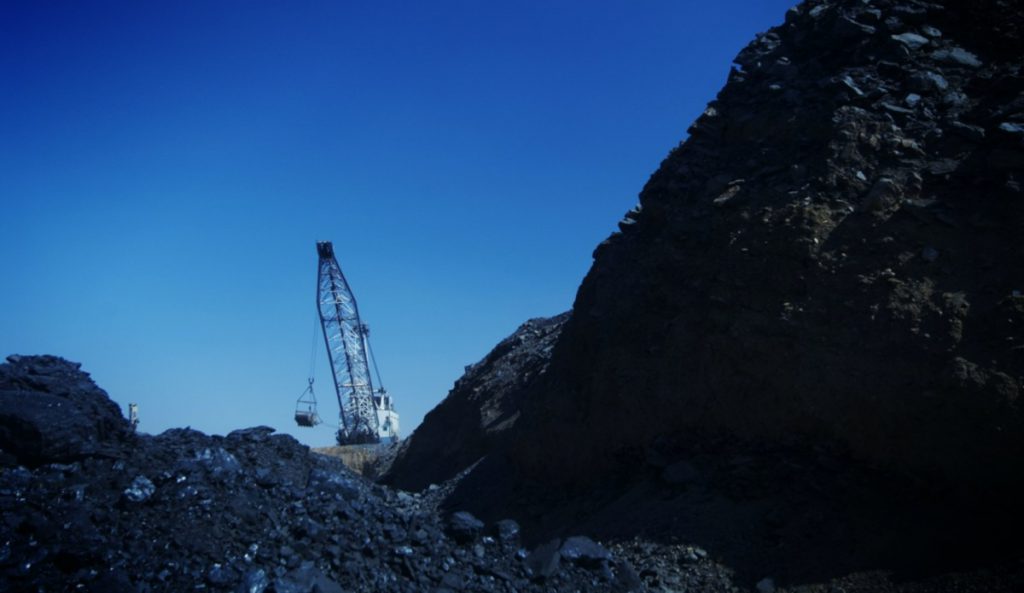
Impunzi coal mines South Africa. Image: Glencore

China is paying a high price for policies that curbed domestic coal output and imports, and led to a shortage of the fuel that still largely powers the world’s second-largest economy.

The good news for Beijing is that while the scarcity of coal will cause problems for energy-intensive industries, such as steel and aluminum, the situation is likely to be resolved relatively quickly.

China has already signalled it will seek to boost imports, and domestic output is likely to recover strongly in coming months as more mines re-open after being idled for safety checks.

The problem is that increasing imports will not fully fix the problem and will be costly, especially if Beijing keeps its informal ban on shipments from Australia, put in place last year as part of an ongoing political dispute with Canberra.

THERE ARE SIGNS THAT SEABORNE COAL IS RESPONDING TO THE PRICE RALLIES

Looking at the domestic coal situation first, its clear that supply has become an issue in 2021.

While the big-picture gain of 4.4% over the first eight months of the year to 2.6 billion tonnes doesn’t seem too bad, the detail shows that production has been in a downward trend for most of the year, reversing only in August.

China produced a record high 351.89 million tonnes in December last year, as mines ramped up output to meet demand in a colder-than-expected winter.

Since then, domestic production slumped to 314.17 million tonnes in July, the lowest since May 2019, according to official data.

Production did recover to 335.24 million tonnes in August, but the total so far this year is still well below China’s potential output.

If production had been maintained at December’s record levels, it would have resulted in about 2.82 billion tonnes being mined in the first eight months, or some 220 million tonnes more than what was actually achieved.

It’s not entirely realistic to assume that record production could have been kept up, of course, but what is clear is that China has significantly underperformed its potential when it comes to domestic coal output.

Turning to imports, these are down 10.3% in the first eight months of the year to 197.7 million tonnes, according to customs data.

August’s imports of all grades of coal were 28.05 million tonnes, down from July’s 30.18 million in July, but in general terms the trend has been rising since May, when imports were 21.04 million.

Australia impact

Australia used to be China’s second-biggest supplier of coal, with roughly 60% of its shipments being thermal coal, used for power generation and by industries such as cement, and about 40% coking coal, used to make steel.

China imported 9.79 million tonnes from Australia in June last year, according to data from commodity consultants Kpler, but this had dwindled to virtually zero by January this year.

China has turned to Indonesian coal as a replacement, even though its energy value tends to be less than the Australian equivalent, and it is buying more from Russia and smaller suppliers such as South Africa and the United States.

But in doing so, China sparked huge increases in prices. Russian coal with a similar energy rating to the 5,500 kilocalories per kg (kcal/kg) Australian grade that was popular in China is reported by traders to be commanding premiums of up to 100% more than the Australian fuel.

Indonesian coal is also rallying to records, as Chinese buyers compete with more traditional customers such as India.

The weekly index for Indonesian coal with an energy value of 4,200 kcal/kg, as assessed by commodity price reporting agency Argus, rose to a record high of $91.28 a tonne in the week to Sept. 24 and has quadrupled from its 2020 low.

Benchmark high-grade Australian thermal coal with an energy value of 6,000 kcal/kg, also rose last week, reaching $180.70 a tonne, closing in on an all-time high of $195.25 hit in July 2008.

It’s likely to surpass that record in this week’s assessment, given that Newcastle coal futures closed at an all-time high of $210.50 a tonne on Wednesday.

These high prices are likely to persist, especially if China tries to ramp up imports in coming months.

There are signs that seaborne coal is responding to the price rallies, with Kpler estimating September global exports will rise to 121.2 million tonnes, up from 111.8 million in August, and the strongest monthly outcome since December 2019.

But the point is that it will take several months for higher exports to work their way through the system, just as it will take several months for China to ramp up domestic output by enough to ease the current supply crunch.

In the meantime, the costs will continue to mount, in the form of high coal prices, both imported and domestic, and in the constrained output of energy-intensive industries, which in turn will have a negative impact on supply chains.

https://www.mining.com/web/russell-chinas-coal-crunch-is-self-inflicted-costly-and-temporary


More News


What is behind China’s power crunch? : Explainer

China is in the grip of a power crunch as a shortage of coal supplies, toughening emissions standards and strong demand from manufacturers and industry have pushed coal prices to record highs.

Reuters | September 27, 2021 | 7:37 am Intelligence Markets China Aluminum Coal Iron Ore 

Dust-up in the coal trade. Stock Image.

China is in the grip of a power crunch as a shortage of coal supplies, toughening emissions standards and strong demand from manufacturers and industry have pushed coal prices to record highs and triggered widespread curbs on usage.

How long has there been a power supply problem in China?

Restrictions on power use in homes have only just taken effect. However, China’s massive industrial base has been wrestling with sporadic jumps in power prices and usage curbs since at least March, when provincial authorities in Inner Mongolia ordered some heavy industry including an aluminum smelter to curb use so that the province could meet its energy use target for the first quarter.

China thermal coal price

In May, manufacturers in the southern province of Guangdong, a major exporting powerhouse, encountered similar requests to curb consumption as a combination of hot weather and lower than usual hydropower generation strained the grid.

Other major industrial zones along China’s east coast have also encountered recent consumption caps and power cuts.

What are China’s energy use targets and why do they exist?

China’s President Xi Jinping announced in late 2020 at a United Nations summit on climate change that the country would cut its carbon dioxide emissions per unit of gross domestic product, or carbon intensity, by more than 65% from 2005 levels by 2030.

As the world’s top producer of carbon dioxide and other polluting gases, China’s ability to cut emissions is seen as critical in the global fight against climate change.

Xi also pledged sharp increases in renewable energy capacity at the summit, but his carbon intensity targets have been the most closely followed guidelines for emissions reduction since, especially at the provincial level where local authorities have the responsibility of making sure the targets are reached.

Has energy use declined since Xi announced those goals?

According to the country’s main planning agency, the National Development and Reform Commission (NDRC), only 10 out of 30 mainland Chinese regions achieved their energy reduction targets in the first six months of 2021.

In response to that collective overshoot, the NDRC announced in mid-September tougher punishments for regions that fail to meet their targets, and said it would hold local officials to account for limiting absolute energy demand in their regions.

Has China produced less power in 2021 due to targets?

China’s total power generation through August of 2021 was actually 10.1% greater than in the same period in 2020, and nearly 15% more than in the same slot in 2019 as utilities across the country cranked up power to meet surging industrial demand.

China power generation

However, along with the higher power generation came higher toxic emissions, which surpassed pre-pandemic levels in the first quarter of the year.

How are regions limiting power for certain users?

Local governments in Zhejiang, Jiangsu, Yunnan and Guangdong provinces have asked factories to limit power usage or curb output.

Some power providers have sent notices to heavy users to either halt production during peak power periods that can run from 7 a.m. and 11 p.m., or shut operations entirely for two to three days a week.

China seasonal industrial product output

Others have been told to shut until further notice or a particular date, including soybean processing plants in Tianjin in eastern China which have been shut since Sept. 22.

Which industries have been impacted by the power shortages?

The impact on industries is broad and includes power-intensive sectors like aluminum smelting, steel-making, cement manufacturing and fertiliser production.

At least 15 listed Chinese firms that produce a range of materials and goods – from aluminum and chemicals to dyes and furniture – have reported that their production has been disrupted by power curbs.

Residential users have also been hit, with households in parts of northeast China told to limit use of water heaters and microwaves to conserve power.

What has been Beijing’s response to the power crunch?

The NDRC said on Friday it will work to resolve the power shortages, but did not provide any specific details on what steps it would take.

One major near-term challenge for Beijing is its ongoing trade dispute with Australia, the world’s second-largest coal exporter, which has greatly curbed coal shipments to China just as local authorities stepped up safety standards that have slowed production at Chinese coal mines following a series of accidents.

Another factor is a global shortage of natural gas, as a number of major economies look to stock up on the fuel simultaneously following the easing of covid-19 restrictions.

Even so, the State Grid Corporation of China said on Monday it would “go all out to fight the battle of guaranteeing power supply” to customers and would dispatch more power across its network.

(By Shivani Singh, Min Zhang and Tom Daly; Editing by Gavin Maguire and Susan Fenton)


https://www.mining.com/web/explainer-what-is-behind-chinas-power-crunch/

Thursday, 30 September 2021

Covid 'leaked from Wuhan lab in cover up worse than Watergate', new book claims

Covid-19 was leaked from a Chinese lab in a "cover up" that's been slammed as "worse than Watergate", it has been claimed in a new book on the pandemic. 


The first case of the novel coronavirus was reported in Wuhan back in December 2019, and the mainstream theory has since been that the virus had natural origins around the city, perhaps in the 'wet market'.

But almost two years on - and more than 4.7million deaths since the pandemic broke out across the world - author and investigative journalist Sharri Markson said there is evidence the virus was leaked.

According to the Sydney-based author of What Really Happened in Wuhan, her research and interviews corroborate the theory that the outbreak accidentally slipped from China's Wuhan Institute of Virology, a claim China has always vehemently denied.

Some of those first infected with coronavirus in October 2019 "now appear difficult to track down", John Ratcliffe, Trump’s former director of national intelligence, said, according to inews.

The alleged disappearance of Wuhan lab worker Huang Yanling in January has only served to fuel speculation of a cover-up.

Former MI6 chief Sir Richard Dearlove said the "weight of evidence" suggests Covid leaked from a lab but doesn't believe it was ever intentional.

"If you look at the evidence coldly, the likelihood is this is an escape from a laboratory, and it's up to the Chinese to demonstrate conclusively to us that it isn't, not just to tell us," he told Markson.

He added: "I'm not saying they deliberately released it, I'm saying this is a Chinese accident but there was a cover-up from day one."

Robert O'Brien, Donald Trump's former National Security Advisor, echoed this as he called for "international supervision" of China's laboratory research.

"I always thought whether it was the wet market or the lab was somewhat immaterial given the history of past health crises; they keep coming out of China and affecting the entire globe," he said.

https://www.msn.com/en-gb/news/world/covid-leaked-from-wuhan-lab-in-cover-up-worse-than-watergate-new-book-claims/ar-AAOWOvY?ocid=msedgntp

Wednesday, 29 September 2021

China sends 19 fighter jets towards Taiwan in show of force

 China has sent 19 fighter jets towards Taiwan in a large display of force.


© Provided by PA Media Undated file photo released by the Taiwan Ministry of Defence of a Chinese PLA J-16 fighter jet (Taiwan Ministry of Defence via AP)


This happened after the self-governing island announced its intention to join an 11-nation Pacific trade group that China has also applied to join.

Taiwan deployed air patrol forces in response to the Chinese jets and tracked them on their air defence systems, the island’s Defence Ministry said in a statement.

Among the various jets, some of which flew in a long L-shaped path, were 12 J-16 and two J-11s, as well as bombers and an anti-submarine aircraft.

China has sent fighter jets toward Taiwan on an almost daily basis this past year. It stepped up its military harassment of the self-ruled island after political events in which it views as interfering with its sovereignty.

Taiwan and China split during a civil war in 1949, but China continues to claim Taiwan as part of its territory. Beijing opposes Taiwan’s involvement in international bodies.

Taiwan has applied to join the Comprehensive and Progressive Agreement for Trans-Pacific Partnership, setting up another potential clash with Beijing.

China’s military sent 18 planes towards Taiwan last year when a top US diplomat visited the island and met with top government officials.

In June, it sent 28 warplanes after leaders of the Group of Seven industrialised nations issued a statement calling for a peaceful resolution of tensions over Taiwan Strait issues.

https://www.msn.com/en-gb/news/world/china-sends-19-fighter-jets-towards-taiwan-in-show-of-force/ar-AAOJBKy?ocid=msedgntp

Wednesday, 22 September 2021

China 'is going back to a policy of total control'

China 'is going back to a policy of total control,' short seller says amid crackdowns

Aarthi Swaminathan  Yahoo Finance   20 Sep 2021   

© Provided by Yahoo! Finance China's President Xi Jinping leaves APEC Haus, during the APEC Summit in Port Moresby, Papua New Guinea November 18, 2018. REUTERS/David Gray


Beijing’s latest moves to crackdown on various sectors in the Chinese economy is spooking some investors, and one short seller believes that this is simply the start.

"I know the bulls wanted to say: 'It's just going to be the education stocks,' and then it was the crackdown on gaming," short seller Dan David told Yahoo Finance Live (video above). 

In the last few months, the Chinese government under President Xi Jinping has started tightening regulations across various sectors such as gaming — both in terms of casinos and kids playing video games — in addition to Big Tech in the country and even celebrity culture.

“We really are not even in the beginning stages of the crackdown,” the Wolfpack Research Founder and CIO added. “China is going back to a policy of total control.”

Part of Xi’s focus is addressing the wealth inequality in China: There are 626 billionaires in China as of last year, as compared 724 to the U.S., according to Forbes. In contrast, Chinese Primer Li Keqiang said that there were 600 million people in China earning a monthly income of barely 1,000 yuan — roughly around $155 — during a 2020 press conference

State messaging indicates that the Chinese Communist Party (CCP) is pursuing the concept of “common prosperity” to address the wealth gap.

"We will adhere to the mainstay status of the people and the direction of common prosperity, and always practice development for the people, development by the people, and sharing the fruits of development by the people," the CCP's most recent five-year plan stated. "We will protect the people's fundamental interests, inspire the enthusiasm, initiative, and creativity of all the people, promote the well-being of the people, and continuously realize people's aspirations for the good life (美好生活)."

From a foreign investor’s perspective, according to David, these developments made it “very dangerous” for U.S. investors to hold Chinese stocks. He also stressed that with big mutual funds like BlackRock, Vanguard, Fidelity still exposed to Chinese companies, that would put investors “at great risk.”

'They’ve missed out on what’s going on in China'

Some experts and investors still remain optimistic regarding the outlook for foreign companies in China — at least for the time being.

Cowen Research’s Oliver Chen told Yahoo Finance Live that he was “bullish on luxury goods” in the U.S. as well as China.

“Consumption has changed in China, where it’s more inside China, versus traveling,” said Chen. “The luxury market is very robust, as wealthy people have benefitted from stock market appreciation, real estate appreciation.” Chen added that he saw a lot of momentum for companies that are targeted to the middle-class, such as Coach and Tapestry.

Chen also acknowledged possible headwinds for foreign companies in China, especially for the brands catering to the ultra-rich. For instance, even though Louis Vuitton has an “outstanding presence” in China, Xi’s desire to achieve a “common prosperity” and the “egalitarian nature in China" could present a big risk to the luxury sector, said Chen.

Bridgewater co-chief investment officer Ray Dalio also argued for investing in China despite the crackdowns.

"I have found that most Western observers... interpret moves like these two recent ones as the Communist Party leaders showing their true anti-capitalist stripes even though the trend over the last 40 years has clearly been so strongly toward developing a market economy with capital markets, with entrepreneurs and capitalists becoming rich," Dalio wrote in a LinkedIn post on July 30, referring to the crackdown in the ride-hailing and education sectors.

"As a result, they’ve missed out on what’s going on in China and probably will continue to miss out," the billionaire hedge fund manager added. "I urge you to not misinterpret these sorts of moves as reversals of the trends that have existed for the last several decades and let that scare you away."

At the same time, no one outside of the CCP really know what comes next.

“While US regulators are primarily focused on just four Big Tech companies, the Chinese government is targeting dozens and has the centralized power to act quicker and more aggressively than the US,” DataTrek’s Jessica Rabe wrote in a recent note. “This nuance makes it trickier for investors to navigate the current environment, especially as Chinese regulators remain tightlipped about everything they have planned."

https://www.msn.com/en-us/money/savingandinvesting/china-we-really-are-not-even-in-the-beginning-stages-of-the-tech-crackdown-short-seller-says/ar-AAOBKDj